American Bison
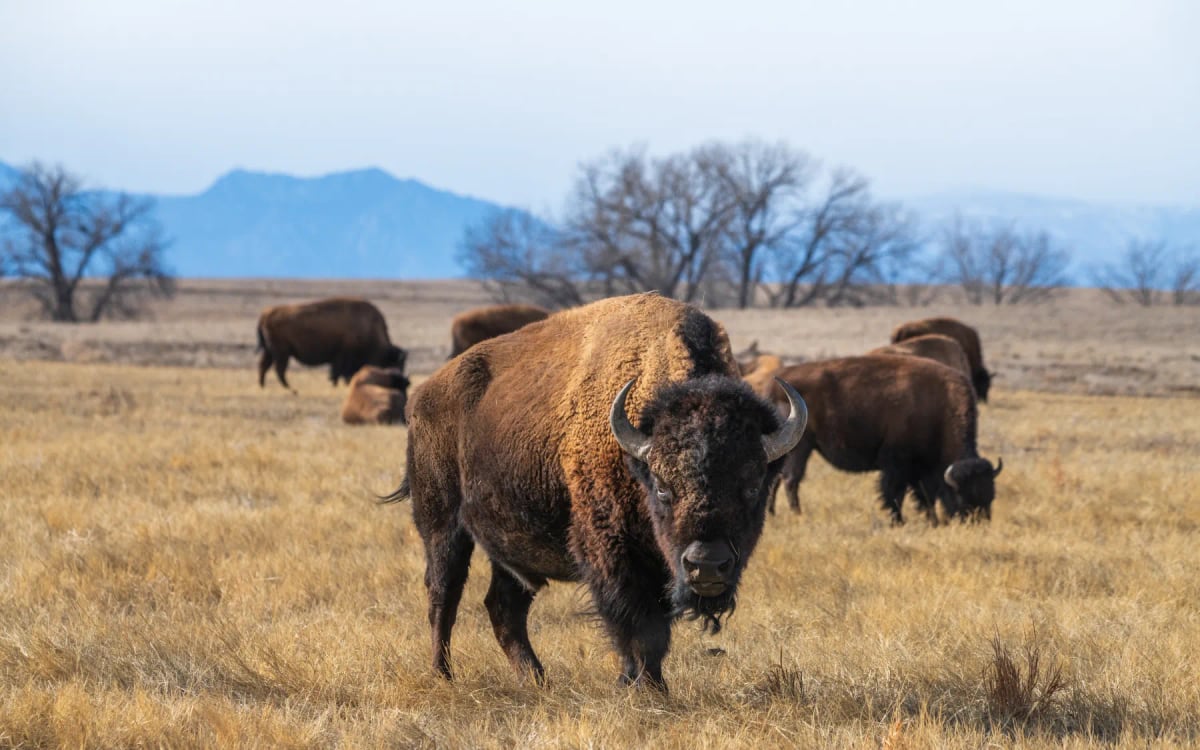
The American bison (Bison bison), often called the American buffalo, is the heaviest land animal in North America and, since 2016, the national mammal of the United States. Bulls can weigh 900 kilograms or more, with a massive head carried low, a tall hump of muscle over the shoulders and a thick, shaggy cape of hair. There are two subspecies: the plains bison of the Great Plains and the larger wood bison of northern Canada and Alaska. An estimated 30 to 60 million once roamed the continent, but commercial hunting in the nineteenth century left fewer than 1,000 by the late 1880s. Conservation saved the species, and today there are roughly 350,000 to 400,000, though most are livestock on private ranches and only about 31,000 live in conservation herds, such as those of Yellowstone and Wood Buffalo National Parks, with reintroductions in Alaska and northern Mexico. Living in herds, bison shape prairies by grazing, trampling and wallowing, supporting countless other species.
Bison or buffalo? Why it is called both
In North America the American bison is just as often called the buffalo, as in Buffalo Bill or the song Home on the Range, but biologists keep the two names apart. True buffalo are the African buffalo and the Asian water buffalo, which belong to different genera, have no hump and carry very different horns. The bison belongs to the genus Bison, together with the European bison, or wisent. The confusion probably goes back to French trappers, who called the animals boeufs, oxen, and English speakers turned that into buffalo, a name that stuck in everyday speech. There are two subspecies: the plains bison of the Great Plains, and the larger, darker wood bison of the boreal forests of Canada and Alaska, whose hump sits further forward. In 2016 the bison became the national mammal of the United States, and it also appears on the flag of Manitoba and the seal of the Department of the Interior.
How much does an American bison weigh?
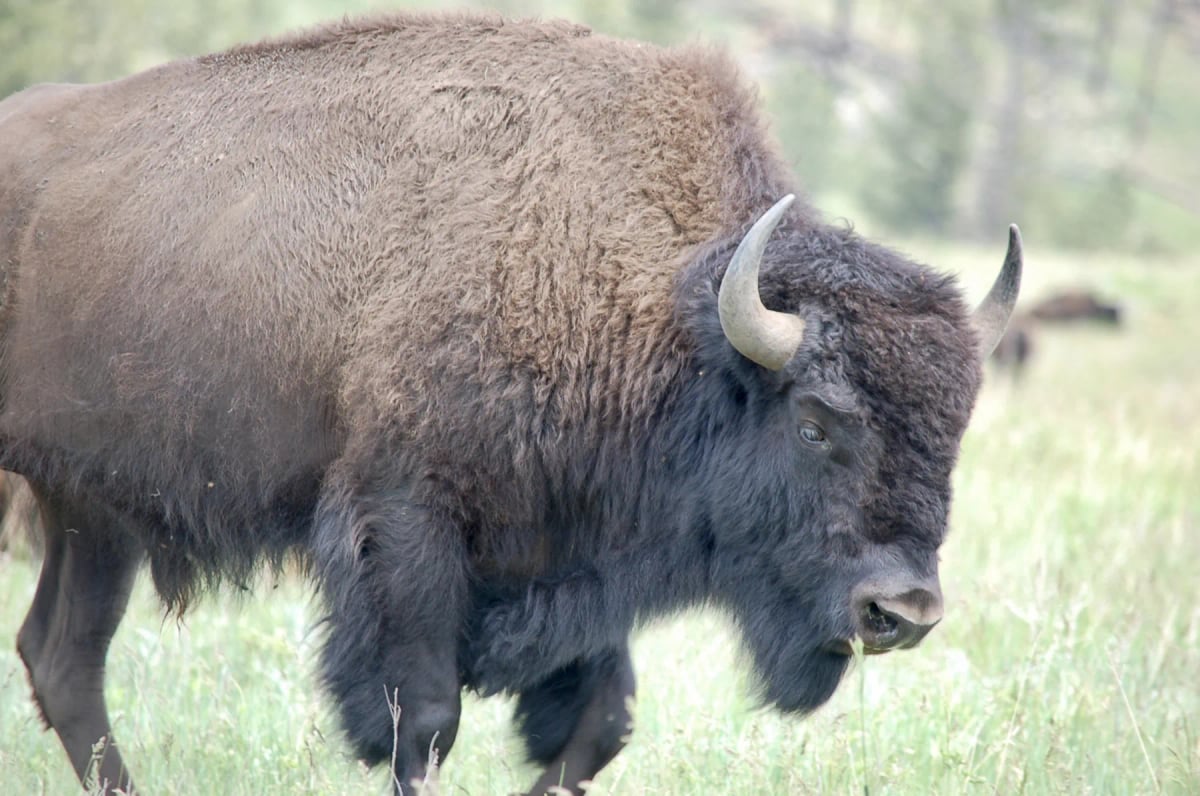
The American bison is the heaviest land animal in North America. Adult bulls usually weigh around 700 to 900 kilograms and can pass 1,000 kilograms, while cows weigh about 400 to 550 kilograms. Bulls stand up to about 1.9 meters at the shoulder and measure up to 3.5 meters from nose to tail. Wood bison are larger than plains bison, and the heaviest wild bulls on record come from that subspecies. Calves are born weighing about 15 to 25 kilograms, with a reddish orange coat that has earned them the nickname red dogs, and turn brown after a few months. The massive head sits low, and the tall hump over the shoulders is made of long spines on the vertebrae anchored to strong muscles, which let the bison swing its head like a snowplow to clear snow. Both sexes carry short, curved black horns that are never shed. The front half of the body is covered in thick, shaggy hair, while the hindquarters have shorter, lighter hair, giving the bison its unmistakable silhouette.
Where do American bison live?
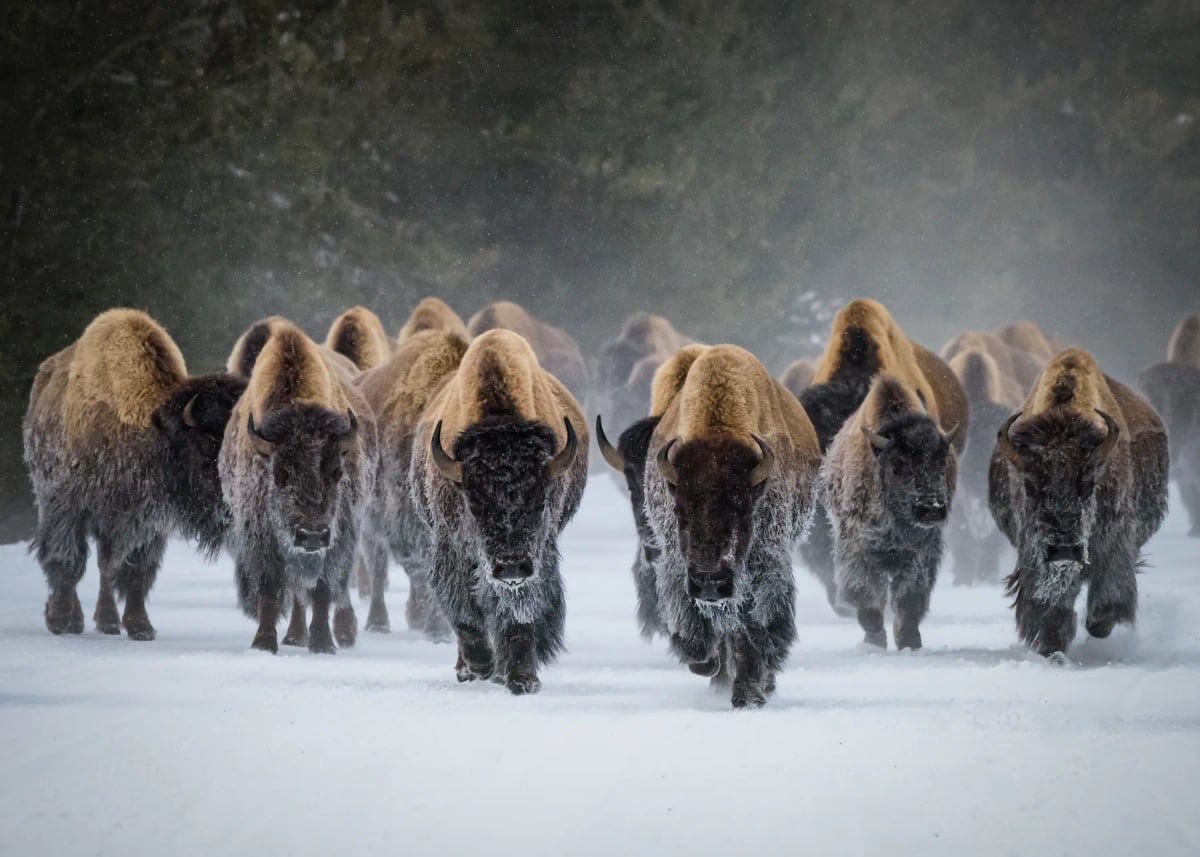
The American bison once ranged over most of North America, from the forests of Alaska and northern Canada to the grasslands of northern Mexico, and from the Rocky Mountains to the Appalachians, with its heart on the Great Plains. Today wild and conservation herds survive in only a small fraction of that range, mostly in parks and reserves. In the United States, the largest and most famous herd lives in Yellowstone National Park, around 5,000 animals that have lived there continuously since prehistoric times. Other public herds roam Grand Teton and Wind Cave National Parks, Custer State Park in South Dakota, the Henry Mountains of Utah, the Book Cliffs, the Kaibab Plateau in Arizona, and the National Bison Range in Montana. Many Native American nations, such as the Blackfeet and the Lakota, manage their own herds. In Canada, wood bison live in Wood Buffalo National Park and the Northwest Territories, and plains bison have returned to Grasslands, Elk Island and Banff National Parks. Wood bison were also brought back to Alaska in 2015, and plains bison to Janos in Mexico in 2009.
What do American bison eat?
The American bison is a grazing herbivore that feeds primarily on native grasses and sedges. It eats throughout the day and can consume large quantities of vegetation, using its broad, flat tongue to pull grasses close to the ground. In winter, bison use their large heads to sweep snow aside and expose buried vegetation beneath. This grazing behavior, combined with wallowing and trampling, plays a key ecological role in maintaining prairie structure, promoting plant diversity, and creating habitat features that benefit birds, insects, and other grassland species.
Behavior
American bison live in herds of cows, calves and young animals, often led by older females, that roam and graze together throughout the year. Adult males form separate bachelor groups for most of the year, joining female herds only during the rut, which peaks in late summer. During the rut, bulls compete intensely through bellowing, displaying, and sometimes fighting. Bison are known for wallowing in dust or mud, which helps control parasites and maintain their coats. Despite their size and calm appearance, bison are unpredictable and capable of explosive speed, reaching up to 55 kilometers per hour when alarmed, and they can jump close to 2 meters high and swim across large rivers.
How many American bison are left?
Before European settlement, an estimated 30 to 60 million bison roamed North America. Commercial hide hunting, fed by railroads and by army policies meant to starve the Plains nations, wiped them out in a few decades, and by the late 1880s fewer than 1,000 remained, including about two dozen wild animals hiding in Yellowstone. A handful of ranchers, Native Americans and early conservationists saved the rest, and in 1905 the American Bison Society began moving animals back into protected herds. Today there are roughly 350,000 to 400,000 bison, but most are livestock: the 2022 United States agricultural census counted about 192,000 on private ranches, and Canada's 2021 census about 150,000. Only around 31,000 live in some 68 conservation herds, with perhaps 11,000 to 13,000 mature animals, and many herds carry cattle genes from old crossbreeding. That is why the IUCN lists the American bison as Near Threatened, even though it is far from extinct. The goals now are larger herds, more genetic mixing between them and more land, including on tribal lands.
Where it is found
The American Bison can be found in places such as:
Researched and written by Juan Pablo. Sources: IUCN Red List, scientific literature and regional field guides. Last updated: .
Technical factsheet




Frequently Asked Questions
Why is the bison the national mammal of the United States?
In May 2016, President Barack Obama signed the National Bison Legacy Act, making the American bison the national mammal of the United States, alongside the bald eagle as the national bird. Supporters, including ranchers, conservation groups and many Native American nations, chose it because its near extinction and recovery reflect the country's history, from the Plains nations, for whom the bison was central to food, shelter and spiritual life, to the early conservation movement that saved it. The bison also appears on the seal of the Department of the Interior and on old nickels.
Where can you see wild bison?
Yellowstone National Park is the classic place, especially the Lamar and Hayden valleys, where thousands of bison graze close to the road. Other good spots in the United States are Grand Teton, Theodore Roosevelt National Park in North Dakota, Wind Cave and Custer State Park in South Dakota, where the herd is rounded up every September, and the National Bison Range in Montana. In Canada, try Elk Island National Park near Edmonton or Wood Buffalo, and in Mexico, the Janos reserve in Chihuahua. Always stay at least 25 yards, about 23 meters, away.
How long do American bison live?
American bison usually live about 15 to 20 years in the wild, and some cows reach their mid twenties; in captivity they can pass 25. Cows begin breeding at two or three years old and can keep calving well into their teens, while bulls usually only win the chance to mate from about six years old, after years of sparring. Wolves and grizzly bears take some bison, mostly calves, old animals and those weakened by winter, but harsh winters, drowning in rivers and, in some herds, culling and disease such as brucellosis are bigger causes of death.
Do bison have cattle genes?
Many do. In the late nineteenth and early twentieth centuries, several of the ranchers who saved the last bison crossed them with domestic cattle, trying to breed hardier livestock, and the resulting animals, later called beefalo or cattalo, left cattle DNA in many herds. Genetic studies show that most bison today carry at least traces of cattle genes. Only a few herds are considered free of them, including Yellowstone, Wind Cave, Elk Island and some herds descended from them, such as the bison reintroduced to Janos in Mexico. These herds are especially valuable for conservation.
What is the difference between the American bison and the European bison?
They are two closely related species of the same genus that can even interbreed. The European bison, or wisent, is taller and leaner, with longer legs, a less pronounced hump and less shaggy hair, and it lives in forests rather than open plains, browsing on leaves and bark as well as grazing. The American bison is heavier at the front, with a lower head and a much thicker cape of hair. The wisent was saved from extinction in the twentieth century from about 50 zoo animals, and today it is also listed as Near Threatened.
Are American bison dangerous?
American bison appear calm but are unpredictable and genuinely dangerous. Despite weighing up to 900 kilograms or more, they can reach speeds of 55 kilometers per hour and are highly agile. Bison have injured more people in Yellowstone National Park than any other animal, as visitors frequently underestimate their speed and unpredictability. Bison will charge if they feel threatened, cornered, or surprised, and should always be observed from a significant distance.
What role do bison play in the ecosystem?
American bison are a keystone species of the Great Plains. Their grazing patterns promote plant diversity by preventing any single grass species from dominating. They wallow in dust and mud, creating depressions that collect water and support specialized plant communities. Trampling opens up soil for new growth. Their dung fertilizes the grassland and supports insects that feed birds and other animals. The entire prairie ecosystem evolved alongside bison and depends on their presence to function at its best.