Arabian Oryx

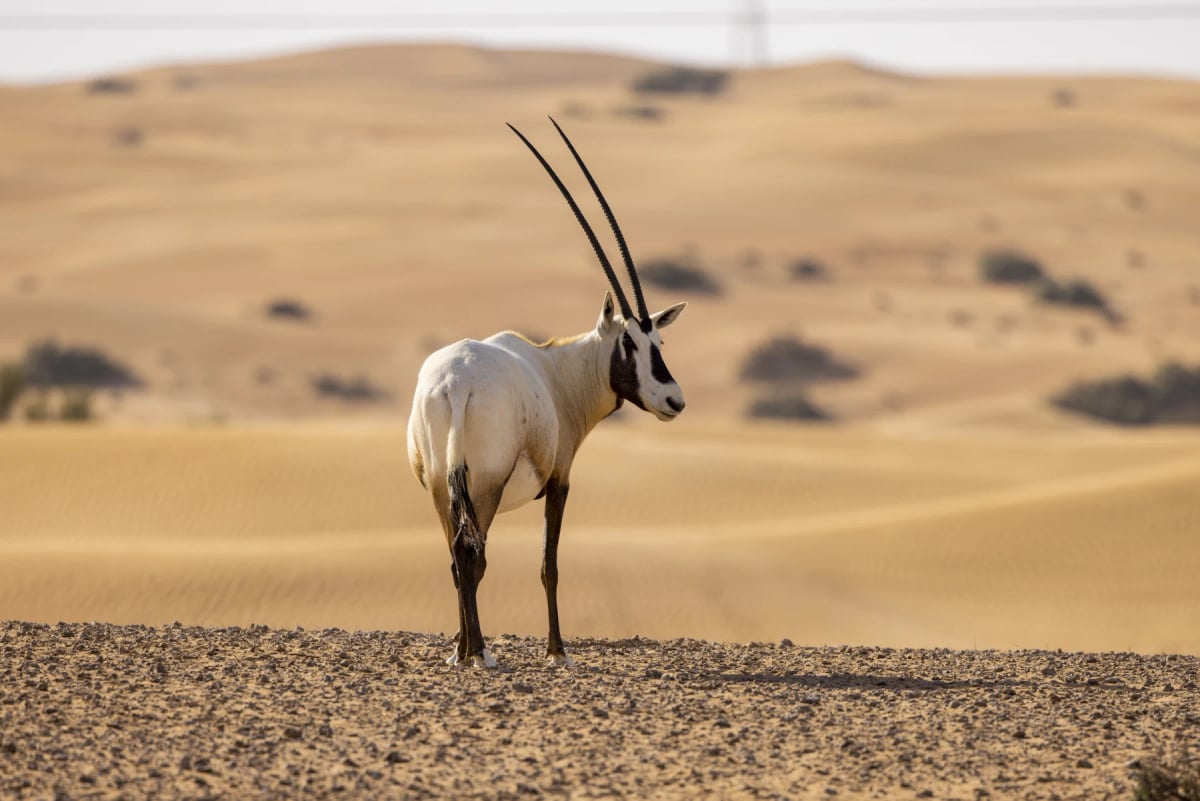
Arabian Oryx in the wild
Type:Mammal
Habitat:Desert and arid plains
Diet:Herbivore
IUCN status:Vulnerable

The Arabian oryx is a medium sized antelope built for life in the extreme desert conditions of the Arabian Peninsula. Its white coat reflects sunlight and helps regulate body temperature, and its long straight horns make it one of the most recognizable desert mammals in the region. Once declared extinct in the wild in 1972 following decades of unregulated hunting, the species became a symbol of conservation success after reintroduction programs restored populations across Oman, Saudi Arabia, Jordan, Israel, the UAE, and Qatar. Today it survives in protected reserves, grazing on dry grasses and shrubs and capable of going days without standing water.

Habitat and distribution

The Arabian oryx inhabits flat desert plains, gravel steppes, and sandy terrain across the Arabian Peninsula. It tolerates extreme heat and drought by seeking shade during midday, resting in depressions scraped into the ground, and shifting its body temperature to minimize water loss. The species is remarkably sensitive to rainfall, capable of detecting storms from considerable distances and moving toward areas of fresh vegetation growth. Historically it ranged across much of the Middle East, but hunting drove it to extinction in the wild by 1972. Current populations exist entirely within managed protected areas and reserves.

Diet

The Arabian oryx feeds on dry grasses, sedges, roots, and succulent plants. It is well adapted to extracting moisture from vegetation, allowing it to survive for extended periods without access to standing water. During dry seasons it shifts toward plants with higher water content, and it is known to travel long distances following rainfall to reach areas with fresh growth. When water is available, it drinks large quantities at once. This combination of behavioral and physiological adaptations makes it one of the most resilient large mammals in arid environments.
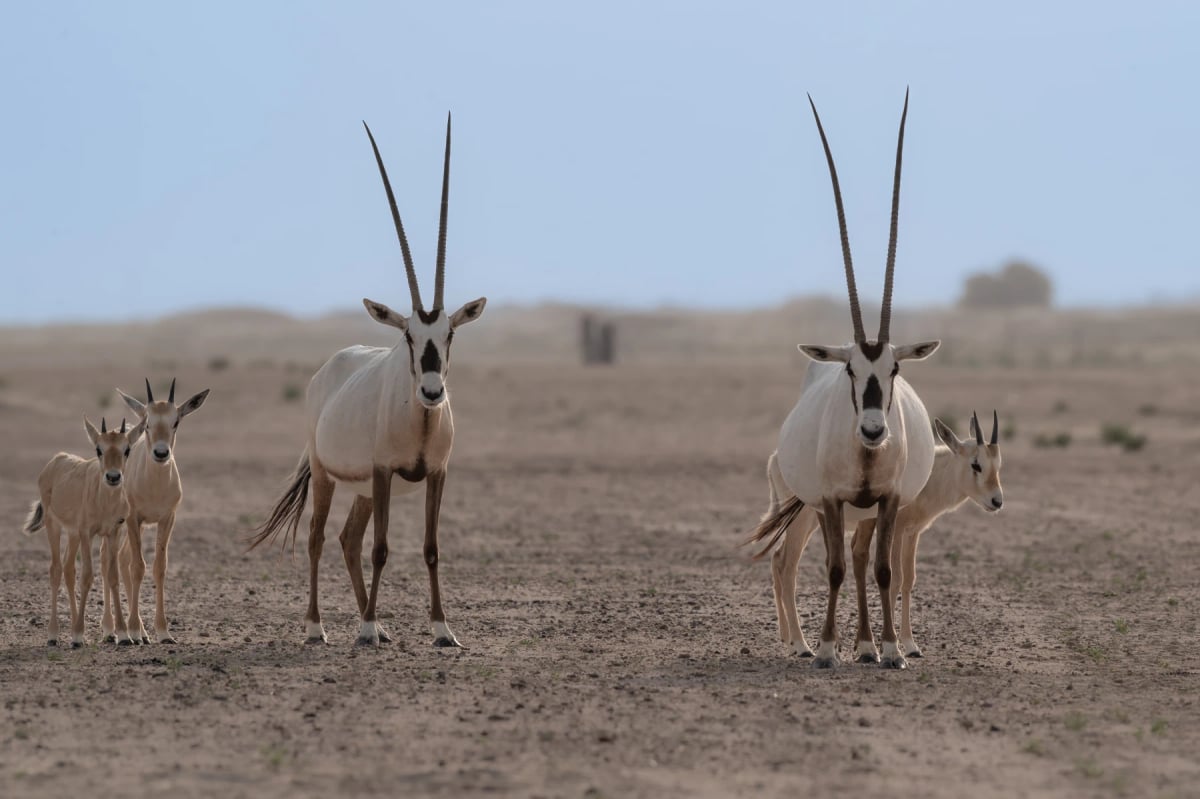
Arabian Oryx in the wild
📸 Photo by undefined undefined on iStock

Appearance

The Arabian oryx has a striking white coat that reflects sunlight and helps regulate body temperature under extreme desert heat. Both males and females carry long, gently ringed horns that can reach up to 75 centimeters in length. Its legs, chest, and lower face bear dark brown to black markings that contrast with the pale coat. When viewed in profile, the two horns overlap visually into a single line, a silhouette thought to have contributed to the ancient legend of the unicorn. The species is the national animal of Jordan, Oman, the UAE, and Qatar.
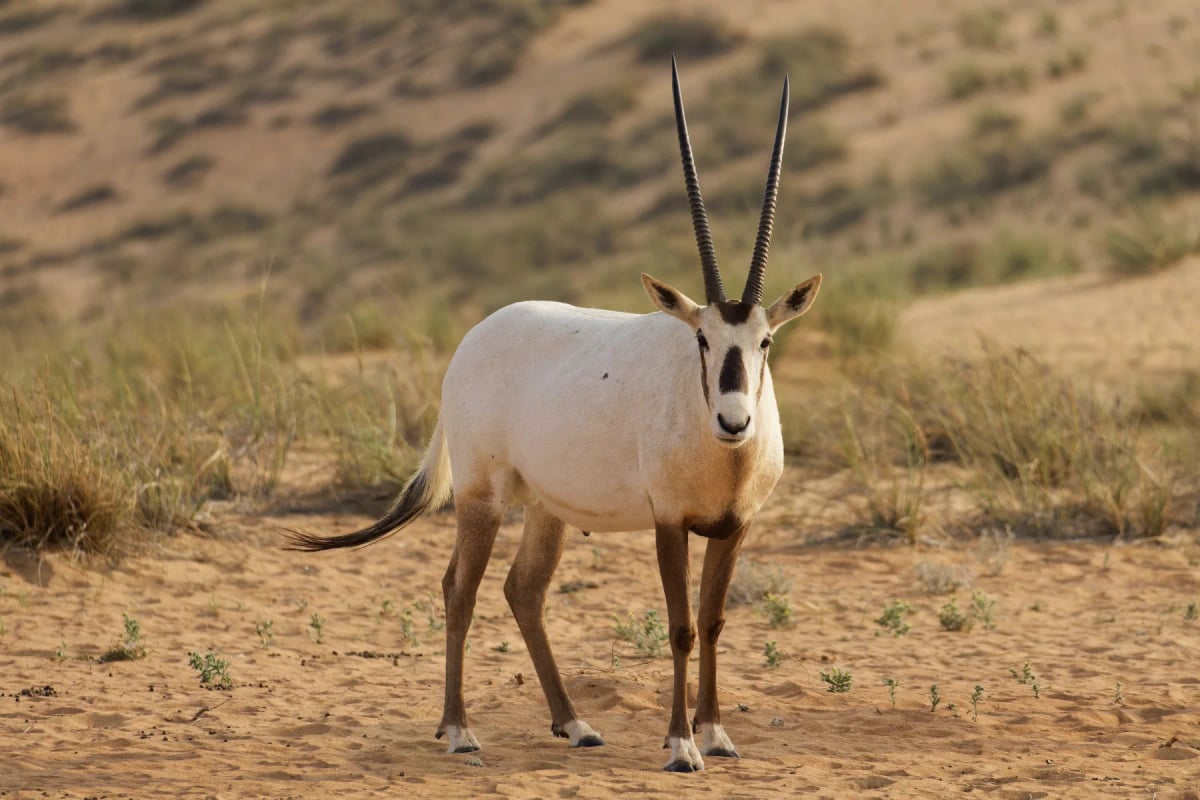
Arabian Oryx
📸 Photo by Thomas Woolsey on iStock

Behavior

Arabian oryx live in mixed herds that vary in size from a few individuals to groups of several dozen. They are highly nomadic, following rainfall across vast stretches of desert in search of new vegetation. Seasonal movements can cover hundreds of kilometers. During the hottest hours of the day, the herd rests in shaded areas or in shallow depressions dug in the ground. Dominance hierarchies within herds are maintained through displays and posturing involving the horns. Males become territorial during the breeding season. The species is diurnal but concentrates activity in the early morning and late afternoon to avoid peak heat.

Conservation

The Arabian oryx is one of the few large mammals to have been declared extinct in the wild and then successfully restored. It vanished from its natural range by 1972, when the last known wild individual was shot in Oman. A captive breeding program coordinated through the Phoenix Zoo and several institutions in Arabia preserved the species through its lowest point. Reintroductions began in Oman in 1982, followed by programs in Saudi Arabia, Jordan, Israel, the UAE, and Qatar. The IUCN downgraded its status from Extinct in the Wild to Vulnerable in 2011, reflecting a recovery spanning more than four decades.

Technical factsheet

Type:Mammal
Habitat:Desert and arid plains
Diet:Herbivore
Continents:Asia
Size:80–100 cm at the shoulder
Weight:65–80 kg
Activity:Diurnal
Social behavior:Herd
Lifespan:15–20 years in the wild

Where it is found

The Arabian Oryx can be found in places such as:
IsraelJordanOmanSaudi ArabiaUnited Arab Emirates

Frequently Asked Questions

What does the Arabian oryx eat?

The Arabian oryx is a herbivore that grazes on dry grasses, sedges, roots, and succulent plants. It can go several days without drinking by extracting water from the vegetation it eats. During dry periods it seeks out plants with higher moisture content. When rainfall triggers fresh grass growth, herds may travel long distances to reach these areas, making this behavioral flexibility a key part of how the species survives in one of the world's harshest environments.

Where does the Arabian oryx live?

The Arabian oryx is native to the Arabian Peninsula, where it inhabits flat desert plains, gravel steppes, and sandy terrain. Today it survives only in protected reserves and reintroduction sites across Oman, Saudi Arabia, Jordan, Israel, the UAE, and Qatar. It was hunted to extinction in the wild by 1972 but has been gradually restored through captive breeding and reintroduction programs that began in the 1980s. Wild populations remain small and highly dependent on active management and protected area enforcement.

Was the Arabian oryx really extinct in the wild?

Yes. The last known wild Arabian oryx was shot in Oman in 1972, making it one of the first species declared extinct in the wild in the modern conservation era. Its survival depended entirely on a captive population maintained through coordinated breeding programs, most notably at the Phoenix Zoo in the United States. Reintroductions began in Oman in 1982, and the IUCN reclassified the species from Extinct in the Wild to Endangered in 1986, then to Vulnerable in 2011 as populations continued to grow.

Why does the Arabian oryx have a white coat?

The Arabian oryx's white coat is an adaptation to desert life. White surfaces reflect sunlight more efficiently than darker ones, which reduces heat absorption during the intense midday sun. The contrast between its white body and the dark markings on its legs and face also plays a role in temperature regulation at different hours of the day. This coloration, combined with behavioral adaptations like resting in shaded areas during peak heat, allows the oryx to manage body temperature with minimal water loss.

Is the Arabian oryx dangerous to humans?

The Arabian oryx is generally not dangerous to humans. It is a herbivore and a prey species, and wild individuals typically flee when approached. However, both males and females carry long, sharp horns that can cause serious injury if the animal feels cornered or threatened. In managed or enclosed settings, handlers treat them with appropriate caution. There are no documented cases of Arabian oryx causing significant harm to people, and they coexist safely with communities near the reserves where they live.

Is the Arabian oryx the national animal of any country?

The Arabian oryx is the national animal of Jordan, Oman, the United Arab Emirates, and Qatar. This reflects the deep cultural significance the species holds across the Arabian Peninsula, where it appears in traditional poetry, heraldry, airline logos, and official emblems. Its near-disappearance from the wild in the twentieth century and its subsequent recovery gave it additional meaning as a symbol of both the fragility and resilience of the region's natural heritage.

🌍 Click any country to explore wildlife

🌍Most searched countries

1
BR
Brazil
2
RU
Russia
3
US
the United States
4
CA
Canada
5
AU
Australia
6
GL
Greenland
7
CN
China
8
IN
India
9
AR
Argentina
10
MX
Mexico

🐾Most searched animals

1
Gray Wolf
Gray Wolf
2
Lion
Lion
3
Red Fox
Red Fox
4
Leopard
Leopard
5
Golden Jackal
Golden Jackal
6
Wild Boar
Wild Boar
7
Bengal Tiger
Bengal Tiger
8
Caracal
Caracal
9
Capybara
Capybara
10
Hammerhead Shark
Hammerhead Shark
The Animal Map LogoThe Animal Map

Directory

All Countries
AfghanistanAlbaniaAlgeriaAngolaAntarcticaArgentinaArmeniaAustraliaAustriaAzerbaijanBahamasBangladeshBelarusBelgiumBelizeBeninBhutanBoliviaBosnia and HerzegovinaBotswanaBrazilBruneiBulgariaBurkina FasoBurundiCambodiaCameroonCanadaCentral African RepChadChileChinaColombiaCongoCosta RicaCote d'IvoireCroatiaCubaCyprusCzechiaDem. Rep. CongoDenmarkDjiboutiDominican RepEcuadorEgyptEl SalvadorEq GuineaEritreaEstoniaEswatiniEthiopiaFalkland Is.FijiFinlandFr. S. Antarctic LandsFranceFrench GuianaGabonGambiaGeorgiaGermanyGhanaGreeceGreenlandGuatemalaGuineaGuinea BissauGuyanaHaitiHondurasHungaryIcelandIndiaIndonesiaIranIraqIrelandIsraelItalyJamaicaJapanJordanKazakhstanKenyaKosovoKuwaitKyrgyzstanLaosLatviaLebanonLesothoLiberiaLibyaLithuaniaLuxembourgMadagascarMalawiMalaysiaMaliMauritaniaMexicoMoldovaMongoliaMontenegroMoroccoMozambiqueMyanmarNamibiaNepalNetherlandsNew ZealandNicaraguaNigerNigeriaNorth KoreaNorth MacedoniaNorwayOmanPakistanPalestinePanamaPapua New GuineaParaguayPeruPhilippinesPolandPortugalPuerto RicoQatarRomaniaRussiaRwandaS SudanSaudi ArabiaSenegalSerbiaSierra LeoneSlovakiaSloveniaSomaliaSomalilandSouth AfricaSouth KoreaSpainSri LankaSudanSurinamSwedenSwitzerlandSyriaTaiwanTajikistanTanzaniaThailandthe United StatesTimor LesteTogoTrinidad and TobagoTunisiaTurkeyTurkmenistanUgandaUkraineUnited Arab EmiratesUnited KingdomUruguayUzbekistanVenezuelaVietnamW SaharaYemenZambiaZimbabwe
Regions
AlaskaCaliforniaFloridaHawaiiNew YorkTexas
All Animals
AddaxAfrican CivetAfrican ElephantAfrican Fish EagleAfrican Forest ElephantAfrican Grey ParrotAfrican ManateeAkhal Teke HorseAlligatorAlpine IbexAlpine MarmotAmazon River DolphinAmerican BisonAmerican Black BearAnacondaAndean CondorAnteaterArabian GazelleArabian LeopardArabian OryxArctic FoxArctic HareArctic WolfArmadilloAsian ElephantAsiatic Black BearAurochsAxolotlBactrian CamelBadgerBald EagleBarbary MacaqueBarn OwlBarracudaBateleurBeaverBellbirdBeluga WhaleBengal Slow LorisBengal TigerBlack backed JackalBlack browed AlbatrossBlack MambaBlack necked SwanBlack RhinocerosBlack SwanBlackbuckBlue CraneBlue WhaleBoa ConstrictorBobcatBonoboBottlenose DolphinBrocket DeerBrown BearBrown HyenaBrown SkuaBuffaloBull SharkBushbuckCaimanCanadian LynxCape PetrelCapybaraCaracalCassowaryChameleonChamoisCheetahChimpanzeeClouded LeopardClownfishCommon DolphinCommon GenetCoquíCottonmouth SnakeCougarCowCoyoteCraneCuban HutiaCuban TrogonDama GazelleDholeDingoDromedary CamelDugongDusky LangurEagle OwlEchidnaEld's DeerElephant SealEmuEurasian LynxEurasian MagpieEuropean AdderEuropean BisonEuropean WildcatFennec FoxFiji Crested IguanaFishing CatFlamingoFossaFruit BatFur SealGaurGelada BaboonGharialGiant OtterGiant PandaGiraffeGoitered GazelleGolden EagleGolden JackalGray FoxGray WolfGreat White SharkGreater KuduGreen PheasantGreen Tree PythonGrey Crowned CraneGriffon VultureGrizzly BearGuanacoGyrfalconHammerhead SharkHareHarpy EagleHartebeestHedgehogHimalayan MonalHippopotamusHispaniolan TrogonHoney BadgerHorneroHuemulHumpback WhaleIberian LynxIguanaImpalaItalian WolfJaguarJaguarundiJapanese MacaqueJapanese SerowKarabakh HorseKeaKing CobraKing PenguinKiwiKoalaKobKomodo DragonKookaburraKoupreyLanceheadLangurLanner FalconLeopardLeopard SealLesser KiskadeeLionLlamaMacaqueMacaroni PenguinMagellanic PenguinManateeMandrillManed WolfMaraMargayMarkhorMarsh DeerMartenMeerkatMonitor LizardMonk ParakeetMooseMouflonMountain GazelleMountain GorillaMugger CrocodileMusk OxMute SwanNarwhalNightingaleNile CrocodileNubian IbexOcelotOkapiOpossumOrangutanOrcaOryxOstrichPalmchatPampas DeerPanamanian Golden FrogPangolinParrotfishPeregrine FalconPersian LeopardPlatypusPolar BearProboscis MonkeyPronghornPrzewalski's HorsePuffinPygmy HippoRaccoonRaggiana Bird of paradiseRattlesnakeRed billed StreamertailRed DeerRed FoxRed Howler MonkeyRed KangarooRed PandaRed SquirrelReef SharkReindeerResplendent QuetzalReticulated PythonRheaRing tailed LemurRiver OtterRoe DeerRoosterRufous bellied ThrushSable AntelopeSaigaSaker FalconSambar DeerSand GazelleScarlet IbisScarlet MacawSea LionSea SnakeSea TurtleSealSecretary BirdServalSiamangSiberian TigerSlothSnow LeopardSoemmerring's GazelleSouth American Gray FoxSouthern CaracaraSouthern LapwingSouthern Red MuntjacSouthern Right WhaleSpectacled BearSperm WhaleSpider MonkeySpotted HyenaSpringbokSquirrel MonkeySri Lankan ElephantSteppe EagleStorkStriped HyenaSun BearTakinTapirTasmanian DevilTawny EagleThe TurulThomson's GazelleTiger SharkTiger SnakeTopiTornjakToucanTree KangarooTrumpeter SwanTuataraTurpialTurquoise browed MotmotVicuñaWallabyWalrusWarthogWater BuffaloWestern Lowland GorillaWhale SharkWhite backed VultureWhite faced CapuchinWhite StallionWhite tailed DeerWhite tailed EagleWhite WagtailWild BoarWild DogWildebeestWolverineWombatYakYellow AnacondaZebra
AboutPrivacy PolicyTerms & ConditionsCookies Policy
Change language