Water Buffalo
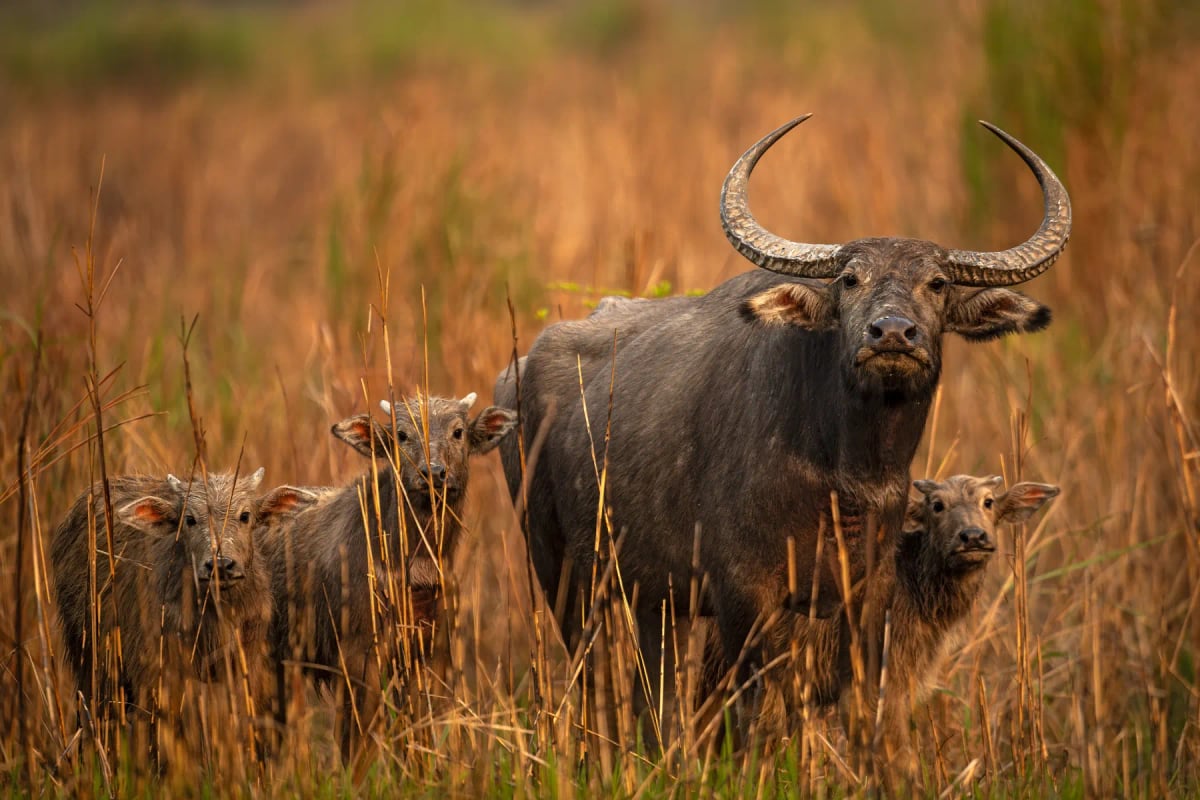
The wild water buffalo is one of the largest members of the cattle family and one of the rarest large mammals in Asia. True wild populations survive only in scattered wetlands across India, Nepal, Bhutan, Cambodia, Myanmar, and Thailand, with the biggest stronghold in Kaziranga National Park in Assam. Adults can weigh over 1,000 kg and carry a pair of sweeping horns that curve outward and then upward, the longest of any living bovid. They spend much of the day resting in shallow water or rolling in mud, which keeps them cool and protects their skin from insects. Herds are led by older females, while adult males mostly live alone or in small bachelor groups. The species is Endangered, threatened above all by crossbreeding with domestic buffalo, which erodes the wild gene pool.
Habitat and range
Wild water buffalo favour the tall grasslands, floodplains, and wetlands that stretch across parts of South and Southeast Asia. Their range has shrunk dramatically over the past century, and true wild populations now survive only in isolated pockets of India, Nepal, Bhutan, Cambodia, Myanmar, and Thailand. The largest and most secure concentration is found in and around Kaziranga National Park in Assam, India, where seasonally flooded plains provide exactly the mix of water, mud, and dense grass these animals need. Smaller groups persist in places like Manas National Park and a handful of protected areas in Cambodia and Myanmar. They rarely stray far from permanent water sources, which are essential not just for drinking but for the daily wallowing that keeps them comfortable through the heat.
Diet
Grasses make up the bulk of the wild water buffalo's diet, particularly the tall, coarse species that grow along riverbanks and in seasonally flooded meadows. They are well suited to grazing in wet, boggy ground that many other large herbivores avoid, and they will also browse on leaves, herbs, and aquatic plants when grasses are scarce. Feeding tends to happen in the cooler hours of early morning and late afternoon, while the middle of the day is mostly spent resting in water or mud. This pattern helps them manage heat. Because they consume such large volumes of vegetation each day, wild buffalo play a real role in shaping the structure of the grassland habitats they live in, keeping plant growth in check and opening up space for other species.
Domestic vs wild
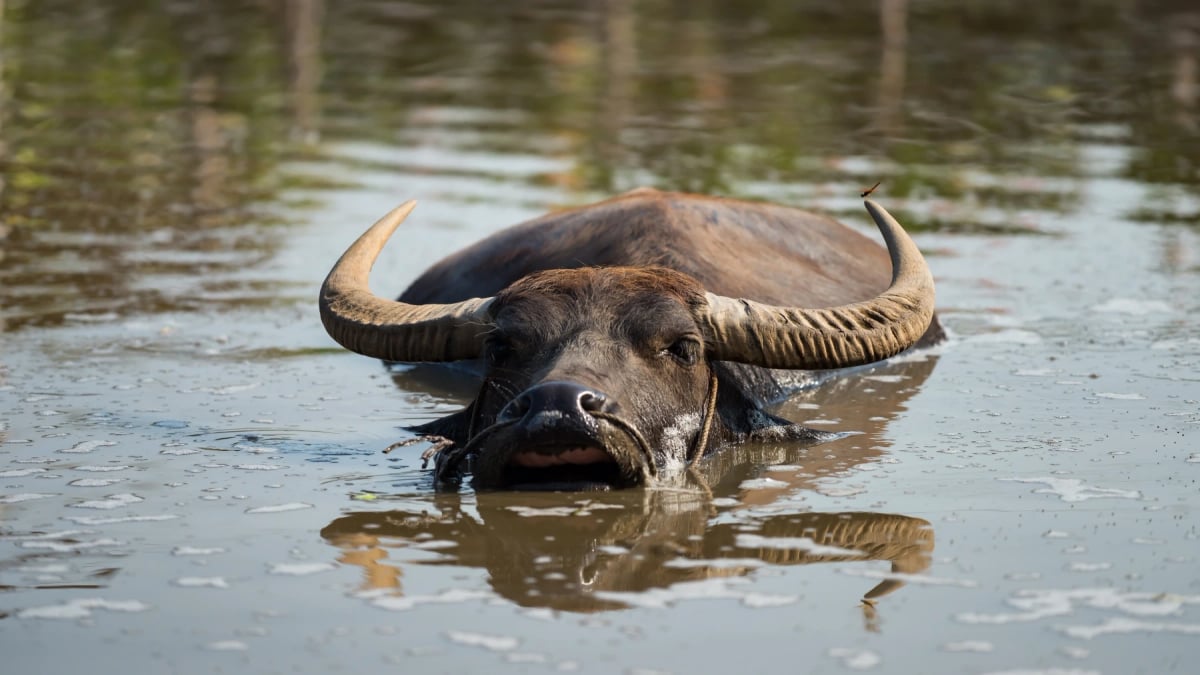
People across Asia began domesticating water buffalo at least 5,000 years ago, and today there are an estimated 200 million domestic animals used for ploughing fields, hauling loads, and producing milk. Despite looking similar, wild and domestic buffalo are genetically distinct, and the differences go beyond appearance. Wild buffalo are larger, more powerfully built, and carry much longer horns. Their behaviour is also far more cautious and alert. The problem is that domestic animals frequently wander into wild buffalo territory, and interbreeding occurs. The offspring of these pairings are hybrids, and over time this erodes the genetic identity of the wild population. Most herds studied today show at least some signs of hybridisation, making the identification and protection of genetically pure wild animals one of the central challenges in conservation work.
Behavior and herds
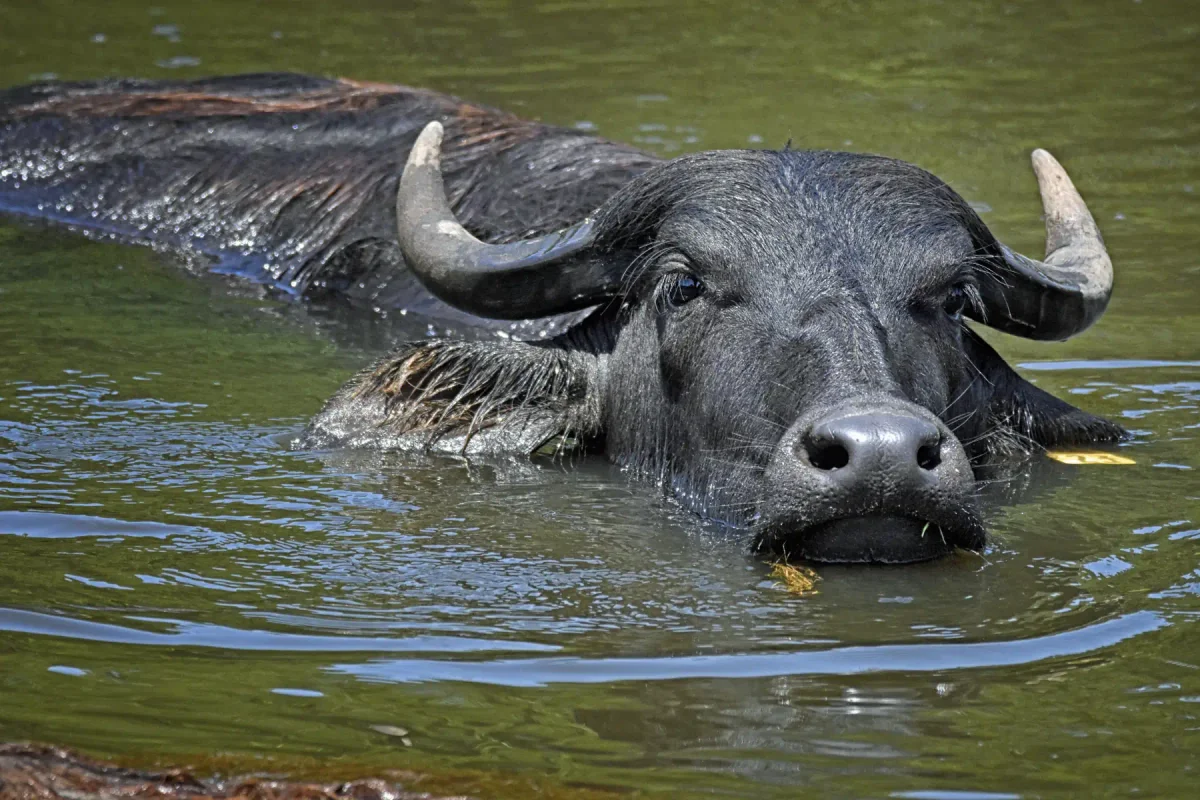
Female wild water buffalo are the backbone of the herd. Groups typically consist of adult females, their calves, and younger animals, all guided by older, experienced cows. Adult males live mostly apart, either alone or in small groups of other bachelors, and only join female herds during the breeding season. One of the most recognisable behaviours of this species is wallowing. Buffalo spend long periods each day standing or lying in shallow water and rolling in mud, which cools their large bodies and forms a protective layer on the skin that keeps biting insects away. They are most active in the early morning and around dusk, retreating to water during the hottest part of the day. Despite their calm appearance, wild buffalo can be unpredictable and are considered among the most dangerous animals in Asia when threatened.
Threats
Several serious pressures bear down on wild water buffalo at once. Hybridisation with domestic animals is widely considered the single greatest threat, as it gradually replaces the wild gene pool with domestic genetics. Alongside this, loss of habitat remains a constant problem. Wetlands and floodplain grasslands across South and Southeast Asia have been converted to farmland, reducing the space available for wild herds to live and move. Poaching, although less reported than in some other large mammals, does occur for meat and trophies. In many areas, wild buffalo also have to compete with domestic livestock for the same grazing land, and this contact increases the risk of disease transmission. Diseases carried by cattle and domestic buffalo, including foot and mouth disease and bovine tuberculosis, can spread to wild populations and cause significant harm.
Conservation
The IUCN lists the wild water buffalo as Endangered, and the total number of genetically pure wild individuals is believed to be fewer than 4,000. Protected areas are the foundation of efforts to keep the species alive. Kaziranga National Park in India holds the largest known population and has proven that strong protection can support a stable herd over time. Beyond guarding land, conservationists are working to identify which animals are truly wild through genetic testing, since the presence of hybrids complicates population counts and management decisions. Community involvement is increasingly seen as essential, particularly in buffer zones where wild animals and farming communities live close together. Reducing the movement of domestic livestock into wild buffalo habitat, improving veterinary surveillance, and raising awareness in local communities are all part of the broader effort to secure a future for this species.
Where it is found
The Water Buffalo can be found in places such as:
Researched and written by Juan Pablo. Sources: IUCN Red List, scientific literature and regional field guides. Last updated: .
Technical factsheet

Frequently Asked Questions
How big do wild water buffalo get?
Wild water buffalo are among the largest members of the cattle family. Adults can weigh over 1,000 kg, and their horns are the longest of any living bovid, curving outward and then sweeping upward. Males are generally larger than females. Their sheer size makes them one of the most imposing animals in Asia, and they are noticeably bigger and more powerfully built than domestic buffalo.
Why do water buffalo wallow in mud?
Wallowing in mud serves two important purposes. First, it helps these large animals cool down, since they have relatively few sweat glands and struggle in intense heat. Second, the mud dries on their skin and acts as a natural barrier against biting insects. You will often find wild buffalo standing in shallow water or caked in mud during the hottest part of the day for exactly these reasons.
What do wild water buffalo eat?
Grasses are the foundation of their diet, especially the tall, coarse varieties that grow in wetlands and along riverbanks. They will also eat leaves, herbs, and aquatic plants when grass is harder to find. Wild buffalo are comfortable grazing in boggy, waterlogged ground that most other large plant eaters tend to avoid. They feed mainly in the early morning and late afternoon, resting near water during midday heat.
Are wild water buffalo dangerous?
Yes, they can be. Despite their calm, slow appearance, wild water buffalo are considered among the most dangerous animals in Asia. When they feel threatened, they can react with speed and force that catches people off guard. Their massive size and large horns make a charge extremely hazardous. Wildlife rangers and researchers working near these animals treat them with a great deal of caution and respect at all times.
How many wild water buffalo are left in the world?
The total number of genetically pure wild individuals is believed to be fewer than 4,000, which is why the species is listed as Endangered by the IUCN. The largest surviving population lives in and around Kaziranga National Park in India. Smaller groups exist in Nepal, Bhutan, Cambodia, Myanmar, and Thailand. Counting them accurately is complicated by the presence of hybrids, which can look very similar to pure wild animals.
What is the difference between wild and domestic water buffalo?
Wild water buffalo are larger, more muscular, and carry much longer horns than their domestic relatives. Their behaviour is also strikingly different. Wild animals are alert, cautious, and quick to flee or defend themselves. Domestication over thousands of years has made farm buffalo far calmer and smaller in build. Genetically they are distinct, though interbreeding between the two is a major conservation problem that threatens the survival of the wild population.
Who leads a wild water buffalo herd?
Herds are led by older, experienced females. A typical group is made up of adult cows, their calves, and younger animals that follow the lead cow's decisions about where to move, feed, and rest. Adult males live separately for most of the year, either on their own or in small groups with other males. They only join the female herds during the breeding season, after which they return to their solitary or bachelor lifestyle.