Bull Shark
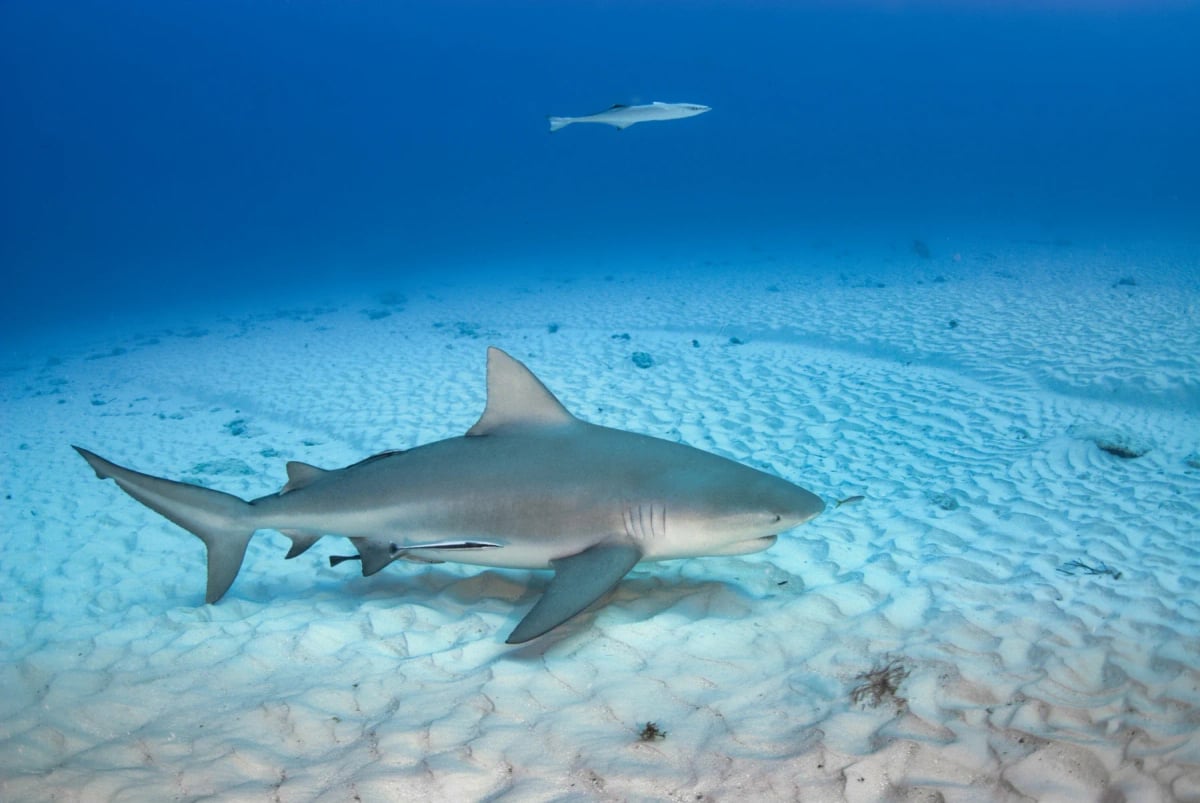
The bull shark (Carcharhinus leucas) is a stocky, powerful predator of warm coastal waters, estuaries and rivers across much of the tropical and subtropical world. It stands apart from nearly all other sharks through its ability to control the balance of salt and water in its body, which lets it live in completely fresh water. Bull sharks have been recorded about 4,000 kilometers up the Amazon in Peru, more than 1,000 kilometers up the Mississippi, and in Lake Nicaragua. Females are larger than males and can reach about 3.5 meters. They are opportunistic hunters that take bony fish, rays, smaller sharks, turtles and even seabirds. Because they hunt in shallow, often murky water close to shore, where people swim and fish, bull sharks are one of the three species most often involved in unprovoked bites on humans, along with the great white and the tiger shark. The IUCN lists the species as Vulnerable since 2021.
Where are bull sharks found?
Few sharks use as wide a range of places as the bull shark. It lives in warm coastal seas, estuaries, lagoons and rivers throughout the tropical and subtropical Atlantic, Pacific and Indian Oceans: along the Gulf of Mexico and Florida, the Caribbean and the Atlantic coast of South America down to southern Brazil, the Pacific coast from Mexico to Peru, West Africa from Senegal to Angola, the east coast of Africa from South Africa to Somalia, the Persian Gulf, South and Southeast Asia, and northern and eastern Australia and the islands of the southwest Pacific. Unlike almost every other shark, it moves freely between salt and fresh water, and it has been recorded about 4,000 kilometers up the Amazon, far up the Zambezi and the Ganges, and in Lake Nicaragua. It prefers shallow, murky water less than 30 meters deep, close to river mouths and busy coastlines, which is why it so often shares the water with people.
Diet
Opportunism defines the bull shark's approach to feeding. Its diet is one of the broadest among coastal sharks, encompassing bony fish, stingrays, other elasmobranchs, sea turtles, dolphins, crustaceans, and occasionally seabirds. Juveniles typically concentrate on smaller fish and invertebrates in estuarine nursery areas, while adults pursue larger prey in both marine and freshwater environments. Bull sharks often hunt in shallow, murky water where visibility is poor, relying on their well-developed electroreceptors and lateral line system to detect prey. They have also been documented scavenging carrion when the opportunity arises. Studies on stomach contents have shown considerable variation in diet depending on geography, season, and the availability of local prey, confirming that this species adapts its foraging behavior to whatever resources its habitat provides.
The freshwater shark: living in rivers and lakes
What really sets the bull shark apart from almost every other shark is its ability to thrive in fresh water. Sea sharks keep their blood about as salty as seawater by holding on to urea and salts. In a river, water would flood into their bodies, so the bull shark adjusts: its kidneys produce large amounts of dilute urine, its rectal gland, which normally gets rid of salt, slows down, and its gills take up salt from the water. This lets it move from the sea to fresh water and back within hours. Juveniles use rivers and estuaries as nurseries, where large predators are scarce. The species has lived for decades in Lake Nicaragua, reaching it up the San Juan River, and in Australia a group of bull sharks survived for about 17 years in a golf course lake at Carbrook, near Brisbane, after a flood trapped them there in the 1990s.
Why are bull sharks so dangerous?
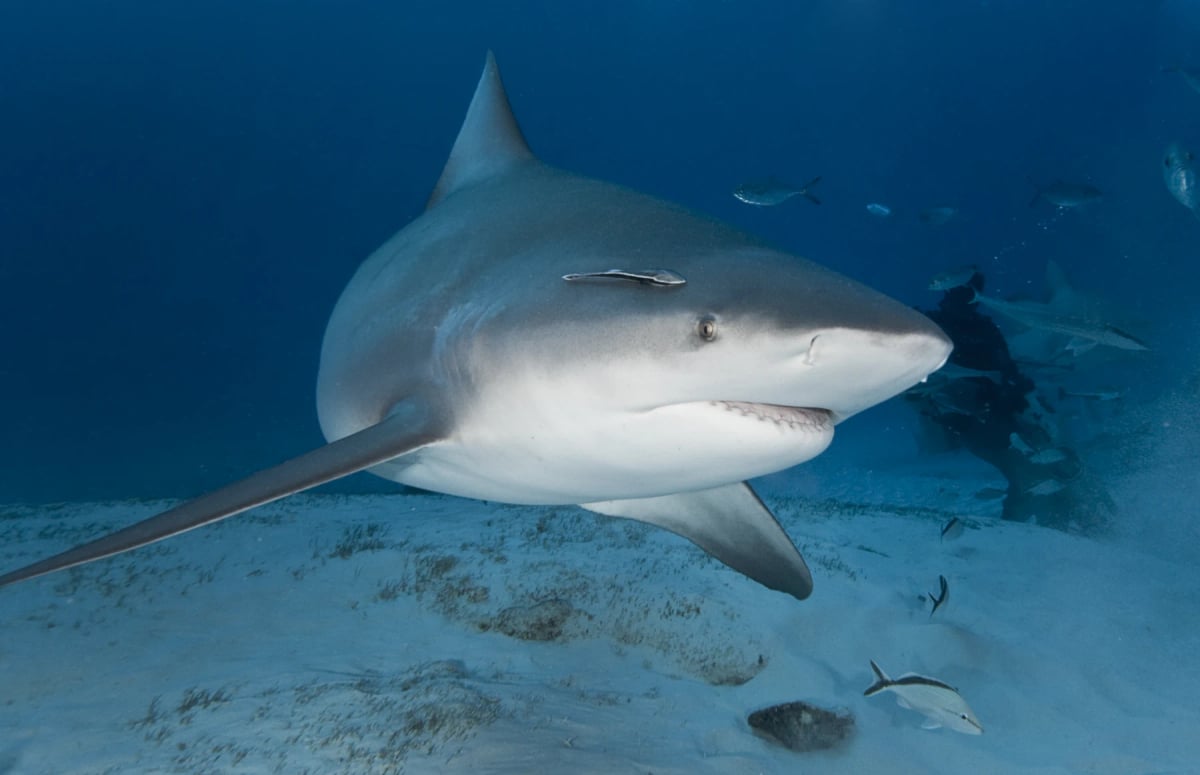
Along with the great white and the tiger shark, the bull shark is one of the three species most often involved in unprovoked bites on people. The main reason is where it lives: it hunts in the same shallow, murky coastal waters, river mouths and rivers where people swim, wade, surf and fish, so encounters are far more likely than with most large sharks. Poor visibility also means a bull shark may bite a hand or foot by mistake while investigating something that moves like prey. It is also bold and territorial, and it often bumps an object before biting. Because it lives along densely populated tropical coasts and rivers in many countries with little record keeping, many incidents are never reported, which makes the true number hard to know. Even so, bites are rare compared with how often people and bull sharks share the water, and most can be avoided by not swimming at dusk, in murky water or near river mouths after heavy rain.
Conservation
The IUCN moved the bull shark from Near Threatened to Vulnerable in 2021, after estimating that its global population has declined by about 30 to 49 percent over the last three generations, roughly 68 years. The trend is not the same everywhere: numbers are increasing in the northwest Atlantic, off the United States, where fishing is managed, but falling in many tropical regions. Commercial and artisanal fisheries are the main threat, catching bull sharks for their fins, meat, liver oil and skin, or as bycatch in nets set for other fish. Shark control nets and drumlines on some beaches also kill them. Habitat loss adds to the problem, as the estuaries and rivers that serve as nurseries are damaged by coastal development, dams and pollution. Because females mature late, around 15 to 20 years, and have small litters after a pregnancy of about a year, populations recover slowly.
Where it is found
The Bull Shark can be found in places such as:
Researched and written by Juan Pablo. Sources: IUCN Red List, scientific literature and regional field guides. Last updated: .
Technical factsheet

Frequently Asked Questions
Is a shark a fish or a mammal?
Sharks are fish, not mammals. The bull shark, like all sharks, breathes with gills, has a skeleton made of cartilage instead of bone, and is cold blooded, taking the temperature of the water around it. Mammals such as whales and dolphins breathe air with lungs and nurse their young with milk. The confusion comes partly from the fact that many sharks, including the bull shark, give birth to live young instead of laying eggs, something people usually associate with mammals.
Why is it called a bull shark?
It is named for its short, broad, blunt snout and stocky, heavy body, which give it the look of a bull, and for its habit of head butting prey before biting. Its local names are just as varied as its range: it is called the Zambezi shark in southern Africa, the Lake Nicaragua shark in Central America, the Ganges shark in India, although that name properly belongs to a different, rare species, and the Swan River whaler in Western Australia.
Where can you dive with bull sharks?
Several places offer regular, guided dives with bull sharks. Off Playa del Carmen, in Mexico, pregnant females gather from about November to March. In Fiji, the Shark Reef Marine Reserve in Beqa Lagoon is famous for its large bull sharks. Other well known sites are Protea Banks and Aliwal Shoal in South Africa, the Bat Islands in Costa Rica's Guanacaste, and Playa Santa Lucía in Cuba. Responsible operators keep strict rules, and diving with them in clear water is far safer than swimming in murky river mouths.
Can bull sharks live in lakes?
Yes. The best known case is Lake Nicaragua, the largest lake in Central America, which bull sharks reach by swimming about 190 kilometers up the San Juan River from the Caribbean, jumping rapids along the way like salmon. Scientists once thought they were a separate lake species, until tagging showed they move between the lake and the sea. Commercial fishing in the 1960s and 1970s reduced them sharply. In Australia, bull sharks also lived for years in a golf course lake at Carbrook, near Brisbane, after a flood trapped them there.
Can bull sharks live in fresh water?
Yes, and this is one of the most remarkable things about them. Bull sharks can control the salt and water balance in their bodies well enough to live in completely fresh water. They have been recorded about 4,000 kilometers up the Amazon, at Iquitos in Peru, more than 1,000 kilometers up the Mississippi, and far up the Zambezi and the Ganges, and they have lived for decades in Lake Nicaragua. Their kidneys, rectal gland and gills adjust as salinity changes, making them unique among large sharks.
What does the bull shark eat?
Bull sharks are opportunistic predators with one of the broadest diets among coastal sharks. They feed on bony fish, stingrays, other sharks, sea turtles, dolphins, crustaceans, and occasionally seabirds. Young bull sharks tend to focus on smaller fish and invertebrates in estuaries, while adults go after larger prey. They hunt mainly in murky, shallow water, relying on their electroreceptors and lateral line to detect prey when visibility is poor.
How big do bull sharks get?
Bull sharks are stocky and powerfully built. Females tend to be notably larger than males, which is a common pattern in sharks. Adult females typically reach around 2.4 meters in length and can weigh over 130 kilograms, while males are generally closer to 2.1 meters. Some individuals have been recorded at lengths approaching 3.5 meters, though such sizes are uncommon. Their compact, muscular build makes them among the more physically imposing coastal sharks.
Are bull sharks endangered?
The bull shark is not Endangered, but it is threatened: the IUCN moved it from Near Threatened to Vulnerable in 2021, after estimating a global decline of 30 to 49 percent over about 68 years. It is caught for its fins, meat, liver oil and skin, and as bycatch in nets set for other fish, and its river and estuary nurseries are being lost to coastal development and dams. Populations are growing again off the United States, where fishing is managed, showing that protection works.
How do bull sharks reproduce?
Bull sharks give birth to live young after a gestation period of around twelve months. Litters are typically small, ranging from one to thirteen pups, with an average closer to the lower end of that range. Females use shallow estuaries and river systems as nursery areas, where the young find some protection from larger predators. Pups are born at around 70 centimeters in length and must fend for themselves from birth, as there is no parental care after delivery.