Gelada Baboon
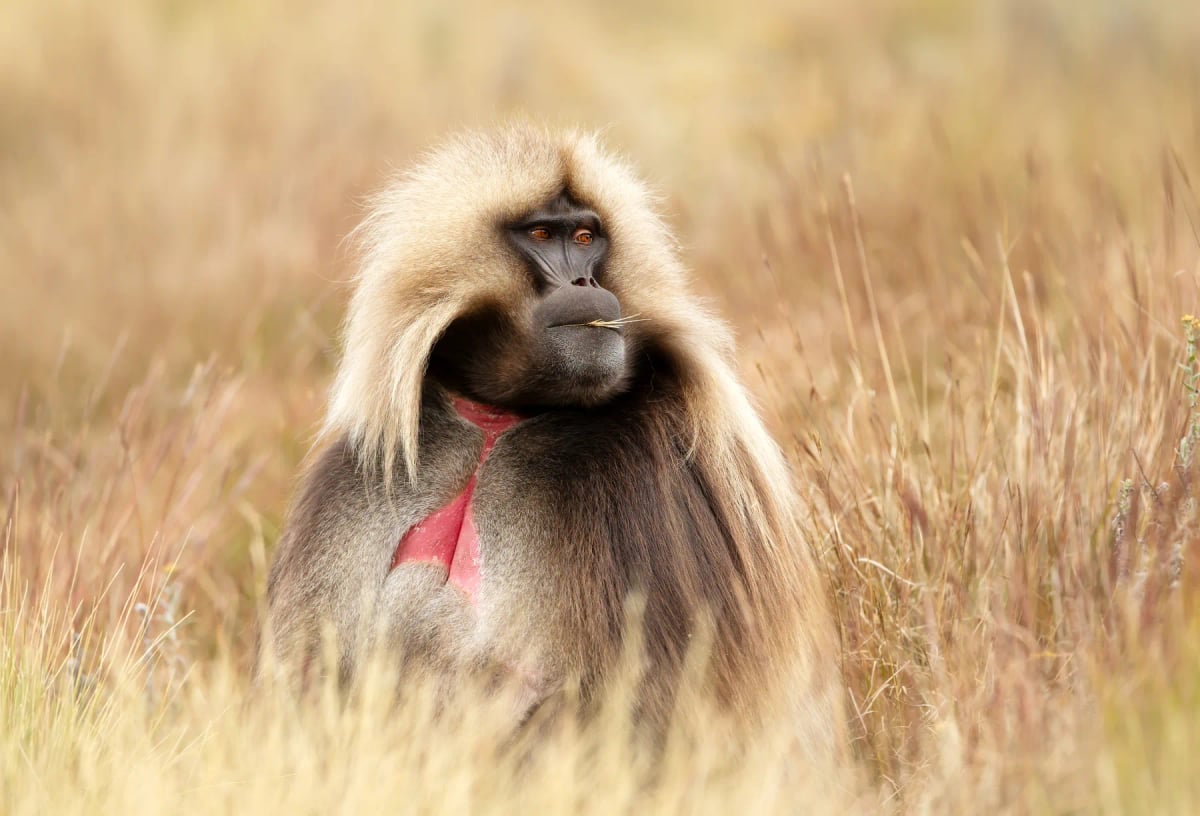
The gelada (Theropithecus gelada), often called the gelada baboon although it is not a true baboon, is a primate found nowhere else on Earth but the Ethiopian Highlands, where it roams alpine grasslands and cliff faces at elevations above 1,800 meters. Often called the bleeding heart monkey, it carries a striking bare red patch on its chest that serves as a social signal. It holds the distinction of being the only primate that relies almost entirely on grass for its diet, using nimble fingers to pluck individual blades with remarkable precision. Geladas organize themselves into one of the most layered social systems seen in any primate. Small units of one male and several females slot into larger bands, which in turn gather into herds that can number several hundred individuals. Habitat loss from expanding farmland and livestock grazing puts growing pressure on their mountain stronghold, and local populations are shrinking in some parts of their range.
Is the gelada a baboon?
Not quite, despite the common name gelada baboon. True baboons belong to the genus Papio, while the gelada is the only living member of its own genus, Theropithecus. The two are close relatives in the same tribe of African monkeys and look alike in size, shape and life on the ground, which is why the name stuck, but they have followed separate paths for several million years. The gelada is the last survivor of a once very successful group. Fossil relatives of the genus spread across Africa and reached as far as Spain and India, and one of them, Theropithecus oswaldi, was a giant grass eater far larger than today's gelada. Today only the gelada remains, confined to the highlands of Ethiopia. It is also called the bleeding heart monkey because of the red patch on its chest, and many sources simply call it the gelada monkey.
How big is a gelada?
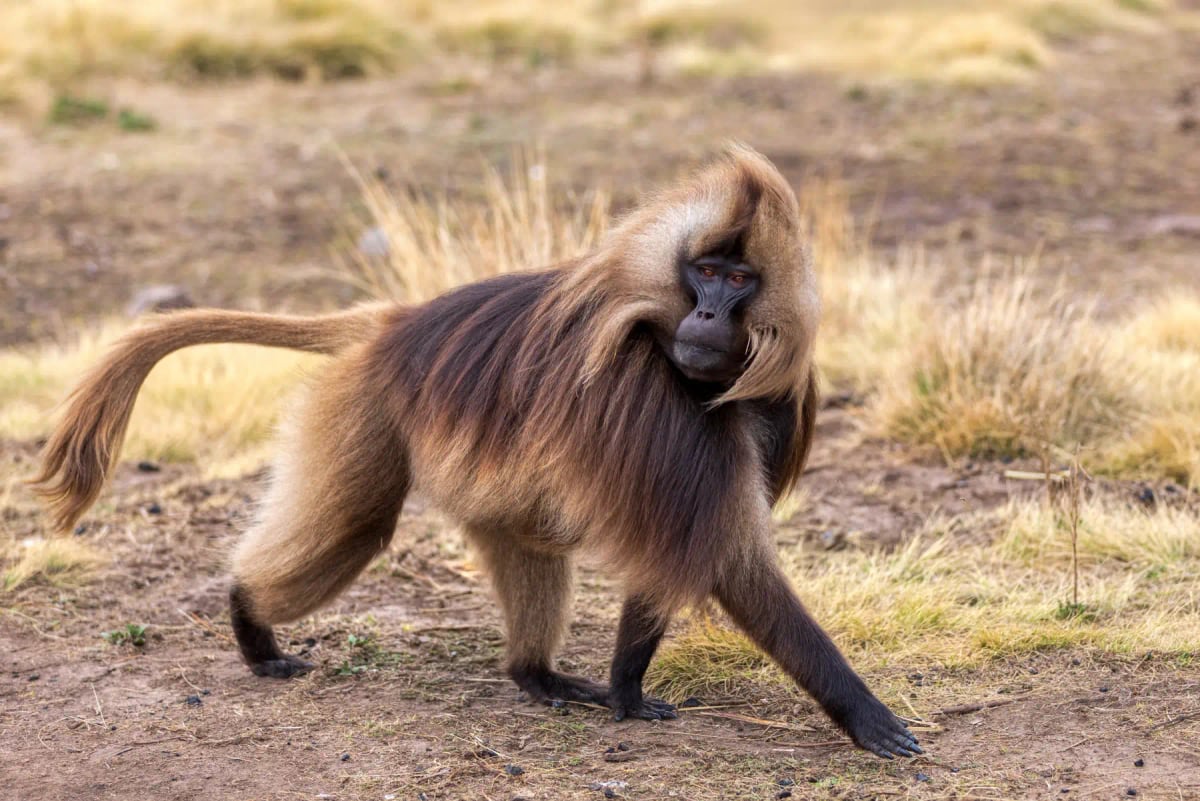
Geladas are large, solidly built monkeys with a striking difference between the sexes. Adult males weigh about 18 to 21 kilograms and carry a long, heavy cape of brown hair over the shoulders and back, which makes them look even bigger. Females weigh about 11 to 14 kilograms and have shorter hair. The body measures roughly 50 to 75 centimeters, and the tail adds another 30 to 50 centimeters, ending in a tuft. Both sexes have a short muzzle, small eyes set deep under a heavy brow, and short, strong fingers made for plucking grass. The most famous feature is the bare patch of skin on the chest, shaped like an hourglass. In dominant males it is bright red; in females it is surrounded by small bumps like beads that swell when they are ready to mate. Males also have long canine teeth, used mostly for display.
Where do gelada baboons live?
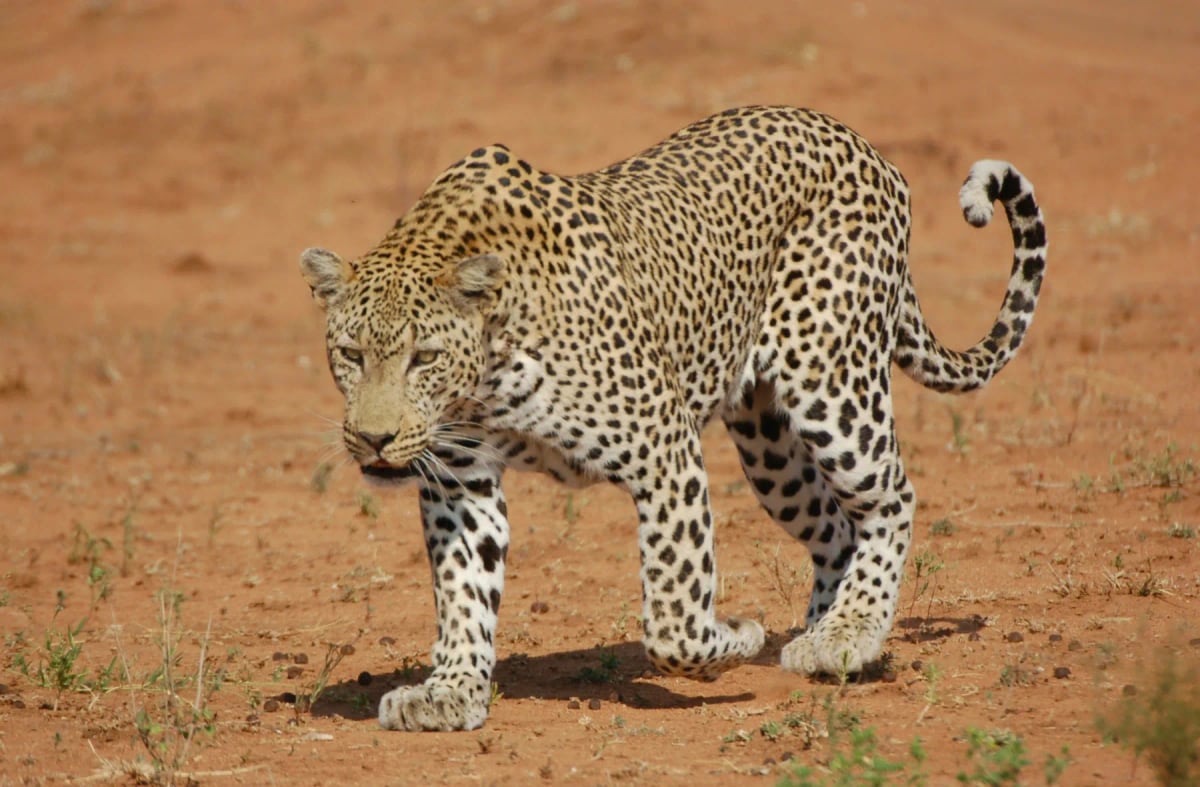
Geladas are found nowhere outside the Ethiopian Highlands, making them one of the most geographically restricted primates on the planet. They occupy alpine grasslands, rocky plateaus, and sheer cliff edges at elevations typically ranging from 1,800 to over 4,400 meters above sea level. The Simien Mountains and the Guassa Plateau are among their most important strongholds. During the day, groups move across open grassland to graze, covering considerable ground in search of fresh growth. As evening approaches, they retreat to the vertical faces of gorges and escarpments, where the steep rock provides safety from predators such as leopards, spotted hyenas and feral dogs. This daily rhythm between open plateau and cliff edge is one of the most distinctive features of gelada life.
What do gelada baboons eat?
Among all primates, the gelada stands alone as a dedicated grazer. Grass makes up roughly 90 percent of its diet throughout the year, and it feeds with remarkable efficiency, using its short, nimble fingers to pinch individual blades close to the root. This technique strips a great deal of nutrition from each small mouthful. The preferred grasses belong to genera such as Festuca and Poa, which grow abundantly across highland meadows. When the dry season reduces available green growth, geladas broaden their diet to include roots, rhizomes, seeds, and flowering plants. They occasionally eat insects too, though in small amounts. Because they rely on low quality food eaten in enormous quantities, geladas spend more hours feeding each day than almost any other primate.
Social structure
Few animals on Earth organize their social lives with as many layers as the gelada. The basic unit is a reproductive unit, made up of one dominant male, several females, and their young. Related females form the stable core of these units and often remain together for life. Several reproductive units, along with bachelor males, join together to form a band. Bands in turn come together into herds that can contain several hundred to over a thousand individuals. Despite these large gatherings, each reproductive unit keeps its own internal hierarchy and identity. Females largely control their own social bonds, and a dominant male can be ousted by a coalition of females if he loses their support. This gives gelada society a structure that is unusual among primates.
Behavior
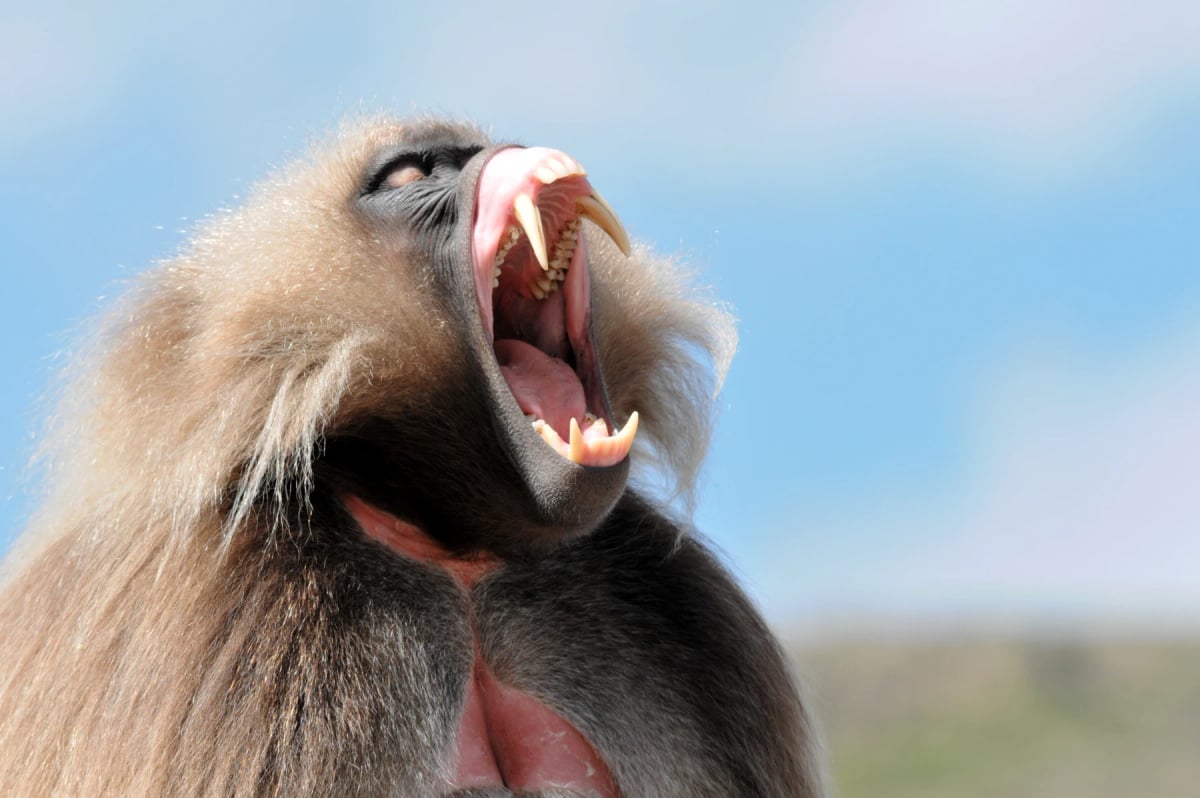
Communication sits at the heart of gelada daily life. Both males and females produce an exceptionally varied range of vocalizations, including lip smacks, grunts, and calls that shift in tone and rhythm in ways that have drawn comparisons to human speech patterns. Researchers have noted that geladas modify their calls depending on social context, which points to a level of vocal flexibility rare among non-human primates. The bare red chest patch, present in both sexes but more vivid in males, changes in color intensity depending on hormonal state and plays a key role in signaling readiness to mate or social rank. Males also flip back their upper lip to expose their gums, a dramatic threat display that shows off their pale gums and long canines. Grooming between females reinforces bonds within reproductive units and keeps group life running smoothly.
Geladas and Ethiopian wolves
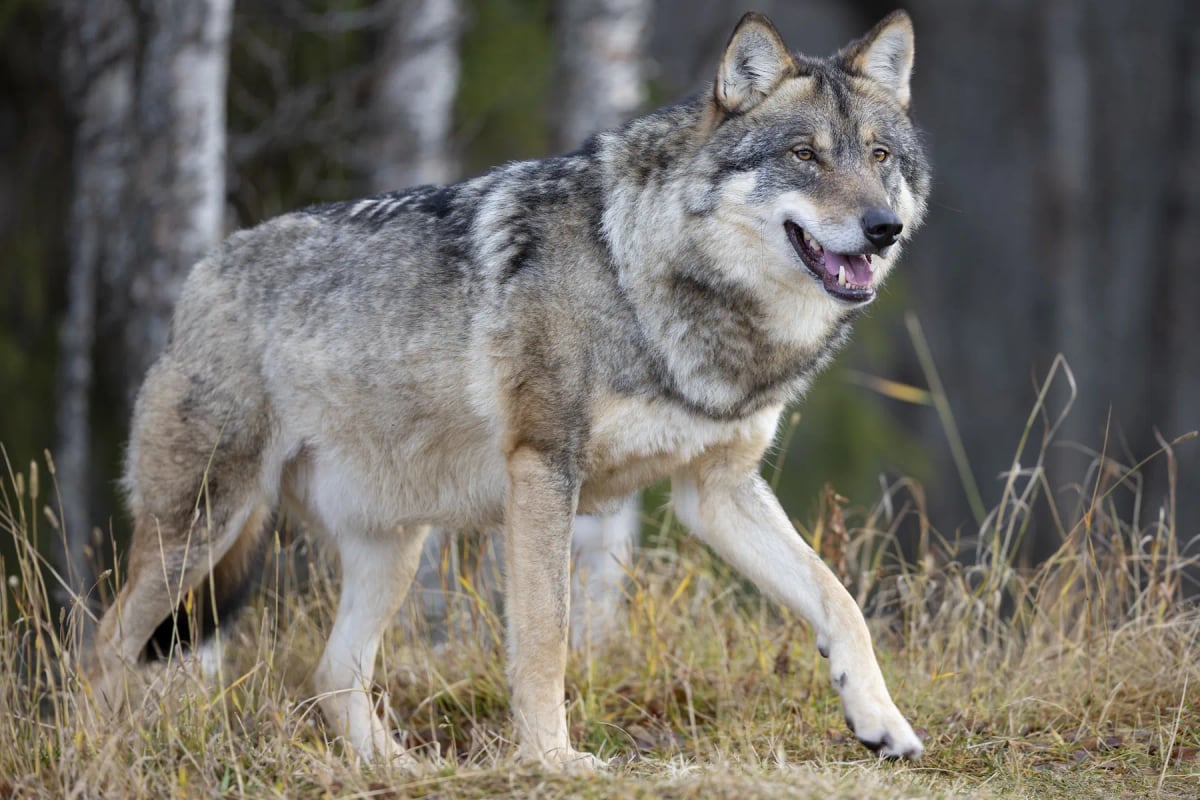
One of the most surprising partnerships in African wildlife happens on the Guassa Plateau, where geladas graze side by side with the Ethiopian wolf, one of the rarest canids on Earth. A study published in 2015 found that the wolves walk calmly among gelada herds and that the monkeys mostly ignore them, even though young geladas would be an easy meal. The wolves are after rodents, and they hunt them far better among the monkeys: they caught their prey in about 67 percent of attempts inside a gelada herd, against about 25 percent when hunting alone. Researchers think the grazing geladas either flush rodents out of the grass or distract them. The wolves seem to keep the arrangement working by almost never attacking the young monkeys, while the geladas run from dogs, which do hunt them. It is a rare example of two very different animals tolerating each other for mutual benefit.
Are gelada baboons endangered?
Not officially. The IUCN lists the gelada as Least Concern, but it also describes its population as decreasing, and there has been no full count in decades. An aerial survey of the central Ethiopian highlands in the 1970s estimated about 440,000 geladas; by 2008 experts put the total at around 200,000, a rough estimate rather than a census, after droughts and the steady loss of highland grassland. In the Simien Mountains, one of the main strongholds and a UNESCO World Heritage Site, a 2006 survey counted about 4,260 to 4,560 geladas in and around the park. The main threats are the spread of farmland up the mountain slopes and heavy grazing by livestock on the meadows geladas depend on. In some areas farmers see them as crop raiders and chase or kill them, and in the past males were sometimes hunted for their capes. Conservation work focuses on protected grasslands, community managed areas such as Guassa, and reducing conflict with farmers.
Researched and written by Juan Pablo. Sources: IUCN Red List, scientific literature and regional field guides. Last updated: .
Technical factsheet






Frequently Asked Questions
Are gelada baboons dangerous?
Not to people who keep a respectful distance. Geladas in the Simien Mountains and at Guassa are used to visitors and keep grazing while hikers walk among them, often within a few meters. They are wild animals, though: adult males have long canines and will flip their lip, yawn and chase to warn rivals, and a male defending his group could bite if cornered or handled. Visitors are advised not to feed them, not to touch them and not to walk between a mother and her infant. Attacks on people are very rare.
How long do geladas live?
Geladas are thought to live around 14 to 20 years in the wild, although wild lifespans are hard to measure and many die younger. In captivity they can live much longer, and one individual is reported to have passed 30 years. Males usually have a shorter life than females: they compete fiercely to take over a unit of females, hold it for only a few years and then lose it to a younger rival. Females, which stay in the group they were born into, tend to live longer and keep close bonds with their mothers and sisters for life.
Where can you see geladas?
The best place is Simien Mountains National Park in northern Ethiopia, where large herds graze near the escarpment around Sankaber and Chennek and let visitors watch from close range, especially in the morning when they climb up from their sleeping cliffs. The Guassa Community Conservation Area, about 260 kilometers north of Addis Ababa, is another excellent site, and geladas can also be seen at Debre Libanos and along the gorges of the Blue Nile closer to the capital. Outside Ethiopia, they live only in a few zoos.
How do geladas raise their young?
A female gelada gives birth to a single infant after a pregnancy of about five to six months, usually once every two years. The newborn has black fur and pink skin, clings to its mother's belly at first and later rides on her back. Infants are weaned at around one year to eighteen months. Mothers get help from relatives, and other females in the unit often hold and groom the young. Females stay in their birth unit for life, while young males leave at about four to six years old to join a bachelor group before trying to win a unit of their own.
What animals eat geladas?
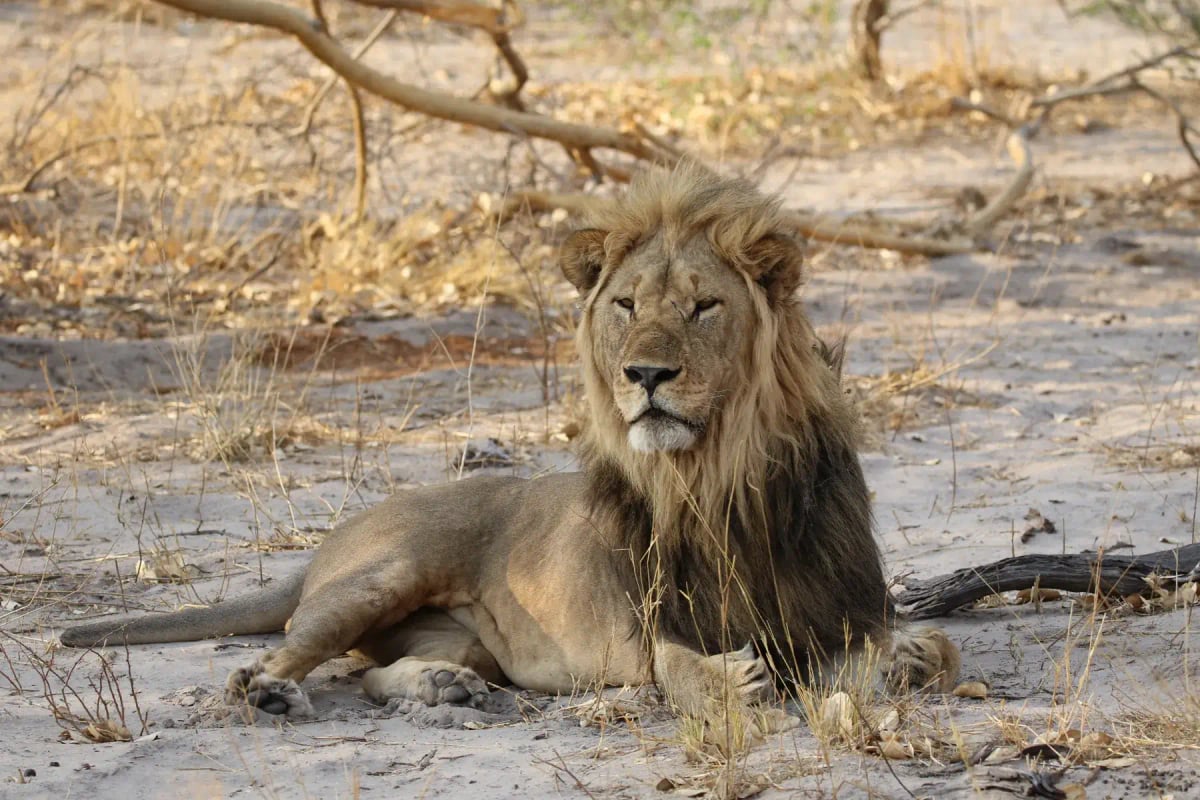
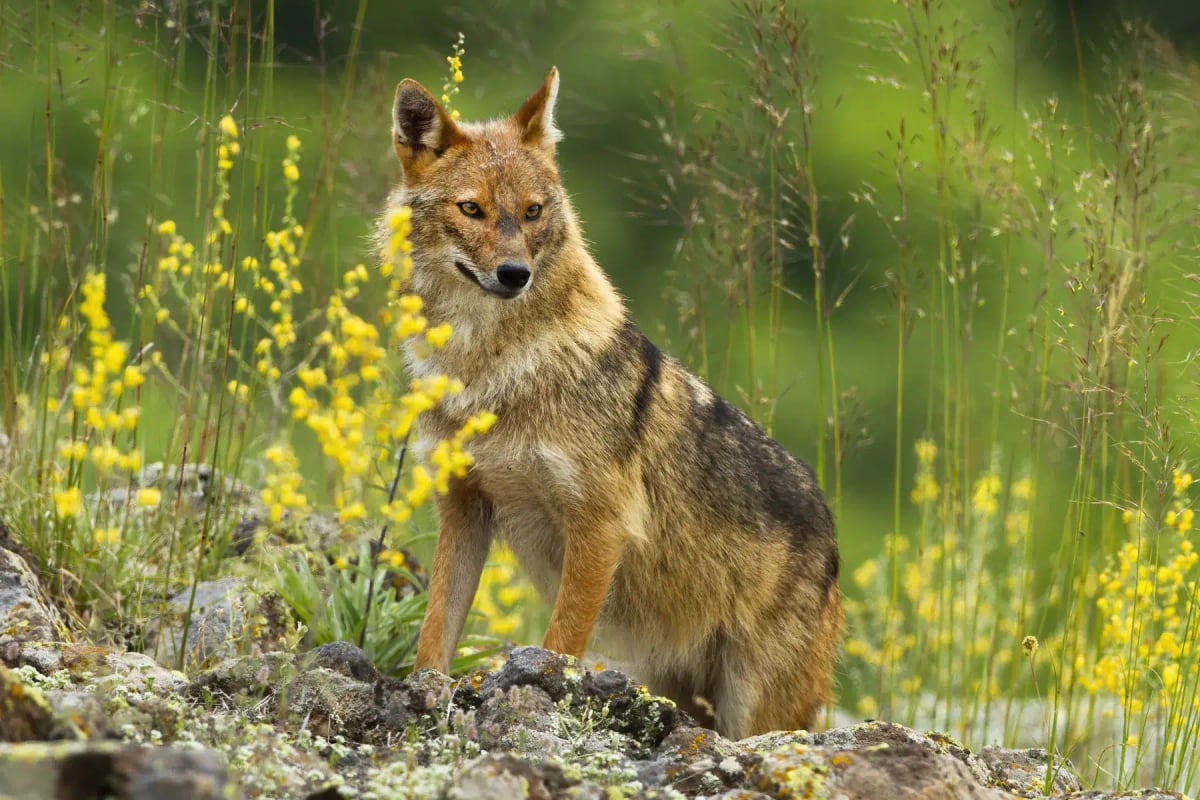
Adult geladas have few natural predators. Leopards are the main threat and can ambush them near the cliffs, and spotted hyenas, jackals and large eagles may take young or sick animals. Feral and village dogs, which roam many highland areas, also hunt them, and geladas react to dogs with alarm calls and flight. Their main defense is the cliffs where they sleep, which most predators cannot reach. Curiously, they tolerate Ethiopian wolves walking among them, since the wolves are hunting rodents and almost never attack young geladas.
Why do geladas have a red patch on their chest?
The bare red patch on a gelada's chest is a social signal used to communicate status and reproductive condition. In males, the patch becomes more vivid when testosterone levels are high, advertising dominance or readiness to mate. Females also carry the patch, and it swells and reddens around the time of ovulation. Because geladas spend so much time sitting while grazing, the chest is far more visible than the rear, which is why this signal evolved there rather than elsewhere.
How do geladas communicate?
Geladas are among the most vocal primates on Earth. They produce a rich variety of sounds including grunts, lip smacks, and calls that shift in tone and rhythm depending on the situation. Researchers have compared their vocal patterns to certain features of human speech, noting that geladas adjust their calls based on social context. They also communicate through facial expressions, such as the lip flip that males use as a threat display, and through the color of their chest patch.