Scarlet Ibis
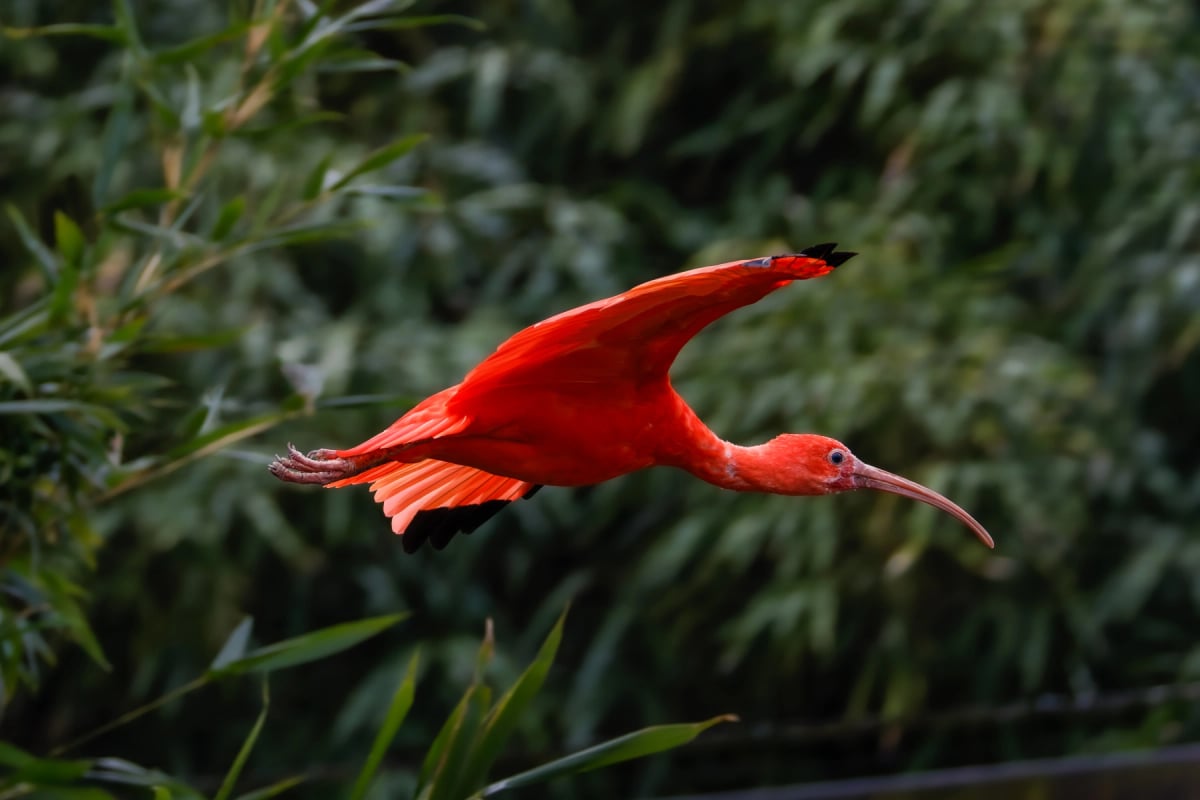
The Scarlet Ibis is one of the most brilliantly colored birds in the world, draped in plumage so intensely red it seems almost unreal against the green of a mangrove forest. That color is not a trick of genetics but a direct result of diet: the carotenoid pigments found in the crabs, crayfish and other crustaceans it eats accumulate in its feathers over time. Young birds hatch with brown and white plumage and only reach full scarlet after their first molt or two. Adults are about 55 to 63 centimeters long and weigh roughly one kilogram. They probe mudflats and shallow coastal water with a long, curved bill that is highly sensitive at the tip. Highly social birds, they forage, fly and roost in flocks that can number in the thousands. The species is the national bird of Trinidad and Tobago and is listed as Least Concern by the IUCN.
Appearance
Up close, the Scarlet Ibis is even more striking than photographs suggest. Adult birds are covered almost entirely in feathers of a deep, saturated red, the only exception being the tips of the four outer primary feathers, which are black and become visible as the wings spread in flight. The bill is long and strongly curved downward, perfectly shaped for probing soft substrate. In breeding condition, the bill and facial skin deepen toward a dark reddish black. Legs are red as well. Juveniles look nothing like their parents: they are born with brown and white plumage and only begin to show orange and then red tones after their first and second molts. Full adult color typically takes around two years to develop. Adults measure roughly 55 to 75 centimeters in length and weigh close to one kilogram.
Habitat and distribution
Mangrove forests are the heartland of the Scarlet Ibis. The species is most abundant across the northern coast of South America, from Colombia and Venezuela through the Guianas and into northern Brazil, with a particularly strong population in Trinidad and Tobago. Inland, big numbers also live on the flooded llanos of Venezuela and Colombia, and in recent decades a population has returned to the coast of southern Brazil, around São Paulo and Santa Catarina. It favors coastal wetlands where saltwater and freshwater mix: tidal mudflats, estuaries, shallow lagoons and river deltas all suit it well. Inland birds will also use flooded grasslands and rice paddies when conditions are right. Occasional birds turn up in Florida and along the Gulf Coast of Texas, though no established breeding population exists in the United States. The species depends on undisturbed shorelines with mature mangroves, which provide shelter for roosting and nesting as well as productive feeding grounds at low tide.
Diet
Food is what turns the Scarlet Ibis red. The bird feeds heavily on small crabs, fiddler crabs in particular, along with crayfish, shrimp, mollusks, aquatic insects and the occasional small fish or amphibian. All of these prey animals contain carotenoid pigments, which the ibis cannot produce on its own. Instead, it absorbs them through digestion and deposits them directly into growing feathers. The more carotenoid rich the diet, the deeper the red. Birds kept in captivity without access to natural prey gradually fade toward orange or pale pink. Foraging takes place at the water's edge, where the ibis sweeps its long curved bill through soft mud and shallow water by touch, probing rapidly until it detects prey. Most feeding happens during low tide, when mudflats are fully exposed.
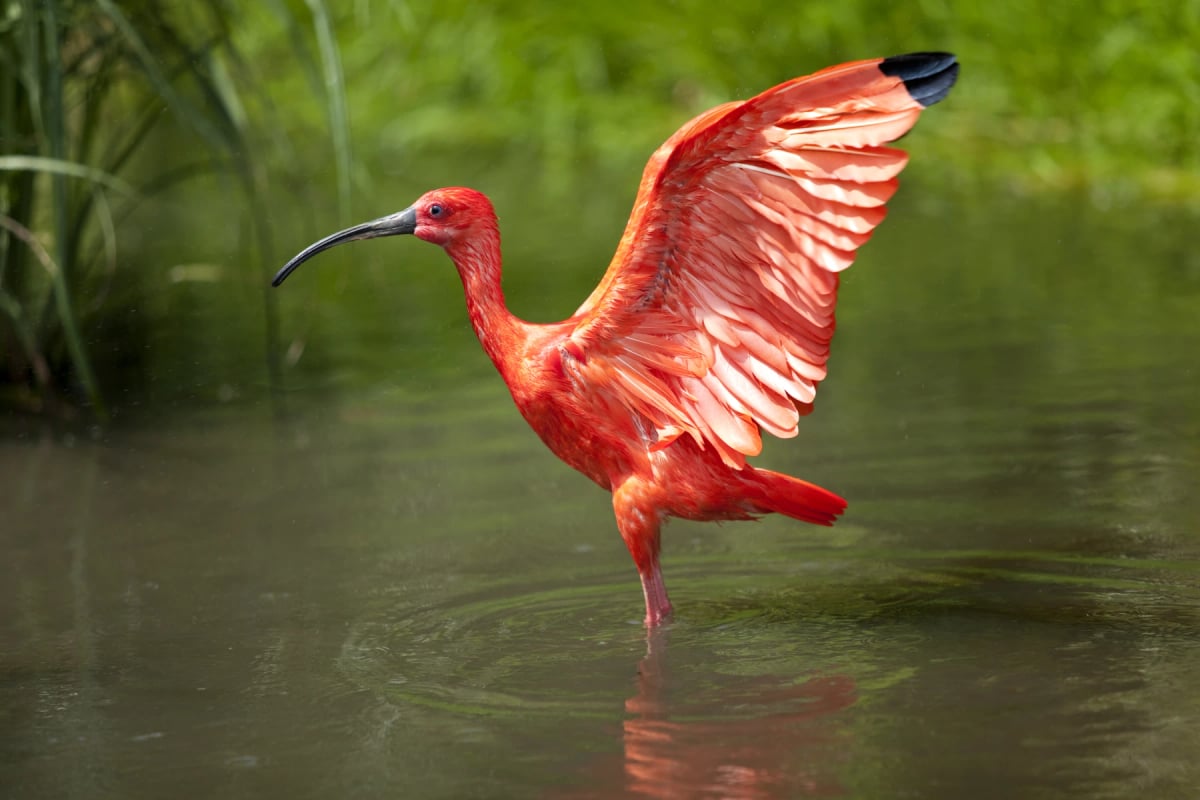
Scarlet ibis and white ibis: one species or two?
The scarlet ibis has a near twin: the American white ibis, which lives from the southern United States through the Caribbean to northern South America. Apart from color, the two birds are practically identical, with the same size, bones, bill shape and behavior, and some scientists consider them a single species, or two forms of the same one. Where their ranges meet, on the llanos of Colombia and Venezuela, they mix in the same flocks and sometimes pair up, producing hybrids with pale orange or salmon pink plumage. A famous case happened in Florida in the 1960s, when scarlet ibis eggs were placed in the nests of white ibises; the young grew up with their foster species and some later bred with them, which is why pinkish ibises have been reported there since. Most checklists still treat them as separate species, based mainly on the color of adults and the fact that, over most of their range, each keeps to its own. The link helps explain why a stray scarlet ibis in North America often turns up among flocks of white ibises.
Behavior
Few birds are as committed to group living as the Scarlet Ibis. Flocks can number in the thousands, and the birds forage, travel and roost together almost without exception. When a large flock takes flight over a coastal lagoon at dusk, the sky fills with moving red, an experience that draws wildlife watchers from around the world to places like the Caroni Swamp in Trinidad. At the roost, colonies often include other wading bird species such as the Snowy Egret, a pairing that appears to benefit both through shared vigilance. Breeding colonies are also communal, with many pairs nesting close together in mangrove canopies. The birds are not territorial over feeding areas and will shift location readily in response to tides or disturbance. Flight is direct and steady, with alternating flaps and short glides.
National symbol
Trinidad and Tobago made the Scarlet Ibis its national bird in 1962, the year of independence, sharing that honor with the cocrico, or rufous-vented chachalaca, of Tobago; the two birds stand side by side on the national coat of arms, the ibis for Trinidad and the cocrico for Tobago. The choice reflected more than aesthetic appeal. The ibis is deeply woven into the cultural identity of the islands, particularly in relation to the Caroni Swamp on Trinidad's west coast, one of the finest mangrove wetlands in the Caribbean and the roosting site of thousands of ibises every evening. That daily return of the flocks has become one of the region's most celebrated wildlife events. Conservation of the ibis in Trinidad is tied closely to the protection of the Caroni Swamp, which was declared a wildlife sanctuary in 1953. In Venezuela and Colombia the same bird is known as the corocoro or corocora roja, and in Brazil as the guará. The bird also appears in local art, literature and carnival imagery, reflecting how central it is to the national imagination.
Where it is found
The Scarlet Ibis can be found in places such as:
Researched and written by Juan Pablo. Sources: IUCN Red List, scientific literature and regional field guides. Last updated: .
Technical factsheet






Frequently Asked Questions
What is a scarlet ibis?
The scarlet ibis, Eudocimus ruber, is a wading bird of the mangroves and coastal wetlands of northern South America and Trinidad and Tobago. It is about the size of a small heron, with long legs, a long down curved bill and plumage of an almost unreal red, which comes from the pigments in the crabs and shrimp it eats. It lives in large flocks, feeds by probing mud for prey, and is the national bird of Trinidad and Tobago. In Venezuela and Colombia it is called corocoro, and in Brazil guará.
What does the scarlet ibis symbolize?
In nature and national culture, the scarlet ibis is a symbol of Trinidad and Tobago, which chose it as a national bird at independence in 1962 and placed it on its coat of arms. In literature it is best known from The Scarlet Ibis, a 1960 short story by James Hurst, where a rare, fragile bird that arrives exhausted in a storm and dies in the family's yard stands for Doodle, the narrator's frail younger brother: beautiful, out of place and unable to survive in a world that pushes him too hard.
Is The Scarlet Ibis a true story?
No. The Scarlet Ibis is a work of fiction by the American writer James Hurst, first published in The Atlantic Monthly in 1960 and set in rural North Carolina in the early twentieth century, around the time of the First World War. The bird itself is real, though: in the story it arrives after a storm, far from home, which fits reality, because the scarlet ibis lives in South America and the Caribbean, and the few that reach the United States are usually lost wanderers. In the wild it does not live in North Carolina.
How long do scarlet ibises live?
Scarlet ibises live about 16 years on average in the wild, and around 20 years in captivity, where they are safe from predators and food shortages. That is a long life for a bird of its size. Because young ibises take about two years to reach their full red color and to start breeding, adults usually have many breeding seasons ahead of them. Long life also helps colonies recover after bad years, since the same adults return to the same mangroves to nest again and again.
Why do scarlet ibises lose their color in zoos?
Because the red is not made by the bird but comes from its food. In the wild, crabs, shrimp and other crustaceans supply carotenoid pigments that the ibis deposits in its growing feathers. In captivity, without that natural prey, new feathers grow in pale orange or pink. To keep their birds red, zoos add carotenoids such as canthaxanthin to the feed, or give them shrimp and other colorful foods. The same thing explains why young wild birds start out gray, brown and white and only turn red with time.
Why is the Scarlet Ibis so red?
Its color comes entirely from food. The crabs, shrimp and crayfish it eats are packed with carotenoid pigments, which the bird cannot produce on its own. Those pigments get absorbed during digestion and deposited straight into the feathers. The more crustaceans it eats, the deeper the red. Birds in captivity that lack access to this kind of prey gradually fade to orange or pale pink.
What do Scarlet Ibises eat?
Fiddler crabs are their favorite food, but they also eat other small crabs, shrimp, crayfish, mollusks, aquatic insects and the occasional small fish or frog. They find their prey by feel, sweeping that long curved bill through soft mud and shallow water until something moves. Most feeding happens at low tide, when mudflats are fully exposed along the coast.
Where does the Scarlet Ibis live?
It is most at home in the mangrove forests and coastal wetlands of northern South America, especially in Venezuela, Colombia, the Guianas, northern Brazil and Trinidad and Tobago. Stray birds occasionally turn up in Central America, other Caribbean islands and the United States. The bird favors tidal mudflats, estuaries and river deltas, though it will move into flooded grasslands and rice paddies when food is available there.
Is the Scarlet Ibis endangered?
No. The IUCN currently lists it as Least Concern, and its overall population is considered stable. That said, it still faces real pressures: habitat loss from coastal development, hunting in some areas and pollution all affect local populations. The species is also sensitive to the health of mangrove ecosystems, so anything that degrades those forests can hurt ibis numbers in a given region.
Are Scarlet Ibises born red?
Not at all. Chicks hatch with brown and white plumage and look nothing like their brilliant parents. As they grow and start eating carotenoid rich prey, their feathers begin shifting toward orange and eventually deep red. The full adult color usually takes about two years to develop, going through one or two molts before the bird reaches the intense scarlet it is known for.
Do Scarlet Ibises migrate?
They are not long distance migrants in the way many birds are. They do move around seasonally in response to rainfall, tides and food availability, sometimes traveling between coastal and inland wetlands. Occasional birds show up in Florida and along the Texas coast, likely carried off course by storms or wandering naturally, but no breeding population exists in the United States.
How do Scarlet Ibises behave in groups?
They are intensely social animals. They forage, fly and roost in flocks that can reach several thousand birds. At dusk, large colonies return to their roosts in the mangroves, filling the sky with red in a display that draws wildlife watchers from all over the world. Breeding is also communal, with many pairs nesting close together in the mangrove canopy during the same season.