Eld's Deer
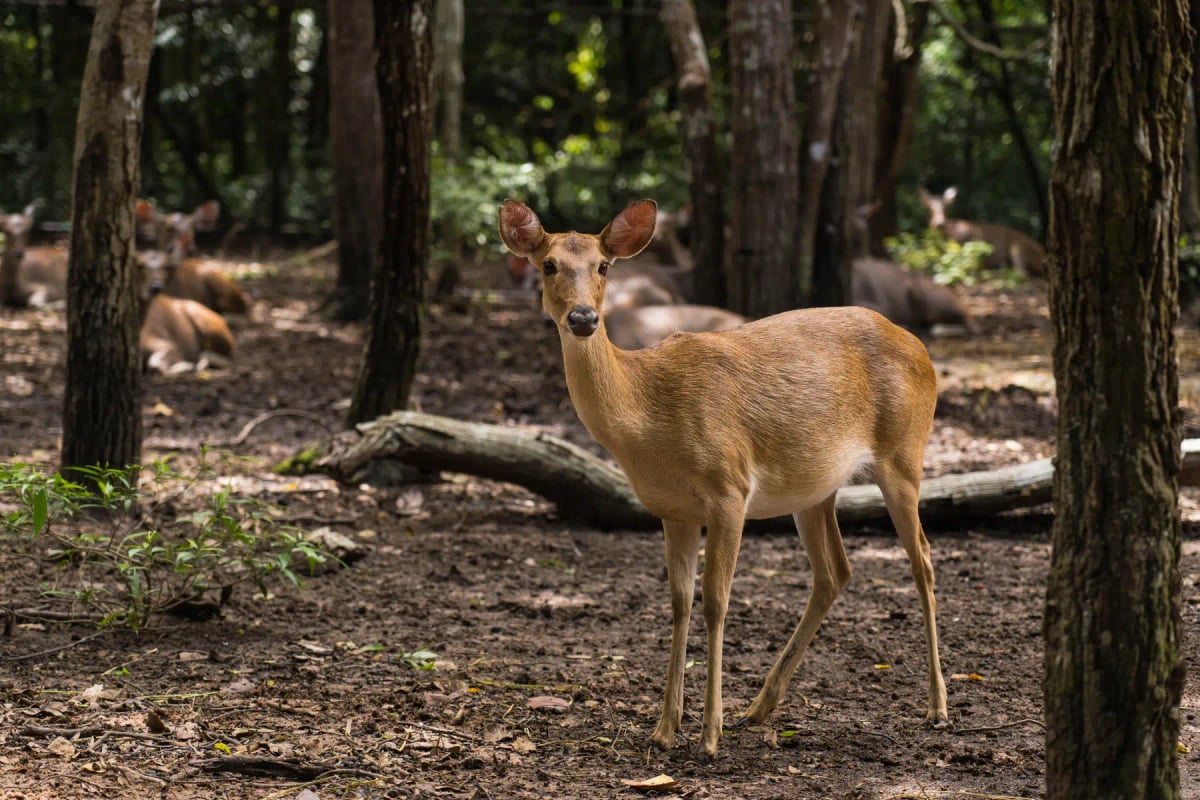
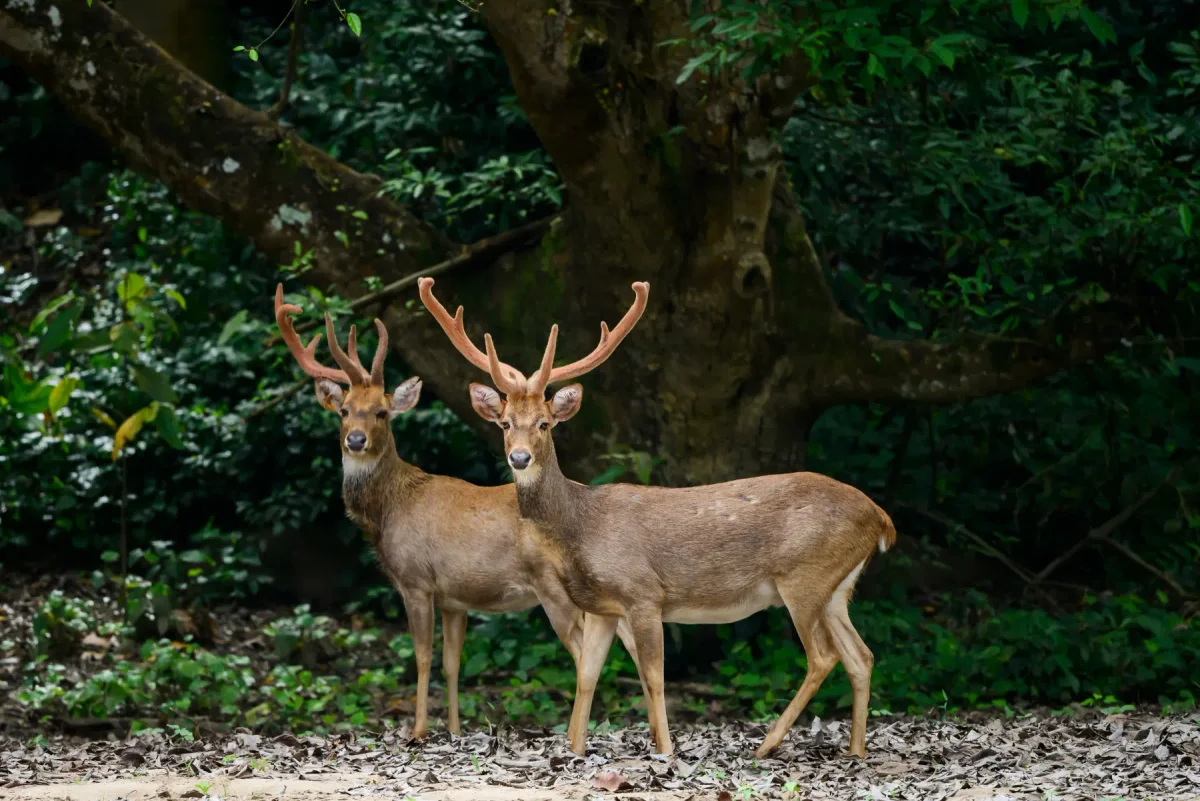
Eld's deer (Rucervus eldii), also called thamin or brow-antlered deer, is a medium-sized deer native to Southeast Asia and northeastern India. Males carry distinctive antlers shaped like a lyre, sweeping forward from the brow and then curving back in a long arc. Females are smaller and carry no antlers. The coat tends toward a reddish brown in summer and grows duller and thicker in the cooler months. This species favors dry deciduous forests, open grasslands, and marshy plains, browsing on grasses, leaves, and tender shoots. Populations have fallen sharply over the past century because of uncontrolled hunting and the widespread loss of suitable habitat to agriculture. The IUCN currently lists the species as Endangered, with fewer than 2,500 mature individuals thought to remain across all three recognized subspecies. Conservation efforts in India and Myanmar are among the most active in trying to stabilize the remaining herds.
Habitat and distribution
Eld's deer is found across a fragmented range in Southeast Asia and northeastern India. The three recognized subspecies each occupy distinct areas: one survives in Manipur, India, one is scattered across Myanmar, Thailand, southern China, Laos, and Cambodia, and a third is confined to the island of Hainan in China. Across all of these areas, the species gravitates toward dry deciduous forests, open grasslands, and low-lying marshy plains. It tends to stay close to water sources, particularly during the dry season. Suitable habitat has shrunk dramatically over the past several decades as wetlands have been drained and forests cleared for farming, pushing surviving populations into increasingly small and isolated pockets of land.
Diet
Grasses form the foundation of this deer's diet for much of the year, and it will graze for extended periods on open plains when fresh growth is available. As the dry season sets in and grasses become coarse and sparse, Eld's deer shifts toward browsing, feeding on leaves, tender shoots, and the bark of shrubs and young trees. Aquatic plants also feature in the diet, especially in populations living near wetlands and marshy ground. Like other deer, it requires regular access to water and mineral salts, and individuals are sometimes seen visiting natural mineral licks. The seasonal shift in food sources mirrors the dramatic changes in vegetation that define the dry deciduous landscapes where this species lives.
Behavior
Most activity takes place at dawn and dusk, when temperatures are cooler and the risk of encountering predators is lower. During the hottest part of the day, Eld's deer rests in the shade of forest cover. Outside the breeding season, males and females generally live apart in small, loose groups. The rut changes this arrangement considerably. Males become territorial and vocal, competing for access to females through displays and sometimes direct combat with their distinctive lyre-shaped antlers. A successful male may hold a group of females throughout the breeding period. Fawns are typically born during the spring months, and mothers keep them hidden in dense vegetation for the first weeks of life.
Threats
Several pressures have combined to push Eld's deer to the brink of extinction in many parts of its former range. Poaching for meat has historically been the most immediate cause of population decline, and the antlers are also sought for use in traditional medicine. At the same time, the conversion of forests and wetlands to agricultural land has stripped away much of the habitat the species depends on. Cattle grazing in and around protected areas increases competition for food and can introduce disease to wild deer. In some regions, the construction of roads and settlements has broken up remaining habitat into fragments too small to support healthy populations. All of these pressures continue today, and few areas within the species' range are free of at least one of them.
Conservation
The IUCN lists Eld's deer as En Danger, with fewer than 2,500 mature individuals estimated to survive across all three subspecies. In India, the Keibul Lamjao National Park in Manipur is the last natural refuge for the subspecies found there, and it remains one of the most intensively managed protected areas in the region. Myanmar holds the largest remaining populations, and several wildlife sanctuaries there provide a degree of protection. Captive breeding programs have helped build reserve populations and have supported reintroduction efforts in parts of Thailand and Cambodia. International cooperation between governments and wildlife organizations is considered essential, as no single country holds enough individuals to secure the future of the species on its own.
Researched and written by Juan Pablo. Sources: IUCN Red List, scientific literature and regional field guides. Last updated: .
Technical factsheet


Frequently Asked Questions
What do Eld's deer eat?
Eld's deer eat mostly grasses when fresh growth is available, then switch to leaves, shoots, and bark as the dry season sets in. Aquatic plants are also part of the diet for populations living near wetlands. Like many deer, they visit natural mineral licks to get the salts their bodies need. This flexible approach to feeding helps them survive the dramatic seasonal changes in the dry landscapes they call home.
Where do Eld's deer live?
Eld's deer are found in parts of Southeast Asia and northeastern India. Their range includes Myanmar, Cambodia, Laos, southern China, and the Indian state of Manipur. One subspecies lives only on the island of Hainan in China. They prefer dry deciduous forests, open grasslands, and marshy plains, and they stay close to water sources year round. Habitat loss has pushed surviving populations into small, scattered pockets across this region.
Why are Eld's deer endangered?
Eld's deer are endangered mainly because of poaching and the loss of their habitat. They have been hunted for meat and for their antlers, which are used in traditional medicine. At the same time, forests and wetlands across their range have been converted to farmland, leaving far less space for the species to survive. Cattle grazing in protected areas and the fragmentation of land by roads have made the situation even harder to reverse.
What do Eld's deer antlers look like?
Only the males grow antlers, and they are quite striking. The antlers sweep forward from the brow and then curve back in a long, sweeping arc, giving them a lyre shaped appearance. This distinctive shape sets Eld's deer apart from most other deer species in Asia. The antlers are shed and regrown each year, and during the breeding season males use them in competition with rivals for access to females.
Are Eld's deer active during the day?
Eld's deer are most active at dawn and dusk, when it is cooler and there is less risk from predators. During the hottest hours of the day they rest in the shade of the forest. This pattern of behavior, known as crepuscular activity, is common among deer living in warm climates. Outside the breeding season, males and females tend to live in separate groups, coming together mainly when the rut begins.
How many Eld's deer are left in the world?
The IUCN estimates that fewer than 2,500 mature individuals remain across all three subspecies combined. Myanmar holds the largest surviving populations, while the subspecies in Manipur, India, is confined to a single national park. Numbers have dropped sharply over the past century due to hunting and habitat loss. Conservation programs involving captive breeding and protected areas are working to prevent further decline, but the species remains at serious risk.
What is being done to protect Eld's deer?
Several conservation efforts are underway across the species' range. In India, Keibul Lamjao National Park in Manipur is the last refuge for one subspecies and is intensively managed. Myanmar has a number of wildlife sanctuaries that protect key populations. Captive breeding programs have helped reintroduce deer into parts of Thailand and Cambodia. International cooperation between governments and wildlife organizations is considered essential, since no single country has enough individuals to secure the species on its own.