Nubian Ibex
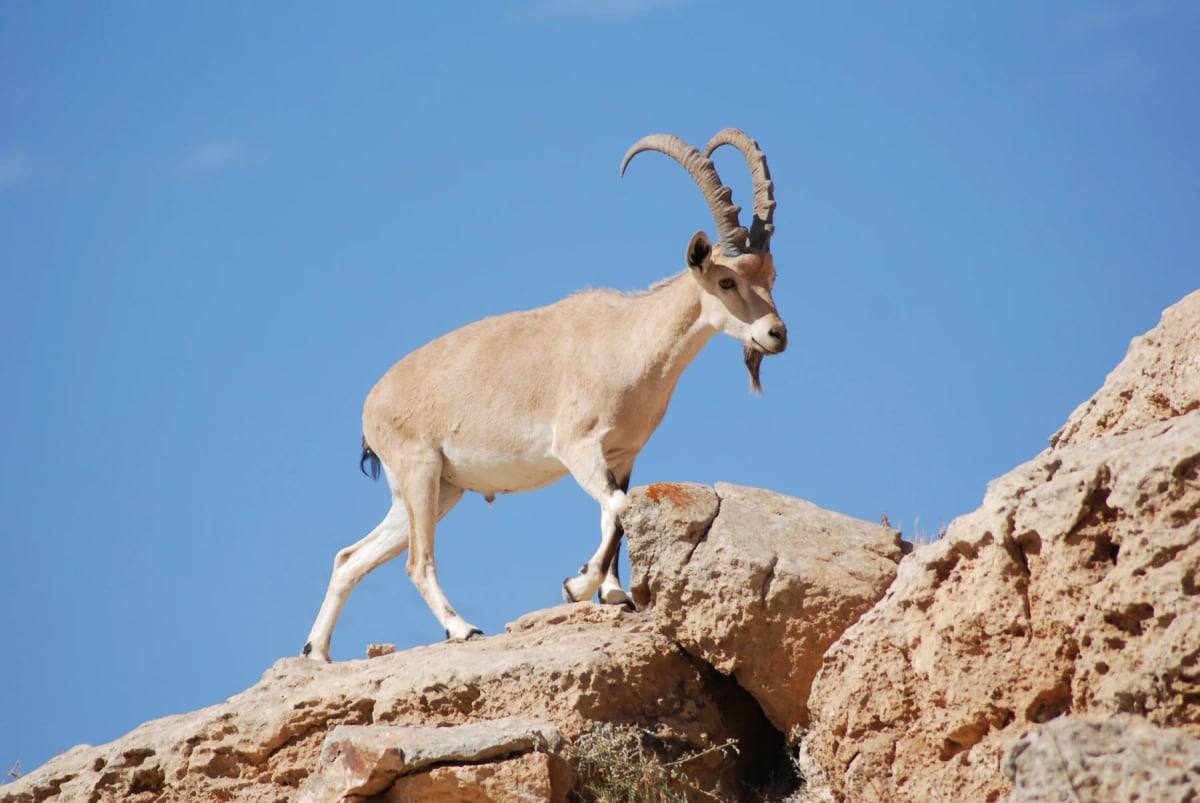
The Nubian ibex is a wild goat native to the arid mountains of North Africa and the Middle East. Males carry sweeping horns that can reach over a meter in length, used to settle rivalries during the rut through dramatic head-on clashes. Females are noticeably smaller and form tight nursery groups with their young for most of the year. Built for life on vertical terrain, this ibex moves across sheer cliff faces and loose scree with remarkable confidence, using specially adapted hooves with hard outer edges and soft inner pads for grip. Its pale, sandy coat reflects sunlight and helps regulate body heat in extreme desert conditions. Once pushed to the brink by uncontrolled hunting, the species has responded well to protection in national reserves, though populations across its range remain small, scattered, and under pressure from habitat disturbance and road construction.
Habitat and distribution
Nubian ibexes are found across some of the driest and most rugged landscapes on Earth. Their range stretches through Egypt, Israel, Jordan, Oman, Saudi Arabia, Sudan, and Yemen, where they occupy steep wadis, rocky escarpments, and mountain cliffs that rise above sun-baked desert floors. In Israel, the Negev and Judean Deserts hold some of the most studied populations. Elevation plays an important role in their daily lives: they descend to lower ground to feed and drink, then retreat to high rocky ledges for safety. Water sources are scarce across much of their range, so these animals are well adapted to extracting moisture from the plants they eat. Populations tend to be small and geographically isolated, separated by vast stretches of open desert that few individuals ever cross.
Diet
Surviving in desert terrain demands flexibility, and the Nubian ibex delivers exactly that when it comes to food. It browses on a wide variety of shrubs, grasses, leaves, and dried herbs depending on what the season allows. In areas where trees such as acacia are present, ibexes will also reach up to strip bark and forage on leaves at considerable height. Feeding happens mainly in the cooler hours of early morning and late afternoon, giving the animals time to rest and ruminate during the hottest part of the day. Like other ruminants, they regurgitate and re-chew their food to extract as much nutrition as possible. During dry seasons, when green vegetation is almost entirely absent, they rely more heavily on dried plant matter and can go extended periods without drinking fresh water.
Distinctive features
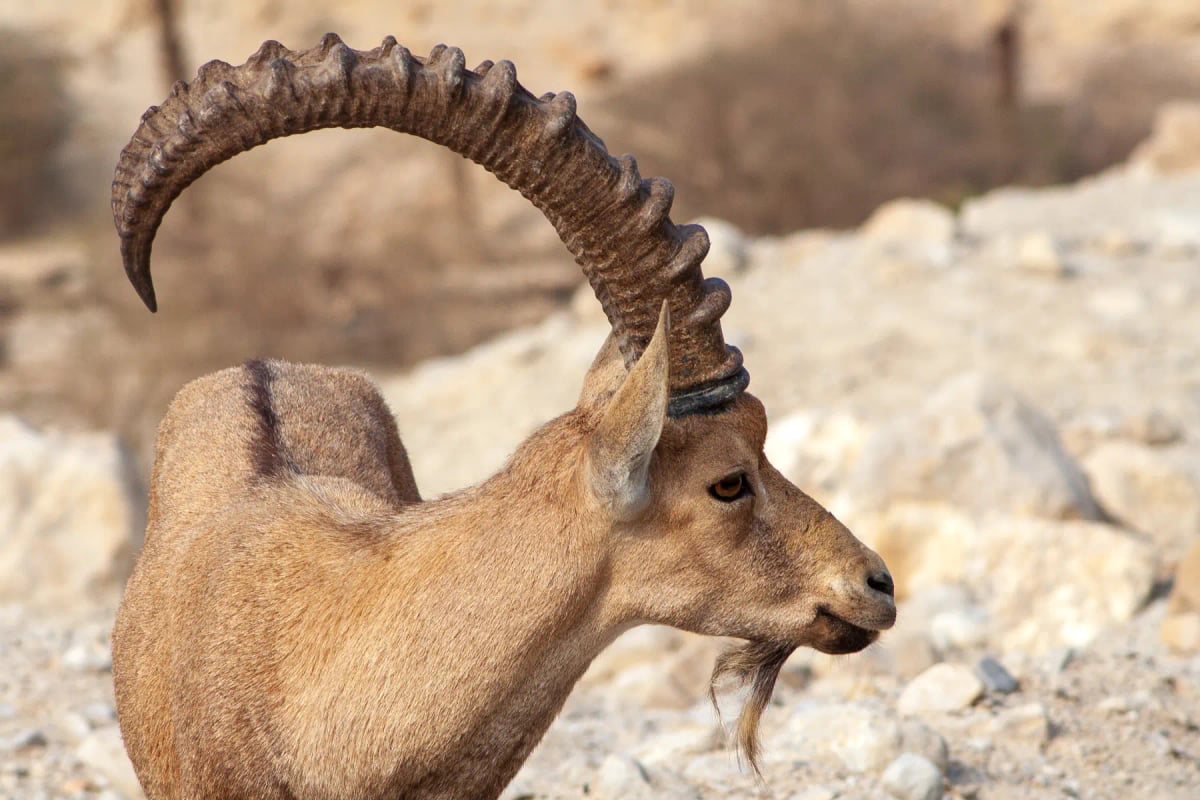
Few wild animals look quite as striking as a male Nubian ibex in full profile. The horns are the defining feature: long, sweeping, and ridged along the front edge, they can grow to well over a meter in length and curve back dramatically over the animal's body. Females also carry horns, though these are much shorter and more upright. The coat is a warm sandy brown in males, becoming darker along the belly and legs, while females tend to be paler overall. One of the most practical features of this animal is its hooves. Each hoof has a hard outer rim for grip on rock edges and a soft inner pad that acts almost like a suction surface on smooth stone. This design allows the ibex to move across cliff faces that would be impassable for almost any other large mammal.
Behavior
For most of the year, Nubian ibexes live in separate groups organized by sex. Females and their young form nursery herds that move together across the landscape, staying close to cliff terrain where they can escape predators quickly. Males typically spend their time in smaller bachelor groups or alone, coming together with females only during the rut in autumn. Competition between males at this time is intense. Rivals face each other head on and clash with considerable force, their ridged horns locking as they push and wrestle for dominance. Despite the drama of these encounters, serious injuries are rare. Outside the breeding season, ibexes spend much of their day in a predictable rhythm: moving to feeding areas in the morning, resting through midday in shaded rocky spots, then feeding again before climbing to sleep on high ledges overnight.
Conservation
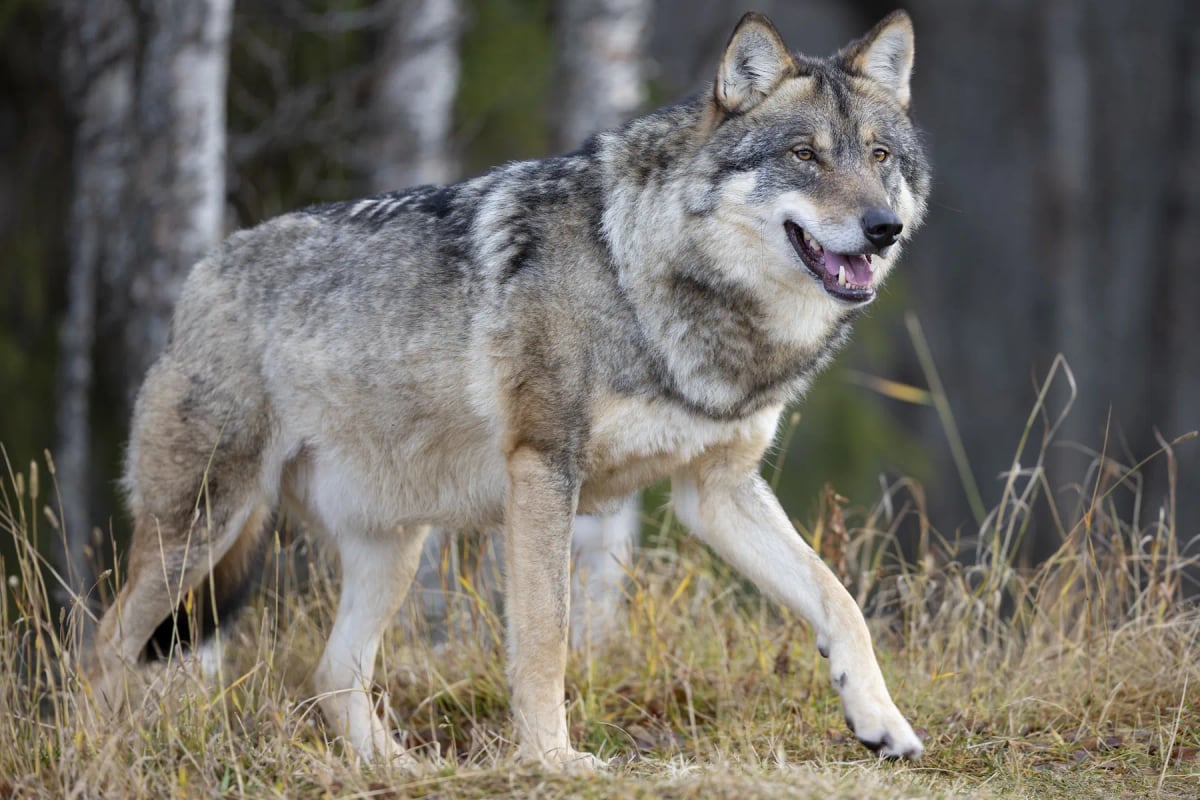
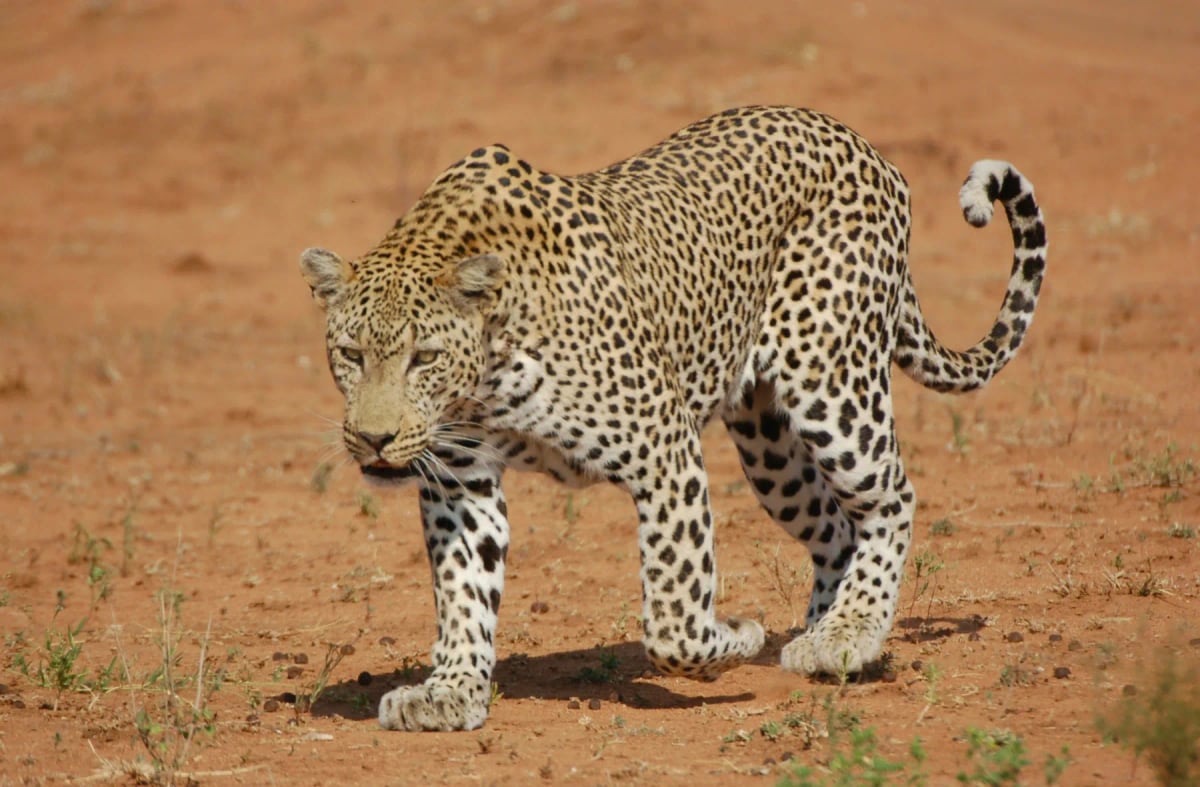
The IUCN classifies the Nubian ibex as Vulnerable, reflecting real and ongoing pressure across its range. Unregulated hunting drove steep declines throughout the twentieth century, and while legal protections have since eased that pressure in several countries, poaching still occurs. Habitat disturbance from road construction, mining, and tourism infrastructure fragments the terrain these animals depend on and can cut populations off from one another entirely. Predation by wolves and leopards adds natural pressure, though large predator populations are themselves reduced in most of the ibex's range. Protected reserves in Israel, Jordan, and Egypt have produced encouraging results, with some local populations recovering steadily under active management. Continued success depends on cross-border cooperation, since ibex populations do not follow political boundaries, and on reducing human activity in the most sensitive mountain areas.
Where it is found
The Nubian Ibex can be found in places such as:
Researched and written by Juan Pablo. Sources: IUCN Red List, scientific literature and regional field guides. Last updated: .
Technical factsheet


Frequently Asked Questions
What do Nubian ibexes eat?
Nubian ibexes browse on shrubs, grasses, dried herbs, and leaves, adjusting to whatever plants are available through the seasons. In areas with acacia trees, they will stretch up to reach bark and foliage. They feed mainly during the cooler morning and late afternoon hours, then rest through the midday heat. Like other ruminants, they re-chew their food to get the most nutrition out of it. During dry seasons, they can survive on very little fresh water.
Where do Nubian ibexes live?
Nubian ibexes live in the rocky mountains and steep desert cliffs of North Africa and the Middle East. Their range covers Egypt, Israel, Jordan, Oman, Saudi Arabia, Sudan, and Yemen. They favor rugged terrain like wadis and rocky escarpments, where cliffs give them shelter from predators. They descend to lower ground to feed and drink, then climb back up to sleep on high ledges. Populations are spread out and separated by wide stretches of open desert.
How do Nubian ibexes climb such steep cliffs?
Their hooves are specially built for life on rock. Each hoof has a hard outer edge that grips ledges and a soft inner pad that clings to smooth stone almost like a suction cup. This combination lets them move across near-vertical cliff faces with impressive confidence. They use this ability every day, climbing to high ledges to sleep safely at night and retreating quickly up rock faces when a predator approaches.
Are Nubian ibexes endangered?
The Nubian ibex is classified as Vulnerable on the IUCN Red List. Hunting drove serious declines during the twentieth century, and while legal protections have helped in some areas, poaching still occurs. Road construction, mining, and tourism development fragment their habitat and can cut populations off from one another. Protected reserves in Israel, Jordan, and Egypt have shown real recovery results, but the species still faces pressure across much of its range.
How big are Nubian ibex horns?
Male Nubian ibexes carry some of the most impressive horns of any wild goat. They sweep back over the body in a long curve and can grow to well over a meter in length, with ridges running along the front edge. Females also have horns, but they are much shorter and grow more upright. Males use their horns during the autumn rut, clashing head on with rivals to compete for dominance. Serious injuries from these fights are surprisingly rare.
Do Nubian ibexes live alone or in groups?
Nubian ibexes spend most of the year in separate groups based on sex. Females and their young stay together in nursery herds, while males form smaller bachelor groups or wander alone. The two sexes come together only during the autumn rut, when males compete intensely for the chance to mate. Outside of that period, the groups go their separate ways, following their own routes across the mountain terrain in a predictable daily rhythm.
How do Nubian ibexes survive in the desert heat?
The Nubian ibex has several ways of coping with extreme heat. Its pale, sandy coat reflects sunlight and helps keep its body temperature stable. It avoids the worst of the midday sun by resting in shaded rocky spots and does most of its feeding during cooler hours. It also gets much of its water from the plants it eats, which reduces how often it needs to find a water source. High cliff ledges, which catch cooler breezes, also serve as resting spots.