European Bison
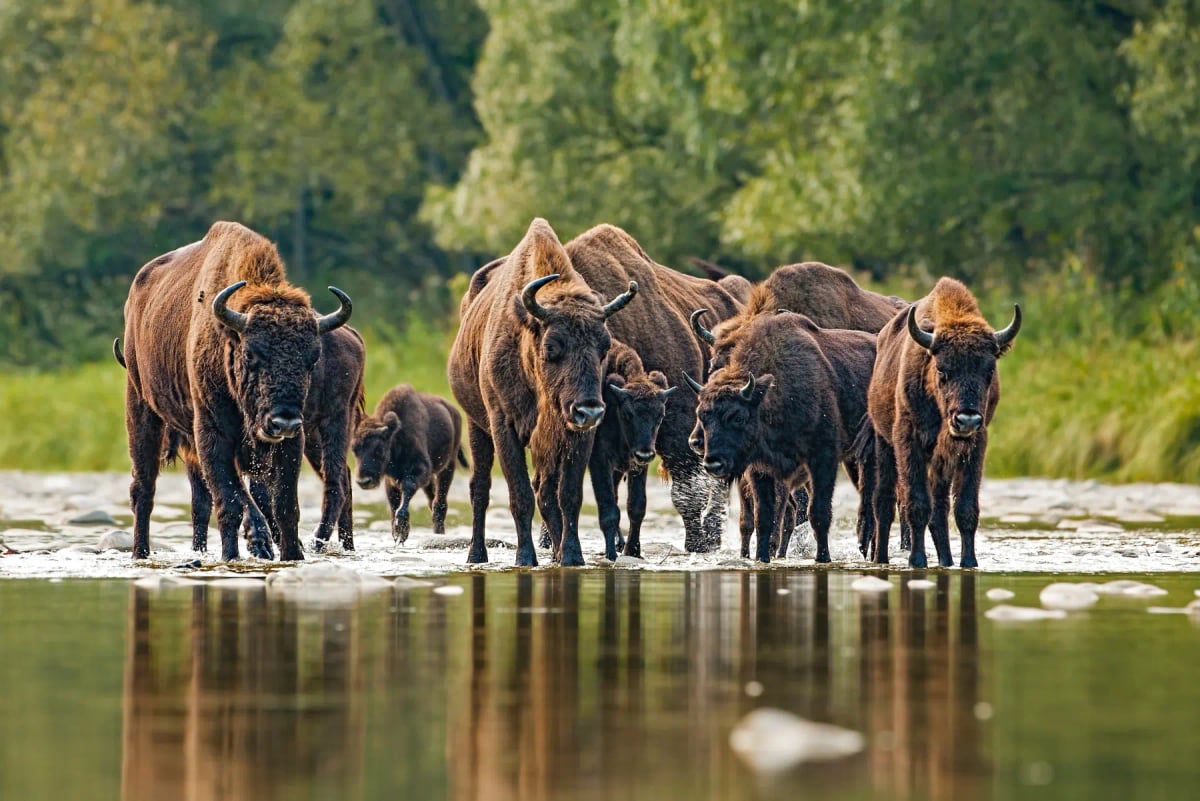
The European bison is the heaviest land mammal in Europe, with bulls reaching up to 920 kg. Hunted to extinction in the wild by the early 1920s, the entire species survived through fewer than fifty individuals held in zoos and private parks. A coordinated breeding effort brought it back, and reintroductions into forests in Poland, Belarus, Russia, and several other countries have created free-roaming herds once again. The Białowieża Forest, straddling Poland and Belarus, remains the stronghold of the species. These animals are grazers and browsers, feeding on grasses, leaves, bark, and shrubs depending on the season. Females and young live in herds while adult males tend to be solitary outside the breeding season. Although populations have grown to around 9,000 individuals, the species remains Near Threatened due to low genetic diversity and its continued reliance on human protection.
Habitat and distribution
European bison are most at home in broad-leaved and mixed forests, where patches of open meadow give them room to graze alongside the shelter of trees. The Białowieża Forest, shared by Poland and Belarus, is the heartland of the species and holds the largest free-roaming population. Beyond that ancient woodland, herds have been reintroduced into forests across Russia, Lithuania, Latvia, Romania, Slovakia, Bulgaria, Ukraine, and Germany. Most populations depend on reserves and national parks where hunting is controlled and supplementary feeding is provided in winter. The species is absent from truly mountainous terrain and open steppe, preferring lowland and foothill forests with a rich understory. Today around 9,000 individuals live in the wild, spread across more than 40 herds, a remarkable recovery for an animal that vanished from nature a century ago.
Diet
Feeding occupies a large part of every day for European bison. In spring and summer, fresh grasses, sedges, and herbaceous plants make up the bulk of their diet, and they will also browse on the leaves and shoots of trees such as oak, willow, and hornbeam. Shrubs and ferns are taken when available. As autumn arrives, the animals shift toward fallen leaves, acorns, and the bark and twigs of deciduous trees. Winter is the hardest season: natural food becomes scarce under snow, and bison rely heavily on bark stripped from trees, along with hay provided by wildlife managers in many protected areas. Adults can consume up to 30 kg of plant matter in a single day, a reflection of their enormous size and the energy they need to stay warm.
Distinctive features
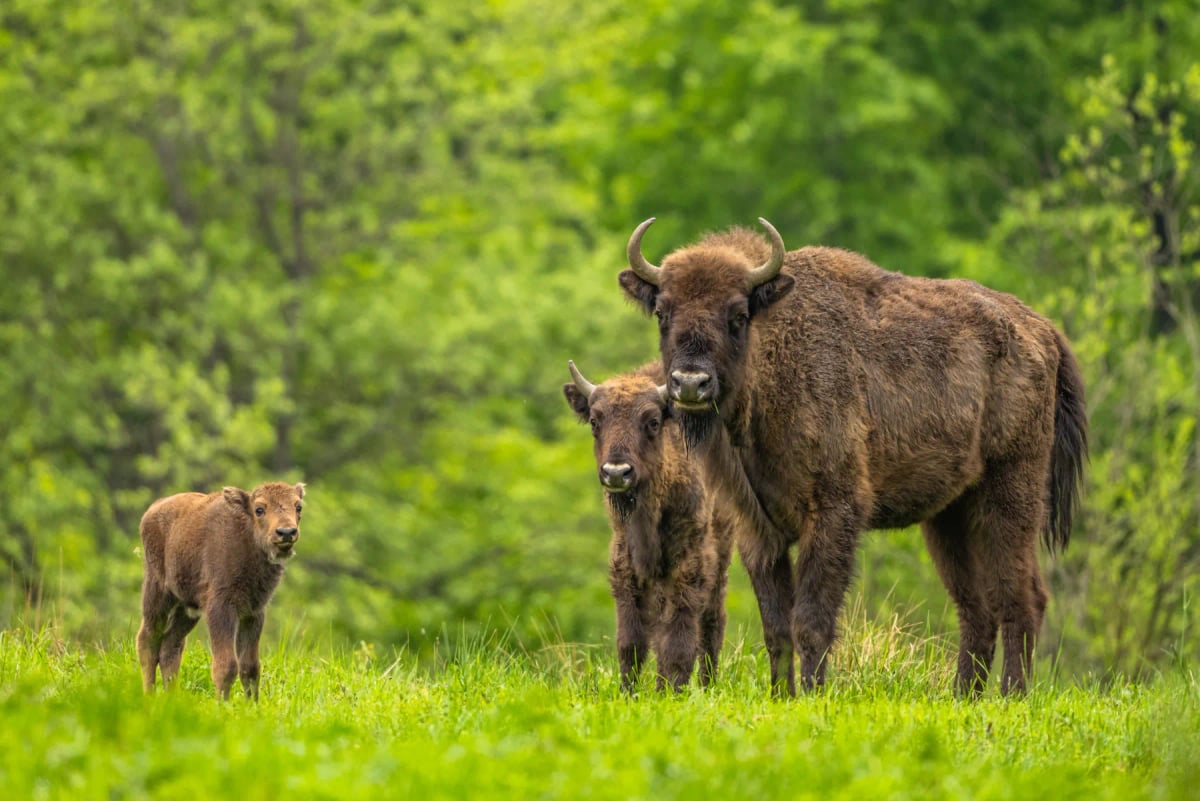
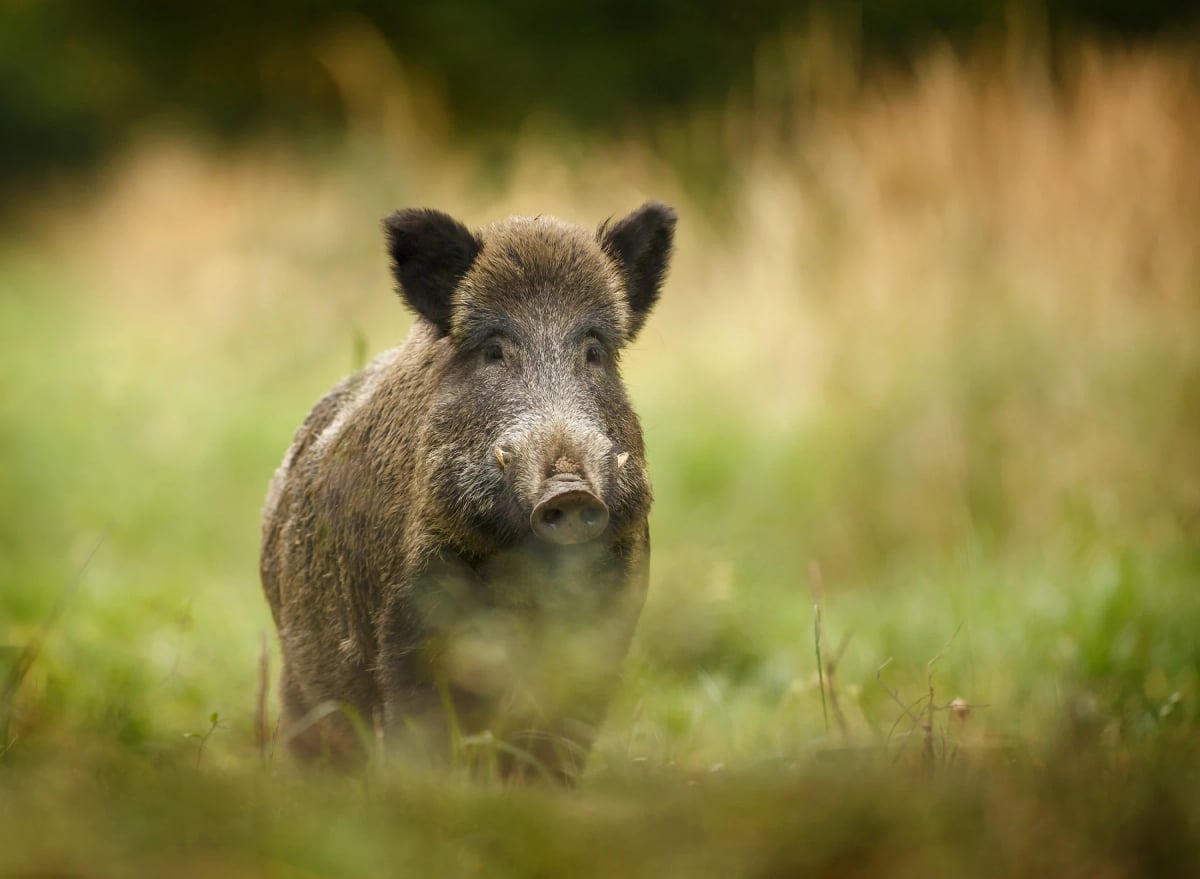
At first glance, the European bison can look similar to its American cousin, but the two animals differ in several clear ways. The European species has a less pronounced hump over the shoulders, a longer and leaner body, and legs that are proportionally taller, giving it a more upright posture. Bulls can reach up to 920 kg, making this the heaviest land animal on the continent. Both sexes carry curved, upward-pointing horns, though these are shorter and lighter than those of American bison. The coat is brown and somewhat shaggy, thickening during winter and shedding in spring. The head is carried higher than in American bison, which helps the European species browse on branches and shrubs rather than grazing low to the ground. Adult bulls also develop a small beard beneath the chin.
Behavior
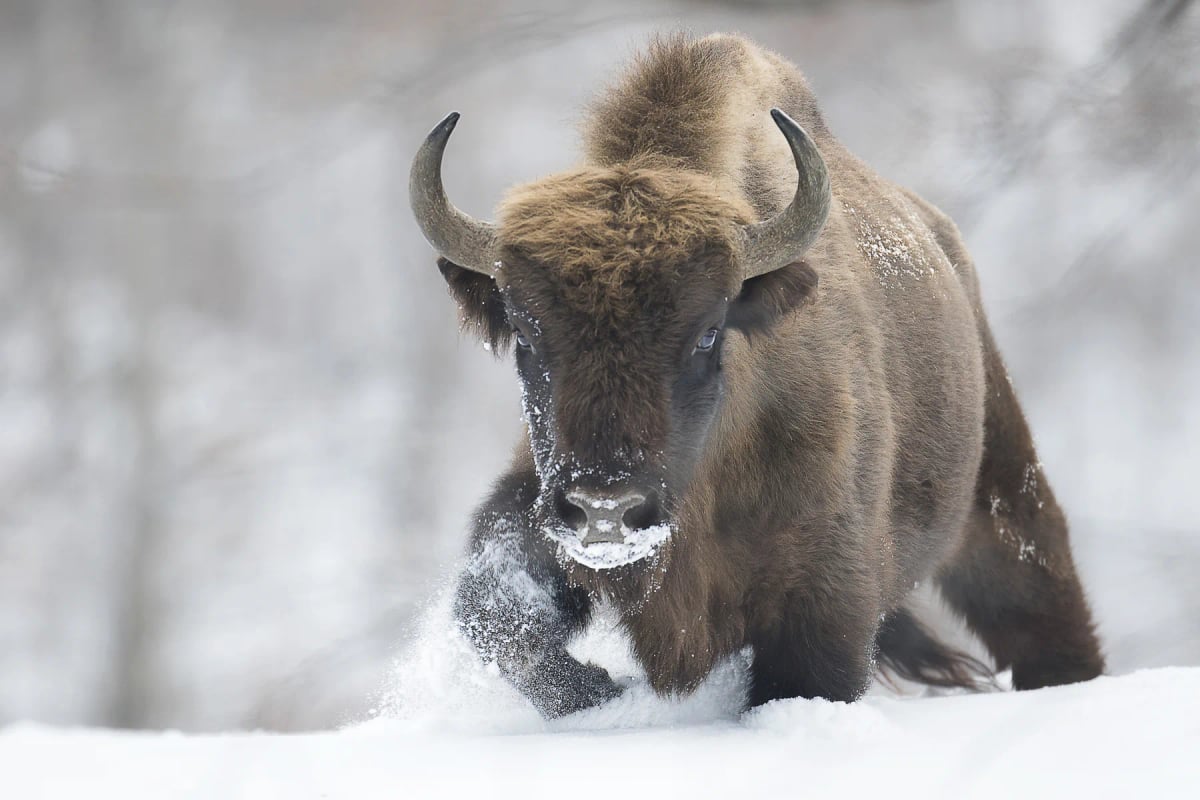
Social life in European bison is organized around sex and age. Females, along with their calves and young from previous years, form loose herds that can number anywhere from a handful of individuals to several dozen. These groups move together, forage together, and offer young animals some protection in numbers. Adult bulls lead a different life: they spend most of the year on their own or in small bachelor groups, only seeking out female herds during the rut, which takes place from August through October. During that period, bulls bellow, wallow in mud, and clash head-on to establish dominance and win mating rights. Calves are born in spring after a gestation of about nine months and can stand within hours of birth. European bison are generally calm animals but will defend themselves if cornered.
Conservation
Few conservation stories in Europe are as dramatic as that of the European bison. The last wild individual was shot in the Caucasus in 1927, leaving only 54 animals alive in zoos and private collections worldwide. A careful breeding program, coordinated across institutions, gradually rebuilt the population, and the first reintroductions into the wild began in the Białowieża Forest during the 1950s. Decades of continued effort have brought the total number of free-roaming animals to around 9,000. The IUCN currently lists the species as Near Threatened. That cautious status reflects a real concern: nearly all living bison descend from just 12 founders, meaning the genetic base of the entire species is dangerously narrow. Ongoing work focuses on managing genetic diversity, expanding reintroduction sites, and reducing the risk of disease spreading through populations that live in close contact.
Where it is found
The European Bison can be found in places such as:
Researched and written by Juan Pablo. Sources: IUCN Red List, scientific literature and regional field guides. Last updated: .
Technical factsheet






Frequently Asked Questions
What do European bison eat?
European bison eat a wide variety of plants depending on the season. In spring and summer they graze on grasses and browse on leaves and shoots. Come autumn, acorns and bark become important. In winter, when snow covers the ground, they strip bark from trees and often rely on hay provided by wildlife managers. Adults can eat up to 30 kg of plant matter in a single day.
Where do European bison live?
European bison live in broad-leaved and mixed forests across central and eastern Europe. The Białowieża Forest, shared by Poland and Belarus, holds the largest free-roaming population and is considered the heartland of the species. Herds also roam forests in Russia, Lithuania, Latvia, Romania, Slovakia, Bulgaria, Ukraine, and Germany. Most populations live within protected reserves where hunting is controlled and food is supplemented during winter.
How many European bison are left in the world?
Around 9,000 European bison roam free today, spread across more than 40 herds. That number is remarkable given that the species was wiped out in the wild by the 1920s, with only 54 individuals surviving in zoos and private collections. A coordinated breeding program rebuilt the population over several decades. Despite this recovery, the IUCN still lists the species as Near Threatened because nearly all living bison descend from just 12 founders.
Are European bison dangerous to humans?
European bison are generally calm animals and tend to avoid contact with people. However, like any large wild animal, they can be dangerous if they feel cornered or threatened. Bulls during the rutting season in late summer and autumn are particularly unpredictable. Visitors in areas where bison roam freely are advised to keep a safe distance and never approach them. Serious incidents are rare but not unheard of.
Why did the European bison go extinct in the wild?
European bison disappeared from the wild mainly due to hunting and the destruction of the forests they depended on. By the early twentieth century, centuries of pressure had reduced their range drastically. The final blow came during and after World War One, when uncontrolled hunting wiped out the last wild herds. The very last wild individual was shot in the Caucasus in 1927, leaving the species entirely dependent on animals kept in captivity.
What is the difference between a European bison and an American bison?
Although the two species look similar at first glance, they differ in important ways. The European bison has a less pronounced shoulder hump, a longer and leaner body, and taller legs, giving it a more upright posture. It tends to browse on leaves and branches rather than graze at ground level. The American bison is stockier and heavier in the front. The two species also evolved on separate continents and are not the same animal.
How do European bison behave during the mating season?
The mating season, known as the rut, runs from August through October. During this time, bulls that normally live alone or in small groups seek out herds of females. Males bellow loudly, roll in mud, and engage in direct head-on clashes to assert dominance. The strongest bull earns the right to mate. Calves are born the following spring after a gestation period of around nine months and can stand within hours of birth.