Fur Seal
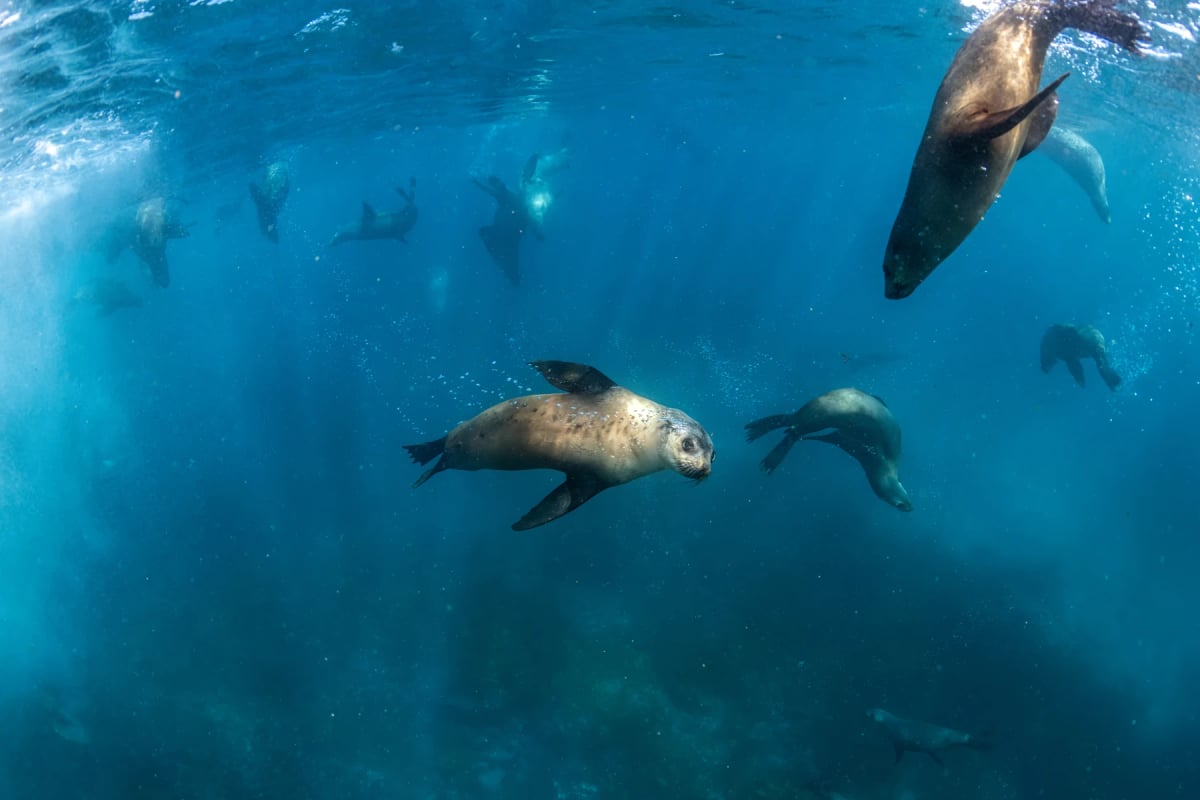
Fur seals are medium sized eared seals named for their extraordinary coat: under a layer of coarse guard hairs they have a dense, waterproof underfur with around 60,000 hairs per square centimeter, which traps air and keeps the skin dry in freezing seas. Eight species belong to the genus Arctocephalus, all in the Southern Hemisphere except the Guadalupe fur seal of Mexico, and the northern fur seal of the Bering Sea belongs to a genus of its own. Like sea lions, they have visible ear flaps and can turn their rear flippers forward to walk on land, but they have a more pointed snout and a thicker coat. Males are dramatically larger than females, often four or five times their weight, and defend territories in noisy, crowded colonies on rocky shores and islands. They are agile swimmers that hunt fish, squid and krill, mostly at night. Hunted almost to extinction for their pelts in the 18th and 19th centuries, most species have recovered under protection, but the Antarctic fur seal is now declining at South Georgia as krill becomes scarcer, the northern fur seal is Vulnerable and the Galápagos fur seal is Endangered.
Fur seal species
There are nine species of fur seal. Eight belong to the genus Arctocephalus. The Antarctic fur seal is by far the most numerous, with about 95 percent breeding at South Georgia. The subantarctic fur seal, with a creamy orange chest and a crest of fur on the head, breeds on islands such as Amsterdam, Gough and Marion. The South American fur seal lives on both coasts of South America, with the largest population in Uruguay. The brown fur seal is the largest, and it has two subspecies: the Cape fur seal, about two million strong in South Africa and Namibia, and the Australian fur seal of Bass Strait. The New Zealand fur seal, or kekeno, lives around New Zealand and southern Australia. Three have tiny ranges: the Galápagos fur seal, the smallest of all and Endangered, the Juan Fernández fur seal of Chile, rediscovered in 1965 after it was thought extinct, and the Guadalupe fur seal of Mexico. The ninth species, the northern fur seal, belongs to a genus of its own. It breeds mostly on the Pribilof Islands of Alaska, numbers about 1 to 1.3 million and is listed as Vulnerable, because its main colony has been falling since 1998.
Why do fur seals have so much fur?
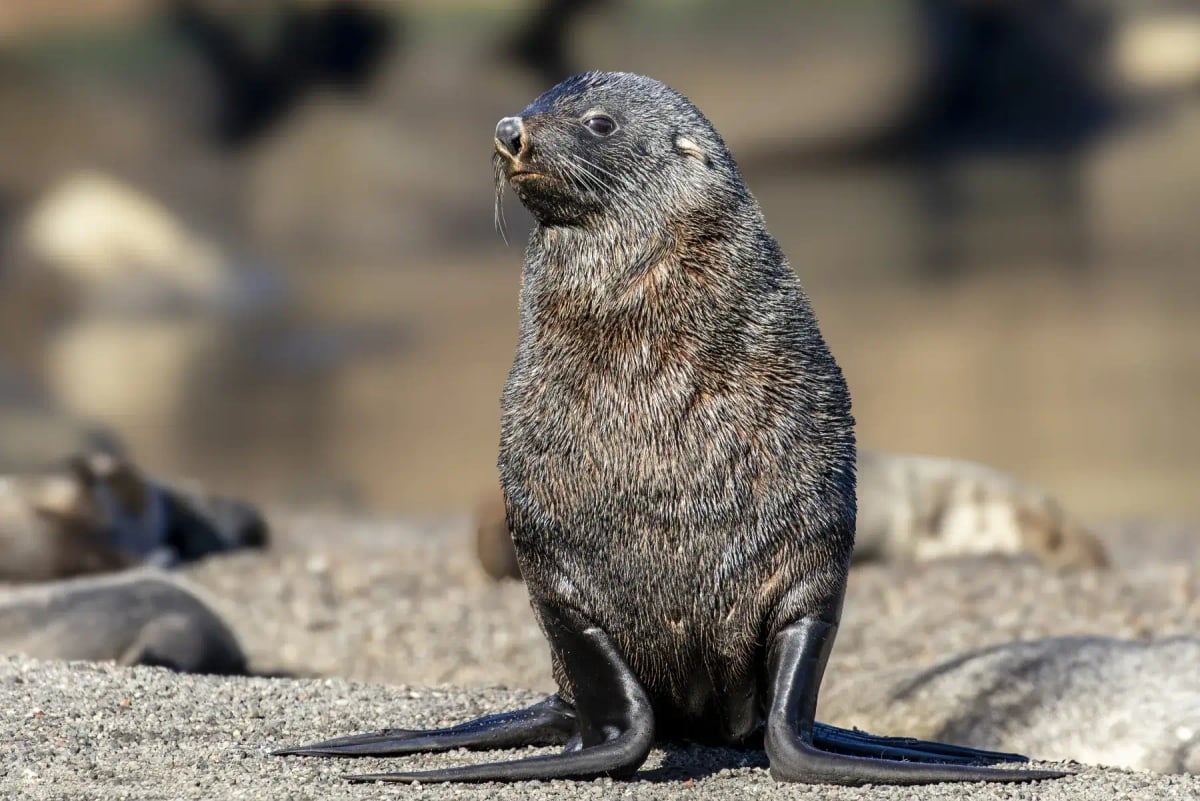
The coat is what gave fur seals their name, and it is what sets them apart from sea lions. It has two layers: long, coarse guard hairs on the outside, and underneath a dense, soft underfur with around 60,000 hairs per square centimeter, many times thicker than a dog's coat. The underfur traps a layer of air that keeps water from ever reaching the skin, so fur seals stay warm with much less blubber than other seals. To keep it working they spend a lot of time grooming, and oil from their skin helps make it waterproof. That is also why oil spills are so dangerous for them: once the fur is soaked, it stops insulating. Unlike true seals, fur seals have small external ear flaps and long front flippers that lift their bodies off the ground. Males are dramatically larger than females and in several species grow a thick mane around the neck and shoulders. Adults are usually dark brown or gray, pups are born almost black, and among Antarctic fur seals at South Georgia about one pup in 800 is born pale blond or cream, a genetic condition called leucism.
Fur seal or sea lion?
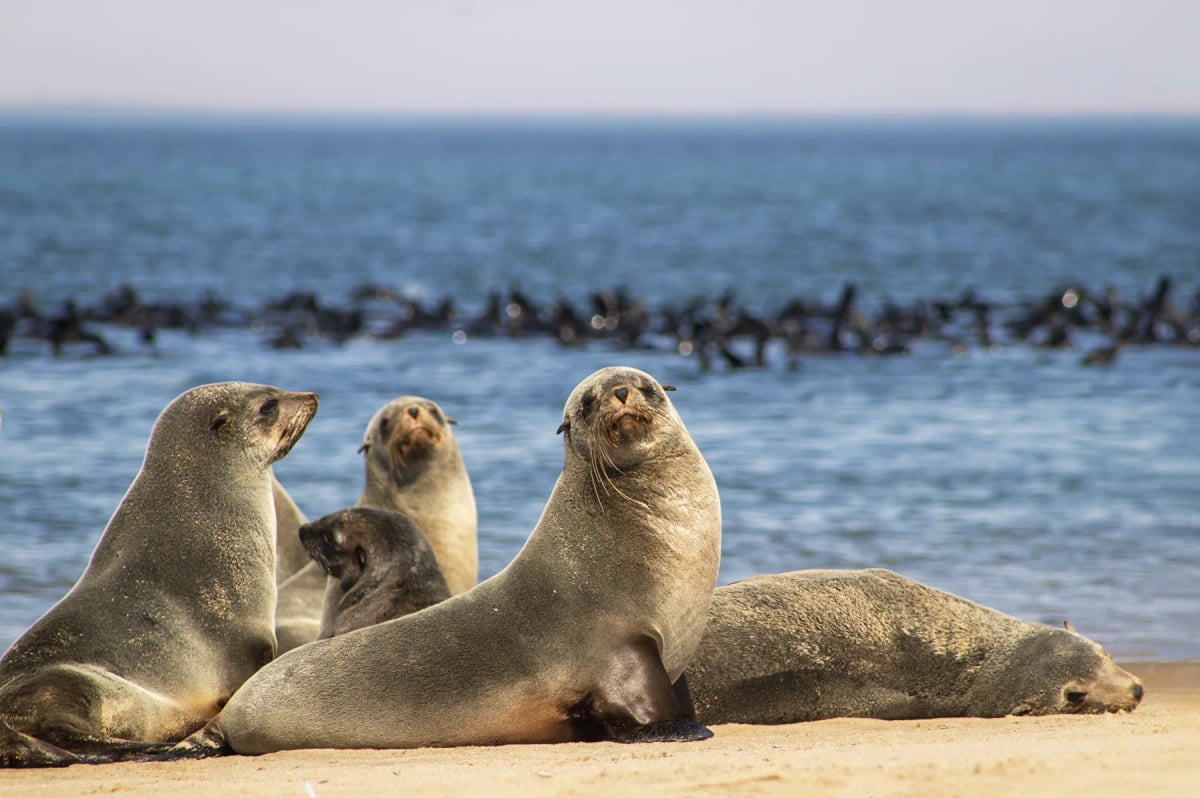
Fur seals and sea lions are close relatives in the same family, the eared seals, and both have visible ear flaps and walk on all four flippers. In South America they even share beaches, which is why Argentines and Uruguayans call the sea lion the one hair sea wolf and the fur seal the two hair sea wolf. The coat is the main difference: fur seals have the thick underfur, while sea lions have only a short, single layer of coarse hair. Fur seals also have a more pointed, dog like snout, longer whiskers and proportionally longer rear flippers, and they are usually smaller than the sea lions they live with. Their behavior differs too. Fur seals tend to breed on steep, exposed rocks and boulder beaches, often pounded by waves, while sea lions prefer flatter, sandy beaches. At sea, fur seals usually feed farther offshore and at night.
Where do fur seals live and where can you see them?
Fur seals are creatures of cold, productive seas. All species but two live in the Southern Hemisphere, breeding on rocky shores, sea cliffs and offshore islands of South America, southern Africa, Australia, New Zealand and the subantarctic islands, and the northern fur seal and the Guadalupe fur seal live in the North Pacific. Outside the breeding season they range widely across the open ocean, sometimes traveling thousands of kilometers, and they favor waters where cold upwellings bring nutrients to the surface. Some colonies are easy to visit. Cape Cross in Namibia is the most famous, with a boardwalk beside a huge Cape fur seal colony, and Seal Island in False Bay, South Africa, is known for the great white sharks that hunt there. In Australia, boats visit Seal Rocks off Phillip Island, and in New Zealand the colony at Ōhau Point, near Kaikōura, sits right beside the coastal highway. In Uruguay, fur seals can be watched at Cabo Polonio and around Isla de Lobos, and expedition ships to South Georgia land on beaches packed with Antarctic fur seals.
Behavior
At sea, fur seals are powerful and nimble, using their front flippers to propel themselves through the water in a style quite different from the undulating motion of true seals. They are capable of diving to depths of over 200 meters and can stay submerged for several minutes at a time, though most foraging dives are much shallower. On land, the social life of a fur seal colony is loud and intense. During the breeding season, males arrive early to stake out territories on the beach, and competition between rivals can turn physical, with biting and pushing matches that may leave visible scars. A successful male may hold a territory containing many females. Outside the breeding season, both males and females spend long periods at sea, returning to shore mainly to rest.
What do fur seals eat?
Fish, squid, and krill form the backbone of the fur seal diet, though the exact mix depends on the species and the ocean region it inhabits. Antarctic fur seals rely heavily on Antarctic krill, which is extraordinarily abundant in the waters around South Georgia and the broader Southern Ocean. Species living closer to temperate coastlines tend to focus more on fish and squid. Fur seals are pursuit predators, chasing prey through the water column with bursts of speed. Most feeding takes place at night, when many of their prey species rise toward the surface, making them easier to locate and catch. Nursing mothers face a particular challenge, needing to consume enough food during their trips to sea to produce the rich milk that their pups depend on for rapid growth in the first weeks of life.
Hunted for their fur
Few animals suffered as severely from commercial hunting as fur seals did. From the late 1700s onward, sealers from Europe and North America descended on Southern Hemisphere colonies in enormous numbers, drawn by the exceptional quality of the underfur. Entire colonies were eliminated within years of discovery. South Georgia alone saw millions of seals killed before populations collapsed. By the early 20th century, several species had been pushed to the edge of extinction. The gradual introduction of legal protections through the 1900s, including international agreements covering Antarctic waters, allowed most populations to rebound significantly. The Antarctic fur seal, reduced to a few hundred animals on a small island near South Georgia, grew back to about 3.5 million by 2009. Recovery has not been universal, and some regional populations remain below historical levels, but the overall story is one of remarkable resilience when hunting pressure is removed.
Are fur seals endangered?
Most fur seal species are listed as Least Concern by the IUCN, but not all, and recovery is not a guarantee. The Galápagos fur seal, the smallest species, is Endangered, because its tiny population crashes in El Niño years when warm water drives away its prey. The northern fur seal is Vulnerable: its main colony on the Pribilof Islands has been falling by about 6 percent a year since 1998. Even the Antarctic fur seal, the great success story, is in trouble again. At South Georgia its numbers peaked at about 3.5 million in 2009 and have dropped around 7 percent a year since, back to levels last seen in the 1970s, as krill grows scarcer with warming seas and fishing, and the small colonies of the South Shetland Islands are close to collapse. Elsewhere, entanglement in fishing nets, lost gear and plastic bands kills fur seals every year, especially in southern Africa and South America, and competition with fisheries reduces the food available to nursing mothers. Oil spills are particularly harmful, because oiled fur loses its insulation.
Where it is found
The Fur Seal can be found in places such as:
Researched and written by Juan Pablo. Sources: IUCN Red List, scientific literature and regional field guides. Last updated: .
Technical factsheet

Frequently Asked Questions
Why are they called fur seals?
Because of their fur. Fur seals have a dense underfur, with around 60,000 hairs per square centimeter, under a layer of longer guard hairs, and that soft coat was so valuable that millions were killed for it in the 18th and 19th centuries. In Argentina and Uruguay they are called two hair sea wolves, for the same double coat, to tell them apart from the sea lion, the one hair sea wolf.
Are there white fur seals?
Yes. Among Antarctic fur seals at South Georgia, about one pup in 800 is born with pale blond or cream fur instead of the usual dark brown. It is not albinism, since their eyes and flippers are normally colored, but leucism, a genetic condition that reduces pigment in the fur. These white fur seals are a highlight for visitors to South Georgia, and a few have also been recorded in other species, such as a subantarctic fur seal at Gough Island.
What animals eat fur seals?
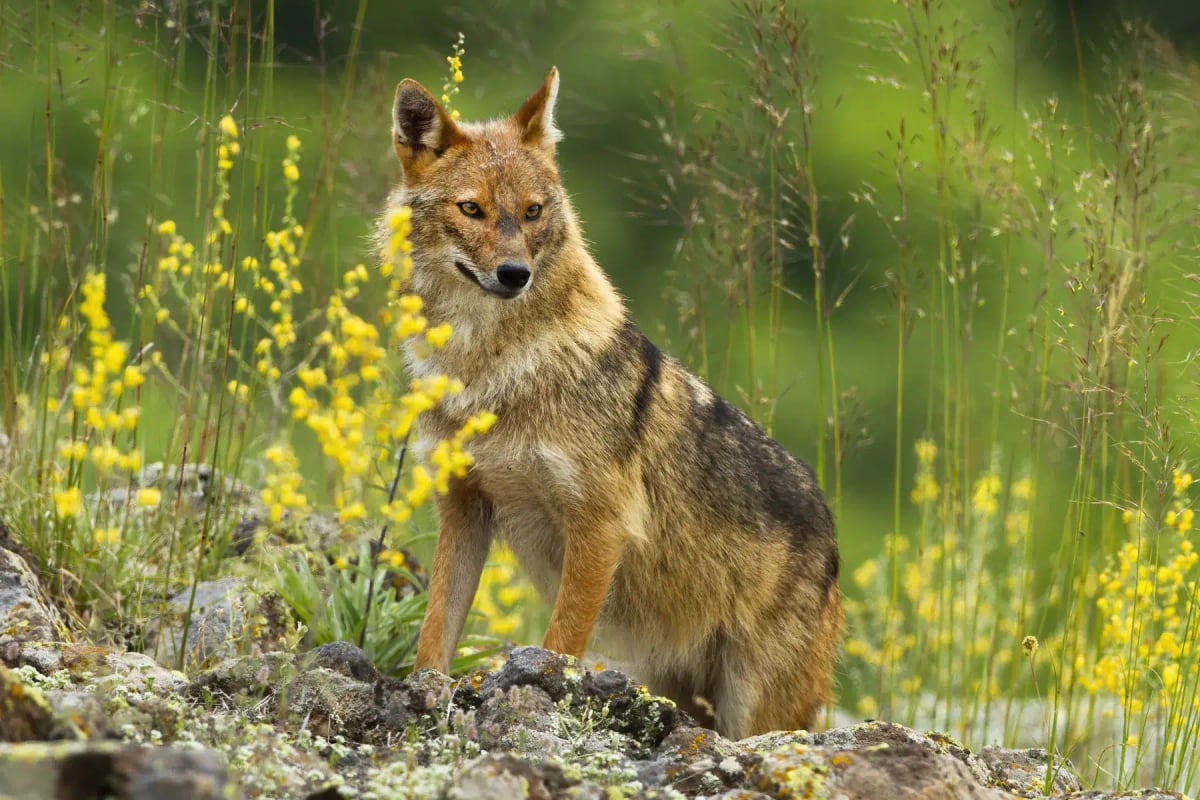
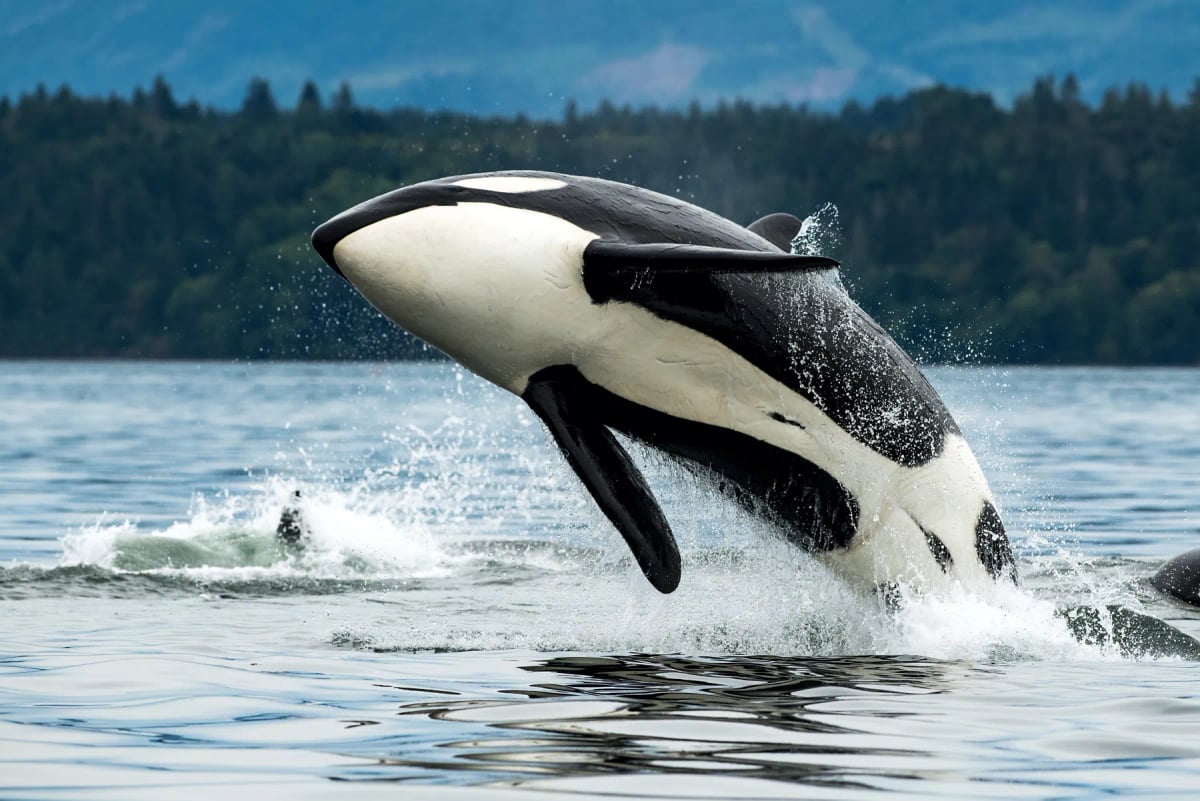
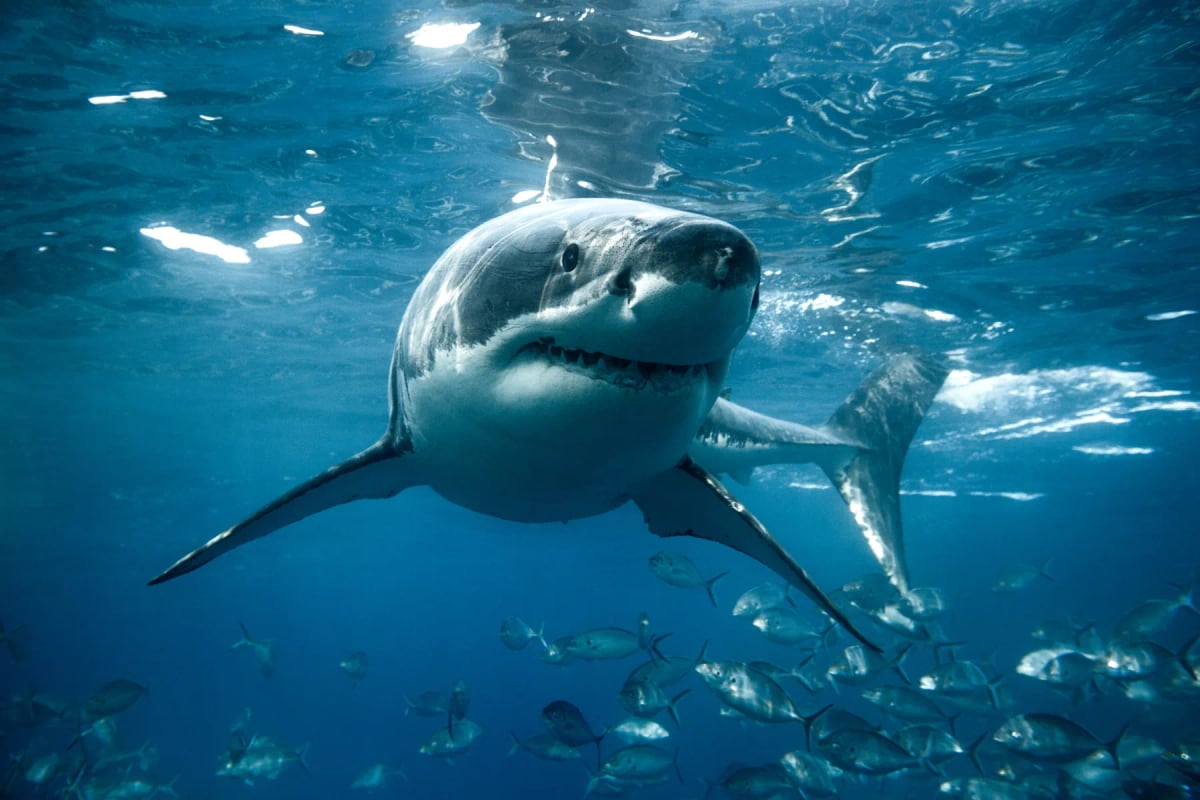
Their main predators are great white sharks and orcas. At Seal Island in South Africa, great whites famously leap out of the water while attacking Cape fur seals. Leopard seals catch many Antarctic fur seal pups, and South American sea lions sometimes kill young fur seals. On land, pups can be taken by black backed jackals and brown hyenas in Namibia, and by skuas and giant petrels in the subantarctic.
Are there fur seals in the Arctic?
Not in the true Arctic, but one species lives in the cold North Pacific: the northern fur seal, which breeds mainly on the Pribilof Islands in the Bering Sea, and also on islands off Russia and California. It spends most of the year at sea, sometimes migrating thousands of kilometers south. The Guadalupe fur seal of Mexico is the other northern species. All the rest live in the Southern Hemisphere.
How many fur seals are there?
There are several million fur seals in total. The Antarctic fur seal is the most numerous, with about 3.5 million at its 2009 peak, although it has been declining since. Southern Africa has around two million Cape fur seals, the northern fur seal numbers about 1 to 1.3 million, and New Zealand has around 200,000. At the other extreme, the Galápagos and Guadalupe fur seals number only in the thousands or tens of thousands.
How deep can fur seals dive?
Fur seals are impressive divers. They can reach depths of over 200 meters and stay underwater for several minutes at a time. That said, most of their dives during a typical feeding trip are much shallower, as a lot of their prey is found in the upper layers of the ocean. They use their powerful front flippers to propel themselves, making them agile and fast in the water compared to other seal species.
Are fur seals dangerous to humans?
Fur seals are generally not aggressive toward people, but they can bite if they feel threatened or cornered, especially during the breeding season when males are defending territories. Adult males in particular are large and can move surprisingly fast on land. Visitors to colonies are advised to keep a respectful distance and avoid blocking an animal's path to the sea. As long as people behave calmly and give the animals space, encounters are rarely a problem.