Kea
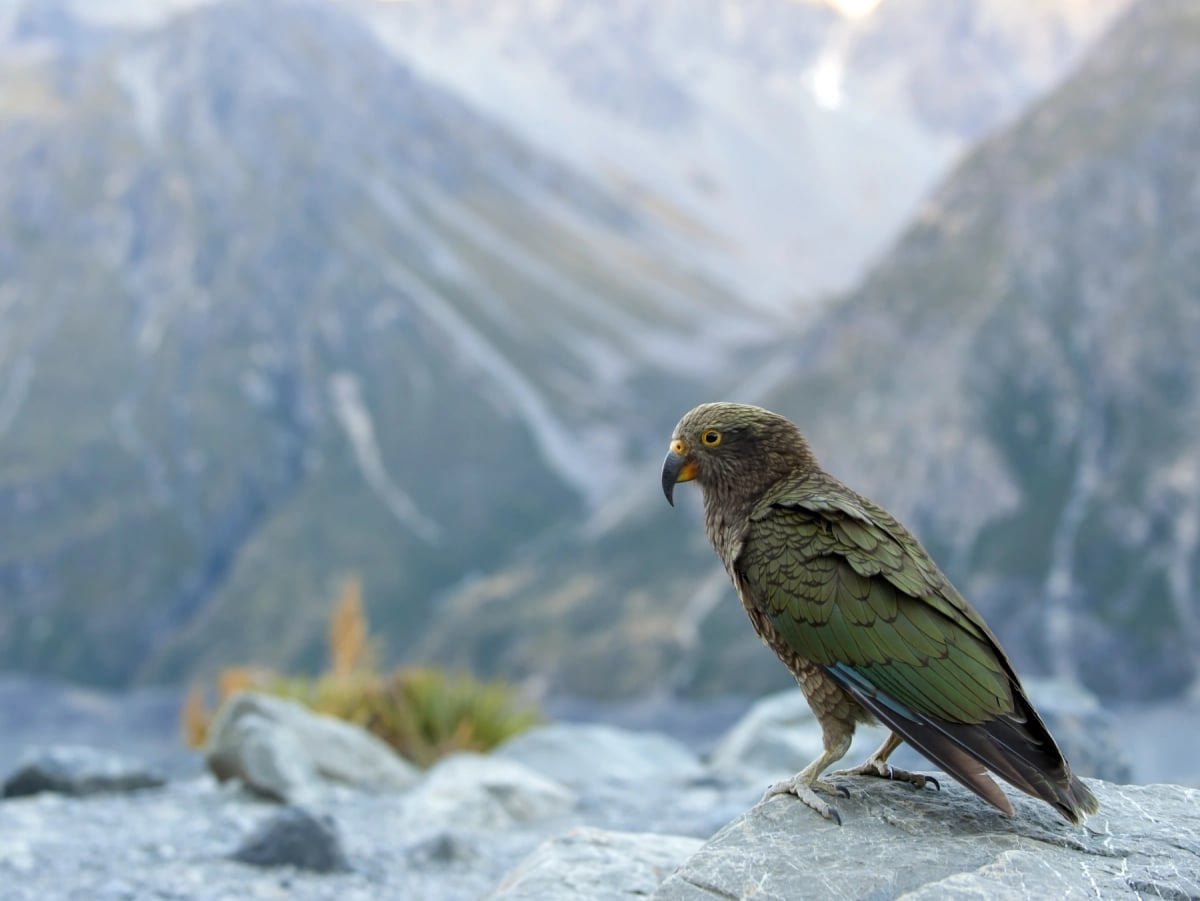
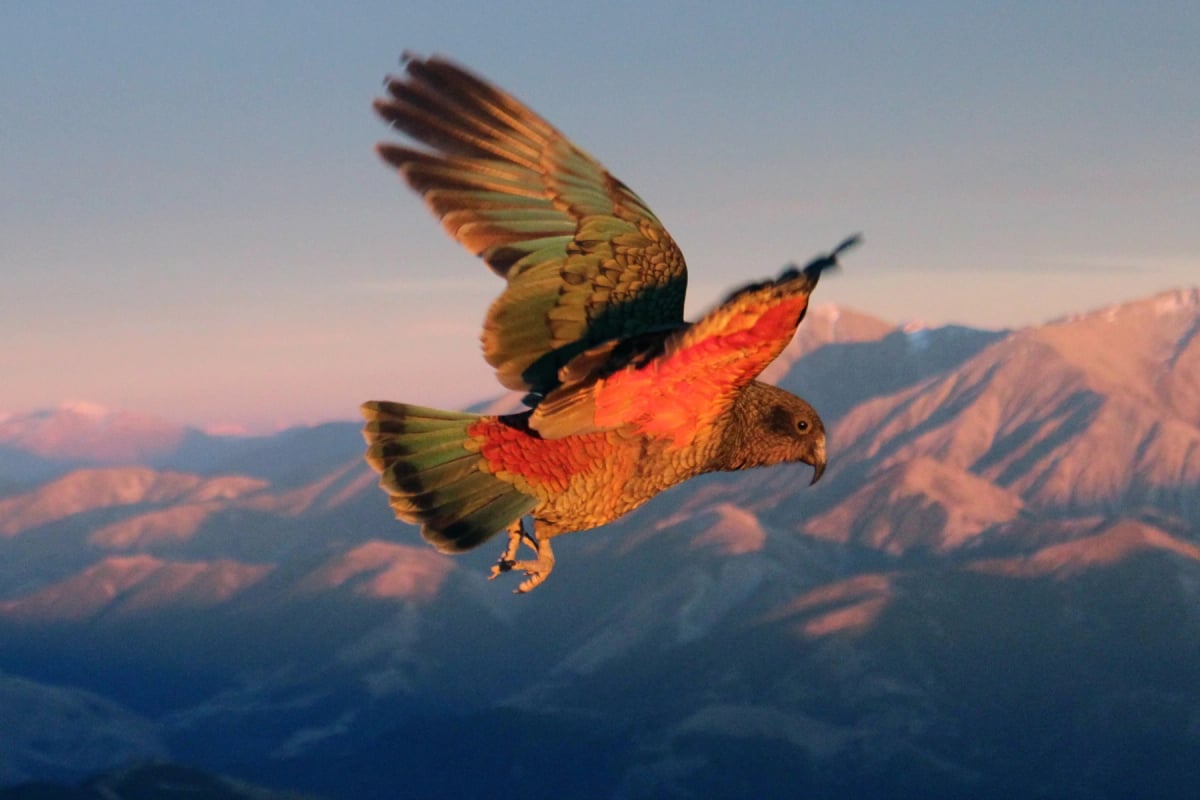
The kea is the only alpine parrot in the world and one of the most intelligent birds alive. Found exclusively on the South Island of New Zealand, it makes its home in subalpine forests, rocky slopes, and valleys that sit well above sea level. Its plumage is mostly olive green, with vivid orange feathers on the underside of its wings that flash brilliantly in flight. The kea has a curved, powerful beak it uses to dig up roots, tear apart bark, and investigate almost any object it finds. It feeds on roots, berries, leaves, seeds, insects, and occasionally carrion. Studies have shown it can solve puzzles, work in teams, and even understand probability, placing it among the smartest non-human animals. The kea is listed as Endangered, threatened mainly by stoats, possums, and rats introduced to New Zealand.
Habitat and distribution
New Zealand's South Island is the only place on Earth where the kea lives. It occupies a wide band of elevation, from beech forests on the lower mountain slopes all the way up into the subalpine and alpine zones above the tree line, where snow can linger well into spring. The Fiordland, Westland, and Nelson Lakes regions hold some of the largest populations. Rather than migrating, kea move up and down the mountains with the seasons, descending to lower valleys during the harshest winter conditions. They are equally at home on rocky outcrops, scree slopes, and in mountain car parks, where curious individuals are a familiar sight to visitors exploring national parks across the Southern Alps.
Diet
Few birds have a diet as broad as the kea's. It feeds on roots, bulbs, berries, leaves, seeds, nectar, and insects, and will also consume carrion when the opportunity arises. Its powerful, curved beak is well suited to prying bark from trees in search of grubs, digging into the soil for roots, and cracking open tough seed cases. The kea is an opportunistic forager, meaning it constantly explores its surroundings for anything edible. In areas near human activity, it has learned to raid rubbish bins and pick apart unattended food. By carrying seeds across mountain terrain, it also contributes to the regeneration of native plants, giving it a quiet but genuine role in the health of the alpine ecosystem.
Intelligence and behavior
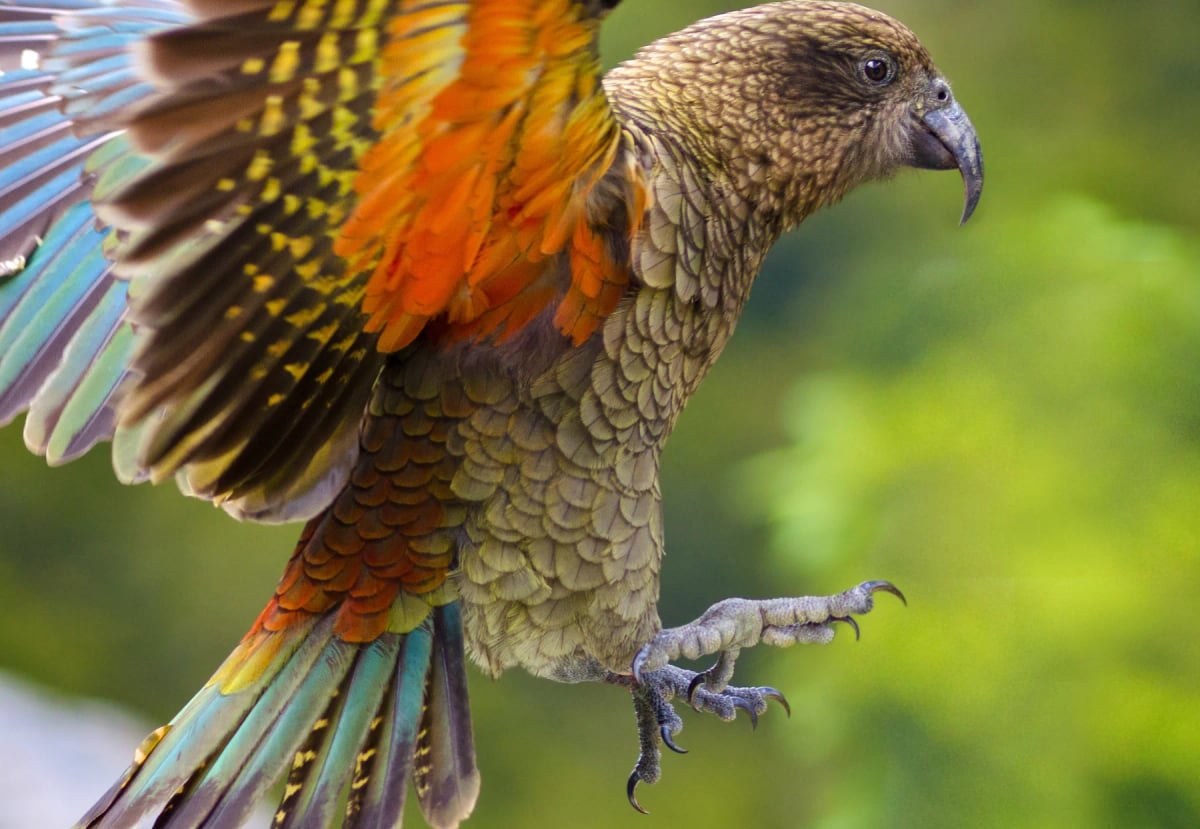
Among birds, the kea stands out as one of the most intellectually impressive species ever studied. Research has shown that kea can solve puzzles requiring multiple steps, cooperate with other individuals to obtain a reward, and even grasp the concept of probability, a skill once thought to belong only to humans and a handful of other mammals. They are intensely playful, especially as juveniles, and spend hours manipulating objects, sliding down snowy slopes, and investigating anything unfamiliar. This curiosity drives them to pull rubber seals from car windows, dismantle boots left outside huts, and pry at anything within reach. Far from being destructive for no reason, this behavior reflects a sharp, active mind always looking for something new to engage with.
Do kea attack sheep? The bounty years
When European settlers brought sheep to the high country of the South Island in the 1860s, stories soon spread that kea were attacking and killing their flocks. The truth is more limited: some kea, not all, learned to land on the backs of sheep and use their powerful beak and claws to tear through the wool and eat the fat underneath, and the wounds could become infected. Video recorded in 1992 finally confirmed the behavior, but it was always the habit of a few birds, and kea do not hunt sheep as prey. Even so, the reputation cost the species dearly. For about a century, the government, local councils and sheep station owners paid a bounty for kea beaks, and more than 150,000 birds were killed before the system ended in 1970. The kea only received full legal protection in 1986. Today farmers who have problems with a particular bird can ask the Department of Conservation to remove it, and attacks on sheep are rare.
Reproduction
Kea typically begin breeding between July and January, nesting in sheltered spots such as deep rock crevices, burrows dug into the ground, or hollow spaces beneath the roots of large trees. The female lays between two and five eggs and takes on most of the incubation, which lasts around three weeks. The male plays a critical supporting role, bringing food to the female throughout incubation and continuing to provision both her and the chicks after hatching. Juveniles stay with the family group for several months, learning skills through play and observation. Breeding success can vary sharply from year to year, and in seasons when introduced predators such as stoats are at high numbers, nest failure rates rise considerably.
Conservation
Classified as Endangered on the IUCN Red List, the kea faces serious pressure from several directions. Stoats, rats, and possums, all introduced to New Zealand by humans, prey on eggs, chicks, and nesting females, and are considered the primary driver of population decline. Estimates place the total wild population somewhere between three thousand and seven thousand individuals. The New Zealand Department of Conservation runs predator control operations across key mountain areas, including aerial drops of poison bait to reduce stoat numbers. Lead poisoning from old nails and flashing on huts and buildings is another serious problem: in one study at Aoraki Mount Cook, all 38 live kea tested had lead in their blood, and 26 had dangerous levels. Some kea have also died after eating poison bait laid for possums. In 2017 the kea was voted New Zealand's Bird of the Year, which helped raise awareness of its situation. Public education plays a growing role in conservation, encouraging people not to feed kea, which draws them closer to roads and other hazards.
Researched and written by Juan Pablo. Sources: IUCN Red List, scientific literature and regional field guides. Last updated: .
Technical factsheet


Frequently Asked Questions
Why is it called kea?
The name kea comes from the Māori language and imitates the bird's loud call in flight, a long, ringing keee aaa that echoes across the mountain valleys of the South Island. Its scientific name is Nestor notabilis: Nestor is a wise old king from Greek mythology, a fitting reference for such a clever bird, and notabilis means remarkable. In English the word kea is used for both one bird and several, so people speak of a kea and of a group of kea, although keas is also seen.
How big is a kea?
The kea is a large, heavy parrot, 46 to 50 centimeters long and weighing 750 grams to about 1 kilogram, roughly the size of a large crow. Males are about 5 percent longer than females and have a noticeably longer upper beak, 12 to 14 percent longer, which is the easiest way to tell the sexes apart. Its body looks olive green and rather plain when perched, but when it opens its wings it reveals bright orange red underwings, one of the most striking sights in the New Zealand mountains.
Do kea laugh?
In a way, yes. Kea have a special play call, a warbling sound they make while playing, and a study published in 2017 showed that when wild kea heard a recording of it, they started playing too: tumbling in the air, chasing each other or tossing objects. It was the first known case of an emotionally contagious call in a bird, and researchers compared it to laughter in humans, which also spreads from one person to another. Young kea are especially playful and can spend hours sliding in the snow or wrestling.
Can kea use tools?
Yes. Kea have used sticks and other objects in experiments to reach food, and the best known case is a wild born kea named Bruce, who lives at a wildlife park in Christchurch. Bruce lost his upper beak, probably in a trap, and taught himself to pick up small pebbles, hold them between his tongue and lower beak, and use them to preen his feathers. Scientists studied his behavior in detail and concluded it was deliberate tool use, one more example of the problem solving skills that make the kea one of the smartest birds in the world.
What is the difference between a kea and a kākā?
The kea and the kākā are close relatives, both large parrots of the genus Nestor found only in New Zealand, but they live very different lives. The kea is olive green with orange underwings and lives in the mountains of the South Island, often above the tree line. The kākā is a forest parrot, darker and more brownish, with red and orange tones on the belly and under the wings, and it lives in native forests on both the North and South Islands and on offshore islands. Kākā are also noisier in the treetops, while kea are famous for their boldness around people.
Is the kea really a parrot?
Yes, the kea is a true parrot, and a remarkable one at that. It belongs to the family Strigopidae, the ancient group of New Zealand parrots that also includes the kākā and the flightless kākāpō, and it is often described as the only alpine parrot in the world. While most people picture parrots in tropical rainforests, the kea thrives in the cold, rugged mountain landscapes of New Zealand's South Island, often surrounded by snow for months at a time.
How intelligent is the kea?
The kea is considered one of the most intelligent birds on the planet. Scientists have shown it can solve problems with multiple steps, work together with other kea to get a reward, and even understand probability at a basic level. That last ability was long thought to be unique to humans and a few other mammals. Its curiosity and problem solving skills are on display every day in the wild.
Why do kea damage cars?
Kea are intensely curious birds that explore everything within reach, and cars happen to offer all sorts of interesting materials to investigate. They pull at rubber seals around windows, pry off wipers, and pick at any loose fitting part they can find. This behavior is not aggression. It is simply a reflection of a highly active mind looking for stimulation. Car parks near national parks in the Southern Alps are famous for kea encounters.
What are the biggest threats to the kea?
The greatest threat to the kea comes from predators introduced to New Zealand by humans, particularly stoats, rats, and possums. These animals prey on eggs, chicks, and females sitting on nests, causing nest failure rates to spike in bad years. Lead poisoning from old building materials has also harmed kea living near human structures. The total wild population is estimated at somewhere between three thousand and seven thousand individuals.
Where exactly does the kea live?
The kea is found only on the South Island of New Zealand, with no natural population anywhere else in the world. It favors mountain environments, from beech forests on the lower slopes up to rocky terrain above the tree line. The Fiordland, Westland, and Nelson Lakes regions are home to some of the strongest populations. Kea move up and down in elevation with the seasons rather than traveling long distances horizontally.
What does the kea eat?
The kea eats a surprisingly wide variety of food, including roots, berries, leaves, seeds, nectar, insects, and carrion. Its strong, curved beak lets it dig into soil, strip bark from trees, and crack open tough seed cases with ease. Near human settlements, it has learned to raid rubbish bins and steal unattended snacks. This flexible approach to finding food is one of the reasons the kea has managed to survive in such a demanding environment.
Is the kea endangered?
Yes, the kea is classified as Endangered on the IUCN Red List. The wild population is estimated at between three thousand and seven thousand individuals, a relatively small number for a species spread across New Zealand's South Island. Conservation efforts include predator control programs run by the New Zealand Department of Conservation, such as aerial drops of poison bait to reduce stoat numbers, as well as public education campaigns to keep kea safe around roads and human activity.