Wild Dog
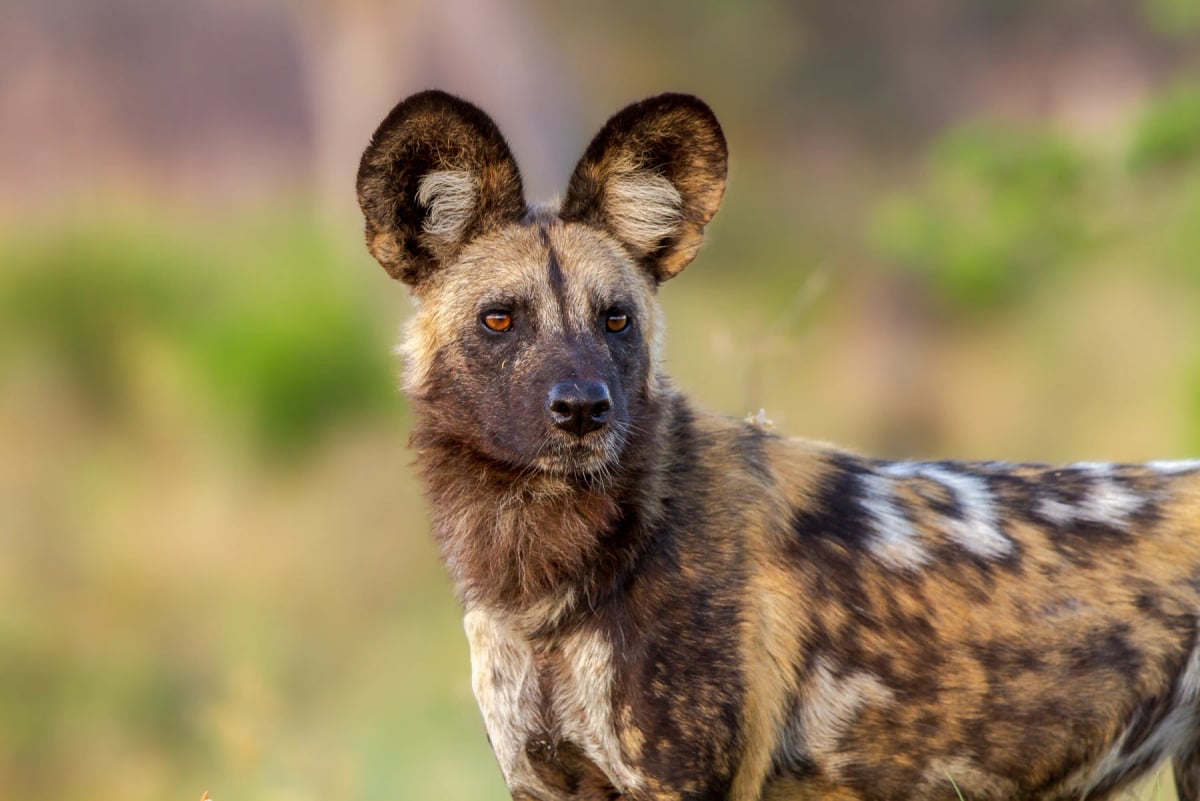
The African wild dog, also known as the painted wolf, is one of Africa's most efficient and social predators. Its coat is a unique mosaic of black, white, yellow, and brown patches, and no two individuals look the same. Large rounded ears give it exceptional hearing. Living in packs of around 10 to 40 individuals, it hunts cooperatively, relying on stamina rather than speed to pursue impalas, wildebeest calves, and other medium sized prey over long distances. Success rates in the hunt can exceed 70 percent, far above those of lions or leopards. Fewer than 6,600 adults remain in the wild. Habitat loss, snares set for other animals, road collisions, and diseases passed on from domestic dogs have pushed it to the edge. It now survives in scattered populations across southern and eastern Africa.
Habitat and distribution
At one point, African wild dogs ranged across nearly all of sub-Saharan Africa, from the Sahel down to the southern tip of the continent. Today, suitable populations survive mainly in southern and eastern Africa, with strongholds in Tanzania, Zimbabwe, Botswana, Zambia, Mozambique, and South Africa. They thrive in open woodlands, grasslands, and savanna scrub, where visibility is good and prey is plentiful. Large home ranges are essential for these animals. A single pack may cover several hundred square kilometres as it patrols its territory. Fragmentation caused by human settlement, agriculture, and fencing has broken their range into scattered pockets, making it increasingly hard for individuals to move between populations and maintain the genetic diversity the species needs to survive.
Diet
Impalas make up the bulk of the African wild dog's diet across much of its range, but these predators are flexible hunters. Wildebeest calves, gazelles, and reedbuck are all taken when available, and smaller animals such as hares and warthogs are also eaten. Rather than ambushing prey, packs pursue their targets at a steady pace over distances that can stretch several kilometres, gradually tiring the animal out. This strategy of hunting through endurance is remarkably effective. Success rates regularly exceed 70 percent, far outperforming lions and leopards. After a kill, food is shared across the whole pack. Adults returning to the den will regurgitate meat for pups and for members that were too ill or injured to take part in the hunt.
Social structure
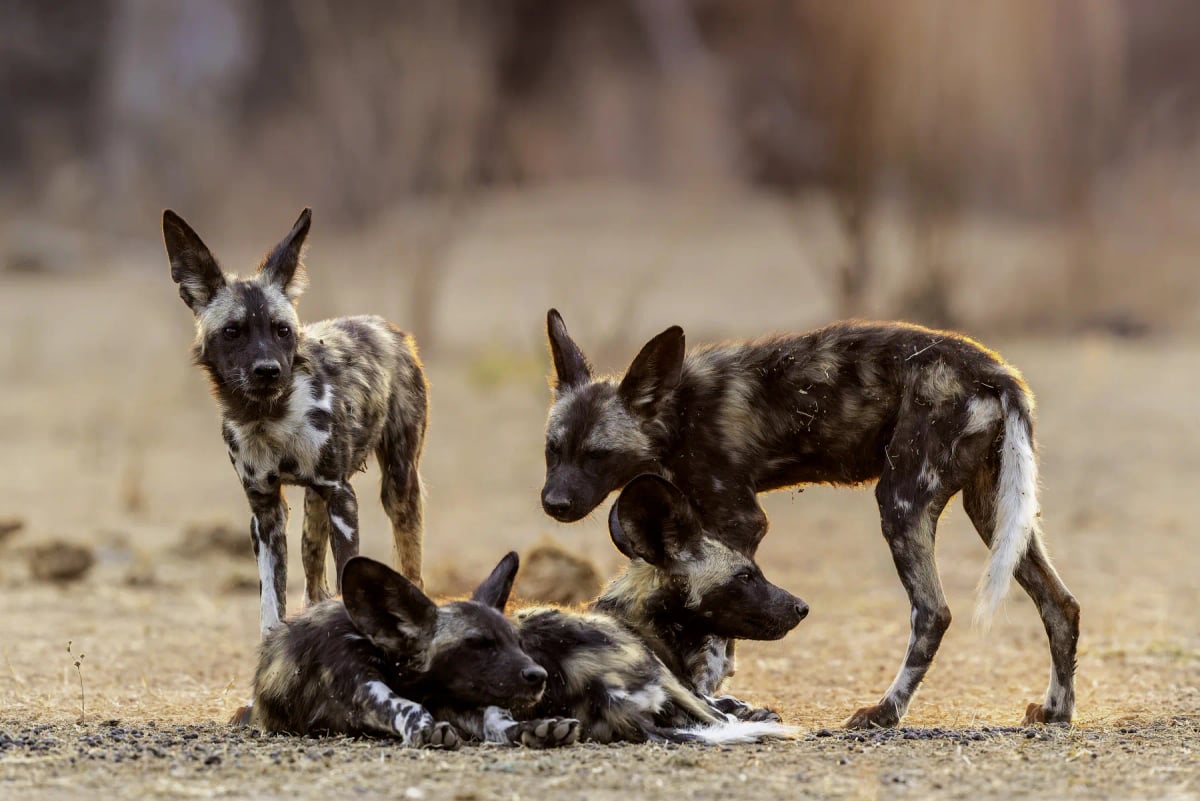
Few animals show the level of cooperation seen in a wild dog pack. Groups typically number between 10 and 40 individuals and are centred around a single dominant breeding pair, the only animals in the pack that normally reproduce. Every other member contributes to raising the pups, babysitting at the den, sharing food, and caring for injured or sick companions. Before a hunt, packs engage in a lively greeting ritual that appears to build excitement and coordinate the group. Communication involves a wide range of calls, including a distinctive hoo contact call that carries over long distances. This tight social bond is not just touching to observe. It is the foundation of their survival, allowing them to raise pups successfully and care for one another in a demanding environment.
Threats
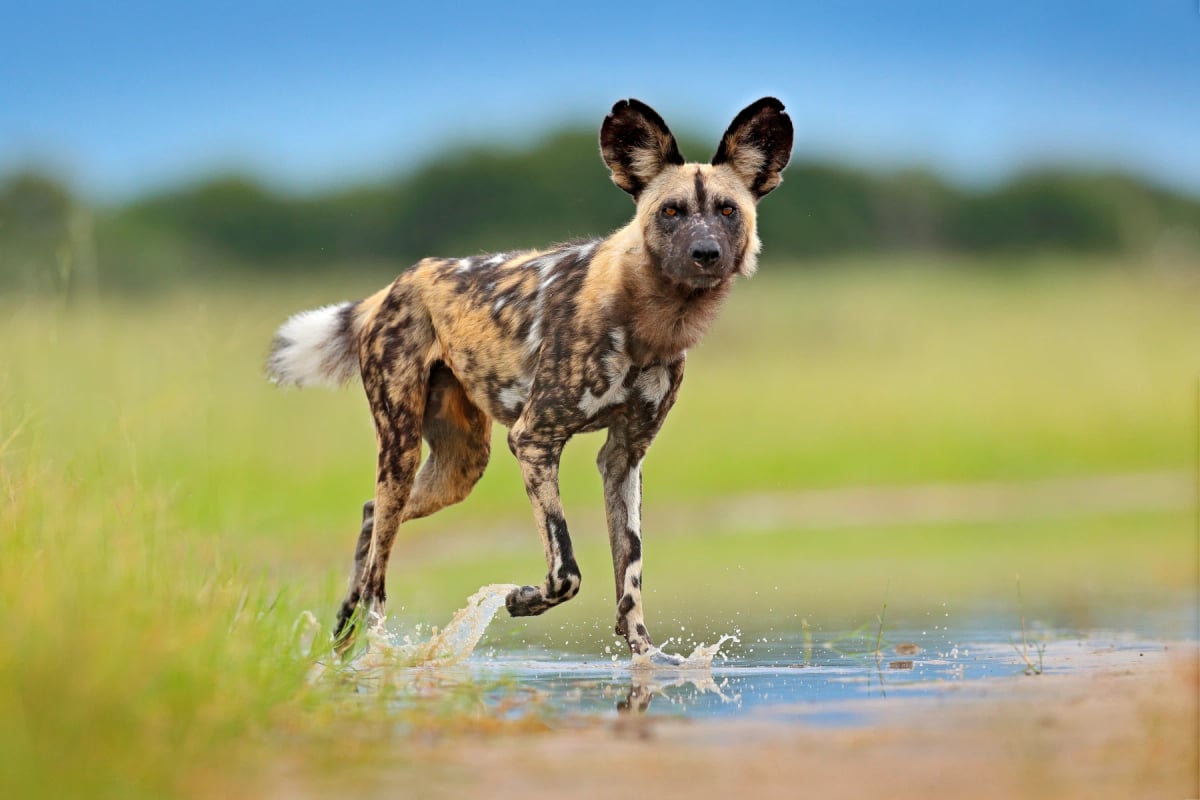
Pressure on African wild dog populations comes from several directions at once. As farmland and human settlements expand, the large territories these animals need are steadily reduced and divided. Wire snares set for bushmeat species catch wild dogs unintentionally, causing serious injuries or death. Roads crossing wildlife areas claim lives through collisions, particularly at night. Disease is another major concern. Rabies and canine distemper, both transmitted by contact with domestic dogs living near the edges of protected areas, have caused local population collapses in the past. Because packs are small and spread across a wide area, a single disease outbreak can wipe out an entire group. Persecution by farmers who view wild dogs as a threat to livestock also contributes to their decline, even though predation on livestock is far less common than often assumed.
Conservation
The IUCN lists the African wild dog as Endangered, with fewer than 6,600 adults estimated to remain in the wild. Large, well-managed protected areas such as the Selous Game Reserve in Tanzania and the Okavango Delta in Botswana provide some of the best remaining refuge for the species. Conservation programmes focus on several fronts: reducing conflict with farming communities through compensation schemes for livestock losses, removing snares, vaccinating domestic dogs against rabies and distemper near protected area boundaries, and establishing wildlife corridors to reconnect isolated populations. Reintroduction efforts in South Africa, including in Kruger National Park, have had measurable success. Ongoing research using tracking collars helps scientists monitor pack movements and health, giving conservationists the information they need to act quickly when a population is in trouble.
Where it is found
The Wild Dog can be found in places such as:
Researched and written by Juan Pablo. Sources: IUCN Red List, scientific literature and regional field guides. Last updated: .
Technical factsheet

Frequently Asked Questions
How fast can an African wild dog run?
African wild dogs can reach speeds of around 66 kilometres per hour in short bursts, but speed is not really their secret weapon. What makes them such effective hunters is endurance. They chase prey at a steady pace over several kilometres, gradually wearing the animal down until it can no longer escape. This strategy works so well that their hunts succeed more than 70 percent of the time.
Why are African wild dogs endangered?
Several pressures have pushed this species to the brink. Habitat loss has broken their range into isolated fragments, making it hard for packs to find enough space. Wire snares, road collisions, and diseases such as rabies and canine distemper passed on from domestic dogs have all taken a toll. Persecution by farmers concerned about livestock also plays a role. Fewer than 6,600 adults are estimated to remain in the wild today.
How do African wild dogs hunt together?
Before heading out, the whole pack takes part in an energetic greeting ritual that seems to get everyone ready and coordinated. Once on the move, they work as a unit, communicating constantly and taking turns leading the chase. Rather than relying on a sudden burst of speed or an ambush, they wear their prey down over a long distance. When the animal tires, the pack closes in together. Afterward, every member of the group shares in the meal.
What do African wild dogs eat?
Impalas are their most common prey across much of their range, but African wild dogs are adaptable. They also hunt wildebeest calves, gazelles, and reedbuck, and will take smaller animals like hares and warthogs when the opportunity arises. After a kill, food is shared with the entire pack. Adults returning from the hunt will regurgitate meat for pups and for any members that were too sick or injured to take part.
Where do African wild dogs live?
African wild dogs once roamed across nearly all of sub-Saharan Africa. Today, the strongest populations are found in southern and eastern Africa, particularly in Tanzania, Botswana, Zimbabwe, Zambia, Mozambique, and South Africa. They prefer open woodlands, savannas, and grasslands where they can spot prey from a distance. A single pack needs a very large area, sometimes several hundred square kilometres, to meet all of its needs throughout the year.
Is every African wild dog's coat pattern unique?
Yes, and it is one of the most fascinating things about this animal. Each dog carries a completely individual mix of black, white, yellow, and brown patches. No two individuals share the same pattern, much like human fingerprints. Researchers actually use these coat patterns to tell animals apart in the field without needing to tag or handle them. The species' scientific name, Lycaon pictus, even reflects this, translating roughly as 'painted wolf'.
How many African wild dogs are left in the world?
Current estimates put the total adult population at fewer than 6,600 individuals scattered across sub-Saharan Africa. This makes the African wild dog one of the most threatened carnivores on the continent. Because packs are small and isolated from each other, a single disease outbreak or a spell of severe habitat loss can wipe out a local group entirely. Conservation efforts, including wildlife corridors and vaccination programmes, are working to keep remaining populations connected and healthy.