Mouflon
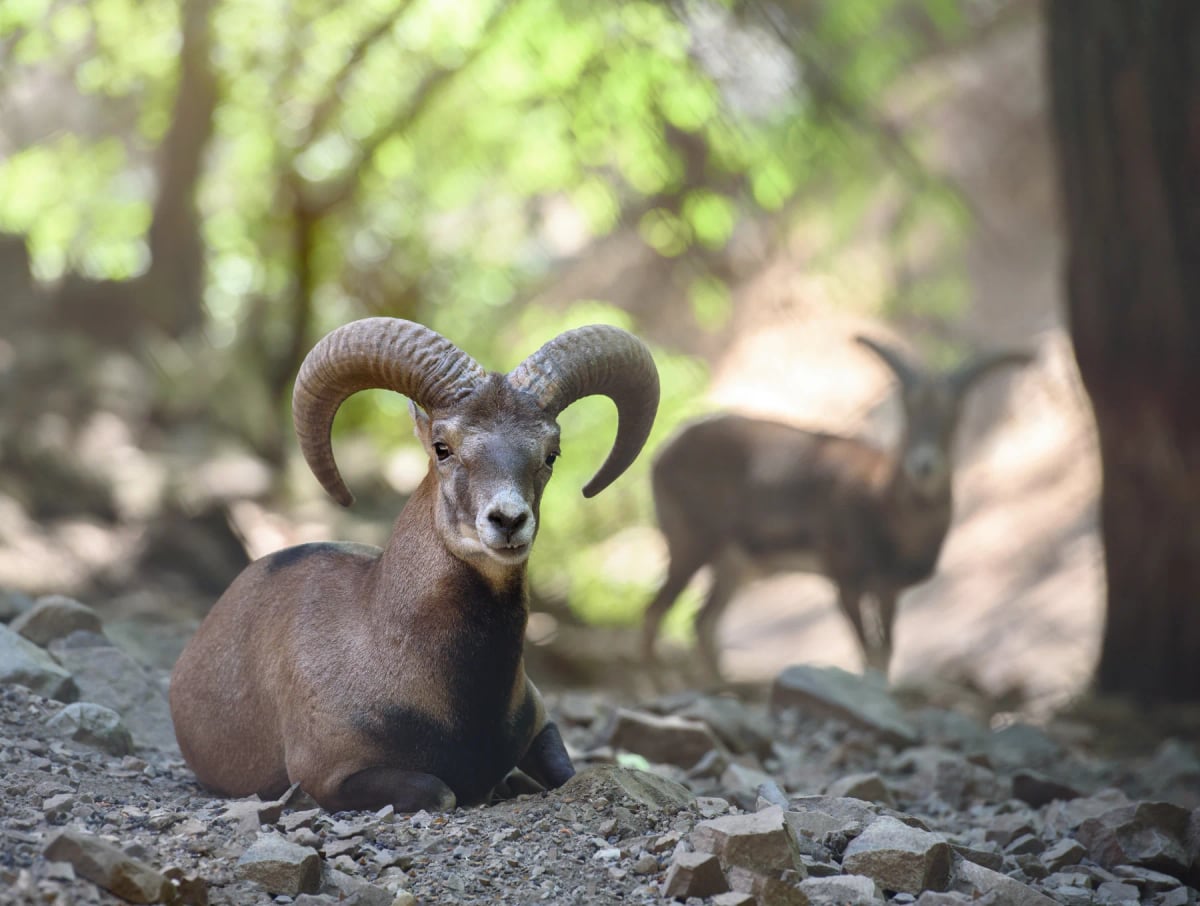
The mouflon is one of the world's oldest wild sheep, native to the rocky mountains of Western Asia. It moves confidently across steep slopes and through pine forests, grazing on grasses, herbs, acorns, and leaves. Males are easy to recognize by their large horns that curl outward and upward, growing throughout the animal's life. Females are noticeably smaller and often lack horns altogether. Outside the breeding season, males and females tend to live in separate groups. When the rut arrives in autumn, males compete intensely, clashing horns to win access to females. The Cyprus mouflon is a distinct and particularly vulnerable population, with only a few hundred animals surviving. Across its range, the mouflon has benefited from legal protection after decades of heavy hunting, though the species is still classified as Near Threatened by the IUCN.
Habitat and distribution
Mouflons are found across the rugged mountain ranges of Western Asia, with native populations in Armenia, Azerbaijan, Iran, and Turkey, as well as an isolated population on the island of Cyprus. They favour steep, rocky terrain where cliffs and boulders provide cover from predators and a clear view of approaching danger. At lower elevations they move through open woodland and pine forest, while in warmer months many groups climb to alpine meadows where fresh grasses are more abundant. Seasonal movement between elevations is common, allowing the animals to follow the best available grazing throughout the year. The mouflon copes well with cold winters and thin soils, and its ability to navigate difficult ground with ease makes mountainous habitat particularly well suited to its way of life.
Diet
Grazing takes up a large part of the mouflon's day, with grasses forming the foundation of its diet throughout the year. Alongside grass, mouflons eat a wide variety of herbs, leaves, and acorns, adjusting what they eat according to what is available each season. During autumn and winter, when green vegetation becomes scarce, they browse shrubs and strip bark or dried plant matter where needed. They are not particularly fussy eaters, which helps them survive in landscapes where food sources can be unpredictable. Mouflons obtain much of their water from the plants they consume, though they will visit streams and springs when the opportunity arises. This practical, adaptable approach to feeding allows them to live in some of the more challenging mountain environments across their range.
Distinctive features
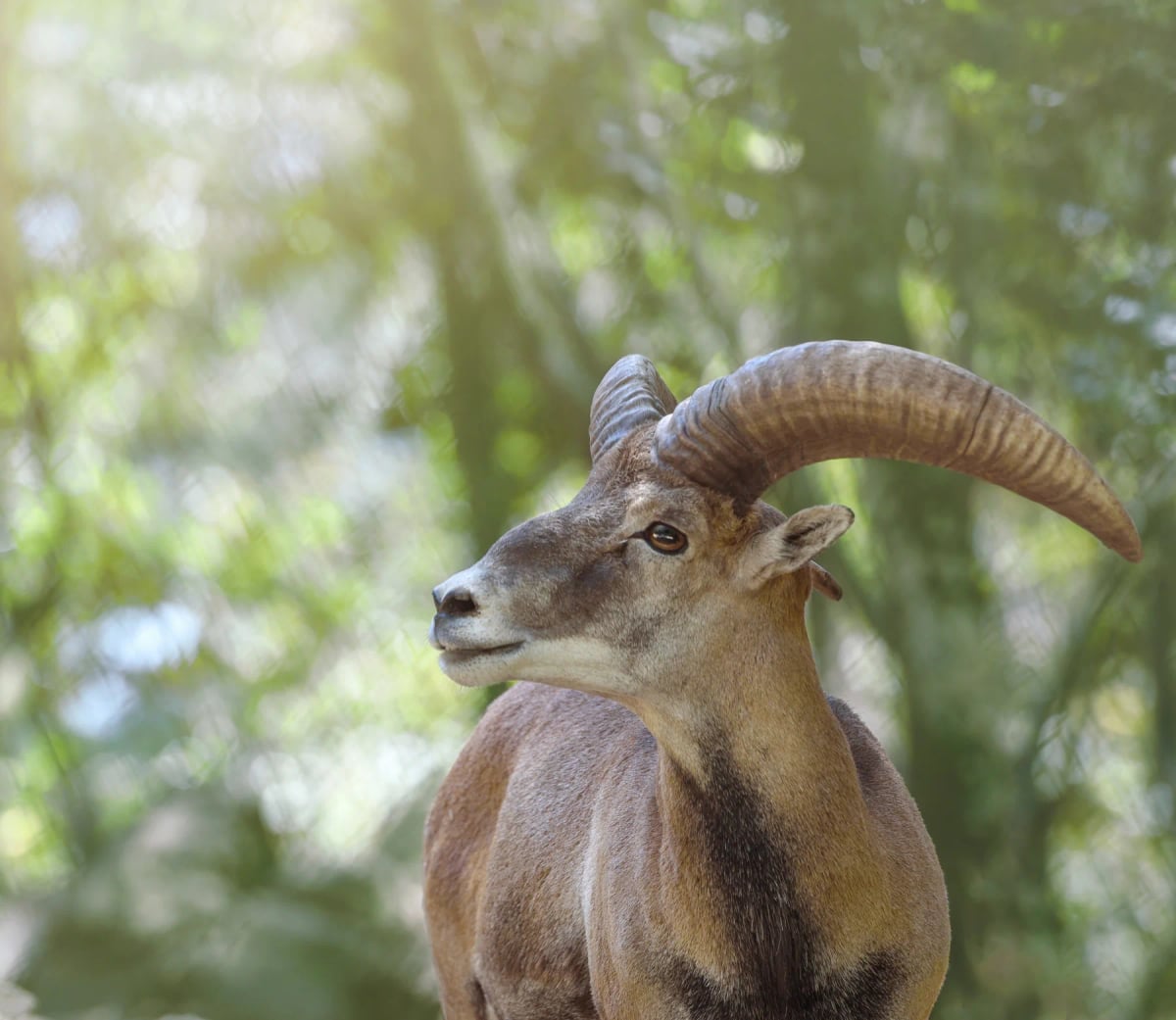
Few wild sheep are as striking as the mouflon, and the adult male is especially hard to miss. His horns grow throughout his entire life, curling outward and upward in a broad arc that can exceed one metre in length in older individuals. The coat is a warm reddish brown for much of the year, and adult males develop a pale saddle patch on the back during winter, which fades again in spring. Females are noticeably smaller and usually lack horns, or carry only short, lightly curved ones. Both sexes have a lighter underside and face, which contrasts with the deeper tone of the body. The mouflon's legs are slender but powerful, built for gripping uneven rock and moving quickly across slopes that would challenge most other animals.
Behavior
Outside the breeding season, mouflons organize themselves into separate groups by sex. Females and their young tend to stay together in nursery groups, while males form their own bands and spend much of the year away from the females. This changes dramatically when the rut arrives in autumn. Males become restless and highly competitive, challenging rivals through displays of strength and direct horn clashes that can be heard from a considerable distance. The dominant male earns the right to mate with females in his area. Mouflons are alert animals with sharp eyesight and a strong instinct to flee uphill when they sense a threat, using steep terrain as their main defence. Within a group, individuals watch for danger constantly, and an alarm call from one animal is enough to send the whole herd moving.
Conservation
The IUCN lists the mouflon as Near Threatened, reflecting decades of pressure from hunting, habitat loss, and competition with livestock. Across much of its range, the species was heavily hunted for its impressive horns, and populations dropped sharply before legal protections began to take hold. Today, hunting restrictions and protected areas have helped some populations recover, though the situation varies considerably by country. The Cyprus mouflon, known locally as the agrino, is one of the most concerning cases. This island population numbers only in the hundreds and faces threats from poaching, disease, and the small size of its gene pool. Conservation efforts in Cyprus include dedicated reserves and strict enforcement of protective laws. Across the wider range, reducing conflict with farmers and controlling the spread of disease from domestic sheep remain important priorities.
Researched and written by Juan Pablo. Sources: IUCN Red List, scientific literature and regional field guides. Last updated: .
Technical factsheet

Frequently Asked Questions
What do mouflons eat?
Mouflons are grazers at heart, and grass makes up the bulk of their diet. They also eat herbs, leaves, and acorns, switching between food sources depending on the season. In autumn and winter, when fresh vegetation is harder to find, they browse shrubs and dried plant matter. They get most of their water from the plants they eat, though they will drink from streams and springs when these are nearby.
Where do mouflons live?
Mouflons are native to the rocky mountain ranges of Western Asia, with populations in Armenia, Azerbaijan, Iran, and Turkey. There is also a separate island population in Cyprus. They prefer steep, rugged terrain with cliffs and boulders, which gives them shelter and a good view of any approaching predators. In warmer months they often move up to higher meadows, then descend again as winter sets in.
Are mouflons endangered?
The mouflon is currently listed as Near Threatened on the IUCN Red List. Decades of heavy hunting, habitat loss, and competition with livestock caused serious population declines. Legal protections and dedicated reserves have helped some groups recover, but the situation is not the same everywhere. The Cyprus population is especially worrying, with only a few hundred animals remaining and ongoing threats from poaching and disease.
How big are mouflon horns?
The horns of a male mouflon grow throughout his entire life, curling outward and upward in a wide arc. In older males they can reach over one metre in length. Females either have no horns at all or carry short, lightly curved ones. The impressive size of the male's horns made the species a target for trophy hunters for many years, which contributed significantly to population declines across its range.
How do mouflons behave during the breeding season?
The mouflon rut takes place in autumn, and it transforms the males completely. Throughout most of the year, males and females live in separate groups, but when the rut arrives, males become restless and aggressive. They compete for females through displays of strength and direct clashes of horns, which can be heard from far away. The male that wins these contests earns the right to mate with the females in his area.
What is the Cyprus mouflon?
The Cyprus mouflon, called the agrino locally, is a distinct population of mouflon found only on the island of Cyprus. It is one of the most vulnerable wild sheep populations in the world, with only a few hundred individuals remaining. It faces threats from poaching, disease, and the limited genetic diversity that comes with such a small population. Cyprus has set up dedicated nature reserves and enforces strict laws to protect it.
Is the mouflon the ancestor of domestic sheep?
The mouflon is widely regarded as one of the wild ancestors of domestic sheep, making it one of the oldest wild sheep species still alive today. Genetic studies support a close relationship between mouflons and the earliest domesticated sheep, which were first kept in Western Asia thousands of years ago. This ancient connection is part of what makes the mouflon such a significant species, both biologically and historically.