Macaque
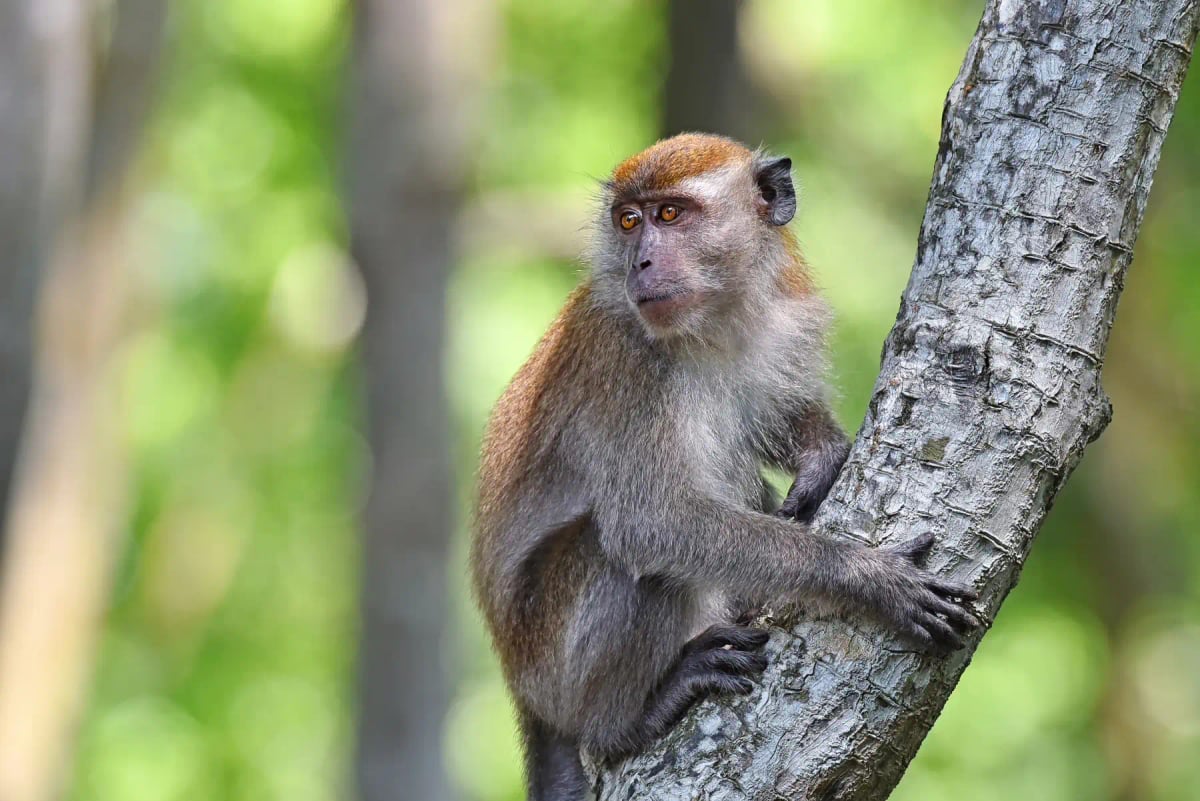
Macaques are Old World monkeys belonging to the genus Macaca, which includes more than 20 species spread across South, Southeast and East Asia. They are among the most geographically widespread primates on Earth, living in habitats that range from snowy mountain forests and river valleys to tropical islands and busy city centres. Most species form large social troops organized around female kinship lines, where females remain in their birth group for life while males transfer between groups. They eat fruit, seeds, leaves, roots, insects and small invertebrates, and many populations readily feed on crops and food scraps near human settlements. This closeness to people has made macaques among the most studied primates in the world. Conservation status varies widely across species, from abundant to critically endangered.
Habitat and range
No group of primates occupies a broader stretch of the world than macaques. Their range extends from Afghanistan and Pakistan in the west through South and Southeast Asia all the way to Japan and the Philippines in the east. Within that vast area they thrive in an extraordinary variety of habitats. Japanese macaques survive winters in snowy mountain forests, while other species inhabit tropical rainforests, coastal mangroves, dry scrubland and rocky cliffsides. The Barbary macaque is the only member of the genus found in Africa, living in the Atlas Mountains of Morocco and Algeria. Several species have also adapted to life alongside people, making their homes in temple grounds, roadsides and the outskirts of cities across Asia.
Diet
Fruit makes up the core of the macaque diet for most species, but these monkeys are flexible and opportunistic feeders. Depending on the season and what their habitat offers, they also eat leaves, bark, roots, seeds, flowers, fungi, insects, bird eggs and small vertebrates. Populations living near human settlements frequently raid agricultural fields, scavenge from rubbish and accept handouts from tourists, which can shift their diet considerably toward starchy and processed foods. Rhesus macaques in particular are well documented foraging in towns and markets across South Asia. This dietary flexibility is one of the key reasons macaques have succeeded across such a wide range of environments, allowing them to find enough food even when preferred items are scarce.
Social structure
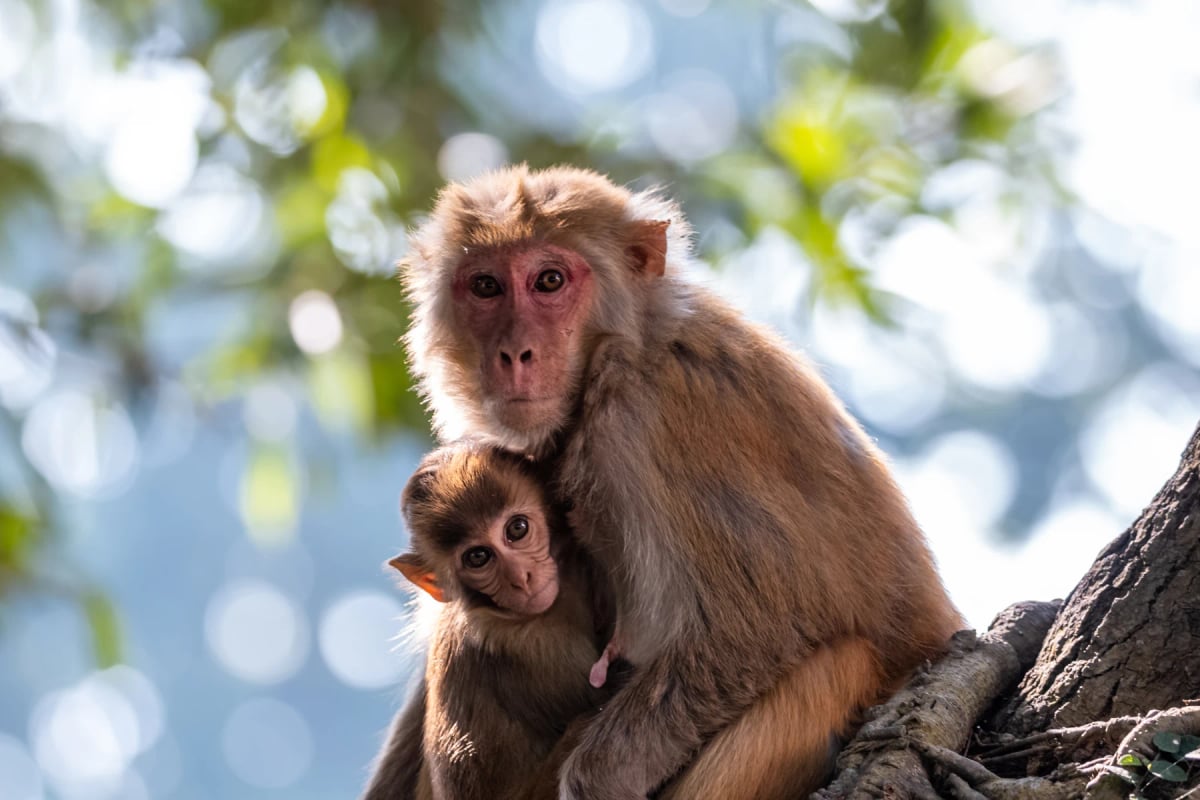
Macaques are deeply social animals that live in troops which can range from around ten individuals to well over a hundred. Their groups follow a pattern centered on female kinship: females stay in the troop where they were born for their entire lives, while males leave at adolescence and join other groups. Within the troop, each female inherits her social rank from her mother, and these ranks are largely stable across generations. Males compete for dominance, but the structure of the group is ultimately anchored by female bonds. Social grooming plays a central role in maintaining relationships and easing tensions. Some species, such as the Tonkean macaque, are notably tolerant in their social interactions, while others maintain stricter dominance hierarchies.
Relation with humans
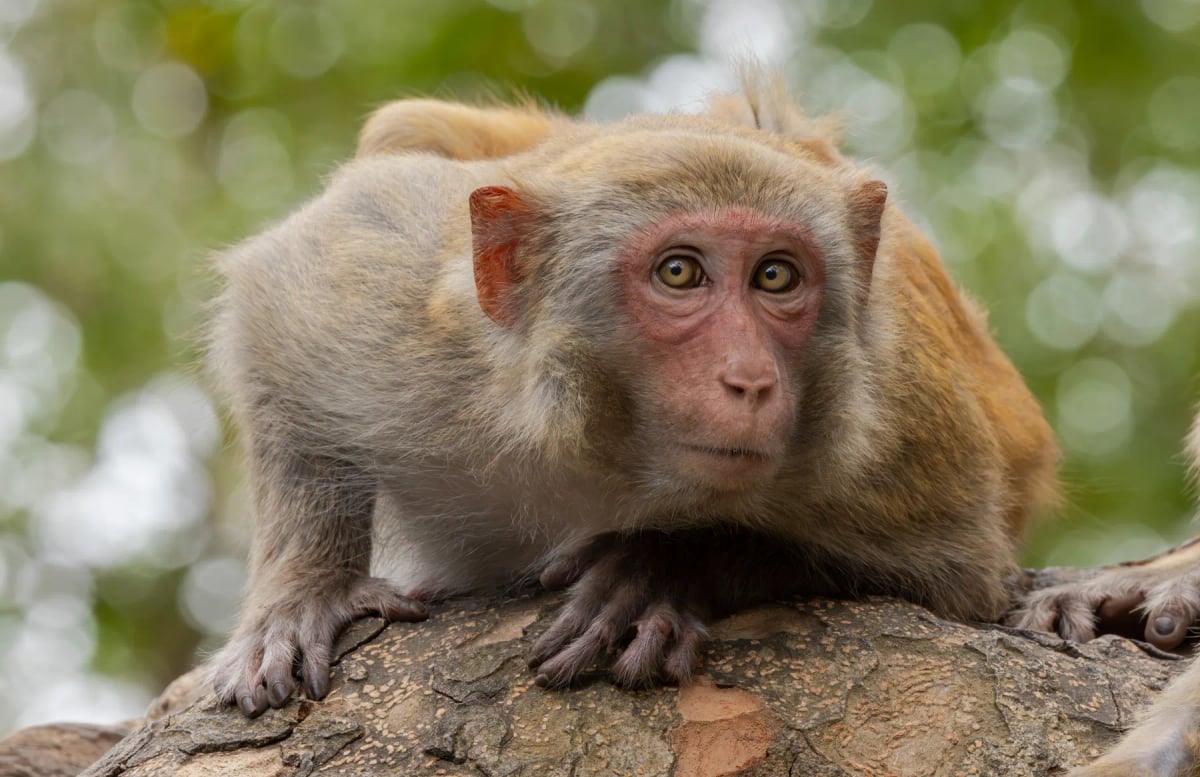
Few primates have a longer or more complex history with people than macaques. In Hinduism, the rhesus macaque is associated with the deity Hanuman, and troops living around temples in India and Nepal are often treated with reverence and fed regularly by devotees. In Japan, the macaque appears in folklore and art going back centuries. At the same time, macaques raiding farms cause real economic losses for rural communities across Asia, leading to conflict and, in some areas, culling programs. Macaques have also played a major role in biomedical research: rhesus macaques contributed directly to the development of the polio vaccine and remain widely used in laboratories today. This combination of cultural significance and scientific utility makes them uniquely intertwined with human history.
Threats
Across the genus, habitat loss is the most widespread pressure macaques face. Deforestation for agriculture, logging and urban expansion has reduced and fragmented forest across much of Asia, pushing many species into smaller and more isolated patches of land. Hunting is a serious additional threat in several countries, where macaques are killed for bushmeat or traditional medicine. The capture of wild individuals for the international pet trade and for export to biomedical research facilities has also depleted certain populations. Species with restricted ranges are especially vulnerable: the Siberut macaque, found only on a single island off Sumatra, and the Pagai Island macaque are both classified as Critically Endangered partly because any further habitat loss could be devastating for populations that have nowhere else to go.
Conservation
Conservation outcomes for macaques vary enormously depending on the species. The rhesus macaque and the long-tailed macaque are among the most numerous primates on Earth and face no immediate risk of extinction. At the other end of the scale, several island species are in serious trouble. The Pagai Island macaque and the Siberut macaque are both listed as Critically Endangered on the IUCN Red List, and the lion-tailed macaque of the Western Ghats in India is Endangered. Protected areas, anti-poaching enforcement and community programs that reduce conflict between farmers and macaques are among the practical tools being used to support struggling populations. Captive breeding has also helped sustain some of the rarest species while habitat restoration efforts continue in the field.
Where it is found
The Macaque can be found in places such as:
Researched and written by Juan Pablo. Sources: IUCN Red List, scientific literature and regional field guides. Last updated: .
Technical factsheet


Frequently Asked Questions
What do macaques eat?
Macaques eat a wide variety of foods. Fruit is usually the foundation of their diet, but they also consume leaves, roots, seeds, insects, bird eggs and small animals. Populations living near towns often raid crops and scavenge from rubbish. This flexibility is a big part of why macaques thrive in so many different environments, from dense rainforests to busy city outskirts.
Where do macaques live?
Macaques are found across a huge stretch of Asia, from Pakistan and Afghanistan in the west to Japan and the Philippines in the east. They occupy an impressive range of habitats, including snowy mountain forests, tropical rainforests, mangroves and rocky cliffs. One species, the Barbary macaque, lives in the Atlas Mountains of North Africa. Several species have also settled comfortably in temple grounds and urban areas.
Are macaques dangerous to humans?
Macaques are generally not aggressive, but they can bite or scratch if they feel threatened or are teased, especially in tourist areas where they have grown bold around people. Some species also carry the herpes B virus, which is harmless to them but can be serious in humans. It is always best to keep a respectful distance and never try to feed or handle a wild macaque.
How do macaques behave in a group?
Macaques live in troops that can range from around ten to over a hundred individuals. The group revolves around female relatives who stay together for life, while young males move to other troops when they grow up. Social rank is inherited from the mother and tends to stay stable over generations. Grooming is a key part of daily life, helping individuals build trust and keep the peace within the troop.
Why are some macaque species endangered?
The biggest threat facing many macaque species is the loss of their forest habitat due to agriculture, logging and urban growth. Hunting for bushmeat and traditional medicine adds further pressure, as does capture for the pet trade and biomedical research. Species with very small ranges, such as the Pagai Island macaque and the Siberut macaque, are especially at risk because any further habitat loss could push their already small populations toward extinction.
Can macaques swim?
Yes, several macaque species are capable swimmers and take to the water quite willingly. The crab-eating macaque of Southeast Asia regularly wades and swims to find food such as crabs, fish and other aquatic creatures. Japanese macaques are famous for soaking in natural hot springs during winter, but they also swim when needed. Water is not an obstacle for most macaques, and some island populations cross short stretches of sea with ease.
How long do macaques live?
In the wild, most macaque species live between 20 and 30 years, though this varies depending on the species and the conditions they face. In captivity, where food is reliable and threats are minimal, individuals can live even longer. Females generally outlive males. The rhesus macaque, one of the most studied primates in the world, has provided much of what scientists know about aging and lifespan in this group.