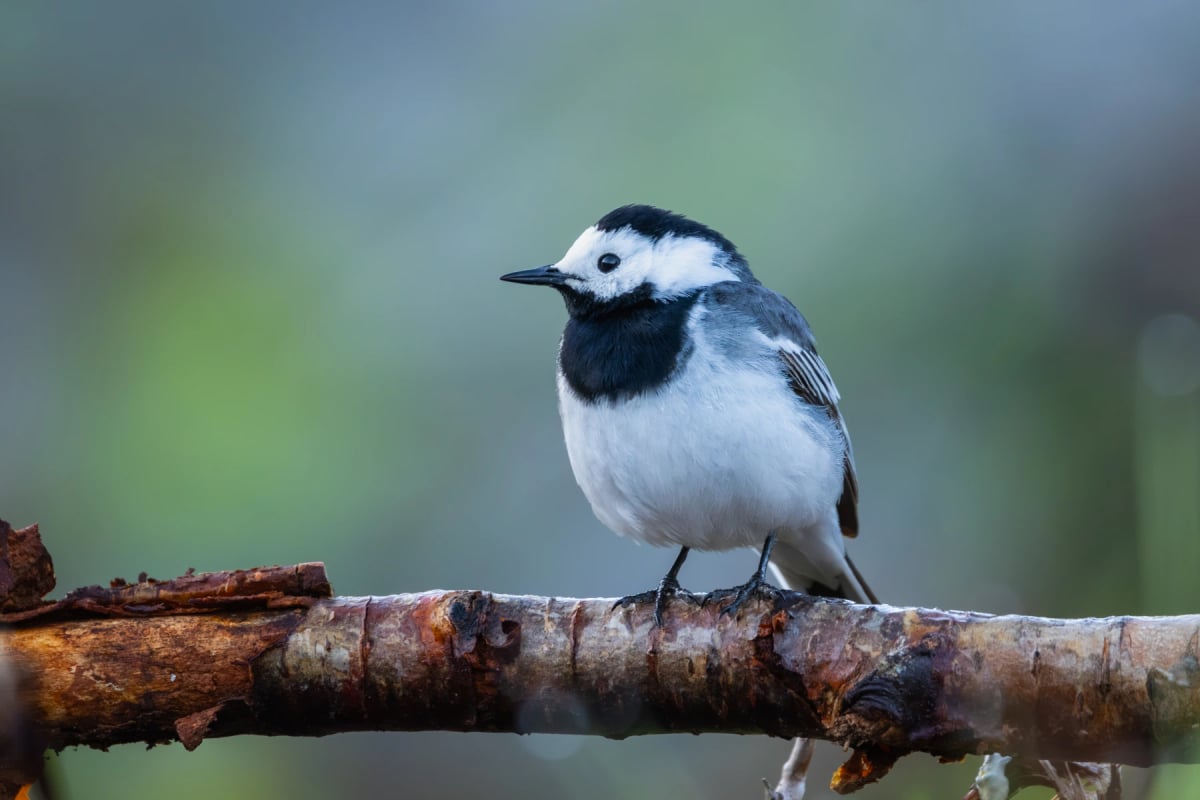
White Wagtail

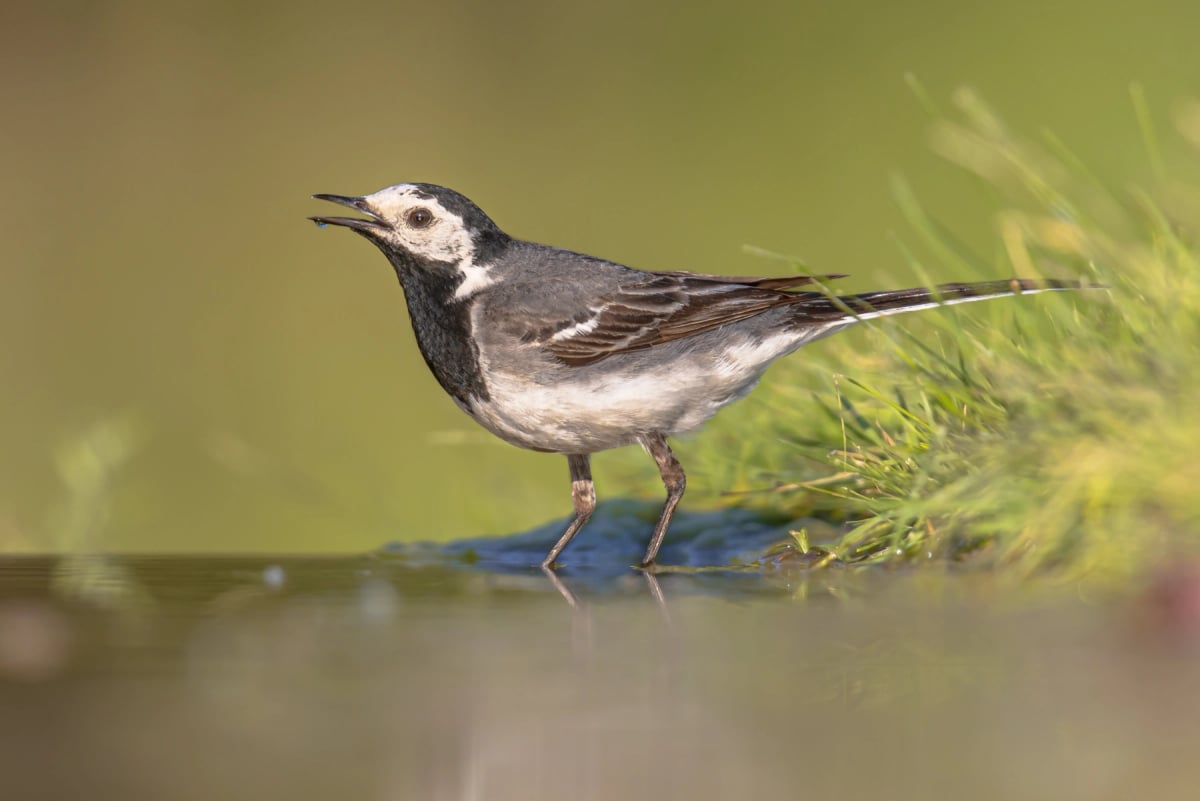
The white wagtail is a slender, energetic bird found across most of Europe, Asia and large parts of Africa. It is best known for the constant up and down motion of its tail, a habit that sets it apart from almost every other small bird. Its plumage combines crisp white, pale grey and black in patterns that vary slightly between the many recognised subspecies. It favours open ground near water, including riverbanks, lakeshores, farmland, roadsides and towns, where it runs quickly after insects rather than hopping. Nesting takes place in crevices in rocks, walls and buildings, often close to or inside human structures. Most northern populations migrate south in autumn, wintering across Africa and South Asia, while some birds in milder regions remain year round. It is one of the most widespread small birds in the world.
Habitat and distribution
Few small birds match the white wagtail for sheer range. It breeds across virtually all of Europe, through Central Asia and into the far east of Russia, China and Japan, and is also resident in parts of North Africa and the Middle East. It shows a strong preference for open, flat ground near water, particularly riverbanks, lake edges, wet meadows, and flooded fields, though it is equally at home on farmland, roadsides and in town centres. Most birds breeding in northern and central Europe head south between August and October, wintering in sub-Saharan Africa and South Asia. Populations in the British Isles, the Iberian Peninsula and parts of the Mediterranean tend to stay put year round, moving only short distances when conditions demand it.
Diet
Insects make up the core of the white wagtail's diet throughout the year. It takes a wide variety of prey, including flies, midges, beetles, ants, mayflies and small aquatic invertebrates picked from the surface of shallow water or wet mud. Rather than perching and waiting, it hunts entirely on foot, sprinting across open ground in short bursts and snapping up prey with quick, precise movements of the bill. It will also launch brief aerial chases to catch insects on the wing. Along riverbanks and lake margins, it works the waterline closely, making the most of the insects that gather there. In winter quarters across Africa and South Asia, it often feeds in flocks alongside other wagtail species, taking advantage of insects disturbed by grazing animals or agricultural machinery.
Behavior
The constant pumping of its tail up and down is the white wagtail's most recognisable trait, and it does this whether walking, standing or perched on a rock or rooftop. The exact reason for this behaviour is still debated among researchers, but it may help flush insects from the ground or signal alertness to other birds. On the move, it covers ground with a brisk, purposeful walk rather than a hop, and its flight follows a distinctive undulating path with each dip accompanied by a sharp call. It is territorial during the breeding season, with males defending patches of riverbank or shoreline vigorously. Outside the breeding season, white wagtails are more sociable and often roost in large communal groups, sometimes numbering in the thousands, in reedbeds, trees or on warm urban structures such as supermarket rooftops.

Breeding
Breeding begins in April across most of the range and can extend into July, with many pairs raising two broods in a single season. The nest is a cup of grass, moss and plant stems, lined with hair and feathers, tucked into a cavity in a rock face, stone wall, road bank or building. White wagtails are notably comfortable nesting inside or very close to human structures, and nests have been recorded in drainpipes, letter boxes and farm machinery. The female lays between five and six eggs on average, and incubation lasts around thirteen days. Both parents share feeding duties, making repeated trips to the nest with insects. Chicks leave the nest at about fourteen days old but continue to be fed by the adults for a short time after fledging.
Conservation
The white wagtail is assessed as Least Concern on the IUCN Red List, reflecting its enormous global range and large overall population. It is among the most abundant breeding birds across Europe, and numbers have remained broadly stable over recent decades. That said, local declines have been recorded in some intensively farmed areas, where the loss of wetland edges, the heavy use of pesticides and the reduction of insect populations have all reduced the availability of suitable feeding habitat. Its willingness to nest in and around buildings has helped it maintain a presence even in heavily urbanised landscapes. No targeted conservation measures are currently considered necessary, but monitoring at a regional level remains useful for detecting any shifts in local population trends over time.
Technical factsheet
Where it is found
The White Wagtail can be found in places such as:
Frequently Asked Questions
Why does the white wagtail wag its tail?
Nobody knows for certain, and researchers are still debating it. The most widely discussed ideas are that the motion helps flush insects out of the grass, or that it signals alertness to nearby birds. Whatever the reason, the behaviour is constant. The wagtail does it while walking, while standing still, and even while perched on a wall or rooftop. It is the single most recognisable thing about this bird.
What does the white wagtail eat?
It feeds almost entirely on insects. Flies, midges, beetles, ants, mayflies and small invertebrates found near water or wet mud are all on the menu. It hunts on foot, running in quick bursts across open ground and snapping up prey with its bill. It will also chase insects through the air on short flights. Along riverbanks it works the waterline closely, where insects tend to gather in good numbers.
Where in the world does the white wagtail live?
It has one of the widest ranges of any small bird on the planet. It breeds across virtually all of Europe and Asia, from Iceland and the British Isles to Japan and far eastern Russia. In winter, most northern birds migrate to sub-Saharan Africa and South Asia. Populations in milder areas, such as the British Isles and the Iberian Peninsula, tend to stay put throughout the year rather than making long seasonal journeys.
Is the white wagtail endangered?
No. The IUCN lists it as Least Concern, which reflects how widespread and numerous it is. Its population has stayed broadly stable across Europe over recent decades. Some local declines have appeared in areas of intensive farming, where pesticide use and the loss of wetland edges have reduced insect numbers. However, the species as a whole is not under threat, and its willingness to live alongside humans has helped it adapt well to changing landscapes.
Does the white wagtail nest near people?
Yes, and quite comfortably. It regularly nests in gaps in stone walls, road banks, drainpipes, letterboxes and even farm machinery. It seems completely unbothered by human activity nearby, which has actually worked in its favour. As natural rock crevices have become less available in some areas, buildings and other structures have more than compensated. Pairs nesting in towns and villages are a common and familiar sight across much of Europe and Asia.
How can I identify a white wagtail?
Look for a slim, restless bird with white, pale grey and black plumage, roughly the size of a sparrow but with a noticeably longer tail. It moves across the ground with a quick, purposeful walk rather than hopping, and bobs its tail up and down without stopping. In flight, it travels in a clear, looping, wave pattern and gives a sharp, two-note call. The constantly wagging tail alone is usually enough to identify it straight away.
Do white wagtails migrate?
Most of them do. Birds breeding across northern and central Europe leave between August and October, travelling to wintering grounds in sub-Saharan Africa and South Asia. The journeys can cover thousands of kilometres. Populations in warmer regions, including the British Isles, the Iberian Peninsula and parts of the Mediterranean, tend to be resident or move only short distances in winter. In spring, migratory birds return northward from March onwards to reclaim their breeding territories.