Humpback Whale
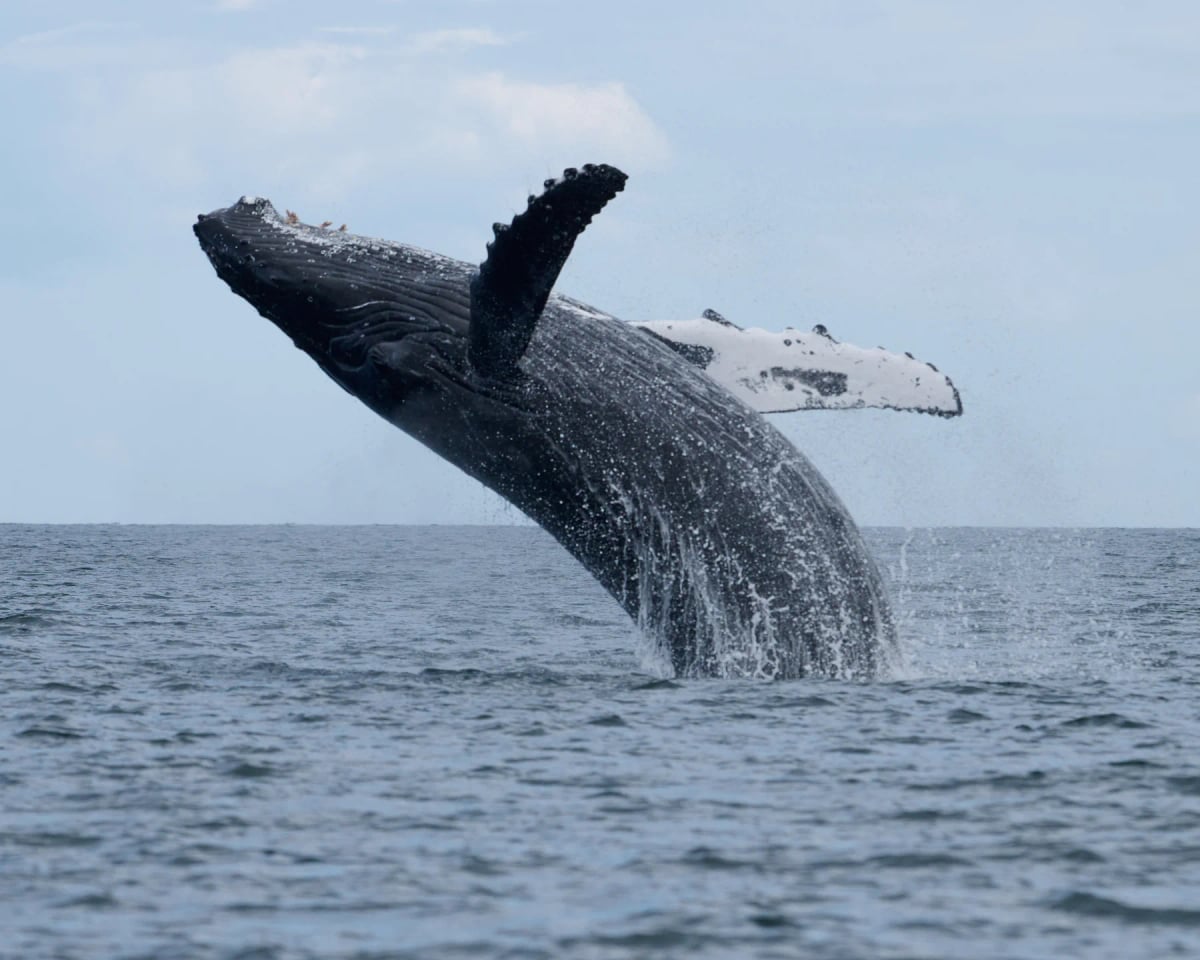
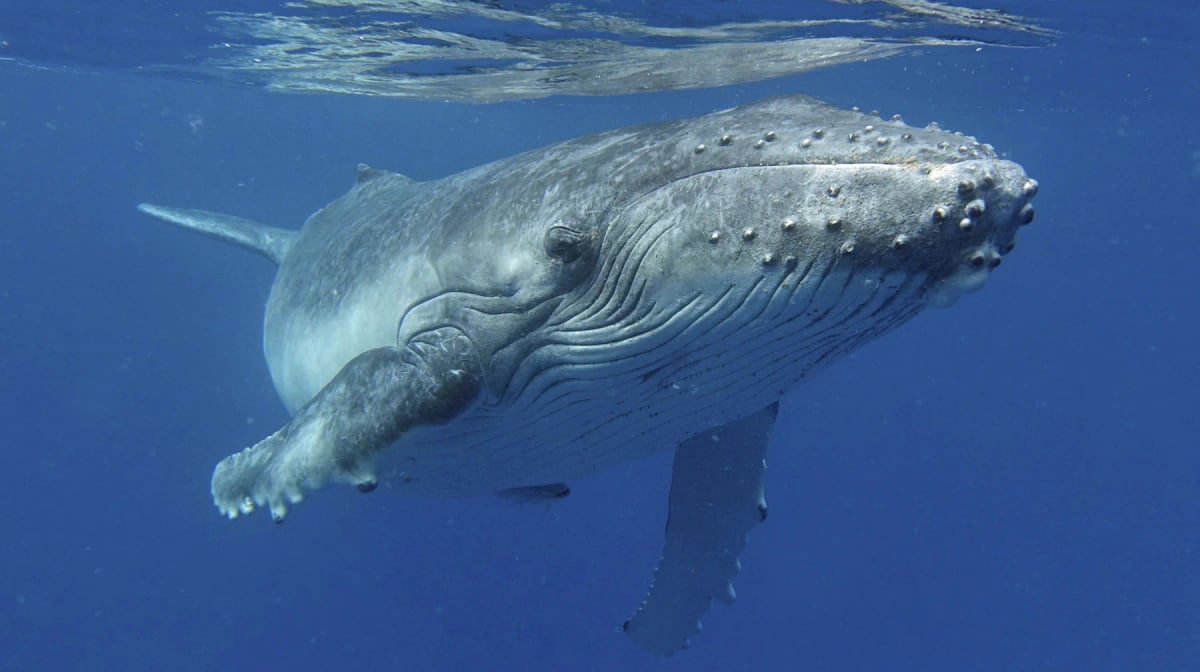
The humpback whale (Megaptera novaeangliae) is one of the largest animals on Earth, reaching up to 16 metres in length and weighing as much as 40 tonnes. Its most distinctive features are extraordinarily long pectoral fins, which can measure up to a third of the body length, and the knobbly bumps that stud the head and jaw. Each year it undertakes one of the longest migrations of any mammal, travelling thousands of kilometres between cold polar feeding grounds rich in krill and small fish and warm tropical waters where calves are born. Males are famous for their songs, sequences of moans, howls and cries that can last for hours and carry across vast distances underwater. Populations were severely reduced by commercial whaling during the twentieth century but have recovered substantially since international protections came into force. The species is now classified as Least Concern by the IUCN.
Habitat and distribution
Humpback whales are found in every major ocean on the planet, from the icy waters around Antarctica and the Arctic to the warm, shallow bays of the tropics. They are strongly tied to coastal and shelf waters during both feeding and breeding seasons, though they cross vast stretches of open ocean during migration. In summer, they concentrate in polar and subpolar regions where cold upwellings bring nutrients to the surface. As winter approaches, most populations move toward tropical or subtropical coasts to give birth and nurse their calves. Well-known gathering spots include the waters off Hawaii, the Silver Bank near the Dominican Republic, Tonga, and the coast of eastern Australia. No single ocean basin is home to all humpbacks; instead, distinct populations follow their own seasonal routes year after year.
Diet
During their months on the feeding grounds, humpback whales consume enormous quantities of food to build up the fat reserves that will sustain them through the long migration and breeding season. Their prey consists mainly of krill and small schooling fish such as herring, capelin, and sand lance. Instead of teeth, they have rows of baleen plates made of keratin that filter prey from the water. One of their most remarkable feeding strategies is bubble net feeding, a technique in which a group of whales swims in a tightening spiral below a school of fish, blowing air to create a rising curtain of bubbles that traps the prey near the surface. One whale then lunges upward through the concentrated mass with its mouth wide open. This behavior requires precise coordination among individuals.
Communication
Few sounds in the natural world are as striking as the song of a male humpback whale. Composed of repeating sequences of moans, groans, howls, and high whistles, a single song can last anywhere from a few minutes to more than half an hour, and males may sing continuously for many hours at a time. Singing occurs mainly on the breeding grounds and during migration, and all males within the same ocean population sing a nearly identical song at any given time. Fascinatingly, the song changes gradually over months and years, and every male keeps up with the shifts. Researchers believe song plays a role in attracting females and signaling between competing males, though its full purpose is still being studied. Humpbacks also use a variety of shorter calls and surface behaviors such as breaching and slapping to communicate.
Migration
Every year, humpback whales complete one of the most impressive journeys made by any animal on Earth. Most populations spend the summer months feeding in cold, nutrient-rich polar waters, then travel to warm tropical or subtropical regions to breed and calve during winter. A single round trip can cover more than 16,000 kilometres for some populations. The record for the longest confirmed migration by a mammal belongs to a humpback tracked from its breeding area off the coast of Brazil to feeding grounds near Antarctica, a one-way distance of roughly 9,800 kilometres. Whales generally travel at a steady pace of around 4 to 15 kilometres per hour during migration. They eat very little along the way, relying almost entirely on stored body fat. Calves born in tropical waters must build enough strength to complete the journey to the feeding grounds within just a few months of birth.
Conservation
After being hunted to the brink of extinction during the twentieth century, humpback whales have made a remarkable recovery. Commercial whaling reduced some populations to just a few hundred individuals before the International Whaling Commission issued a moratorium on commercial hunting in 1986. Since then, numbers have climbed significantly, and the IUCN now lists the species as Least Concern. However, the recovery is not equal across all populations. Several distinct groups, including those in the Arabian Sea, remain classified as endangered. Today the main threats come from entanglement in fishing gear, collisions with large vessels, noise pollution from shipping and sonar, and the effects of climate change on prey availability. Plastic pollution and chemical contamination also pose risks. Conservation efforts focus on whale watching guidelines, shipping lane adjustments, and improved fishing gear designed to reduce accidental entanglement.
Where it is found
The Humpback Whale can be found in places such as:
Researched and written by Juan Pablo. Sources: IUCN Red List, scientific literature and regional field guides. Last updated: .
Technical factsheet





Frequently Asked Questions
How big do humpback whales get?
Humpback whales can reach up to 16 metres in length and weigh as much as 40 tonnes, making them one of the largest animals on Earth. Females tend to be slightly larger than males. Their most eye-catching feature is their pectoral fins, which can measure up to a third of the total body length. That is longer than the fins of any other whale species.
What do humpback whales eat?
Humpback whales feed mainly on krill and small schooling fish such as herring, capelin, and sand lance. They have no teeth. Instead, they filter prey through rows of baleen plates made of keratin. They do most of their eating during summer in cold polar waters, building up fat reserves that fuel them through migration and the breeding season, when they eat very little.
Why do humpback whales sing?
Only males sing, and they do so mainly on the breeding grounds and during migration. The song is thought to help attract females and communicate with rival males. What makes it truly remarkable is that all males in the same ocean population sing almost the same song at any given time, and the song shifts gradually over months and years. Every male keeps up with the changes in real time.
How far do humpback whales migrate?
Humpback whales are among the greatest travelers in the animal kingdom. A full round trip can cover more than 16,000 kilometres for some populations. The longest confirmed migration on record for any mammal was made by a humpback that traveled roughly 9,800 kilometres from the coast of Brazil to feeding grounds near Antarctica. During the journey, they barely eat and rely almost entirely on stored body fat.
Are humpback whales endangered?
The species as a whole is listed as Least Concern by the IUCN, a real success story after commercial whaling nearly wiped them out in the twentieth century. However, not all populations have recovered equally. The group living in the Arabian Sea remains endangered. Today the biggest threats include entanglement in fishing gear, collisions with ships, noise pollution, and the effects of climate change on the availability of their prey.
Where in the world can you find humpback whales?
Humpback whales are found in every major ocean on Earth. During summer, they gather in cold polar and subpolar waters to feed. In winter, they move to warm tropical coasts to breed and give birth. Famous spots for seeing them include Hawaii, the Silver Bank near the Dominican Republic, Tonga, eastern Australia, and the coasts of South Africa. Different populations follow their own seasonal routes and do not mix freely.
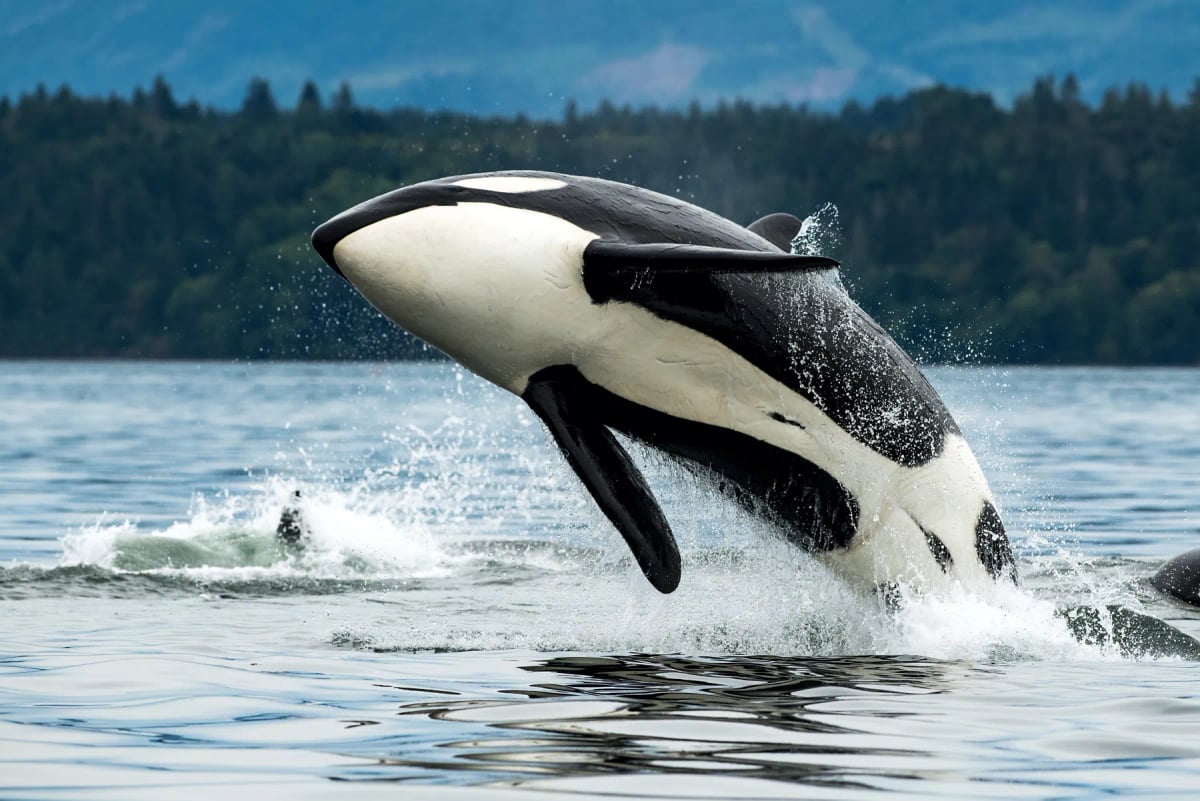
Why do humpback whales breach?
The exact reason humpbacks launch their enormous bodies out of the water is still debated among researchers. The most widely accepted ideas are that breaching is a form of communication, a way to remove parasites from the skin, or simply play. Some studies suggest it happens more often when whales are far apart, pointing to a role in long-distance signaling. Whatever the reason, it is one of the most spectacular sights in the natural world.