Harpy Eagle
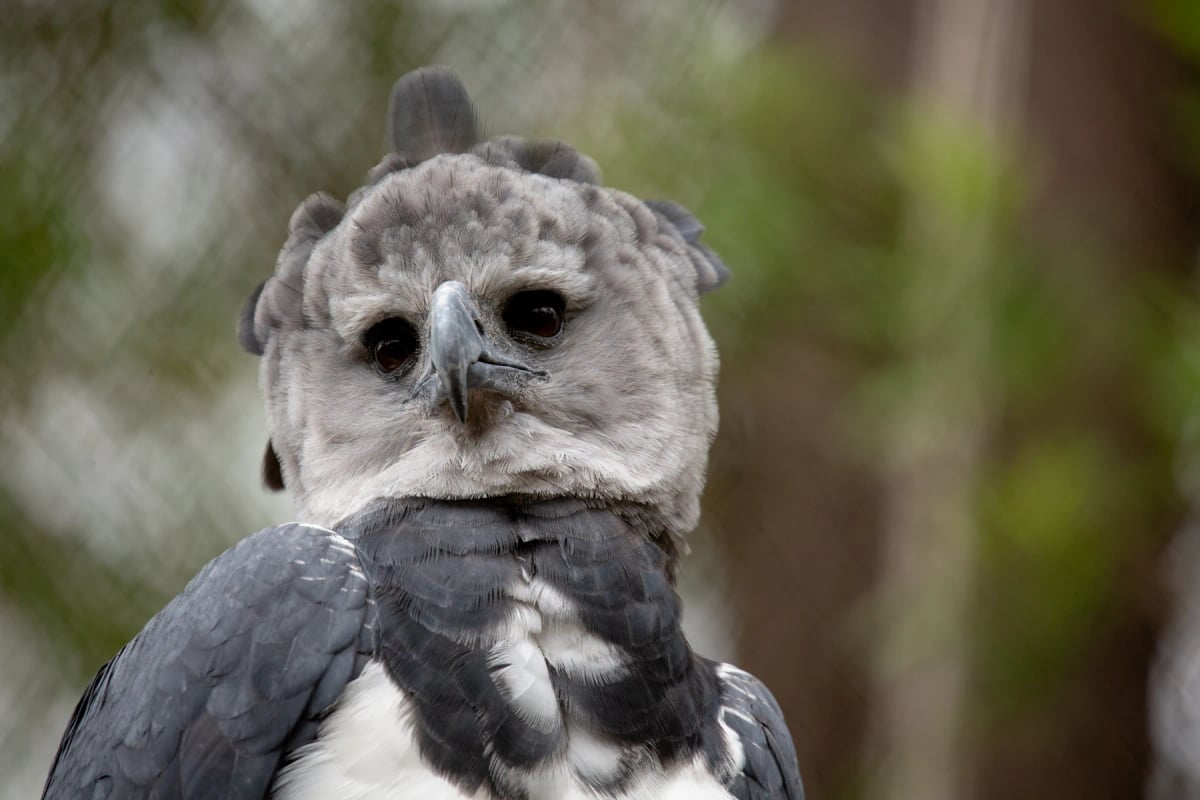
The harpy eagle is one of the largest and most powerful raptors in the world, ruling the tropical rainforests of Central and South America. Its talons can reach the size of a grizzly bear's claws, and its broad wings are built for weaving through dense forest canopy at speed. It hunts from a perch, dropping onto sloths, monkeys and other animals that live in the trees. Adults wear slate gray plumage on the back and white on the belly, topped by a distinctive double crest of feathers that fans out when the bird feels threatened. Pairs hold large territories and raise just one chick every two to three years, which means populations recover slowly from any losses. The species is classified as Vulnerable, with an estimated 20,000 to 50,000 individuals remaining, and its presence in a forest is a reliable sign that the ecosystem is still intact.
Habitat and distribution
Harpy eagles are found across a broad stretch of the Americas, from the forests of southern Mexico down through Central America and across most of tropical South America, reaching as far south as Bolivia, Brazil, and Peru. They live almost exclusively in lowland tropical rainforests, typically below 2,000 meters in elevation, where the canopy is tall and continuous enough to support large nesting trees and an abundance of prey. Old-growth forest is strongly preferred, as it provides the massive emergent trees the species depends on for nesting. In Central America, populations have become sparse and fragmented due to widespread forest clearance. The Amazon Basin remains the stronghold of the species, holding the largest and most stable populations found anywhere in its range.
Diet
Few predators in the Americas can match the harpy eagle when it comes to taking large prey from the treetops. Sloths and monkeys, including howler and capuchin species, make up the bulk of its diet across most of its range. It also takes other mammals such as porcupines, opossums, and coatis, and will occasionally prey on large birds and reptiles like iguanas. Hunting is done from a perch, where the eagle watches carefully before diving into the canopy at speed to snatch prey with its feet. Its talons, which can reach lengths comparable to the claws of a grizzly bear, exert enormous force and are capable of killing animals that weigh several kilograms. Most hunting takes place in the middle and upper levels of the forest.
Behavior
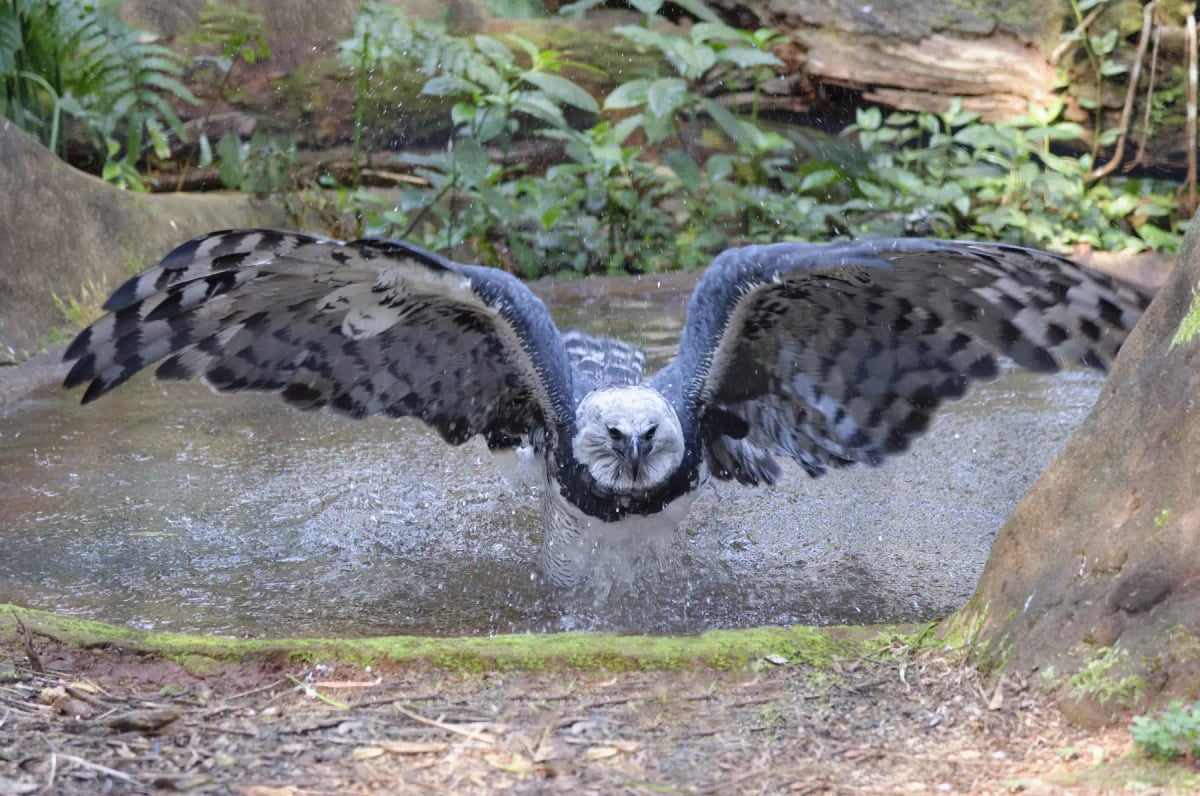
Despite its size, the harpy eagle moves through the forest with remarkable agility. Its relatively short wings and long tail allow it to steer between trees and branches at speed, a design well suited to life inside a dense canopy rather than soaring in open skies. Adults hold large territories and are generally quiet birds, rarely calling except around the nest. The distinctive double crest of feathers on the head is raised when the bird is alert or feels threatened, and researchers believe it may also help channel sound toward the ears. Harpy eagles spend a great deal of time perched and motionless, surveying their surroundings before making a move. Outside of the breeding season, pairs tend to forage independently across their shared territory.
Reproduction
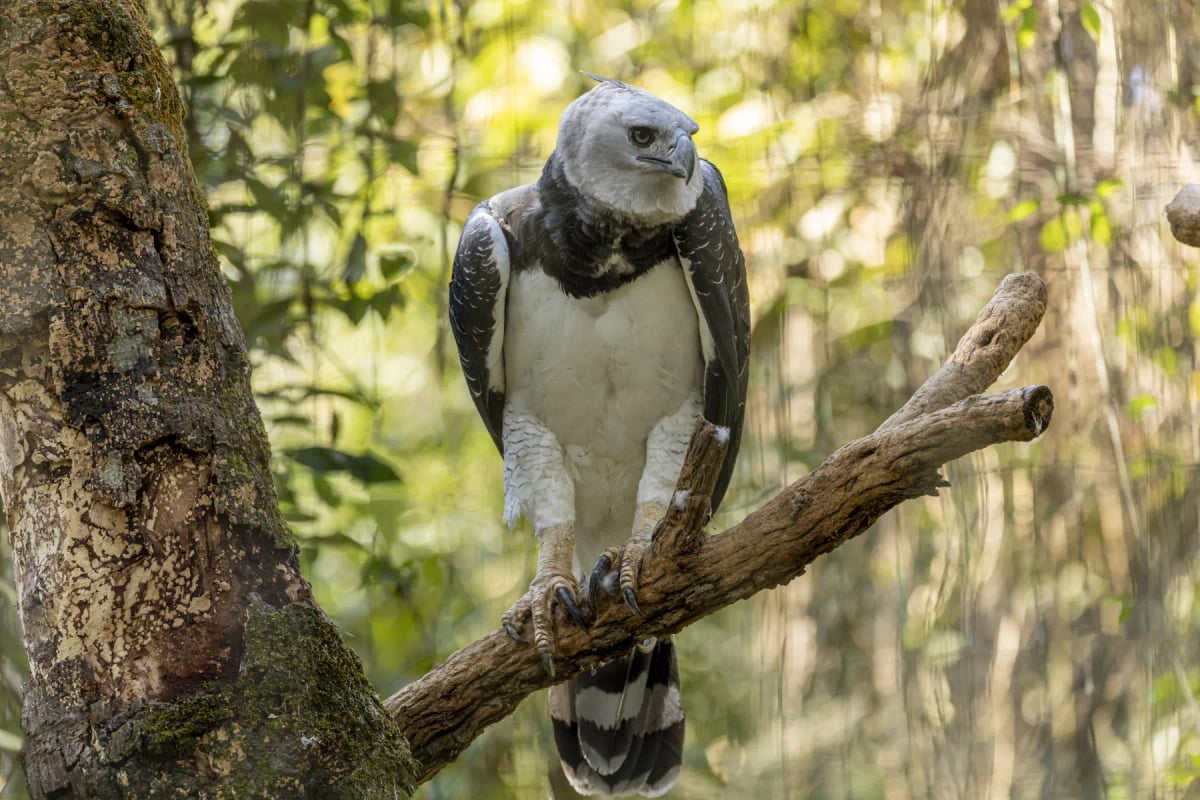
Raising a chick demands an extraordinary commitment from both parents. Pairs build large nests from sticks and branches, often choosing tall emergent trees such as the kapok, and the same nest site may be reused for many years with fresh material added each season. The female typically lays two eggs but usually raises only one chick, as the second egg is rarely incubated once the first hatches. The young eagle stays dependent on its parents for up to two years, well past the point when it has learned to fly, which means a successful pair breeds only once every two to three years. This slow rate of reproduction makes the species particularly sensitive to any factor that reduces adult survival, as populations have very little capacity to recover quickly from losses.
Conservation
Listed as Vulnerable on the IUCN Red List, the harpy eagle faces serious pressure across much of its range. The clearance of tropical forest for agriculture, cattle ranching, and logging removes both nesting habitat and the prey populations the species depends on. Persecution is also a concern, as the birds are sometimes shot by farmers who view them as a threat to livestock, or captured for illegal trade. Because each breeding pair requires a very large area of intact forest and reproduces so slowly, even modest habitat loss can have an outsized effect on local populations. Conservation efforts include nest monitoring programs, environmental education in communities near key habitats, and work to legally protect the forests where breeding pairs have been confirmed. Panama has adopted the harpy eagle as its national bird, reflecting the cultural importance the species holds across the region.
Where it is found
The Harpy Eagle can be found in places such as:
Researched and written by Juan Pablo. Sources: IUCN Red List, scientific literature and regional field guides. Last updated: .
Technical factsheet













Frequently Asked Questions
How big is a harpy eagle?
Harpy eagles are among the largest birds of prey on Earth. Females, which are bigger than males, can weigh up to 10 kilograms and measure nearly a meter in length. Their wingspan reaches around two meters. Perhaps most impressive are their talons, which grow to lengths comparable to the claws of a grizzly bear and can crush prey with enormous force.
What does a harpy eagle eat?
Harpy eagles feed mainly on animals that live in the treetops. Sloths and monkeys, including howler and capuchin species, are their most common prey. They also hunt porcupines, opossums, and coatis, and will occasionally take large birds or reptiles like iguanas. They hunt by watching from a perch and then diving into the canopy at speed to grab prey with their powerful feet.
Where does the harpy eagle live?
Harpy eagles live in tropical rainforests from southern Mexico through Central America and across most of tropical South America, including the Amazon Basin. They prefer old-growth forests with tall trees, usually below 2,000 meters in elevation. The Amazon Basin holds the largest populations. In Central America, numbers have dropped significantly due to the loss of forest cover over recent decades.
Is the harpy eagle endangered?
The harpy eagle is currently listed as Vulnerable on the IUCN Red List, with an estimated 20,000 to 50,000 individuals remaining in the wild. The biggest threats are deforestation for agriculture and cattle ranching, as well as hunting and illegal capture. Because pairs breed only once every two to three years and need vast areas of intact forest, populations recover very slowly from any losses.
Why does the harpy eagle have a crest on its head?
The harpy eagle has a distinctive double crest of feathers that fans out when the bird feels threatened or is on alert. Researchers believe it may also help direct sound toward the bird's ears, much like a facial disc does in owls. This feature makes it one of the most recognizable birds of prey in the world and is one of several adaptations suited to life inside a dense forest.
How fast can a harpy eagle fly?
Harpy eagles can reach speeds of up to 80 kilometers per hour when diving after prey. Rather than soaring over open land, they are built for moving through dense forest. Their relatively short wings and long tail give them the agility needed to steer between trees and branches at speed. Most of their time is actually spent perched and still, carefully watching for movement below.
Which country has the harpy eagle as its national bird?
Panama officially adopted the harpy eagle as its national bird, a recognition of the deep cultural significance the species holds across the region. The choice reflects how closely the bird is tied to the health of tropical forests. Across Central and South America, the harpy eagle is widely seen as a symbol of wild, unspoiled nature, and its presence in a forest is generally taken as a sign that the ecosystem is still functioning well.