Tuatara
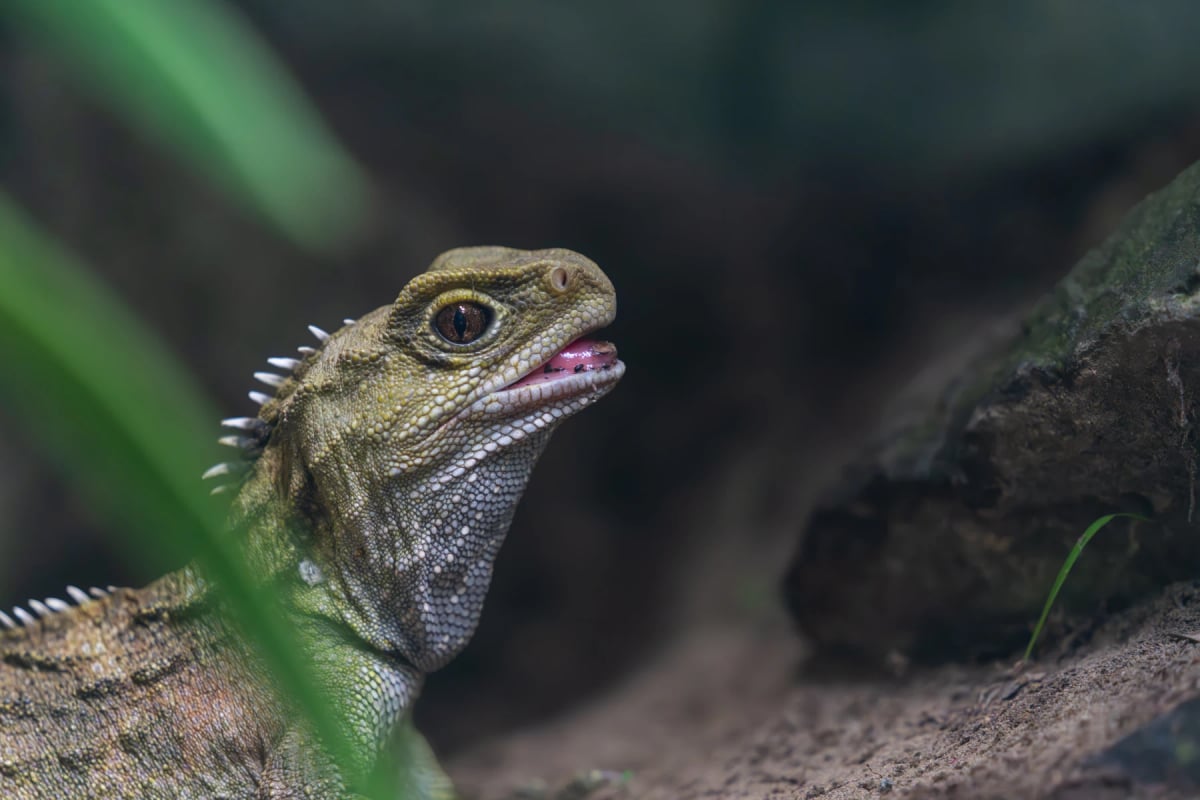
The tuatara is New Zealand's most extraordinary reptile and the only surviving member of the order Rhynchocephalia, a lineage that dates back over 200 million years. Although it looks much like a lizard, it belongs to a completely separate group with no close living relatives. Tuataras live in burrows on predator-free offshore islands and a small number of mainland sanctuaries, where they emerge at night to hunt insects, worms, snails, small lizards and occasionally seabird chicks. They are most active at temperatures that would leave most reptiles sluggish, functioning well in conditions as cool as 7 °C. Growth is very slow, sexual maturity arrives after roughly 10 to 20 years, and individuals can live well beyond 100 years. Because sex is determined by nest temperature, rising temperatures driven by climate change threaten to skew populations heavily toward males.
Evolutionary significance
Few animals alive today carry the weight of history that the tuatara does. It is the sole survivor of the Rhynchocephalia, a reptile order that was widespread across the globe more than 200 million years ago, long before the dinosaurs rose to dominance. While all other members of that lineage vanished, the tuatara endured, changing remarkably little over vast stretches of geological time. This makes it something of a living fossil, though scientists prefer to call it a living relic, since its biology is far more complex and active than that label suggests. Studying the tuatara gives researchers a rare window into the anatomy, physiology, and genetics of an ancient vertebrate lineage, one that split from the ancestors of modern lizards and snakes roughly 250 million years ago.
Habitat and distribution
Tuataras once roamed across mainland New Zealand, but the arrival of Polynesian settlers and, later, European colonists brought rats, stoats, and other predators that wiped them out from most of their original range. Today they survive on roughly 35 offshore islands scattered around the New Zealand coast, where introduced predators have been eradicated or never arrived. A small number of mainland sanctuaries protected by predator-proof fencing also support established populations. On these islands, tuataras favor coastal forest and shrubland, digging their own burrows or taking over those dug by nesting seabirds. The relationship with seabirds is mutually useful in some respects: the birds fertilize the soil, boosting insect populations that the tuatara depends on for food.
Diet
After dark, tuataras leave their burrows and begin searching for food across the forest floor. Their diet centers on invertebrates such as beetles, crickets, worms, and snails, with small lizards also taken when the opportunity arises. On islands shared with nesting seabirds, tuataras will occasionally prey on eggs and chicks, a behavior that surprised early researchers but has since been well documented. One distinctive feature of their feeding apparatus is a unique arrangement of teeth: a single row on the lower jaw fits between two rows on the upper jaw, allowing the tuatara to slice through prey with a shearing action. Unlike the teeth of most reptiles, these are not replaced when worn down, so older individuals rely more heavily on softer prey.
Behavior
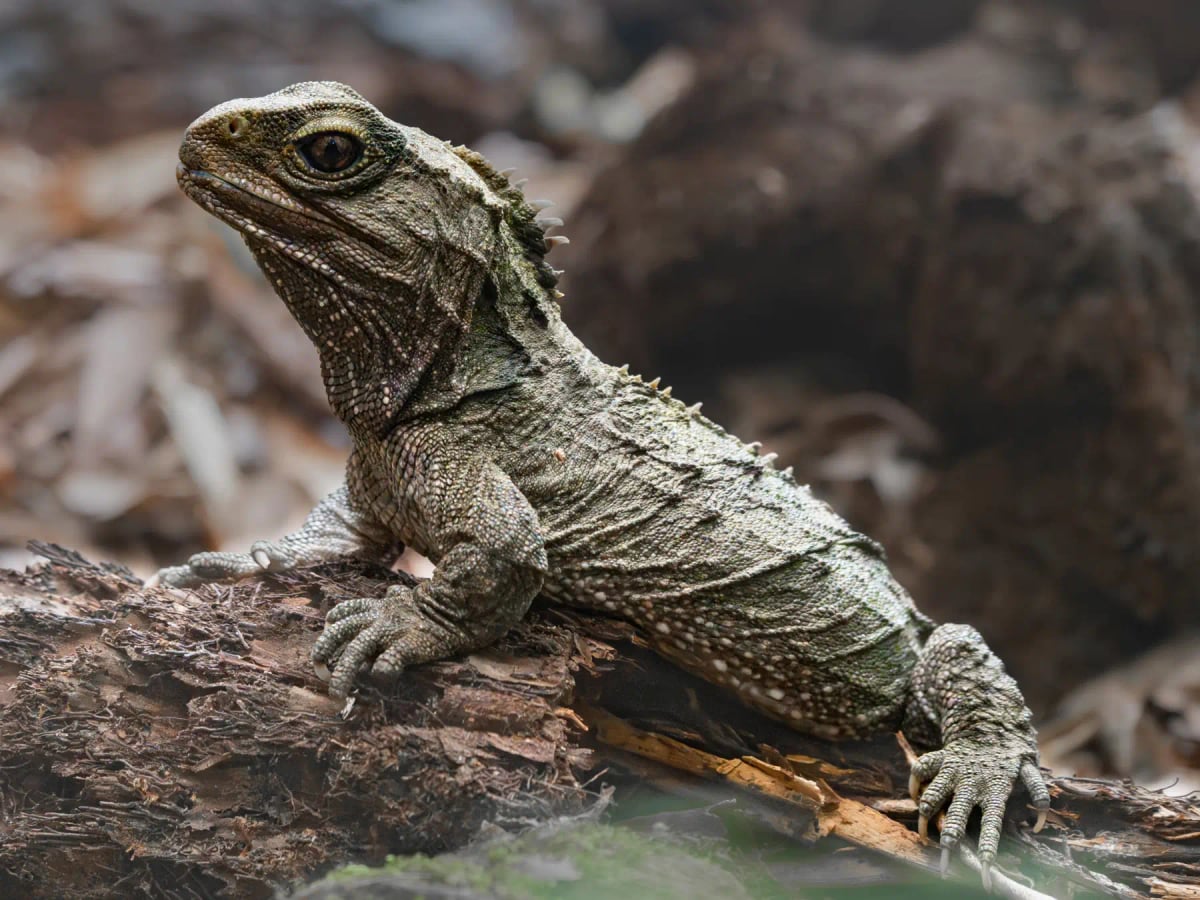
What sets tuataras apart from virtually every other reptile is their preference for cool conditions. They are most active at air temperatures between about 16 and 21 °C and can continue functioning at temperatures as low as 7 °C, a range that would leave most reptiles too sluggish to move. During the heat of summer days, they retreat into their burrows to avoid overheating. Tuataras are also solitary animals that defend territories, communicating through body postures and a series of visual displays. Growth is extraordinarily slow, and individuals may take between 10 and 20 years to reach sexual maturity. Once there, females reproduce only every four years or so. With a lifespan that can exceed 100 years, a single tuatara may reproduce fewer than 20 times across its entire life.
Conservation
Thanks to decades of active management, the tuatara's situation has improved considerably. The eradication of rats and other introduced predators from offshore islands has been the single most effective tool available to conservationists, allowing populations to recover and breed without constant losses to predation. Captive breeding programs at several New Zealand institutions have supplemented these efforts, producing animals that have been released onto restored islands. The tuatara is currently listed as Least Concern on the IUCN Red List, reflecting these gains. Even so, climate change presents a serious ongoing challenge. Because the sex of hatchlings is determined by the temperature of the nest during incubation, warmer summers are already producing a higher proportion of males in some populations. If this imbalance continues, the long term ability of those populations to reproduce could be severely affected.
Researched and written by Juan Pablo. Sources: IUCN Red List, scientific literature and regional field guides. Last updated: .
Technical factsheet

Frequently Asked Questions
Is a tuatara a lizard?
Despite looking very much like a lizard, the tuatara is not one. It belongs to a completely separate reptile order called Rhynchocephalia, whose other members all went extinct long ago. Lizards and snakes are actually closer to each other than either is to the tuatara. Think of it as a reptile that has been on its own evolutionary branch for roughly 250 million years.
Where do tuataras live?
Tuataras are found only in New Zealand. They survive mainly on around 35 offshore islands where introduced predators have been removed, plus a handful of mainland sanctuaries protected by predator-proof fencing. They favor coastal forest and shrubland, spending much of their time in burrows. They once lived across the entire mainland but were wiped out after humans introduced rats, stoats, and other predators.
What do tuataras eat?
Tuataras hunt at night, feeding mainly on beetles, crickets, worms, and snails. They will also eat small lizards when they get the chance. On islands shared with seabirds, they sometimes take eggs and chicks too. Older tuataras tend to stick to softer prey because their teeth wear down over time and are never replaced, making it harder to deal with tougher food.
How long do tuataras live?
Tuataras are among the longest-lived reptiles on Earth, with individuals known to survive well beyond 100 years. Their pace of life is remarkably slow: they take between 10 and 20 years just to reach sexual maturity, and females only reproduce every four years or so. This means a tuatara may go through fewer than 20 breeding cycles across its entire lifetime.
Why are tuataras important to science?
The tuatara is the only surviving member of a reptile lineage that was already ancient when the dinosaurs were alive. Studying it gives scientists a direct look at the biology of an animal group that split from the ancestors of lizards and snakes around 250 million years ago. Its unique anatomy, cold-tolerant physiology, and ancient genetics make it one of the most scientifically valuable vertebrates on the planet.
Are tuataras endangered?
The tuatara is currently listed as Least Concern by the IUCN, which is a real conservation success story. Decades of predator eradication on offshore islands and captive breeding programs have helped populations recover. However, climate change is a growing threat. Because nest temperature determines the sex of hatchlings, warmer summers are producing more males than females in some populations, which could make it harder for those groups to reproduce over time.
How do tuataras stay active in cold temperatures?
Unlike most reptiles that need warmth to function, tuataras are built for the cold. They are most active at temperatures between about 16 and 21 °C and can keep going in conditions as cool as 7 °C. During hot summer days, they retreat into their burrows to avoid overheating. This unusual tolerance for cool weather is one of the many traits that makes the tuatara unlike any other reptile alive today.