Mara
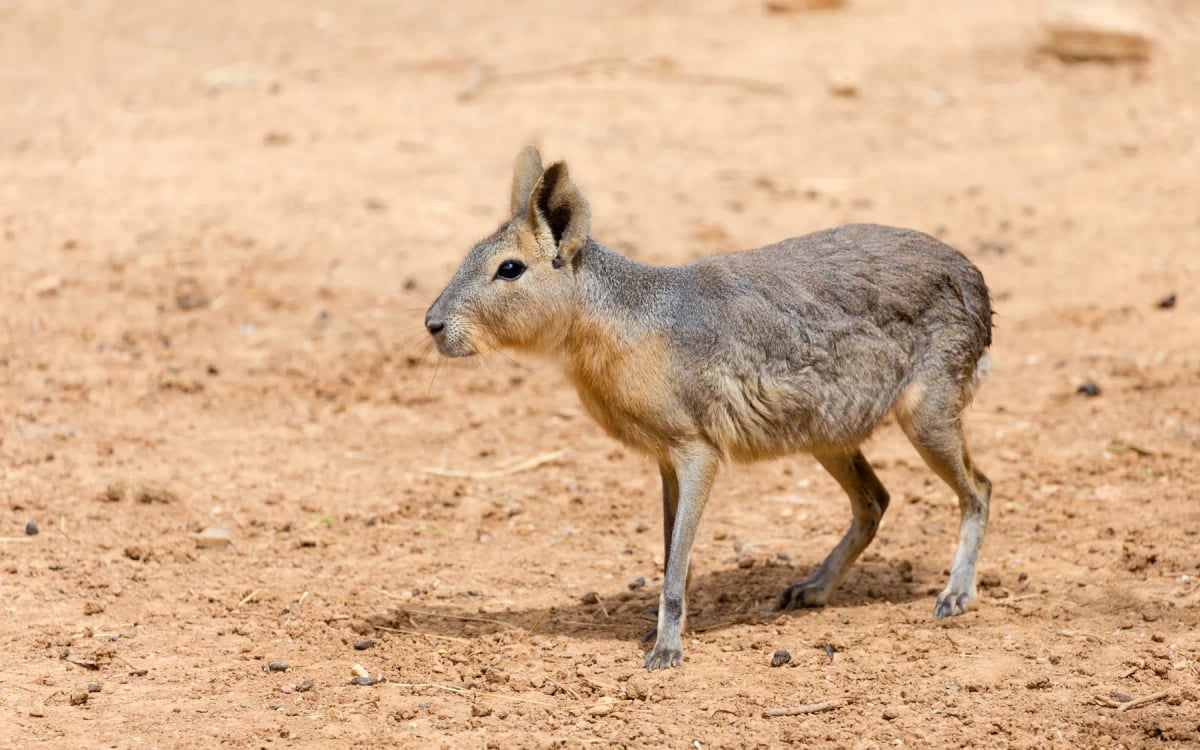
The Patagonian mara (Dolichotis patagonum) is a large rodent found only in Argentina. With its long legs and upright posture, it looks more like a small deer or a jackrabbit than a typical rodent, yet it is closely related to guinea pigs and capybaras. It lives in open grasslands and shrublands across Patagonia and central Argentina, grazing on grasses, herbs, and low shrubs throughout the day. Maras are strongly monogamous. Pairs bond for life and rarely stray far from each other. Several pairs may share a single communal burrow to raise their young, which is an unusual arrangement among rodents. Pups are born well developed and can move around within hours of birth. Populations have fallen over recent decades due to overgrazing by livestock, habitat loss, and hunting. The species is currently listed as Near Threatened on the IUCN Red List.
Habitat and distribution
Patagonian maras are found exclusively in Argentina, where they range from the open steppes of Patagonia in the south to the dry grasslands and shrublands of central provinces such as Buenos Aires, La Pampa, and Mendoza. They favor flat or gently rolling terrain with sparse, low vegetation, which gives them a clear view of approaching predators. Sandy soils are especially important to them, since maras dig their own burrows or take over those made by other animals. They tend to avoid dense forests and intensively farmed land. Although they can survive in relatively arid conditions, they are never found far from some form of plant cover, which provides both food and shelter. Their range has contracted noticeably in areas where livestock grazing has degraded the natural grassland.
Diet
Strictly herbivorous, the Patagonian mara feeds on a wide variety of grasses, low shrubs, herbs, and cacti. It grazes throughout the day, moving steadily across open ground and selecting plants based on seasonal availability. During the dry season, when grasses become sparse, maras rely more heavily on the leaves and stems of shrubs. They obtain most of their water from the plants they eat rather than from drinking directly, which helps them thrive in arid environments. Because they graze selectively, maras influence which plant species dominate in their habitat, giving them a subtle but real role in shaping the local vegetation. Captive individuals have been observed eating fruit and root vegetables, though their natural diet in the wild is based almost entirely on native plants.
Behavior
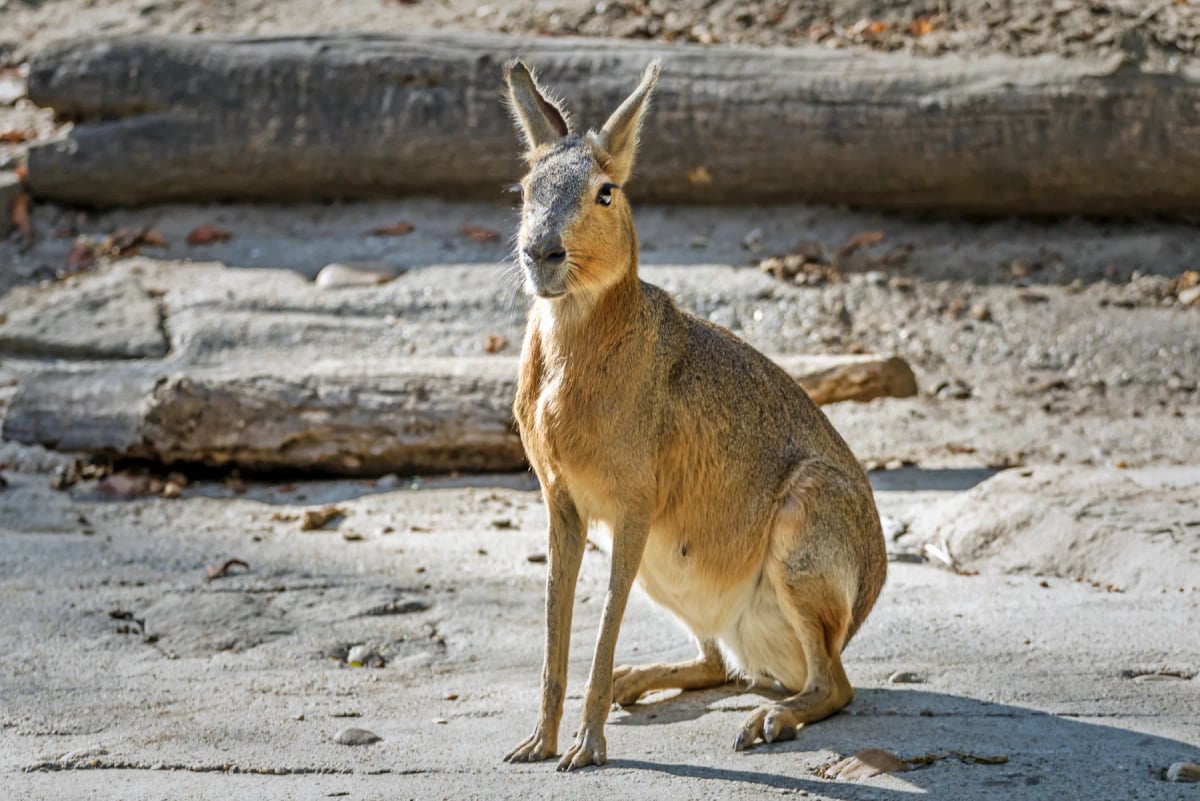
Active during daylight hours, maras split their time between grazing, resting in the sun, and staying alert for predators such as foxes, eagles, and pumas. When threatened, they can sprint at speeds of up to 45 km/h and are capable of bounding in a style that resembles a rabbit more than a typical rodent. Despite living in groups around shared burrows, pairs remain strongly bonded and a male will follow his female closely throughout the day. Communication between individuals involves a range of postures and soft vocalizations. Maras also practice a behavior called stotting, in which they leap stiffly into the air, possibly to signal fitness to predators or to alert nearby companions. They are generally calm animals but will thump the ground with their hind feet when alarmed.
Reproduction
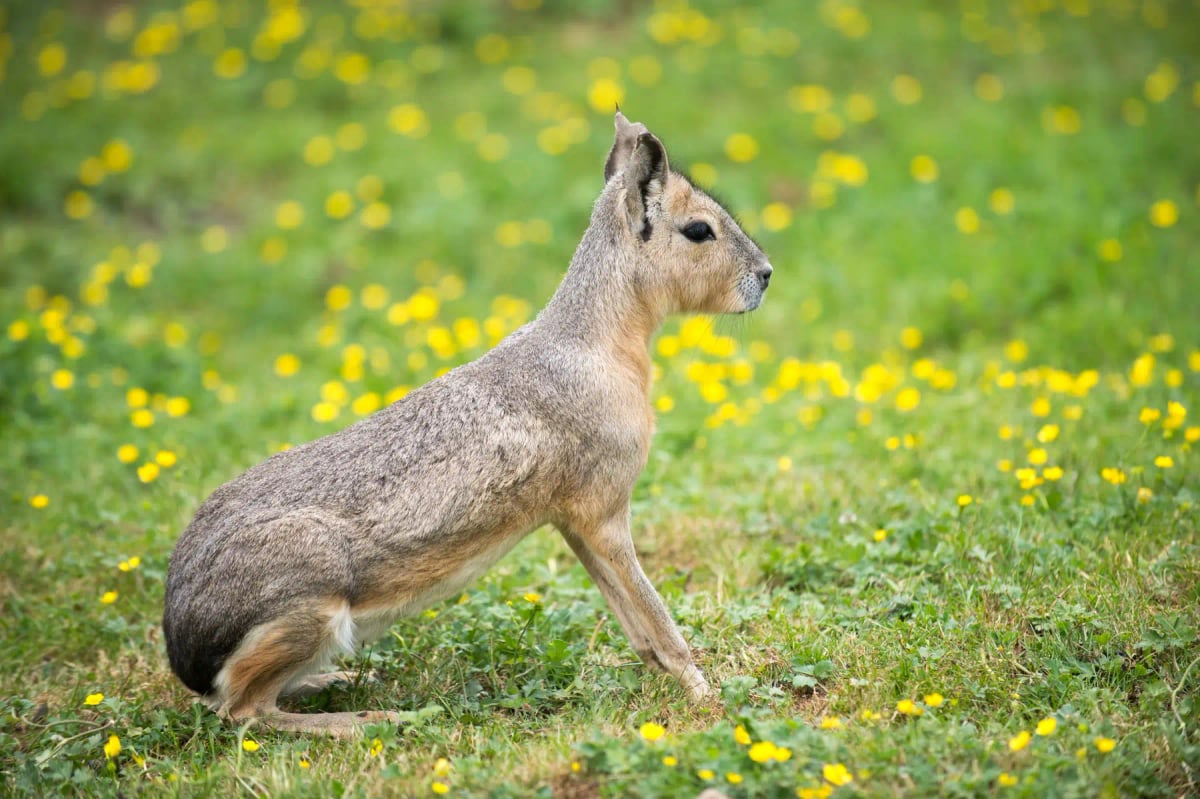
One of the most remarkable things about maras is how they raise their young. Pairs bond for life, which is unusual among rodents, and a male invests heavily in protecting his mate and offspring. Several bonded pairs often share a single communal burrow, known as a crèche, where all the pups are raised together. A single female can give birth to one to three pups per litter and may produce two litters in a year. The young are born in an advanced state of development, with open eyes and full fur, and are able to move around within a few hours of birth. Mothers recognize their own pups by scent and will only nurse their own young, even when many pups are present at the burrow entrance at the same time.
Conservation
The IUCN currently lists the Patagonian mara as Near Threatened, reflecting a real and ongoing decline across much of its range. The main pressures come from the conversion of native grassland to farmland, overgrazing by sheep and cattle, and hunting. Competition with the introduced European hare is also a concern, as hares occupy similar habitats and compete for food. Maras are still present in several protected areas across Argentina, including Lihué Calel National Park and Laguna Blanca National Park, where populations are relatively stable. Outside protected land, however, numbers continue to fall. Some conservation efforts focus on reducing hunting pressure and restoring degraded grasslands, but progress has been slow. Raising awareness of the species among local communities remains one of the more practical tools available for its protection over the long term.
Researched and written by Juan Pablo. Sources: IUCN Red List, scientific literature and regional field guides. Last updated: .
Technical factsheet




Frequently Asked Questions
What does a Patagonian mara eat?
Maras are herbivores that graze on grasses, herbs, low shrubs, and even cacti throughout the day. They get most of their water from the plants they eat, which helps them survive in dry environments. When grasses become scarce in the dry season, they switch to the leaves and stems of shrubs. In captivity, they also enjoy fruit and root vegetables, though wild maras stick almost entirely to native plants.
Is the Patagonian mara a rodent or a type of deer?
It is definitely a rodent, even if it does not look like one. With its long legs, upright posture, and slender build, the mara is often mistaken for a small deer or a jackrabbit. In reality, it belongs to the same family as guinea pigs and is also closely related to capybaras. It is one of the largest rodents in the world, typically weighing between 8 and 16 kilograms.
Where do Patagonian maras live?
Maras are found only in Argentina. They live across the open steppes of Patagonia and the dry grasslands of central provinces like Buenos Aires, La Pampa, and Mendoza. They prefer flat terrain with sparse, low vegetation, since an open landscape lets them spot predators from a distance. Sandy soils are important to them for digging burrows. They avoid dense forests and heavily farmed areas.
Do Patagonian maras mate for life?
Yes, and this makes them quite unusual among rodents. Mara pairs bond for life, and the male stays close to his female throughout the day to protect her. Several pairs may share a single communal burrow to raise their young together, which is rare in the rodent world. Even within these shared nurseries, each mother only nurses her own pups, identifying them by scent.
How fast can a Patagonian mara run?
When threatened, a mara can reach speeds of up to 45 km/h. It can also bound through the air in a style that looks much more like a rabbit than a rodent. Maras rely on this speed and their sharp eyesight to escape predators such as foxes, pumas, and eagles. They also practice stotting, a behavior where they leap stiffly into the air, possibly to signal that they have spotted a threat.
Are Patagonian maras endangered?
The species is currently listed as Near Threatened on the IUCN Red List, which means it is not in immediate danger of extinction but is declining and worth close attention. The main threats are the loss of native grassland to farming, overgrazing by livestock, hunting, and competition with the introduced European hare. Populations inside protected areas like Lihué Calel National Park remain relatively stable, but numbers outside these areas continue to fall.
How many babies does a Patagonian mara have?
A female mara gives birth to one to three pups per litter and can have up to two litters in a single year. The pups are born in a very advanced state, with their eyes open and a full coat of fur, and they can walk around within a few hours of birth. They are raised in a shared burrow alongside the pups of other pairs, though each mother only feeds her own young.