Palmchat
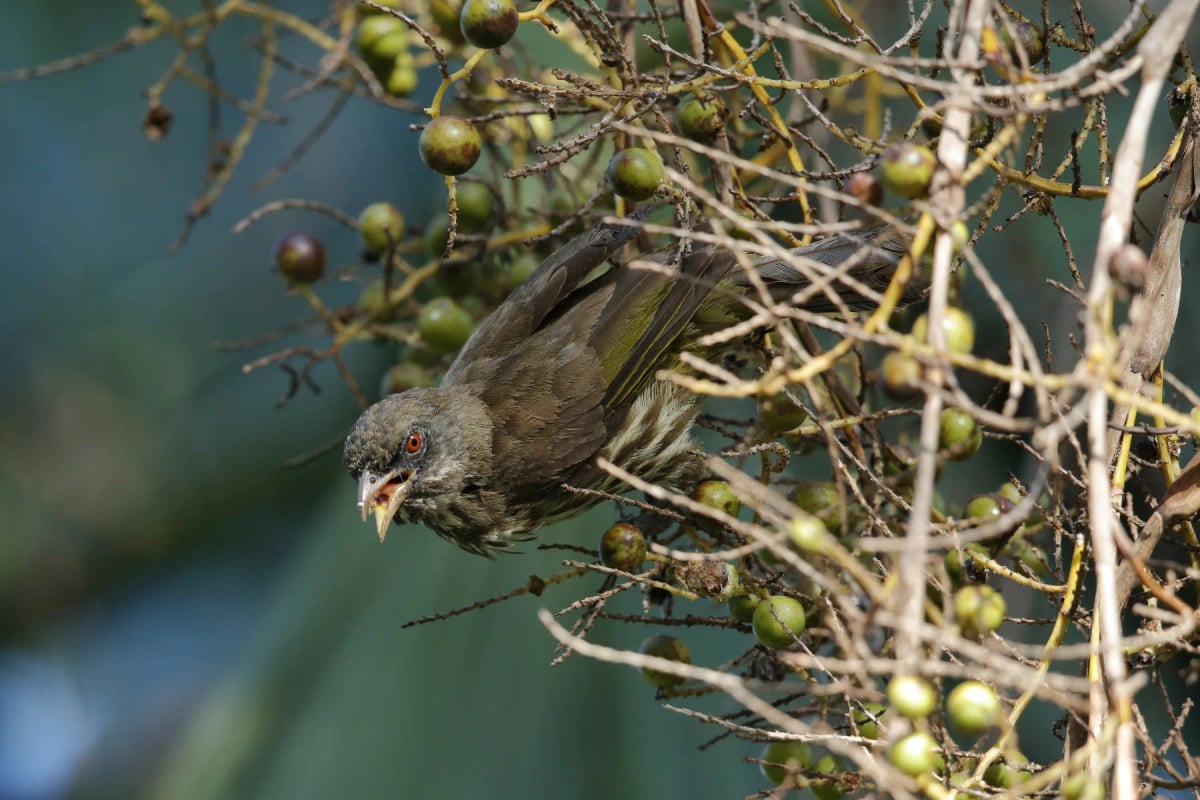
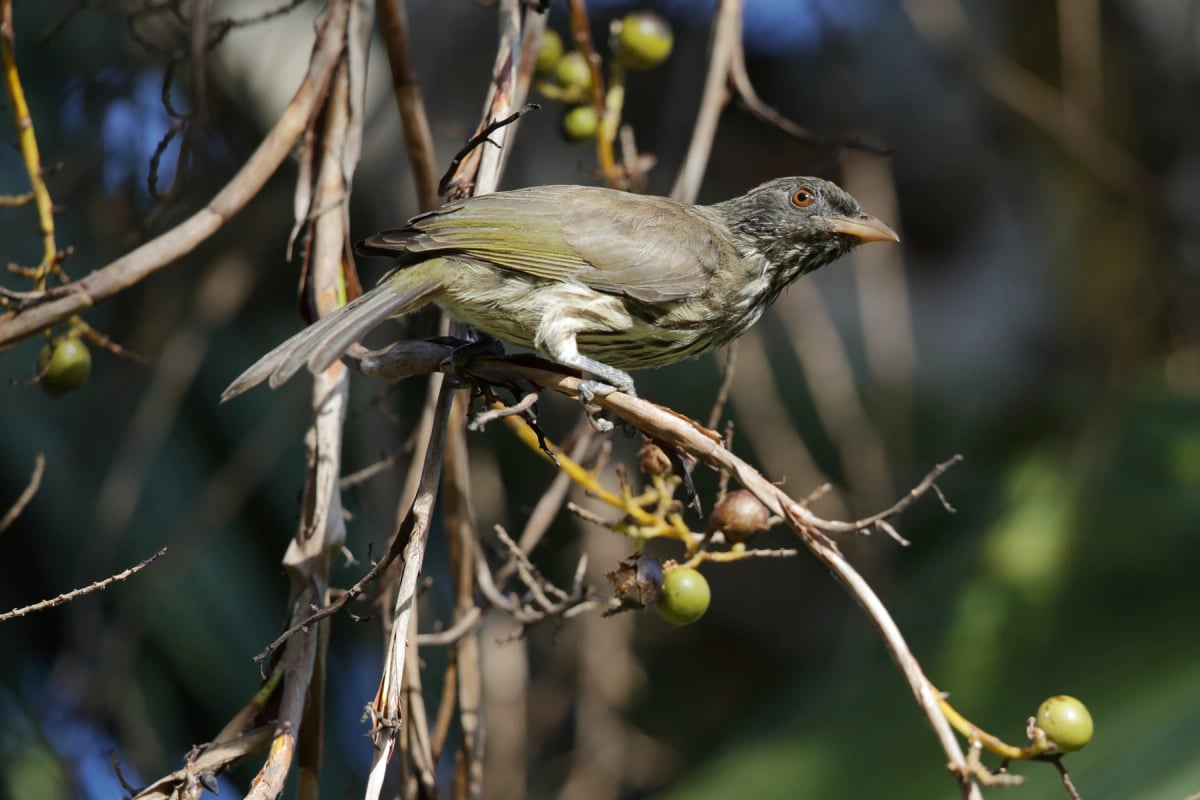
The palmchat (Dulus dominicus) is a small, stocky bird found only on Hispaniola and its satellite islands of Saona and Gonâve, making it one of the Caribbean's most distinctive endemics. It is the national bird of the Dominican Republic and is equally widespread in Haiti. Olive brown on top and heavily streaked below, with a thick, curved yellowish bill, it is not a flashy bird, but its constant chattering makes it impossible to miss. Palmchats are intensely social and build huge shared nests in royal palms: domes of sticks up to two meters across, usually home to four to ten pairs and sometimes to as many as fifty, each with its own chamber and entrance. They feed almost entirely on fruit, berries, and flowers, with royal palm fruit as a staple. It is the only member of its own family, Dulidae. Its ease in forests, farmland, and city parks keeps it common, and the IUCN lists it as Least Concern.
Habitat and distribution
Found nowhere else on Earth, the palmchat is restricted to the island of Hispaniola, shared by the Dominican Republic and Haiti, and to two small islands just off its coasts, Saona in the southeast and Gonâve in the Gulf of Gonâve. It occupies an impressive range of environments, from lowland forests and mountain slopes to agricultural plantations, open scrubland, and busy city parks. The one constant across almost all of these settings is the presence of royal palms, which the species relies on for nesting. palmchats tend to be most abundant in open and semiopen landscapes where these palms grow freely, but they also venture into secondary forest and suburban gardens with ease. Their tolerance for human modified landscapes has allowed them to remain common even in heavily populated areas, and they are one of the most frequently seen birds across both countries that share Hispaniola.
Diet
Fruit forms the core of the palmchat's diet, and the birds seek out a wide variety of tropical fruits throughout the year. Berries and soft, pulpy fruits are especially favored, and the fruit of the royal palm, the same tree they nest in, is one of their staples, so a single palm can give them both food and a home. Flowers and their petals also feature heavily, particularly when fruit is less available, and the birds have been seen eating the blossoms of many trees and shrubs. Insects play a very small role, if any: in one study, 57 of 58 stomachs examined contained only plant matter, which makes the palmchat one of the most strictly vegetarian songbirds of the Caribbean. This fruit based diet also makes it an important seed disperser, spreading the seeds of the plants it eats around the island. Palmchats forage both in the canopy and in low shrubs, often moving through a patch in noisy, animated groups.
Communal nesting
Among the most remarkable things about the palmchat is how it builds its home. Colonies work together to construct enormous nests in the crowns of royal palms, weaving sticks and twigs into domes that can reach two meters across and grow over many seasons. Within this shared mass, each breeding pair keeps its own private chamber, with a separate entrance tunnel that opens to the outside. Most nests hold four to ten pairs, and the largest have been recorded with as many as fifty. Breeding takes place mainly from March to June. The female lays two to seven eggs, usually four, which hatch after about 15 days, and the chicks leave the nest at around 32 days old. The birds defend their own chambers while still benefiting from the safety in numbers that a large colony provides, and in the non breeding months they keep using the nest to roost. Nests are reused year after year and are continuously expanded and repaired.
Behavior
Spend any time near a colony of palmchats and one thing becomes immediately clear: these birds are loud. Their calls are varied and persistent, ranging from harsh chattering to softer conversational notes exchanged between individuals. Groups move together through trees and shrubs in a sociable, energetic way, rarely staying still for long. Despite their boldness in sound, palmchats tend to stay close to palm trees and their nesting colonies, and it is unusual to spot one far from the palms they depend on. Outside of the breeding season, the birds remain in loose flocks and continue to roost communally in or near their large nests. This year round sociability is one of the defining traits of the species and sets it apart from most other birds of similar size found across the Caribbean.
National symbol
The palmchat holds the distinction of being the national bird of the Dominican Republic, a recognition that speaks to just how deeply connected this species is to the island it inhabits. It is also the only member of its own family, Dulidae. Its closest relatives are thought to be the waxwings and the silky flycatchers, but none of them looks or lives quite like it. This combination of endemism and biological uniqueness makes it a fitting emblem for a country proud of its natural heritage. In everyday life, the bird is a familiar presence for most Dominicans, seen and heard in neighborhoods, parks, and countryside alike. Its image appears on various official and cultural materials, and it is widely recognized across the island. For both the Dominican Republic and Haiti, the palmchat serves as a living reminder of the rich and irreplaceable wildlife of Hispaniola.
Researched and written by Juan Pablo. Sources: IUCN Red List, scientific literature and regional field guides. Last updated: .
Technical factsheet




Frequently Asked Questions
How big is a palmchat?
The palmchat measures 18 to 20 centimeters long and weighs 41 to 52 grams, a little bigger than a sparrow and about the size of a thrush. Males have slightly longer wings than females, but both sexes look the same. Its thick, curved, yellowish bill is strong for a fruit eater, and together with its streaked chest and olive brown back it gives the bird a sturdy, compact look.
How many eggs does a palmchat lay?
The female lays two to seven eggs, usually four, in her own chamber inside the shared nest. Breeding happens mainly from March to June. The eggs hatch after about 15 days, and the chicks leave the nest at around 32 days old. Because many pairs breed side by side in the same huge nest, a single royal palm can hold dozens of chicks at the same time during the peak of the season.
How big is a palmchat nest?
A palmchat nest is a dome of sticks and twigs built in the crown of a royal palm that can reach two meters across, far bigger than the birds that make it. It usually holds four to ten pairs, and the largest ones have been recorded with as many as fifty. Each pair has its own chamber and entrance tunnel. The nests are reused and enlarged every year, and the birds also sleep in them outside the breeding season.
Why is the palmchat called cigua palmera in Spanish?
In the Dominican Republic, cigua is a common name for several small birds, and palmera refers to the royal palm, the tree the palmchat depends on for food, nesting, and shelter. The English name tells a similar story: palm for the tree and chat for its constant chattering calls. Both names point to the two things anyone notices first about this bird, its palms and its noise.
Where can you see a palmchat?
Almost anywhere on Hispaniola where royal palms grow. In the Dominican Republic, they are easy to find in city parks and gardens in Santo Domingo and Santiago, along roads through farmland, and in palm groves across the country, as well as on Saona Island. In Haiti they are common in lowland areas with palms. The quickest way to find them is to look up at a big palm crown and listen for the chattering of a colony.
What does the palmchat eat?
Palmchats eat almost only plant food: fruit, especially berries, soft pulpy fruits, and the fruit of the royal palm, plus flowers and petals when fruit is scarce. In one study, 57 of 58 stomachs contained nothing but plant matter, so insects play a very small role, if any. This flexible, fruit based diet helps them thrive in forests, farmland, and city parks alike, and makes them useful seed dispersers across the island.
Where does the palmchat live?
The palmchat lives only on the island of Hispaniola and the small islands of Saona and Gonâve, shared between the Dominican Republic and Haiti. It adapts well to a wide range of settings, including forests, open scrubland, plantations, and city parks. Royal palms are the one feature it truly depends on, since the birds build their nests in the crowns of these trees. It remains common across both countries and is easy to spot almost anywhere on the island.
Is the palmchat endangered?
No, the palmchat is not endangered. The IUCN currently lists it as Least Concern, because it is common and faces no major threats. Its ability to adapt to human modified environments, including urban parks and agricultural areas, has helped it remain common across Hispaniola. As long as royal palms continue to grow across the island, the species is expected to do well.
Why do palmchats build such large nests?
palmchats are highly social birds that nest in colonies, so their nests need to house many pairs at once. Each pair has its own private chamber with a separate entrance, but all the chambers are bundled together into one massive structure built in a royal palm. These nests grow bigger every year as the birds keep adding to them. Living together in large groups offers better protection against predators.
Is the palmchat found only in the Dominican Republic?
No, the palmchat lives across the entire island of Hispaniola, which means it is found in both the Dominican Republic and Haiti. However, it does not exist anywhere else in the world, making it a true island endemic. It holds special status as the national bird of the Dominican Republic, but populations on the Haitian side of the island are just as widespread and healthy.
What makes the palmchat unique among birds?
The palmchat is the only member of its own family, Dulidae. Its closest relatives are thought to be the waxwings and silky flycatchers, but it looks and lives differently from all of them. On top of that, it is endemic to a single island and its two small satellites, builds huge communal nests used by up to fifty pairs, and is the national bird of the Dominican Republic. Very few birds combine that level of uniqueness in one species.
How noisy are palmchats?
Very noisy. palmchats are among the most vocal birds on Hispaniola, producing a wide range of calls from loud, harsh chattering to softer notes shared between individuals. A colony in full activity is practically impossible to miss. The noise is one of the easiest ways to locate them, even before you spot the birds themselves. This constant communication helps the group stay connected while foraging and nesting together.