Canada Lynx
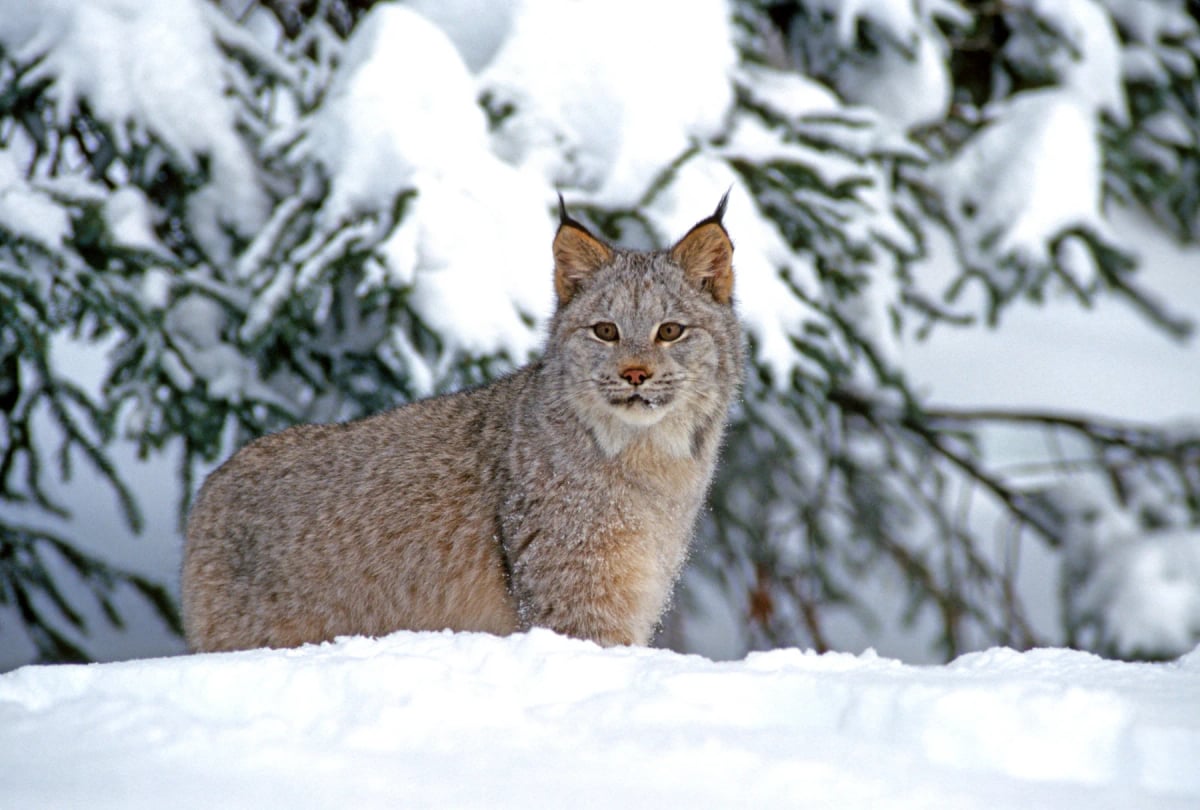
The Canada lynx is a medium-sized wild cat built for life in the deep snow of North America's boreal forests. Its most striking features are its broad, heavily furred paws, which distribute weight across the snow's surface much like snowshoes, and the distinctive black tufts that rise from the tips of its ears. A short, black-tipped tail and a prominent facial ruff complete its unmistakable look. Its coat is thick and grayish brown, providing excellent insulation against temperatures that can drop well below freezing. The lynx and the snowshoe hare share one of the most well-documented predator and prey relationships in ecology. Hare populations cycle roughly every ten years, and lynx numbers rise and fall in close step. When hares are scarce, lynx may travel hundreds of kilometers in search of food. Solitary and largely nocturnal, this cat is rarely observed despite its wide range.
Habitat and distribution
Across the vast boreal forests of Canada, from Yukon and British Columbia in the west to Newfoundland in the east, the Canada lynx is the dominant wild cat of the cold north. Its range extends into Alaska and dips into the contiguous United States, where isolated populations persist in the Rocky Mountains, the Cascade Range, and parts of the Great Lakes region. The lynx gravitates toward dense conifer forest with deep, persistent snow cover, conditions that give it a clear advantage over larger predators whose heavier frames sink into the snowpack. Elevation matters too: in the southern parts of its range, populations tend to occupy higher ground where snowpack lasts longest. The presence of snowshoe hares is the single most reliable predictor of where a lynx will settle and stay.
Diet
Few predator and prey relationships in the animal world are as tightly bound as that of the Canada lynx and the snowshoe hare. Studies have shown that hares can account for up to 97% of the lynx's diet during periods of peak hare abundance, making this cat one of the most specialized hunters among all wild felids. When hare numbers collapse at the bottom of their roughly ten year population cycle, lynx shift opportunistically to red squirrels, grouse, ptarmigan, and occasionally white-tailed deer or caribou calves. Lynx hunt by stealth rather than speed, using their keen eyesight and sharp hearing to locate prey before launching a precise, short distance ambush. They are most active around dawn and dusk, timing their hunts to match the hare's own activity patterns.
Behavior
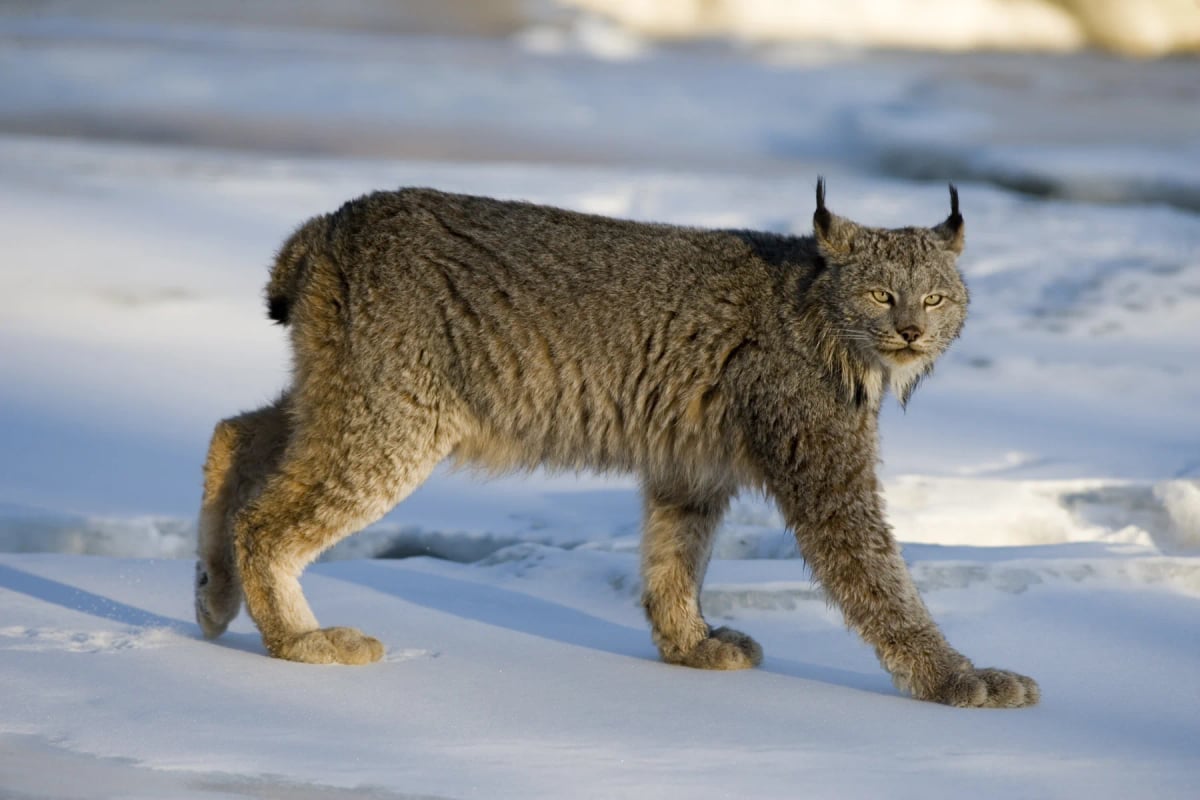
Solitary by nature, the Canada lynx spends most of its life alone, with adults coming together only to mate. Each individual maintains a home range that can vary considerably in size, from around 100 square kilometers during periods of hare abundance to several times that when food is scarce. Males hold larger territories than females, and these ranges often overlap with those of one or more females. Communication happens largely through scent marking, with lynx depositing urine and feces at prominent points along their travel routes. When snowshoe hare populations crash, some individuals undertake remarkable long distance movements in search of food, with records of lynx crossing hundreds of kilometers in a matter of weeks. Despite their wide distribution, they are almost never seen in the wild due to their quiet, cautious nature and preference for dense forest cover.
Adaptations to winter
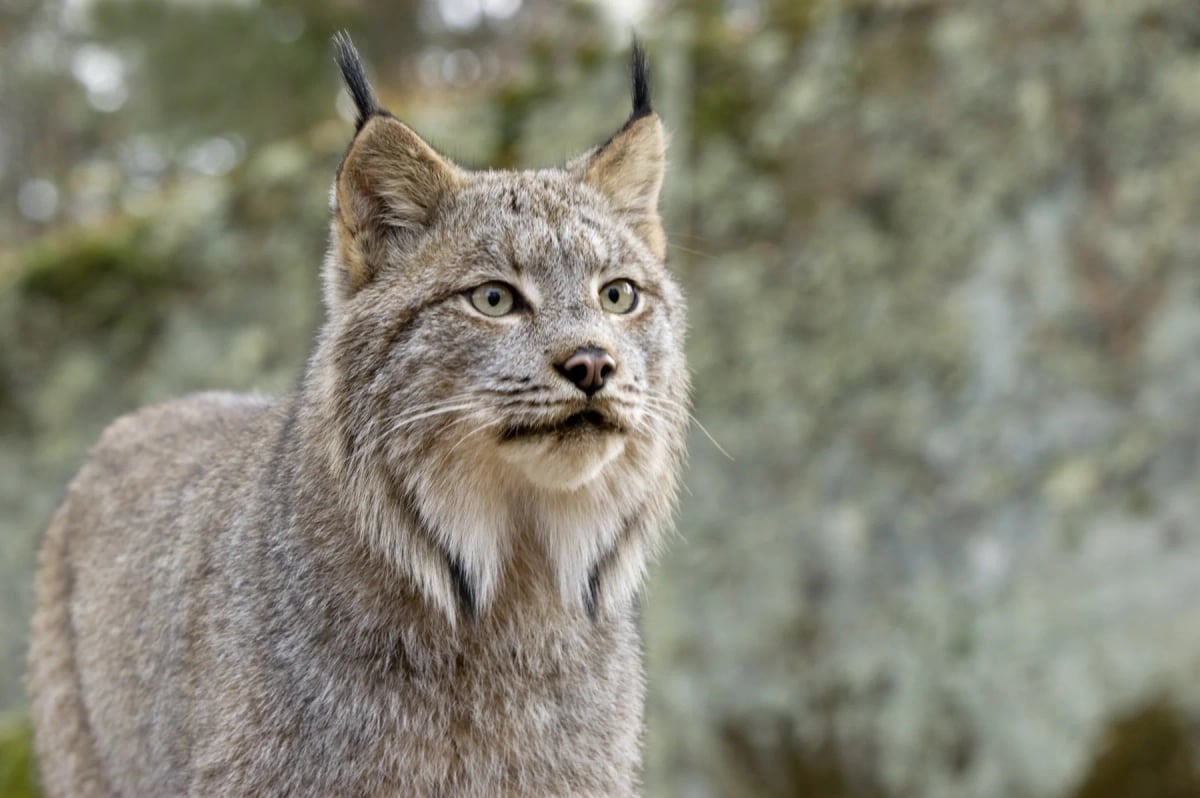
Everything about the Canada lynx seems shaped by snow. Its paws are exceptionally large relative to its body size, and the toes spread wide under pressure, creating a surface area that supports the cat's weight on soft snow in a way that echoes the function of a snowshoe. Dense fur between the toe pads adds grip and insulation in equal measure. The coat itself grows thick and long during winter, trapping a layer of warm air close to the skin that allows the lynx to remain active even when temperatures drop to −40 °C. The long ear tufts are thought to sharpen directional hearing by funneling sound toward the ears, an important advantage when hunting in dense forest. Shorter legs at the front than at the rear give the body a slight rearward tilt that may help with propulsion through deep snow during a chase.
Conservation
Globally, the Canada lynx is assessed by the IUCN as Least Concern, reflecting its broad range and stable populations across much of Canada and Alaska. The picture is more complicated in the United States, where the species is listed as threatened under the Endangered Species Act in its contiguous range. There, habitat loss driven by logging, road construction, and urban expansion has fragmented the forest patches these cats depend on. Climate change presents a growing concern, as warming winters reduce the depth and duration of snowpack, potentially eroding the competitive advantage the lynx holds over other predators in deep snow. The cyclical nature of snowshoe hare populations means that even healthy lynx populations endure periodic crashes, adding further pressure. Protecting large blocks of connected boreal forest and managing for snowshoe hare habitat are considered the most effective tools for securing the lynx's future.
Researched and written by Juan Pablo. Sources: IUCN Red List, scientific literature and regional field guides. Last updated: .
Technical factsheet





Frequently Asked Questions
What does the Canada lynx eat?
The snowshoe hare is by far the lynx's preferred prey, making up the vast majority of its diet during years of hare abundance. When hare populations crash, the lynx shifts to red squirrels, grouse, ptarmigan, and occasionally deer fawns or caribou calves. The lynx hunts by ambush rather than by prolonged pursuit, relying on sharp senses to close the distance quickly before striking.
Where does the Canada lynx live?
The Canada lynx is found across the boreal forests of Canada, from British Columbia and Yukon in the west to Newfoundland in the east, as well as throughout Alaska. In the contiguous United States, smaller isolated populations survive in the Rocky Mountains, the Cascade Range, and the Great Lakes region. The lynx favors dense conifer forest with deep, lasting snow cover, and its presence closely follows that of the snowshoe hare.
Is the Canada lynx endangered?
Globally, the IUCN classifies the Canada lynx as Least Concern, and populations across Canada and Alaska remain broadly stable. In the contiguous United States, however, the species holds threatened status under the Endangered Species Act. There, habitat fragmentation from logging and development, combined with shrinking snowpack due to climate change, puts pressure on already small and isolated populations.
How do a lynx's paws help it walk on snow?
The lynx has unusually large paws relative to its body size. When pressed against the snow, the toes spread wide, distributing the cat's weight across a much greater surface area and preventing it from sinking. Dense fur between the pads adds grip and insulation. This built-in adaptation gives the lynx a real edge over heavier predators that struggle to move efficiently through deep snow.
Why do Canada lynx populations go up and down?
Lynx numbers track the snowshoe hare cycle very closely. Hare populations boom and crash roughly every ten years, and lynx populations follow the same rhythm with a slight delay. When hares are plentiful, lynx breed successfully and numbers rise. When hares become scarce, food stress causes reproduction to fall and some individuals travel great distances in search of prey. It is one of the most studied cycles in ecology.
Is the Canada lynx solitary or social?
The Canada lynx is a solitary animal. Adults live and hunt alone, sharing space only during the breeding season. Each cat maintains its own home range, marked through deposits of urine and feces along regular travel routes. Males hold larger ranges than females, and a male's territory often overlaps with those of several females. Outside of the mating period, encounters between adults are generally brief and avoided.
Can the Canada lynx be found in the United States?
Yes, though in far smaller numbers than in Canada. Populations in the contiguous United States survive in parts of Montana, Idaho, Washington, and the Great Lakes region. These groups are isolated from one another and from the larger Canadian populations, making them more vulnerable to local threats. The species is federally listed as threatened in the lower 48 states, and conservation efforts focus on protecting connected blocks of suitable forest habitat.