Hornero
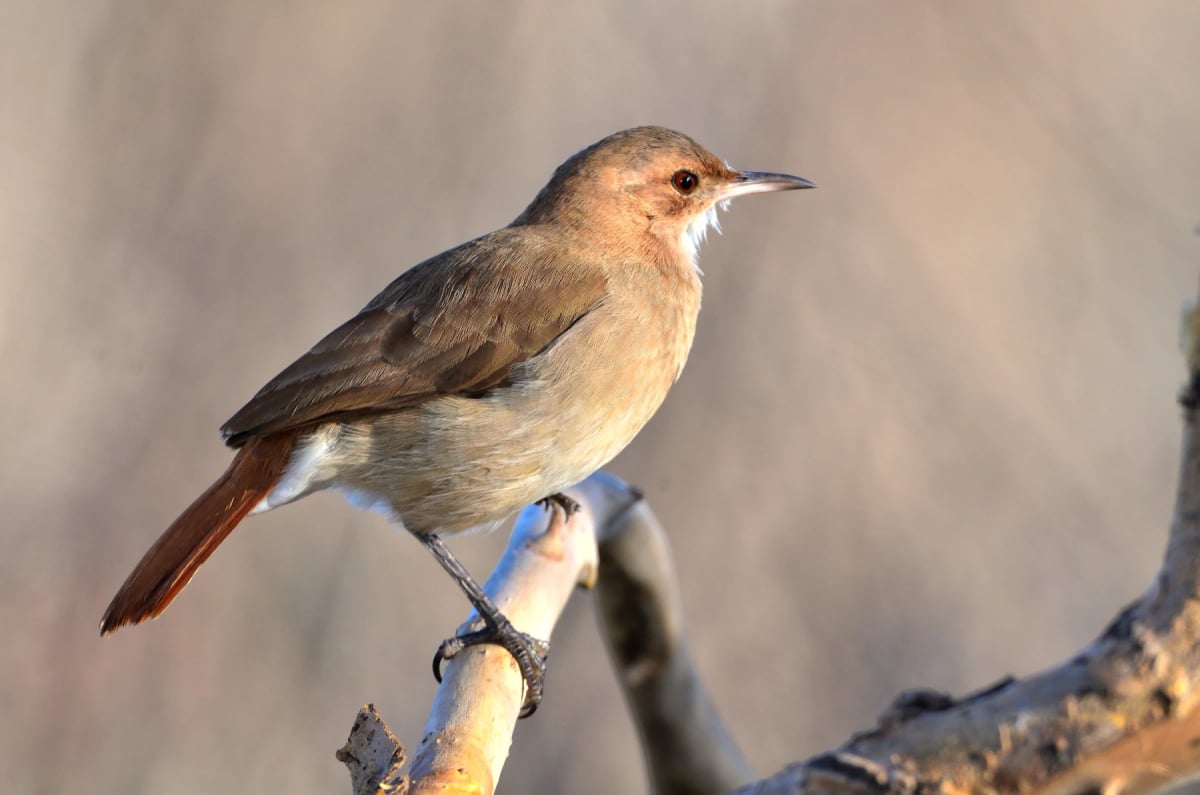
The rufous hornero is a small bird native to South America, instantly recognizable by its warm chestnut plumage and upright posture. It lives across Argentina, Uruguay, Paraguay, Brazil, and Bolivia, thriving in grasslands, farmland, open woodland edges, and city parks alike. The species is most famous for the nest it builds: a large, round structure made of mud and straw that resembles a clay oven, which gives the bird its name. Both partners in a monogamous pair work together to shape the nest, pressing hundreds of pellets of wet earth into a domed shell with a side entrance and a curved inner chamber. Foraging on the ground, horneros pick insects, spiders, worms, and other small invertebrates from the soil and leaf litter. It is one of the most common birds of the region, its numbers are increasing, and it has been the national bird of Argentina since 1928.
Hornero, rufous hornero or joão-de-barro: its names
In most of its range the bird is simply called hornero, the baker or oven maker, a name that comes from its mud nest shaped like an old clay oven. Its standard Spanish name is hornero común, the common hornero, which separates it from its relatives, and in English it is the rufous hornero. In parts of Argentina and Paraguay people also call it alonsito, and in some rural areas casero or hornerillo. In Brazil it is known as the joão-de-barro, John of the mud. Its scientific name, Furnarius rufus, means the reddish oven maker. The rufous hornero is only one of several horneros, all members of the ovenbird family of South America. In northern Argentina, Paraguay and Bolivia it shares the land with the crested hornero, a smaller bird with a pointed crest that also builds mud nests, and in the Amazon and other regions live the pale-legged, bay and band-tailed horneros. Four subspecies of the rufous hornero are recognized, differing slightly in size and in the tone of their plumage.
The mud nest
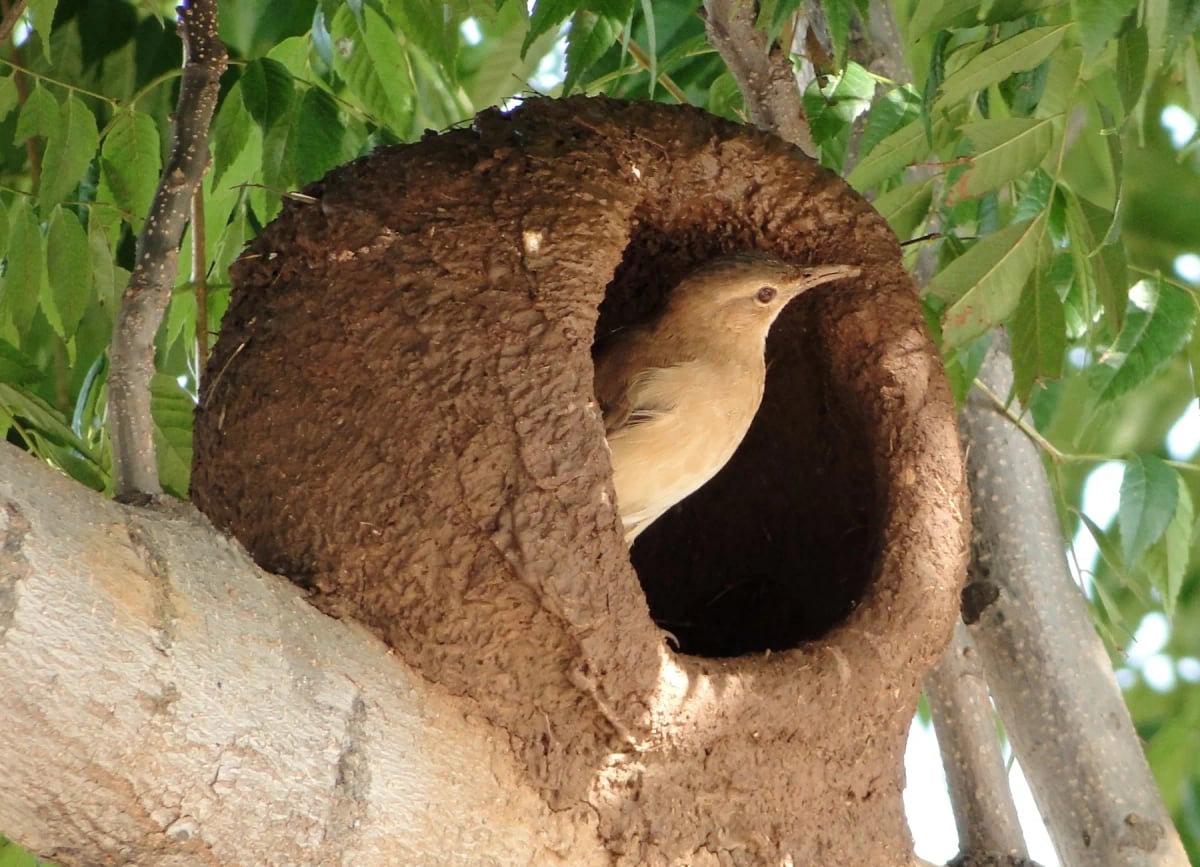
Nothing about the rufous hornero draws more attention than the remarkable structure it builds for breeding. Working as a pair, the two birds collect hundreds of small pellets of wet clay mixed with plant fibres, grass, and sometimes hair or dung, pressing them together into a heavy, rounded dome that weighs several kilograms when dry, around 5 kg on average. Building it can take from about five days to several months, depending on how much rain softens the ground. The finished nest has a narrow side entrance that opens into a short curved corridor, which then leads to a separate inner chamber where the eggs are laid. This corridor acts as a buffer, blocking wind and making it harder for predators to reach the eggs. The couple typically builds a fresh nest each breeding season, leaving old ones standing on fence posts, power lines, and tree branches, where they can persist for several years. The female lays two to four eggs inside, which hatch after 14 to 18 days, and the chicks leave the nest 23 to 26 days later.

Habitat and distribution
Across South America, the rufous hornero occupies one of the broadest ranges of any bird on the continent. It is found throughout Argentina, Uruguay, Paraguay, Brazil, and Bolivia, from river valleys and open grasslands to the edges of dry woodland and scrub. Few birds have adapted as successfully to human presence: horneros thrive in farmland, roadside verges, village squares, and busy city parks, treating lamp posts and building ledges as readily as tree branches. They tend to avoid dense forest, preferring open ground where they can walk freely and probe the soil. Over recent decades the species has actually extended its range into areas cleared for agriculture, suggesting it benefits from landscape changes that challenge many other species.
Diet
Searching for food is almost always a ground level affair for the rufous hornero. It walks steadily across bare earth, short grass, and damp soil, pausing to pluck insects, earthworms, spiders, and other small invertebrates from the surface or just below it. Beetles, ants, and larvae make up a large share of its daily intake, while it also takes advantage of soil turned up by ploughs or garden tools, which brings prey to the surface. The hornero rarely needs to climb vegetation or pursue prey through the air. Its straight, pointed bill works like a pair of tweezers, picking items from cracks, leaf litter, and shallow mud with neat precision. Foraging pairs often work the same patch of ground side by side throughout the day.
Behavior
Pairs of rufous horneros stay bonded throughout the year, not only during the breeding season. Both birds actively defend a territory, and one of the most striking things about them is the loud, rattling duet they perform together, with both partners calling at the same moment in a coordinated burst of song. This chorus, which carries far across open ground, serves as a clear signal to neighbouring pairs that the territory is occupied. The male's trill is faster than the female's, and each beats its wings in time with its own song, so an attentive listener can tell which bird is which. The hornero is active during daylight hours and spends much of its time on the ground, walking with a purposeful, upright gait. It rarely moves far from its established territory, and the same pair will often return to the same site, and even the same nest, season after season.
Cultural importance
Few birds are as deeply woven into the everyday life of a country as the hornero is in Argentina. It was chosen as the national bird of Argentina in 1928, chosen in large part because of the qualities people saw reflected in it: tireless effort, loyalty to a partner, and the ability to build something solid and lasting from nothing but mud and straw. Across rural Argentina, the sight of a hornero nest perched on a fence post or telegraph pole is as familiar as the landscape itself. The bird appears in folk songs, children's stories, and school lessons, and its image is used to teach values of hard work and family. It has also appeared on Argentine coins, banknotes and postage stamps. In Uruguay, Bolivia, Paraguay, and Brazil, it is equally familiar, though it holds its strongest cultural place in Argentina.
Conservation
The rufous hornero is listed as Least Concern on the IUCN Red List, a reflection of just how well the species is doing across its range. There is no precise count of its population, but it is one of the most abundant birds of the region, and rather than declining, the species has been spreading into new areas as agricultural expansion opens up forested land. Its tolerance for cities, towns, and farmland means it faces none of the pressure felt by species that depend on intact forest or wetland. No significant threats have been identified that would affect its survival over the long term. If anything, the hornero is a success story among South American birds, showing that adaptability to human environments can allow a species not just to hold its ground but to extend it.
Researched and written by Juan Pablo. Sources: IUCN Red List, scientific literature and regional field guides. Last updated: .
Technical factsheet




















Frequently Asked Questions
How many eggs does the hornero lay?
The rufous hornero lays two to four white eggs in the inner chamber of its mud nest, usually in spring. Both parents take turns incubating for 14 to 18 days, and both feed the chicks, which leave the nest 23 to 26 days after hatching. The young then stay in their parents' territory for about six months before finding their own. The nest is sometimes targeted by the shiny cowbird, which lays its eggs in other birds' nests, but the narrow curved entrance makes it harder to reach than an open cup nest.
How much does a hornero nest weigh?
A finished hornero nest is surprisingly heavy for a bird that weighs only 31 to 58 grams. Once the mud dries, the nest weighs several kilograms, around 5 kg on average, and it is built from hundreds of small balls of wet earth mixed with grass, straw and sometimes dung or hair. The pair carries each ball in its bill and presses it into place. Building can take as little as five days when the ground is soft after rain, or several months in dry spells, and the finished dome can last for years.
How can you tell a male hornero from a female?
By sight it is almost impossible: male and female rufous horneros look the same, with the same chestnut plumage, although males are slightly heavier and have longer wings. The easiest way is to listen. When the pair sings its loud duet, the male's trill is faster than the female's, and each bird beats its wings in time with its own song. So in a duet, the bird with the faster song and faster wingbeats is the male, and the one with the slower rhythm is the female.
Which birds use old hornero nests?
Because horneros usually build a new nest each season, old nests stay empty and many other birds take advantage of them. The bay-winged cowbird, known in Spanish as tordo músico, often raises its young in abandoned hornero nests, and so do swallows, house sparrows, saffron finches and some small parrots and tyrant flycatchers. Occasionally a pair builds a second nest on top of an old one, creating tall, two storey structures on posts and branches. In this way the hornero provides shelter for a whole community of cavity nesting birds.
Is the hornero common the same as the rufous hornero?
Yes. Hornero común, or common hornero, is the standard Spanish name of the rufous hornero, Furnarius rufus, the bird most people simply call hornero. The word común separates it from other hornero species, such as the crested hornero of the Chaco or the pale-legged hornero. In Brazil the same bird is called joão-de-barro, and in parts of Argentina and Paraguay alonsito. So hornero, hornero común, rufous hornero and joão-de-barro all refer to the same small chestnut bird with the mud oven nest.
What does the rufous hornero eat?
The rufous hornero feeds almost entirely on the ground, picking up insects, earthworms, spiders, beetles, ants, and larvae from bare soil, short grass, and damp earth. It uses its straight, pointed bill to pull prey from cracks and leaf litter with great precision. It often forages alongside its partner and takes advantage of freshly turned soil, where ploughing or digging brings small creatures to the surface.
Why does the hornero build a mud nest?
The mud nest protects the eggs from predators and bad weather. Both partners work together to press hundreds of pellets of wet clay, plant fibres, and grass into a heavy, rounded dome with a curved inner chamber and a narrow side entrance. That entrance corridor blocks wind and makes it very hard for predators to reach the eggs. When dry, the finished nest can weigh over a kilogram.
Where does the rufous hornero live?
The rufous hornero is found across a large part of South America, including Argentina, Uruguay, Paraguay, Brazil, and Bolivia. It thrives in open environments such as grasslands, farmland, riverbanks, and woodland edges. One of the things that makes it special is how well it adapts to cities and towns, living comfortably in parks, village squares, and even busy urban streets alongside millions of people.
Is the hornero endangered?
No, the rufous hornero is not endangered at all. The IUCN lists it as Least Concern, which is the safest category. It is one of the most abundant birds in the region, and it has actually been spreading into new areas as land is opened up for agriculture. Because it adapts so well to cities, towns, and farmland, it faces none of the pressure that threatens many other South American birds.
Does the hornero sing? What does it sound like?
Yes, the hornero is quite vocal. Pairs are known for performing a loud, rattling duet where both birds call at exactly the same moment in a burst of coordinated song. This call carries far across open ground and tells neighbouring pairs that the territory is taken. Once you hear it, it is hard to forget. Horneros call most actively in the morning and use their voices year round, not just during breeding season.
Why is the hornero the national bird of Argentina?
Argentina officially named the hornero its national bird in 1928. People saw in it qualities worth celebrating: it works tirelessly to build its home, stays loyal to one partner, and makes something strong and lasting out of simple mud and straw. The bird is deeply familiar to Argentines, appearing in folk songs, school lessons, and children's stories. Its nest on a fence post or telegraph pole is one of the most recognizable sights across the Argentine countryside.
How long does a hornero nest last?
A hornero nest is surprisingly durable. Once the mud dries, the structure becomes very hard and can withstand rain, wind, and heat. Pairs usually build a fresh nest each breeding season rather than reusing the old one, so old nests are left standing and can persist on fence posts, power lines, and tree branches for several years. Other small birds sometimes move into abandoned hornero nests and use them as shelter.