Eurasian Otter
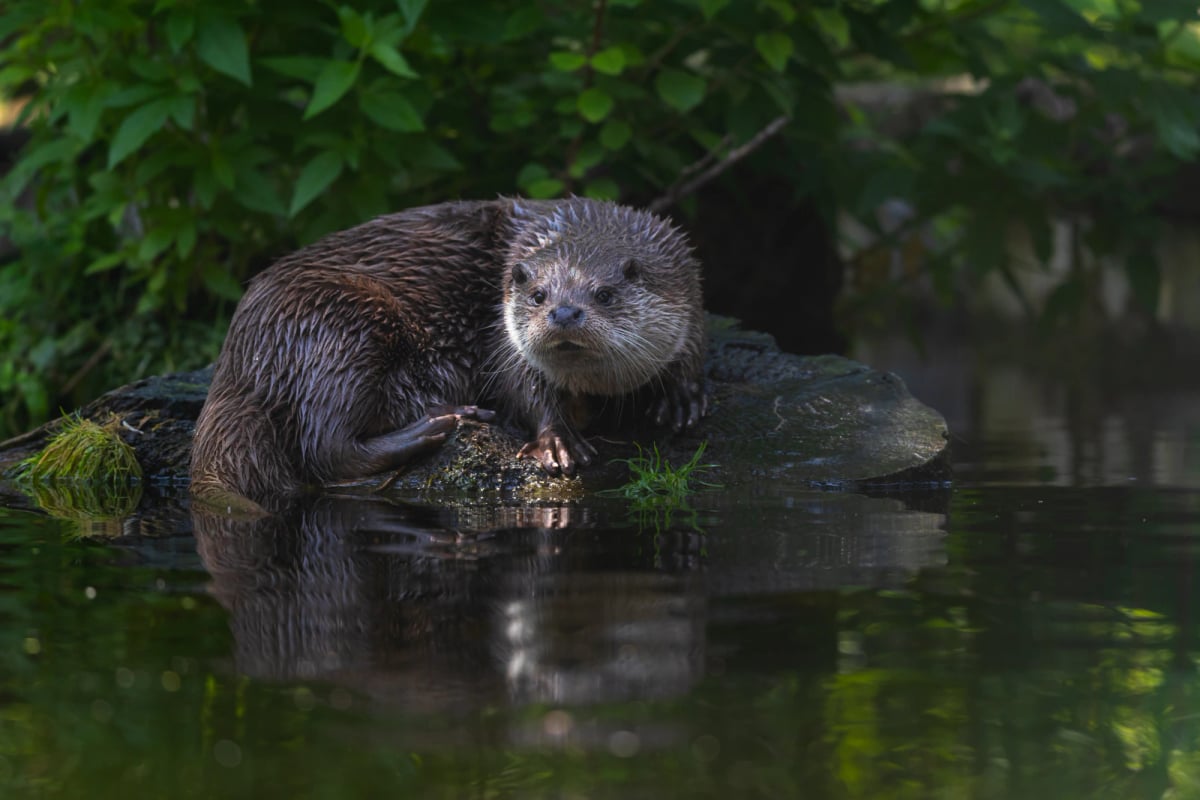
The Eurasian otter (Lutra lutra), also called the European otter or common otter, is the most widespread otter in the world. It lives along rivers, lakes, marshes and rocky coasts from Ireland and Portugal across Europe and Russia to China, Korea and Taiwan, south to India and Sri Lanka, and in the mountains of North Africa. It is a long, slender member of the weasel family, with short legs, webbed feet, a thick, tapering tail and dense brown fur with a paler throat, built for hunting underwater. It eats mainly fish, especially eels and slow bottom fish, along with crayfish, frogs, water birds and small mammals. Eurasian otters are shy, mostly active at night and usually solitary, and they mark their territories with droppings called spraints, which smell surprisingly sweet and are the main way scientists know otters are present. Between the 1950s and the 1980s, pesticides, polluted water, hunting and the loss of wetlands wiped them out from much of western and central Europe. Since then, bans on harmful chemicals, cleaner rivers and legal protection have brought them back to many countries, although they are still declining in parts of Asia. The IUCN lists the species as Near Threatened.
What is a Eurasian otter?
The Eurasian otter is a semiaquatic member of the weasel family and the most widespread of the 13 otter species in the world. Its scientific name is Lutra lutra, and in English it is also called the European otter, the common otter or simply the otter, since it is the only otter found in most of Europe. It is closely related to the hairy nosed otter of Southeast Asia and more distantly to the North American river otter, the sea otter and the giant otter of South America. Eurasian otters live wherever there is clean fresh or salt water with enough fish and safe places to rest, from mountain streams and big lowland rivers to lakes, reservoirs, marshes, estuaries and rocky seashores. In Scotland and Norway many live along the coast and feed in the sea, but unlike the sea otter they always need fresh water to wash the salt from their fur, and they rest and breed on land. Otters have long been part of European folklore and culture, from Celtic legends to the classic book Tarka the Otter. They are also an important indicator species: because they sit at the top of the river food chain, healthy otter populations are a sign of clean water and plentiful fish.
How big is a Eurasian otter?
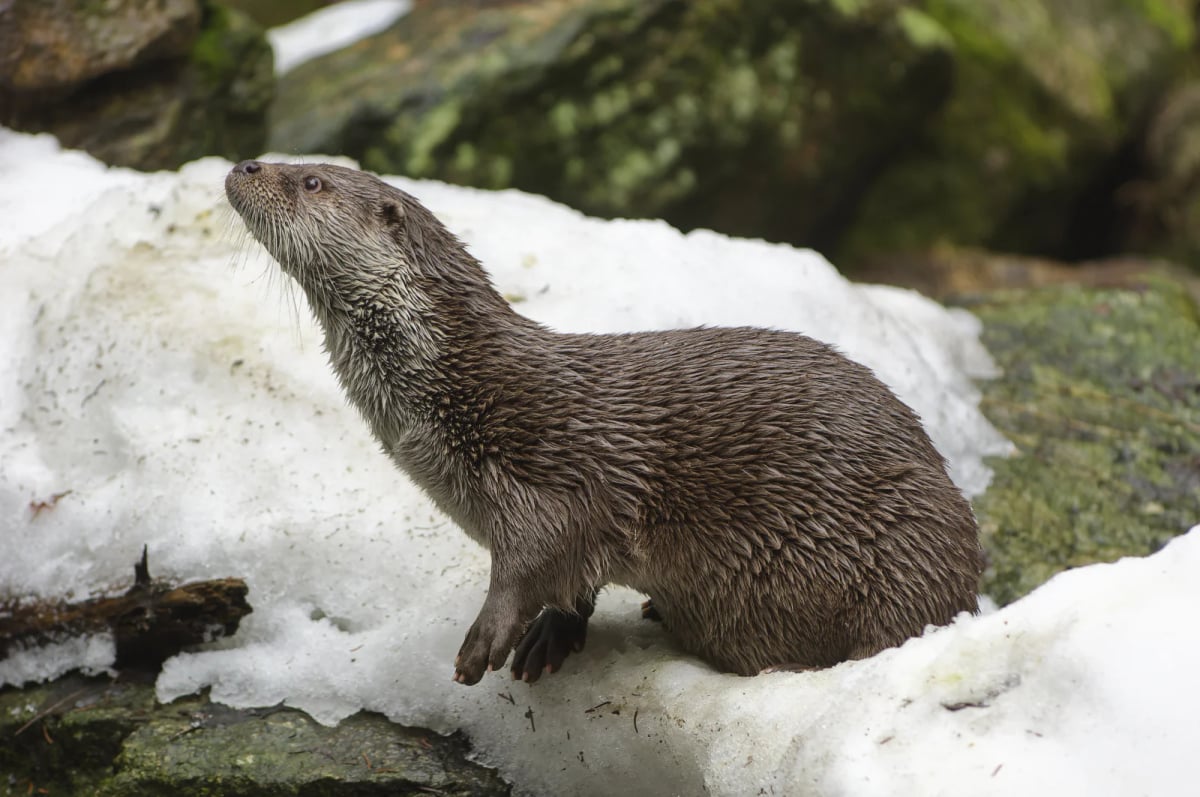
The Eurasian otter is a medium sized otter, much smaller than the sea otter or the giant otter. Its body measures about 57 to 95 centimeters, and its thick, muscular tail adds another 35 to 45 centimeters, so a large male can be more than a meter and a quarter long from nose to tail tip. Males usually weigh 7 to 10 kilograms, sometimes more, while females are smaller, around 5 to 7 kilograms. The body is long, low and flexible, with short legs and broad feet that have five webbed toes and small claws. The tail is wide at the base and tapers to a point, working as a rudder and helping to push the otter through the water. The fur is dark brown above and paler, almost cream, on the throat and chest. It has two layers: a dense underfur that traps air and keeps the skin dry, and longer guard hairs that repel water. The head is broad and flat, with small ears and nostrils that close underwater, small eyes adapted to see both in and out of water and long, sensitive whiskers that detect the movements of fish in dark or muddy water. When it swims at the surface, often only the head and the top of the back are visible.
Where do Eurasian otters live?
The Eurasian otter has one of the widest ranges of any mammal in Eurasia. It lives across almost all of Europe, from Portugal, Spain and Ireland to Scandinavia, the Balkans and Ukraine, and across Russia to the Pacific. In Asia it is found in Turkey, the Caucasus, Iran and Central Asia, along the Himalayas in Pakistan, India, Nepal and Bhutan, in the Western Ghats and Sri Lanka, and across much of China to Korea and the island of Kinmen, which belongs to Taiwan. In North Africa it lives in the mountains and coasts of Morocco, Algeria and Tunisia. Smaller, scattered populations survive in parts of the Middle East and Southeast Asia, where it is now very rare. Within this huge range, otters need clean water with plenty of food and good cover along the banks, such as tree roots, reeds, rocks and dense vegetation, where they can rest and raise cubs. They live along mountain streams up to more than 4,000 meters in the Himalayas, along big lowland rivers, in lakes and fish ponds and on rocky sea coasts. In Shetland, western Scotland, western Ireland and Norway, many otters live by the sea, feeding in kelp and seaweed beds and often active by day.
What do Eurasian otters eat?
Eurasian otters are mainly fish eaters. Fish usually make up most of their diet, and they tend to catch whatever is most common and easiest to catch, rather than the biggest or most prized. Eels are a favorite in many parts of Europe, along with slow bottom living fish such as bullheads, loaches, perch, carp and other cyprinids. They also take trout and salmon, especially young ones in small streams. Along the coast they hunt rockling, butterfish, eelpout and other small fish among rocks and seaweed, as well as crabs. Fish are not the whole story. Otters also eat crayfish, including invasive American crayfish in many European rivers, frogs and toads, which can be very important in winter and spring, water birds such as moorhens and ducklings, and small mammals such as water voles and rats. Otters hunt mainly by touch and sight, swimming close to the bottom and searching under stones and roots with their sensitive whiskers. Most dives last less than a minute. Small prey is eaten in the water, while larger fish are brought to the bank. An adult otter needs to eat about 1 to 1.5 kilograms of food a day, roughly 15 percent of its body weight, to keep warm in cold water.
Eurasian otter behavior: holts, spraints and territories
Eurasian otters are shy and mostly solitary animals. Along rivers they are usually active at dusk, at night and around dawn, while on quiet coasts such as Shetland they often hunt by day, following the tides. They rest in several dens spread through their territory. The main dens, called holts, are usually hidden among the roots of riverside trees, in old rabbit or badger burrows, in rock piles or in dense reeds, and they also use open resting places in vegetation called couches. Otter territories are large and stretch along the water. A female may use 5 to 20 kilometers of river, and a male's territory can cover 20 kilometers or more and overlap those of several females. Otters mark their range with droppings called spraints, left on rocks, logs, bridges and grassy mounds along the bank. Fresh spraints have a surprisingly pleasant smell, often compared to jasmine, cut grass or green tea, and they act as a message board for other otters. They are also the main tool scientists use to survey otters, since the animals themselves are rarely seen. Otters communicate with high whistles, especially between mother and cubs, and they are playful, often sliding on mud banks and chasing each other in the water.
Eurasian otter cubs
Eurasian otters can breed at any time of year in much of Europe, although in colder or more seasonal places, such as Scandinavia and parts of Asia, cubs are more often born in spring and summer. After a pregnancy of about 60 to 63 days, the female gives birth in a well hidden breeding holt, away from the main river if possible, where floods and disturbance are less likely. A litter usually has two or three cubs, sometimes one or four. Newborn cubs weigh only about 100 grams, are covered in soft gray fur and are blind for the first month. They stay in the den for about two to three months and only then come out and start learning to swim, which they do not know instinctively and must practice under their mother's watch. The father plays no part in raising them. The mother brings them food at first and then teaches them to hunt, a slow process that takes many months. The cubs stay with her for about a year, sometimes longer, before they leave to find their own territories. This is a dangerous time: many young otters die on roads, in fights with other otters or from hunger. Females usually breed for the first time at about two years old.
Eurasian otter vs sea otter and river otter
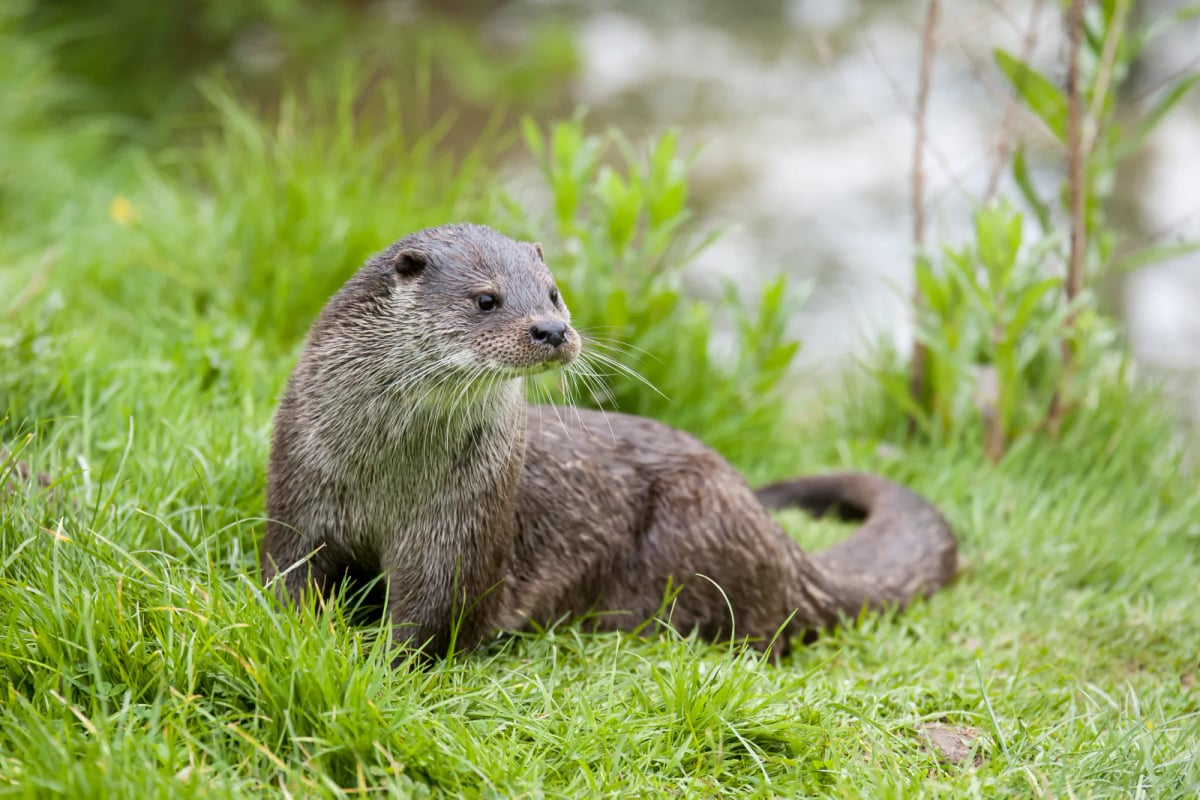
The Eurasian otter is often confused with two better known relatives. The sea otter of the North Pacific is a different animal altogether: it is much heavier, up to 45 kilograms, lives its whole life at sea, floats on its back to eat and has no need for fresh water. Eurasian otters that live on the coast, as in Scotland or Norway, may hunt in the sea, but they swim on their bellies, bring food to the rocks and must wash in fresh water, and people in those places sometimes wrongly call them sea otters. The North American river otter looks very similar to the Eurasian otter and lives in the same kinds of habitats, but it is found only in North America and belongs to a different genus, Lontra. It is a little larger and more sociable, often seen in family groups, and it has a slightly different nose shape. In Asia, the Eurasian otter shares rivers with two other species: the smooth coated otter, which is larger and lives in groups, and the Asian small clawed otter, the smallest otter in the world. The giant otter of the Amazon, which can be almost two meters long, is the largest of all otters and lives in noisy family groups.
The Eurasian otter's comeback in Europe
In the second half of the 20th century, the Eurasian otter collapsed across much of western and central Europe. It vanished from most of England, the Netherlands, Belgium, Luxembourg, Switzerland, much of France, Germany and northern Italy, and declined sharply elsewhere. Hunting for fur and sport played a part, as did the loss of wetlands, the canalization of rivers and the clearing of bankside vegetation. The main cause, however, was pollution. From the 1950s, organochlorine pesticides such as dieldrin and industrial chemicals such as PCBs built up in fish and then in otters, killing them and leaving survivors unable to breed. Once these chemicals were banned in the 1970s and 1980s and rivers were cleaned up, otters began to return. Legal protection under European laws, the end of otter hunting, fish passes, artificial holts and wildlife tunnels under roads all helped. In England, otters had disappeared from most counties by the 1980s, but by 2011 they had been recorded in every county again. The Netherlands reintroduced otters in 2002 and now has a growing population, and otters have returned naturally to Belgium, Luxembourg, Switzerland and much of France. The comeback is a symbol of cleaner rivers, but roads and fishing nets still kill many otters.
Is the Eurasian otter endangered?
Not officially. The IUCN lists the Eurasian otter as Near Threatened in its 2020 assessment, with a decreasing population, and estimates between about 58,000 and 361,000 adults worldwide, a wide range that reflects how hard otters are to count. The picture is very different from one region to another. In much of western and central Europe, otters are recovering thanks to cleaner rivers and strong legal protection, and the European Union protects both the species and its habitat. In much of Asia, by contrast, otters are declining or have disappeared from large areas. Poaching for the illegal fur trade, centered on demand for otter skins in parts of China and Tibet, has hit populations in India, Nepal, Bangladesh and Southeast Asia hard. Dams, sand mining, drainage of wetlands, overfishing and water pollution remove the food and shelter otters need. Even in Europe, threats remain. Road traffic is the leading recorded cause of death in many countries, and otters drown in fishing nets and traps. Conflicts with fish farmers lead to illegal killing in some places. New threats include pollutants such as mercury and flame retardants. Protecting rivers, building safe crossings under roads and stopping the fur trade are key to the otter's future.
Where it is found
The Eurasian Otter can be found in places such as: