Sea Otter
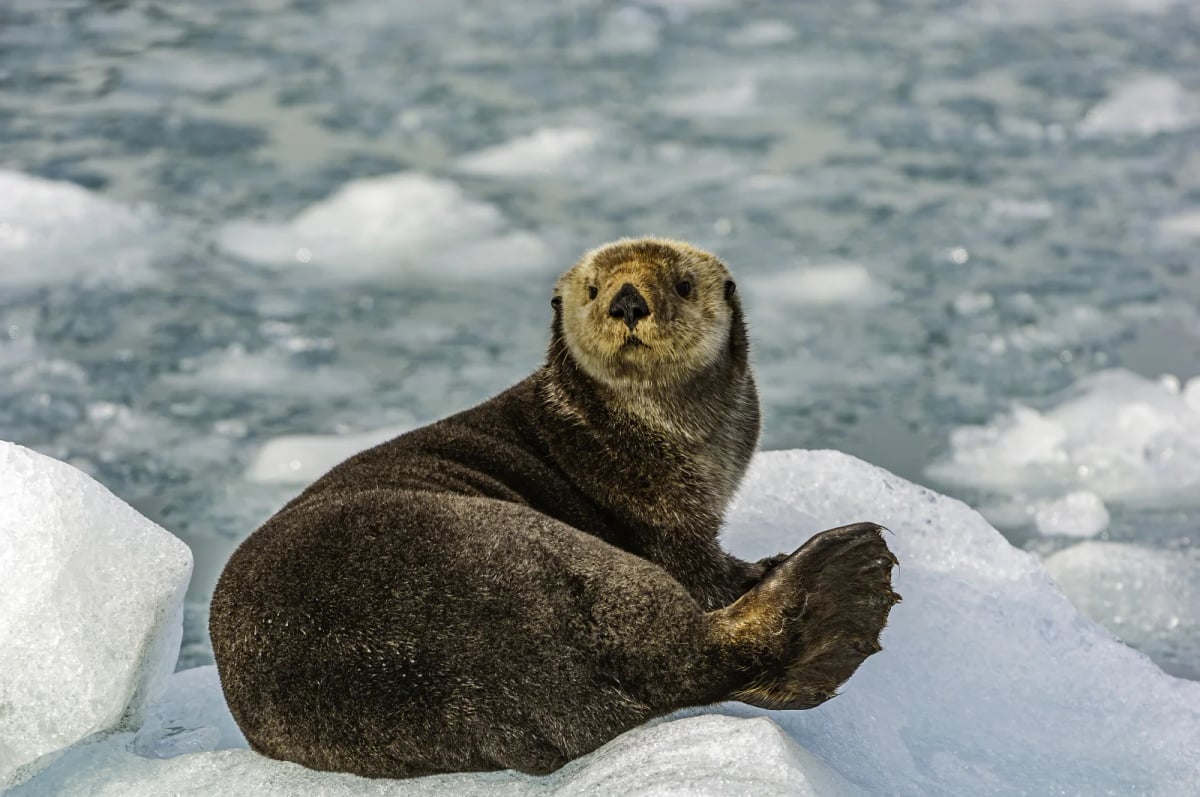
The sea otter (Enhydra lutris) is the heaviest member of the weasel family and one of the smallest marine mammals, and it is the only otter that can live its whole life at sea. It lives along the cold coasts of the North Pacific, from northern Japan and Russia's Kuril and Commander Islands through Alaska and British Columbia to California, usually in shallow water near kelp forests and rocky shores. Unlike seals and whales it has no blubber. Instead it stays warm with the densest fur of any animal and a very fast metabolism, eating about a fifth to a quarter of its body weight every day. It dives to the seabed for sea urchins, crabs, clams, mussels and snails and eats them floating on its back, often cracking shells with a rock it keeps in a loose fold of skin under its forearm. By eating sea urchins, which graze kelp, sea otters protect kelp forests, and they are a classic example of a keystone species. The fur trade of the 1700s and 1800s cut a population of a few hundred thousand down to perhaps 1,000 to 2,000 animals by 1911. Protection and reintroductions brought them back, but oil spills, disease, killer whales and sharks keep some populations in trouble, and the IUCN lists the species as Endangered.
What is a sea otter?
The sea otter is a marine mammal of the North Pacific and the only otter that can spend its entire life in the ocean. Its scientific name is Enhydra lutris, and it belongs to the weasel family, the mustelids, together with badgers, martens, wolverines and the other otters. It is the heaviest member of that family, although the giant otter of South America is longer. Searches for an ocean otter or an otter in the ocean usually mean this species, which eats, sleeps, mates and gives birth in the water and only rarely comes ashore, mostly in parts of Alaska. Sea otters are best known for floating on their backs, using their chest as a dinner table and cracking shells with rocks, which makes them one of the few mammals besides primates that regularly use tools. They live along cold coasts from northern Japan and the Russian Far East to Alaska, British Columbia, Washington and California, usually close to shore in water less than about 40 meters deep. Their fur is the densest of any animal, and that fur nearly caused their extinction, because hunters killed hundreds of thousands of sea otters for their pelts between 1741 and 1911.
Sea otter vs river otter and marine otter
Several otters can be seen in the sea, and they are easy to confuse. The sea otter is much bigger than the North American river otter: a male sea otter can weigh up to 45 kilograms, while a river otter rarely passes 14. The sea otter also has a short, flat tail, a round, blunt face that often turns pale with age and big, webbed hind feet shaped like flippers. River otters have a long, thick, tapered tail, a sleeker body and feet made for walking as well as swimming. Behavior gives them away too. Sea otters float on their backs and eat lying on the water, and they almost never leave the sea. River otters swim on their bellies, carry their food to shore and spend a lot of time on land, which is why people in Alaska call them land otters. Both live along the coasts of Alaska and British Columbia, so seeing them side by side is possible there. The marine otter is a third species. It lives on the rocky Pacific coasts of Peru and Chile, where it is called chungungo, and it is small, dark and hard to see, very different from the sea otter despite the similar name.
How big is a sea otter?
Sea otters measure about 1.2 to 1.5 meters from nose to tail tip, and the tail adds only about 25 to 37 centimeters of that. Males usually weigh 22 to 45 kilograms and females 14 to 33 kilograms, with the heaviest animals in Alaska and Russia and smaller ones in California. That makes the sea otter the heaviest member of the weasel family, yet one of the smallest of all marine mammals. Its body is built for a life at sea. The hind feet are long, broad and fully webbed, working like flippers, and the sea otter swims mostly by kicking them while lying on its back or belly. The front paws are small and round, with retractable claws and tough pads that help it grip slippery prey and handle rocks. The face is round, with small ears that close underwater, long whiskers that help it find food in dark water and strong jaws and teeth for crushing shells. The fur is dark brown, and older animals often have a pale gray or whitish head. Sea otters have a very fast metabolism, two to three times that of a land mammal of the same size, which keeps them warm but also forces them to eat almost constantly.
The densest fur of any animal
The sea otter's secret weapon against the cold is its fur. Unlike seals, sea lions and whales, it has no layer of blubber, so it depends on its coat to stay warm in water that can be close to freezing. That coat is the densest of any animal, with roughly 100,000 to 150,000 hairs on every square centimeter, more than on the whole head of most people in a patch the size of a stamp. It has two layers. A thick, soft underfur traps a layer of air next to the skin, and longer guard hairs on top keep the water out. The fur only works if it stays clean and fluffy, so sea otters spend hours every day grooming. They rub, comb and lick every part of their body, blow air into the fur and roll in the water, and mothers groom their pups constantly. Anything that mats the fur is dangerous. Oil is the worst, because an oiled sea otter quickly loses its insulation and can die of cold, which is why oil spills hit them so hard. The same fur was the reason for the great fur trade: sea otter pelts were among the most valuable in the world, especially in China and Russia.
Where do sea otters live?
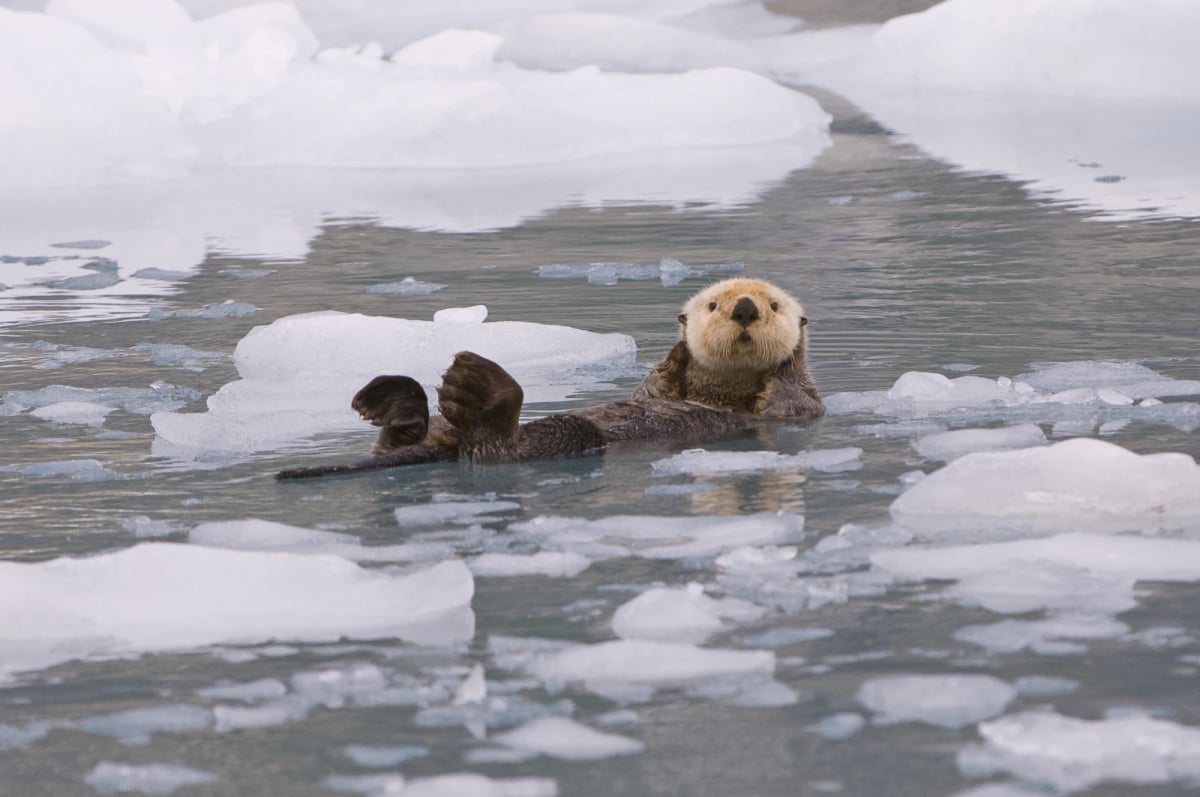
Sea otters live only in the North Pacific, along the coasts of Asia and North America. In Asia they are found off eastern Hokkaido in Japan, in the Kuril Islands, along eastern Kamchatka and around the Commander Islands of Russia. In North America the largest numbers by far are in Alaska, from the Aleutian Islands and the Alaska Peninsula to Prince William Sound, Kachemak Bay and the islands of Southeast Alaska. Farther south they live along the west coast of Vancouver Island and the central coast of British Columbia, on the outer coast of Washington's Olympic Peninsula and in central California, between about Half Moon Bay and Santa Barbara County, with a small group at San Nicolas Island. Sea otters stay close to shore, usually within a couple of kilometers of land and in water less than about 40 meters deep, because they feed on the seabed. Their favorite places are kelp forests, rocky reefs and sheltered bays, but they also use sandy and muddy bottoms and estuaries such as Elkhorn Slough in California. They once lived continuously from Japan to Baja California, and the gaps in their range today, such as Oregon and most of northern California, are a legacy of the fur trade.
What do sea otters eat?
Sea otters eat mostly invertebrates from the seabed. Their menu includes sea urchins, crabs, clams, mussels, abalone, snails, sea stars and octopus, and in some places fish. Each population, and even each otter, has its own favorites, and young otters learn them from their mothers. To find food, a sea otter dives to the bottom, usually less than 30 meters down, and searches among rocks and sand with its sensitive paws and whiskers. Dives normally last one to four minutes. It brings the prey to the surface and eats lying on its back, using its belly as a table. Sea otters are famous for using tools. To open hard shells, an otter places a flat rock on its chest and pounds the clam or mussel against it, or hits the shell with the rock, and it may keep a favorite rock for a long time. It carries the rock and extra food in a loose fold of skin under each front leg, a kind of pocket. Because they burn energy so fast, sea otters need to eat about 20 to 25 percent of their body weight every day, which for a big male can mean nine kilograms or more of seafood.
Why are sea otters a keystone species?
A keystone species is one whose effect on its ecosystem is much bigger than its numbers suggest, and the sea otter is one of the textbook examples. The story starts with sea urchins. Urchins graze on kelp, the giant brown seaweed that forms underwater forests along the North Pacific coast. Where sea otters are present, they eat so many urchins that the kelp can grow, and the forest becomes home to fish, crabs, snails, seals and seabirds. Where sea otters disappear, urchin numbers explode, the kelp is eaten down to the rock and the forest turns into a bare urchin barren. Scientists, led by ecologist Jim Estes, saw this clearly in Alaska's Aleutian Islands. Islands with otters had thick kelp forests and islands without them had urchin barrens. When killer whales began eating sea otters there in the 1990s and otter numbers crashed, the kelp forests collapsed too. The effect reaches beyond kelp. In California's Elkhorn Slough, sea otters eat crabs that would otherwise eat the small grazers that keep seagrass clean, and the seagrass has recovered since the otters returned. Healthy kelp forests and seagrass beds also store carbon and shelter young fish that people later catch.
Do sea otters really hold hands?
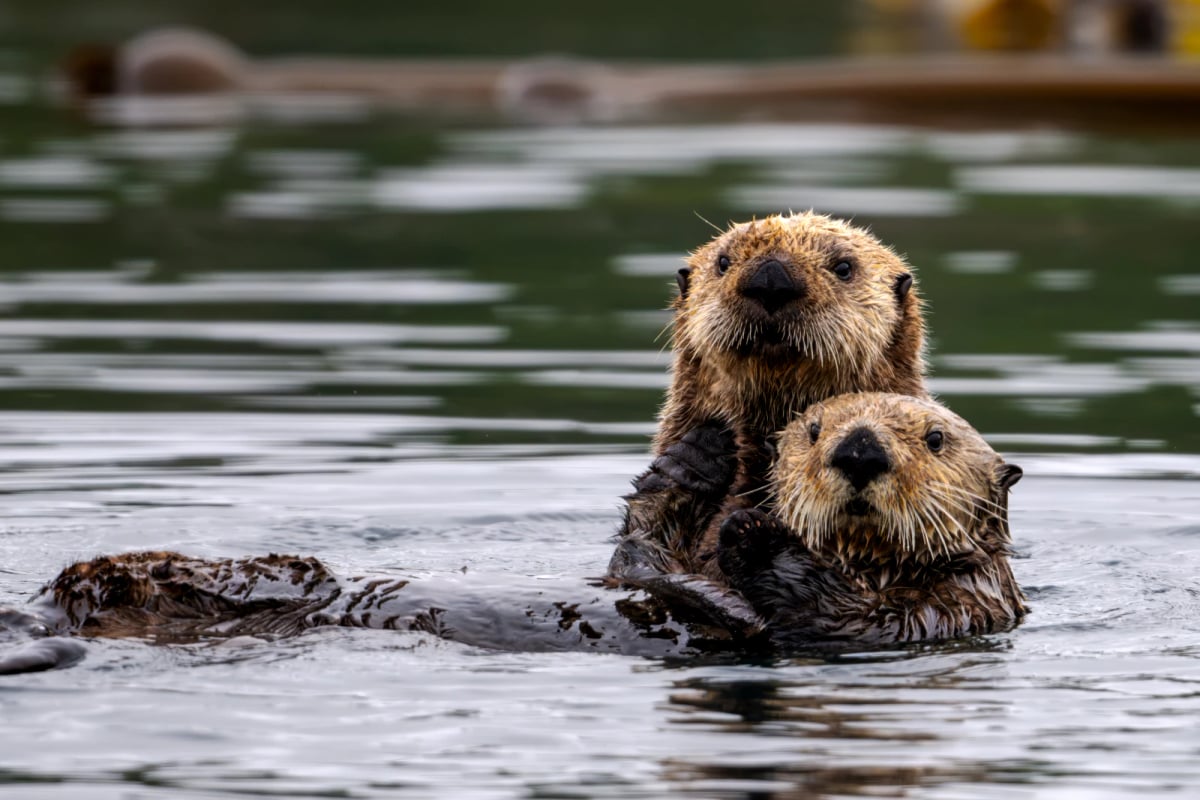
Yes, sometimes. Sea otters rest and sleep floating on their backs, and to avoid drifting apart or out to sea they often wrap themselves in strands of kelp, which works like an anchor. Where there is no kelp, resting otters sometimes hold each other's paws for a while, and mothers often hold their pups. The behavior has been photographed in the wild, but most famous videos come from aquariums. Sea otters gather in groups called rafts while they rest. Rafts are usually split by sex, with males in one group and females with pups in another, and they range from a handful of animals to hundreds, and in parts of Alaska even more than a thousand. Males often defend stretches of coast in the breeding season, and mating can be rough, since the male grips the female's nose with his teeth, leaving scars. A sea otter's day is a cycle of feeding dives, grooming and floating rests, mostly in daylight, though some feed at night as well. They are curious and playful, especially when young, and are mostly quiet, but they can squeal, whistle and scream, and the high calls of pups separated from their mothers carry far across the water.
Sea otter pups
A female sea otter usually has one pup at a time, and most give birth in the water, although in Alaska some do it on shore. A newborn pup weighs about 1.4 to 2.3 kilograms and has fluffy, light brown fur so full of trapped air that the pup cannot dive and floats like a cork. For the first weeks it spends most of its time lying on its mother's chest, where it nurses, sleeps and is groomed. When the mother needs to dive for food, she leaves the pup floating on the surface, sometimes wrapped in kelp so it does not drift away, and the pup cries loudly until she comes back. As it grows, the pup learns to swim, dive and find food by watching its mother, who shares her catch and teaches it which prey to eat and how to open it. Sea otter pups depend on their mothers for about six months, a long time for a mammal this size, and raising one is so costly that mothers often lose a lot of weight. Females can have a pup about once a year. Bald eagles sometimes snatch small pups from the surface, and storms that separate pups from their mothers are a common cause of death.
Types of sea otters
There is only one species of sea otter, but scientists recognize three subspecies, each tied to a part of the North Pacific. The Asian or Russian sea otter, Enhydra lutris lutris, lives in the Kuril Islands, along Kamchatka and around the Commander Islands, and it is the subspecies seen off eastern Hokkaido in Japan. It is generally the largest, with a broad skull. The northern sea otter, Enhydra lutris kenyoni, lives from the Aleutian Islands across Alaska to British Columbia and Washington. It is the most numerous subspecies by far, and most of the world's sea otters belong to it. The southern or California sea otter, Enhydra lutris nereis, lives only in central California and is the smallest, with a narrower skull and smaller teeth. It is listed as Threatened under the United States Endangered Species Act, and so is the northern sea otter population of southwest Alaska. Searches for types of otters often bring people here, so it helps to know that the sea otter is only one of 13 otter species in the world, which also include the North American river otter, the Eurasian otter, the giant otter of the Amazon and the marine otter of Peru and Chile.
Are sea otters endangered?
Yes. The IUCN lists the sea otter as Endangered in its 2020 assessment, with a decreasing population trend. Its history explains why. Before 1741, when the Russian expedition of Vitus Bering reached the Commander Islands and brought back sea otter pelts, there were probably a few hundred thousand sea otters. For the next 170 years, Russian, British and American traders hunted them almost to extinction, and by 1911 perhaps 1,000 to 2,000 survived in a few scattered colonies. That year, an international treaty protecting fur seals also banned sea otter hunting at sea. The survivors slowly recovered, and in the 1960s and 1970s sea otters from Alaska were moved to Southeast Alaska, British Columbia and Washington to start new colonies. A small group of about 50 found along the Big Sur coast of California in 1938 became today's southern population. The threats have not ended. In the 1990s killer whales caused a crash of more than 90 percent in parts of the Aleutians, the Exxon Valdez oil spill of 1989 killed thousands, and in California many otters die from white shark bites, disease and parasites. Today there are probably more than 100,000 sea otters, most of them in Alaska.
Where it is found
The Sea Otter can be found in places such as: