Pallas's Cat
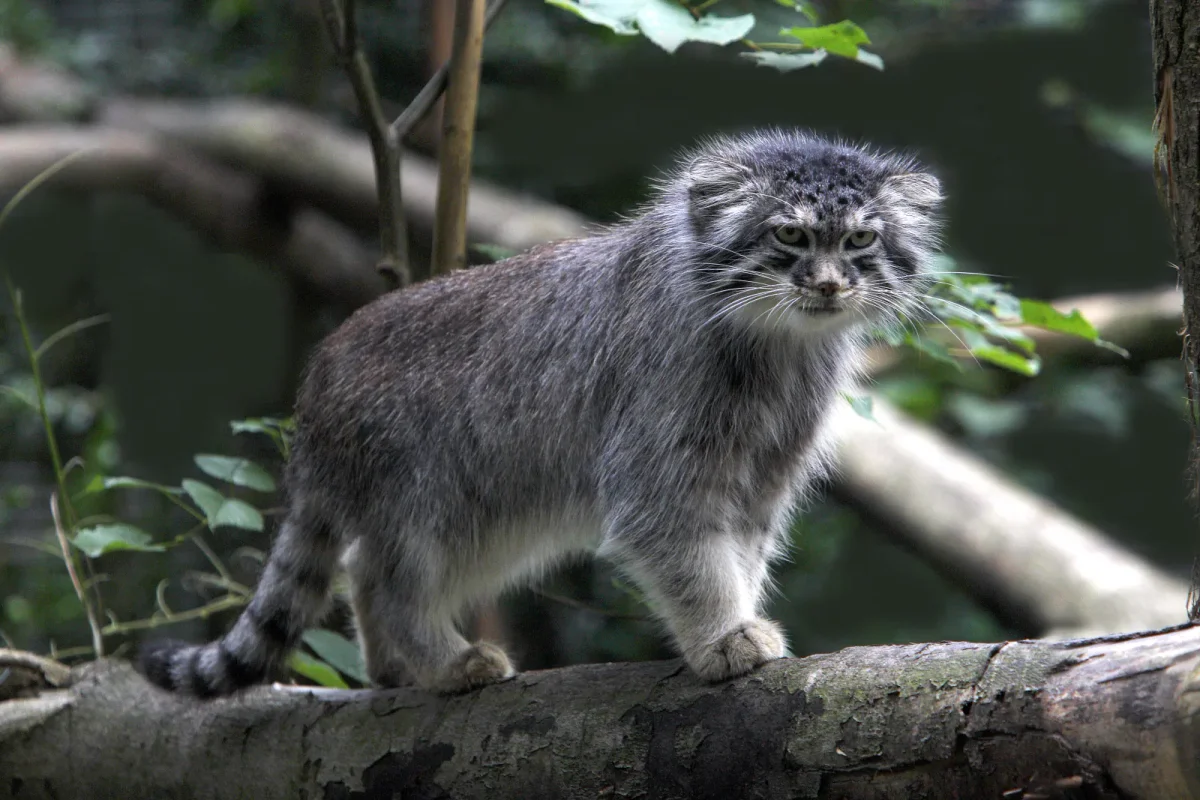
The Pallas's cat (Otocolobus manul), also called the manul, is a small wild cat of the cold, dry steppes and mountains of Central Asia. It is about the size of a house cat, but its long, thick coat, flat face, low set ears and round pupils make it look heavier and famously grumpy. That fur, the longest and densest of any cat, keeps it warm in places where winter nights fall far below freezing and where it lives up to more than 5,000 meters above sea level. The manul lives in grasslands, rocky hills and mountain slopes from Iran and Turkmenistan through Kazakhstan, Kyrgyzstan and southern Russia to Mongolia and western China, and south across the Tibetan Plateau to the Himalayas of India, Nepal and Bhutan. It hunts mostly pikas and voles, waiting patiently at burrows or creeping up on prey among the rocks, and it hides in old marmot burrows and crevices. It is slow, shy and a poor runner, so it relies on camouflage instead of speed. Named after the German naturalist Peter Simon Pallas, who described it in 1776, the species is listed by the IUCN as Least Concern, with about 58,000 mature adults, but numbers are falling because of habitat loss, prey poisoning, dogs and hunting.
What is a Pallas's cat?
The Pallas's cat is a small wild cat from the cold steppes and mountains of Central Asia, best known on the internet for its round, fluffy face and its permanently grumpy expression. It is also called the manul, a name taken from Mongolian, and some people search for it as the Mongolian cat because Mongolia is its stronghold. Its scientific name is Otocolobus manul. The genus name comes from Greek and is often translated as ugly ear, a reference to its short, rounded ears set low on the sides of the head. The species takes its common name from Peter Simon Pallas, a German naturalist working for the Russian Empire, who described it in 1776 from the steppes near Lake Baikal. Although it looks like a long haired house cat, the manul is not closely related to domestic cats. Genetic studies place it in its own genus, close to the lineage of the leopard cat and other small Asian cats, and its ancestors split from the rest of the cat family millions of years ago. It is a true specialist of harsh, open country, shy, slow and hard to see, and much of what is known about it comes from camera traps and from a handful of long term studies in Mongolia and Russia.
How big is a Pallas's cat?
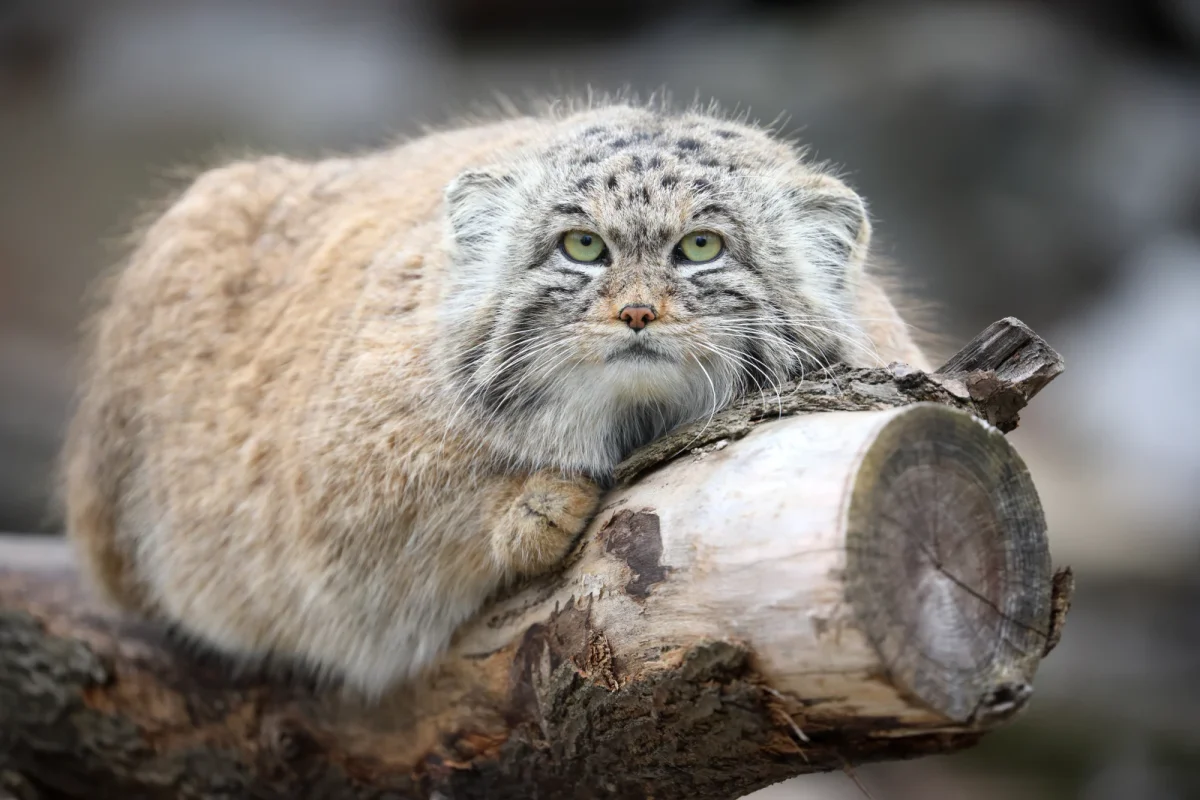
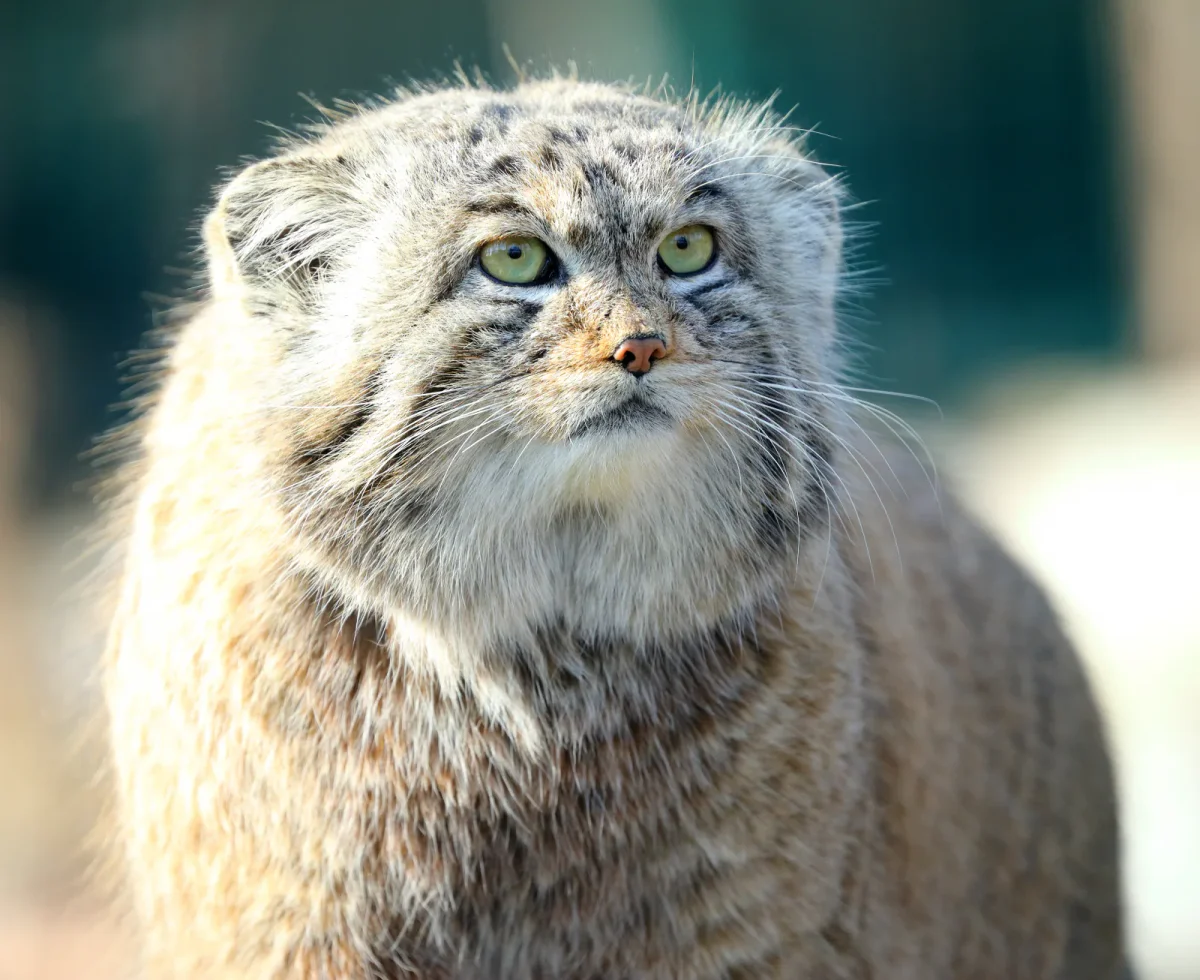
The Pallas's cat is about the size of a domestic cat. Its body measures about 46 to 65 centimeters, its bushy tail adds another 21 to 31 centimeters, and adults weigh 2.5 to 4.5 kilograms, with males a little heavier than females. Weight changes a lot through the year, since manuls put on fat in autumn and lose it during the winter. It looks much bigger than it is because of its thick coat, which makes the body appear round and stocky. The legs are short and the tail is thick, with black rings and a black tip. The head is broad and flat, with a short face, small ears set low and wide apart, black and white stripes on the cheeks and small black spots on the forehead. One of its most unusual features is the eyes. Most small cats have pupils that close to vertical slits in bright light, but the manul's pupils shrink to small round circles, more like those of big cats. Its large, yellow green eyes also have a well developed third eyelid that protects them from wind and dust. The coat varies from silvery gray to a warmer orange gray, and in winter it becomes paler and grayer, which helps it blend with snow and frost.
The thickest fur of any cat
The Pallas's cat has the longest and densest fur of any cat, and it needs it. Across much of its range, winter temperatures drop below minus 40 degrees, the wind blows hard across open steppe and there is little snow to shelter under. Its coat is especially long on the belly and the underside of the tail, where the hair can be almost twice as long as on the back. That thick underside works like an insulating mat when the cat lies on frozen ground or snow, and it also lets the manul press its belly flat against rocks while it waits for prey. The tail is another tool against the cold. Like a scarf, the thick, bushy tail is wrapped around the body and over the paws when the cat rests, and manuls have been seen standing on their own tails to keep their feet off icy ground. The hairs are tipped with white, which gives the coat a frosted look and helps the cat disappear against rocks covered in snow or hoarfrost. The low ears and flat head help too. They allow the manul to peek over a rock or the rim of a burrow with only its eyes showing, which is very useful for an animal that cannot outrun most predators.
Where do Pallas's cats live?
Pallas's cats live in the cold, dry heart of Asia. Their range stretches from northeastern Iran and southern Turkmenistan through Afghanistan, Pakistan, Kazakhstan and Kyrgyzstan to southern Russia, Mongolia and China, and south across the Tibetan Plateau to the Himalayas of India, Nepal and Bhutan. Mongolia and China hold the largest part of the population, and the Mongolian steppe is where the species has been studied best. Within that huge area, manuls are patchy. They need open grassland, steppe, rocky hills and mountain slopes with little snow, plenty of pikas or voles and good places to hide, such as rock crevices, scree and old burrows dug by marmots, foxes or badgers. They avoid deep snow, dense forest and true sandy desert. In the mountains they have been found from about 440 meters up to more than 5,500 meters above sea level, and in the Himalayas they live in the high, dry valleys on the northern side of the range, the same landscape as snow leopards and wolves. Because they are so hard to see, new places keep being added to the map: Nepal and Bhutan were only confirmed in 2012, and Mount Everest in 2019. They are probably gone from Armenia and Azerbaijan in the Caucasus.
What do Pallas's cats eat?
Pallas's cats eat mostly small mammals, and above all pikas, small round eared relatives of rabbits that live in colonies on the steppe and in rocky slopes. Where pikas are common, they can make up more than half of the manul's diet. Voles, gerbils, hamsters and young marmots are also important, and the cat adds birds such as larks and partridges, insects and the occasional hare or lizard. Studies in Mongolia have shown that the number of manuls in an area rises and falls with the number of pikas and voles. The Pallas's cat is not built for chasing. Its legs are short, it runs slowly and it tires quickly, so it hunts by ambush and stealth. It waits motionless next to a burrow until a pika comes out, stalks prey by creeping low between rocks and grass, or digs small animals out of their holes with its paws. Much of its hunting happens at dawn and dusk, when pikas and voles are most active, but manuls also hunt during the day, especially in winter. Because prey is scarce in the coldest months, they depend on the fat stored in autumn, and many lose a large share of their weight before spring arrives.
Is the Pallas's cat a domestic cat?
No. Searches for a domestic Pallas's cat or a manul kitten as a pet are common, but the manul is a wild species that has never been domesticated. It is not a breed and it cannot be crossed into one. It is solitary and shy, and in the wild it avoids people, dogs and almost every other animal. When it feels threatened, it flattens itself against the ground, freezes and relies on its camouflage, and if that fails it hisses, growls and shows its teeth, the expression behind the famous grumpy photos. It is legally protected in most countries where it lives, and international trade is regulated under CITES. Keeping manuls is also very hard for experts. In zoos, many kittens die in their first months because their immune system is weak against infections that are rare on the dry, isolated steppe, especially toxoplasmosis. Zoos in Europe, North America and Russia breed them under coordinated programs, with careful hygiene and veterinary care, mainly to keep a healthy backup population and to raise awareness of the wild cats. Out on the steppe, the Pallas's cat leads a quiet life, spending much of the day resting in a rock crevice or an old marmot burrow.
Pallas's cat kittens
Pallas's cats have a short breeding season. Mating takes place in late winter, mostly between December and March, and males travel long distances in search of females. After a pregnancy of about two and a half months, the female gives birth in April or May, in a rock crevice or an old burrow lined with fur and grass. Litters usually have two to six kittens, and larger litters are common compared with many other small cats, which may make up for the high number of young that die. Newborn kittens weigh only about 90 to 100 grams and are covered in thick, fluffy gray fur. Their eyes open after about two weeks. At around two months they start to leave the den and follow their mother, who brings them prey and teaches them to hunt. By four to five months they are hunting on their own and nearly adult in size, and they leave their mother at about that age, in late summer or autumn, to find their own territories before winter. They can breed at about one year old. Many young manuls do not survive their first year: they are killed by eagles, owls, foxes and stray dogs, or die of hunger during their first hard winter.
Pallas's cats on Mount Everest and in the Himalayas
For a long time the Himalayas were a blank on the Pallas's cat map, but camera traps and genetic tests have changed that. In 2007 a researcher photographed one in the high plateau of Sikkim, in northeastern India. In 2012 the species was confirmed for the first time in Nepal, in the dry valleys of the Annapurna region, and the same year camera traps recorded it in Bhutan. Then, in 2019, scientists on an expedition to Mount Everest collected two samples of scat at about 5,100 and 5,200 meters in Sagarmatha National Park. DNA tests showed that they came from two different Pallas's cats, and that they had been eating pikas and a mountain weasel. The finding, published in 2022, added the world's highest mountain to the manul's range. In India it also lives on the cold desert plateau of Ladakh, where it shares rocky slopes with snow leopards, wolves and red foxes. These Himalayan records suggest that the cat is more widespread along the northern side of the range than anyone thought, living almost unseen in the high pastures used by yak herders. They also show how much remains to be learned about a cat that most people only know from photos.
Is the Pallas's cat endangered?
Not officially. The IUCN lists the Pallas's cat as Least Concern in its 2019 assessment, after many years as Near Threatened, because it lives across a very large area and the best estimate is about 58,000 mature adults. The same assessment says the population is decreasing and severely fragmented, so the species is far from safe. The threats are many. In parts of China and Mongolia, pikas and other small mammals are poisoned because they are seen as pests that damage pastures, which removes the cat's main food and can poison the cats themselves. Overgrazing by growing herds of livestock, mining, roads and farming break up the steppe. Herding dogs kill many manuls, and some are caught in traps set for wolves, foxes and marmots. Hunting for fur, once common in Mongolia and China, has dropped, but some killing continues, and parts of the body are used in traditional medicine. Climate change may shift the grasslands and snow cover the cat depends on. Conservation groups such as the Pallas's Cat International Conservation Alliance study the species with camera traps, train local researchers and work with herders, and their work has made this little known cat far more familiar to people across its range.
Where it is found
The Pallas's Cat can be found in places such as: