Aardvark
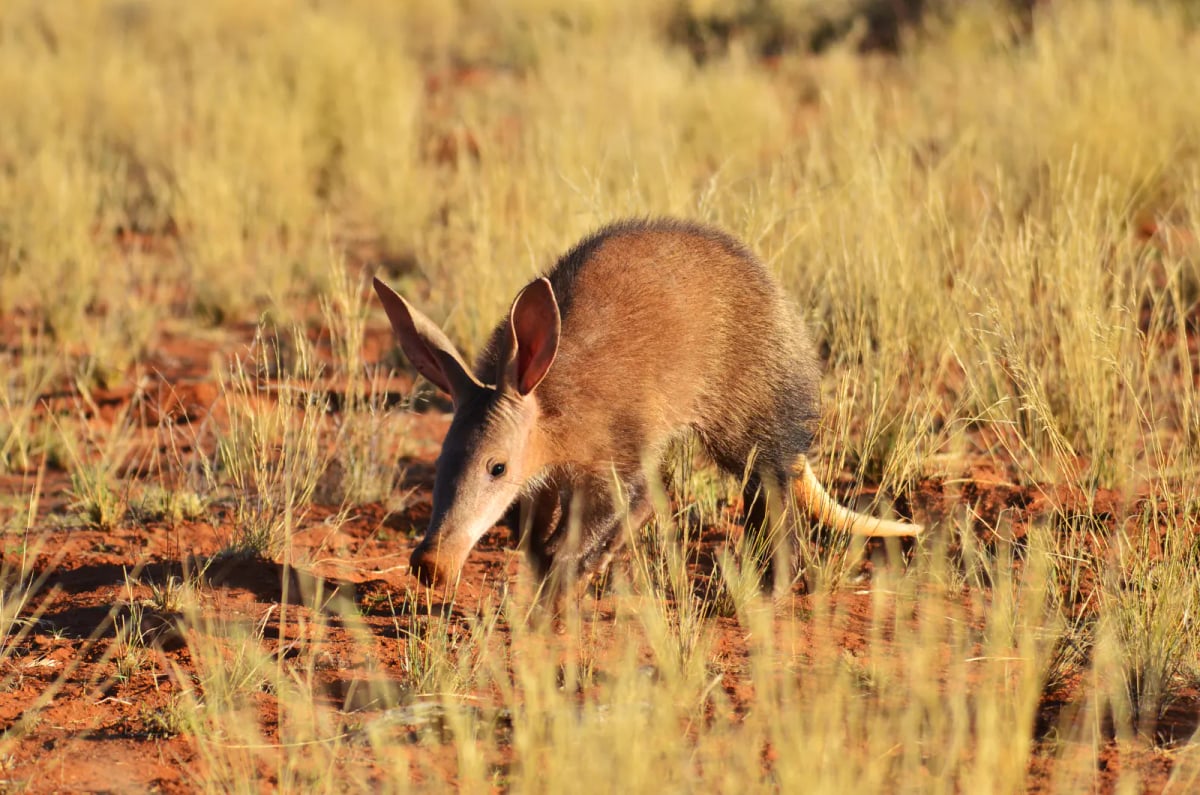
The aardvark (Orycteropus afer) is one of the strangest mammals in Africa and the only living member of its own order, Tubulidentata. Its name comes from Afrikaans and means earth pig, but it is not related to pigs or to the anteaters of the Americas. Its closest living relatives are elephants, hyraxes, manatees and the small sengis, or elephant shrews. An adult weighs about 40 to 65 kilograms and measures about 1 to 1.3 meters long, plus a thick, muscular tail of about half a meter. It has a long, piglike snout, tall ears like a rabbit's, sparse hair on a thick gray or pinkish skin, and powerful legs with strong, spade shaped claws. The aardvark is a champion digger. At night it walks several kilometers sniffing the ground, then tears open termite mounds and ant nests and picks up the insects with a sticky tongue about 30 centimeters long, eating tens of thousands in a single night. It also digs large burrows to sleep in during the day, and when it moves on, those burrows become homes for warthogs, porcupines, hyenas, pangolins, birds and many other animals. Aardvarks live in savannas, grasslands, woodlands and even the edges of forests across most of Africa south of the Sahara, wherever there are enough ants and termites and the soil is soft enough to dig. Because they are nocturnal and shy, few people ever see one. The IUCN lists the aardvark as Least Concern, although its numbers are falling where land is turned into farms and where it is hunted for its meat and skin, and long droughts have killed many in the Kalahari.
Aardvark Name and Relatives
The word aardvark comes from Afrikaans, the language of the Dutch settlers of South Africa, and means earth pig. The settlers gave it that name because of its piglike snout and its habit of digging in the ground, and the name stuck, which is why aardvark is often the first animal word in English dictionaries. In Spanish it is called cerdo hormiguero, the ant pig, and some books call it oricteropo, from its scientific name, Orycteropus afer, which means the digging foot from Africa. Despite all these names, the aardvark is not a pig, and it is not an anteater either. It is the only living species of its own order, Tubulidentata, which means tube teeth. That name comes from its unusual teeth: aardvarks have no front teeth and no enamel, only a few peglike cheek teeth at the back of the mouth, each made of thousands of tiny tubes packed together, that keep growing throughout life. Genetic studies place the aardvark in a group of mammals that evolved in Africa, called Afrotheria, together with elephants, hyraxes, manatees and dugongs, sengis or elephant shrews, golden moles and tenrecs. It looks like the giant anteater of South America and the pangolins of Africa and Asia because all three evolved to eat ants and termites, not because they are related. Fossil relatives of the aardvark lived in Africa, Europe and Asia millions of years ago, but only one species survives today.
Aardvark Size and Appearance
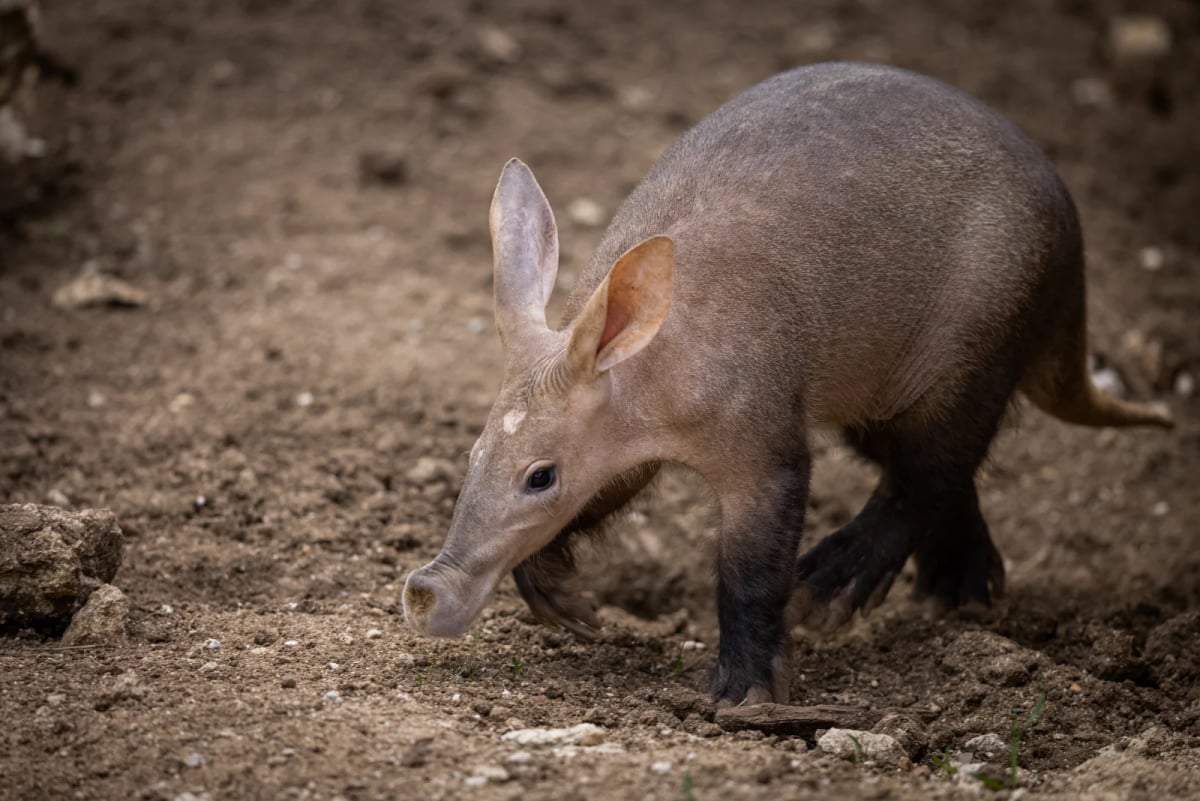
The aardvark is a medium sized mammal with a body shaped like a heavy, arched barrel. Adults weigh about 40 to 65 kilograms, and some large males reach about 80 kilograms. The head and body measure about 1 to 1.3 meters, the thick tail adds another 45 to 70 centimeters, and the animal stands about 60 centimeters at the shoulder, with the back higher at the hips than at the front. The head is long and narrow and ends in a flat, round snout like a pig's, with nostrils that the aardvark can close tight to keep out dust and biting insects while it digs. Inside, the nose has more of the thin, scrolled bones that help with smell than any other mammal, which gives it an excellent sense of smell. The ears are long, tubelike and can move separately, and the aardvark can fold them back against its head when it goes underground. Its eyes are small, and its eyesight is poor, so it relies on smell and hearing. The skin is thick, tough and grayish yellow or pink, with sparse, bristly hair that is often stained the color of the local soil, so aardvarks in the red Kalahari look reddish. The front feet have four toes and the back feet five, each with a strong, flat claw shaped like a small spade. The tail is thick at the base and tapers to a point, and females often have a paler tip that may help their young follow them in the dark.
Aardvark Habitat and Range
Aardvarks live across most of Africa south of the Sahara, from the savannas of West Africa, in countries such as Benin, Burkina Faso, Niger and Ghana, east to Ethiopia, Kenya and Tanzania, and south to Namibia, Botswana and South Africa. They also live in the savanna patches and forest edges of Central Africa, in Gabon, Congo and the Central African Republic, where camera traps have recorded them in recent years. They are absent from the Sahara and the true deserts, and they avoid rocky ground and swampy land where they cannot dig. What an aardvark really needs is simple: plenty of ants and termites and soil soft enough to dig in. That is why they can live in many habitats, including open grasslands, woodlands of acacia and miombo, dry scrub of the Karoo and the Kalahari, farmland and pastures, and the edges of forests. They have been recorded from sea level up to about 3,200 meters in the mountains of East Africa. Each aardvark uses a large home range, often a few square kilometers, with many burrows spread across it, and it may walk several kilometers in one night while it looks for food. Because they are active at night and spend the day underground, aardvarks are rarely seen, even in places where they are common. Visitors are most likely to see one on night drives in reserves of South Africa, Kenya, Zambia and other countries, and in the Kalahari, where aardvarks sometimes feed in the late afternoon during the cold winter months.
Aardvark Diet
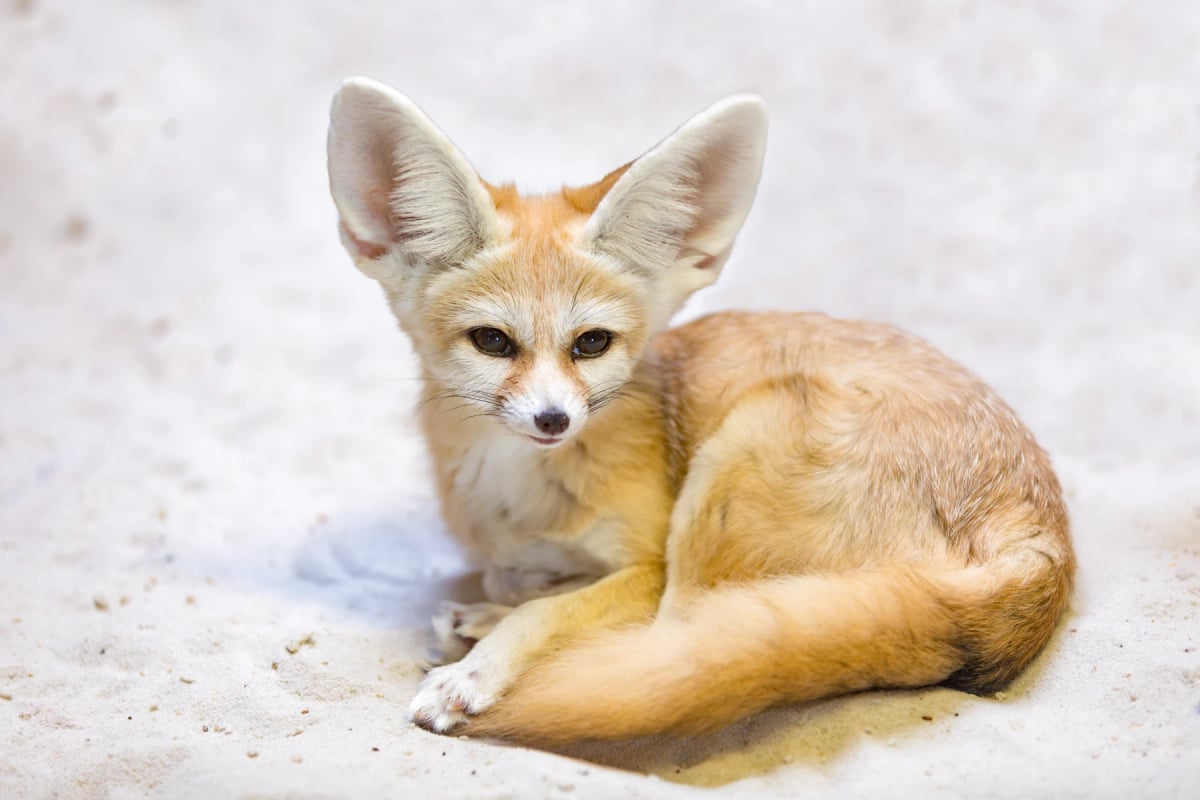
The aardvark eats almost nothing but ants and termites. It finds them with its nose, walking slowly in a zigzag with the snout close to the ground and sniffing for colonies under the soil or inside mounds. When it finds one, it digs fast with its front claws, breaks into the nest and pushes in its long snout. Then it uses a thin, sticky tongue about 30 centimeters long to lick up the insects, along with their eggs and larvae. An aardvark can eat tens of thousands of ants and termites in a single night, and some estimates go up to about 50,000. It swallows them without chewing, and a muscular part of the stomach grinds them up instead. The thick skin protects it from bites, and it can close its nostrils to keep the insects out. Aardvarks change their diet with the seasons. In the wet season they eat more termites, which come out in large numbers, and in the dry season they eat more ants. They rarely need to drink, because they get most of their water from the insects they eat. There is one fruit in the aardvark's diet, the aardvark cucumber, a wild melon whose fruits grow underground. Aardvarks dig them up and eat them for their water, and the seeds pass through the gut and sprout in the loose soil around their burrows and droppings, so the plant depends on the aardvark to spread. By breaking open termite mounds, aardvarks also leave food for other animals, such as aardwolves, bat eared foxes and birds.
Aardvark Burrows and Behavior
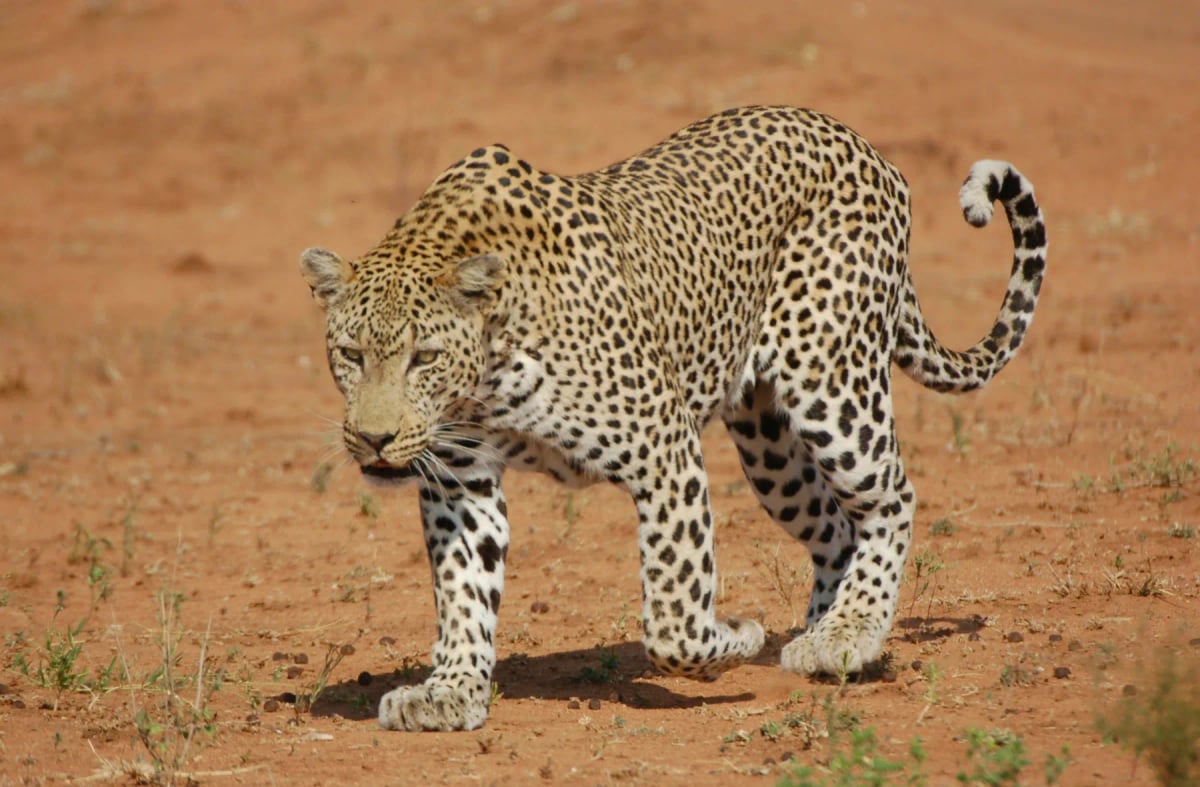
The aardvark is one of the best diggers in the animal world. Its strong front legs and spade shaped claws can break through soil baked hard by the sun, and it can dig itself out of sight in a few minutes when it feels threatened. It digs three kinds of holes: shallow holes when it looks for food, temporary burrows where it can hide or rest for a short time, and large, permanent burrows where it sleeps during the day and raises its young. A permanent burrow can be several meters long, with more than one entrance and a chamber big enough for the aardvark to turn around. Aardvarks are solitary and mostly nocturnal. They leave the burrow after sunset, often after waiting at the entrance to check for danger, and spend most of the night walking and feeding before returning before dawn, sometimes to a different burrow. When they go in, they often close the entrance behind them with soil. If attacked, an aardvark tries to escape underground; if it cannot, it fights back with its claws, rolls on its back and kicks, and can badly hurt a predator. Lions, leopards, spotted hyenas and African wild dogs hunt aardvarks, and pythons take the young. Abandoned aardvark burrows are vital for other animals. A study in South Africa recorded more than 20 kinds of mammals, as well as birds, reptiles and frogs, using them, including warthogs, porcupines, hyenas, jackals, wild dogs, pangolins, honey badgers and bats. For this reason scientists call the aardvark an ecosystem engineer.
Aardvark Babies and Lifespan
Aardvarks live alone, and males and females meet only to mate. In many parts of Africa the young are born at a set time of year, often timed so that they leave the burrow when the rains bring plenty of termites, but the season changes from region to region. After a pregnancy of about seven months, the female gives birth to a single baby in a chamber deep inside her burrow, and twins are very rare. A newborn aardvark weighs about 2 kilograms. It is almost hairless, with pink, wrinkled skin, large ears and its claws already formed. For the first two weeks it stays underground, and then it begins to follow its mother out at night as she feeds, learning how to find ants and termites. It starts eating insects at about three months, though it keeps drinking milk for several more weeks. At about six months the young aardvark can dig its own burrow, but it often stays near its mother until the next baby is born, and then it leaves to find a home range of its own. Aardvarks are thought to be ready to breed at about two years old. Their lifespan in the wild is not well known, because they are so hard to follow, but they probably live around 18 to 20 years. In zoos, aardvarks have lived for more than 20 years. Young aardvarks are the most vulnerable, and many are taken by pythons, hyenas, leopards and other predators before they learn to dig and defend themselves.
Aardvark Conservation Status and Threats
The IUCN lists the aardvark as Least Concern. The species is widespread, lives in many protected areas and can survive on farmland, so it is not at risk of extinction across its range. However, the last assessment dates from 2014, the IUCN itself notes that it needs updating, and nobody knows how many aardvarks there are, because they are so hard to count. In several regions, especially West Africa, numbers are thought to be falling. The main threats are the loss of habitat as grasslands and woodlands are plowed for crops, and hunting. Aardvarks are hunted for their meat in many countries, and their claws, teeth and skin are used in traditional medicine and as charms. On some farms they are killed because their burrows damage roads, dams and fences, or because livestock can trip in the holes. Climate change is a newer and serious threat. In the hot, dry summer of 2012 and 2013, scientists who were following aardvarks with temperature sensors at Tswalu, in the South African Kalahari, saw their body temperature fall as the drought killed off the ants and termites. Many of the animals they studied starved to death. In dry years, more aardvarks are now seen feeding in daylight, a sign that they cannot find enough food at night. Because so many other animals use their burrows, losing aardvarks from a landscape affects much more than one species. In some countries, conservation groups now work with farmers to show that aardvarks are useful, since they eat the termites that damage pastures.
Where it is found
The Aardvark can be found in places such as: