Malayan Tiger
The Malayan tiger is the tiger of the Malay Peninsula and the national animal of Malaysia, where it is known as harimau Malaya. It lives only in the rainforests of Peninsular Malaysia, from the great forest blocks of Belum Temengor and Taman Negara in the north and center to Endau Rompin in the south. It is one of the smaller tigers of mainland Asia: males weigh about 100 to 130 kilograms and measure about 2.4 meters from nose to tail tip, and females are smaller. Its coat is deep orange with narrow black stripes, and its white cheeks and belly stand out in the dim light of the forest. Like all tigers it is a solitary hunter that stalks its prey and kills it with a bite to the neck or throat. It feeds mainly on sambar deer, wild boar and barking deer, and sometimes on young gaur, tapirs and even young elephants. Scientists described it as a separate subspecies, Panthera tigris jacksoni, in 2004, but since 2017 many experts include it with the other tigers of mainland Asia in Panthera tigris tigris. Whatever its name, it is in serious trouble. The first national tiger survey, carried out between 2016 and 2020, estimated that fewer than 150 tigers remain in the wild, down from about 3,000 in the 1950s, mostly because of poaching with snares and the loss of forest to plantations and roads. The IUCN lists the Malayan tiger as Critically Endangered, and Malaysia has launched a national plan to bring the population back.
Malayan Tiger: Name and Classification
The Malayan tiger is the tiger of the southern end of the Malay Peninsula. In Malay it is called harimau Malaya, and people in Malaysia often call it Pak Belang, Mister Stripes, a respectful nickname that also reflects old beliefs in which the tiger was seen as a powerful spirit of the forest, not to be named directly. For most of the twentieth century the tigers of the peninsula were grouped with the Indochinese tigers of Thailand, Myanmar and the rest of mainland Southeast Asia. In 2004, a genetic study led by Shu Jin Luo found that the Malayan population was distinct, and it was described as a new subspecies, Panthera tigris jacksoni. The name honors Peter Jackson, a British journalist who led the IUCN Cat Specialist Group for many years and spent his life working for tiger conservation. Malaysian authorities have also used the name Panthera tigris malayensis. The classification of tigers has changed again since then. In 2017, the Cat Classification Task Force of the IUCN Cat Specialist Group recognized only two subspecies: Panthera tigris tigris for all the tigers of mainland Asia, including the Bengal, Siberian, Indochinese and Malayan tigers, and Panthera tigris sondaica for the tigers of the Sunda Islands, such as the Sumatran tiger. Some later genetic studies have supported keeping the Malayan tiger as a separate subspecies. For conservation, the debate matters little: the tigers of Peninsular Malaysia form an isolated population, separated from those farther north, and they need protection on their own.
Malayan Tiger Size and Appearance
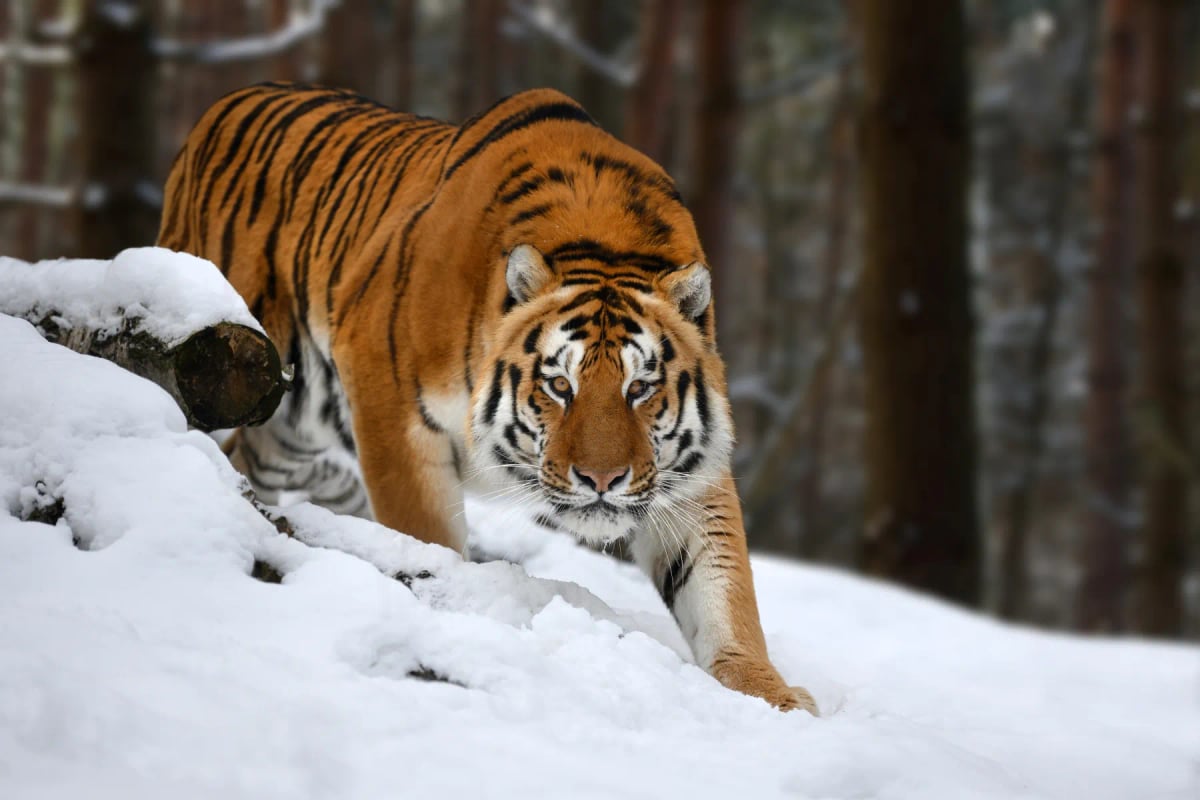
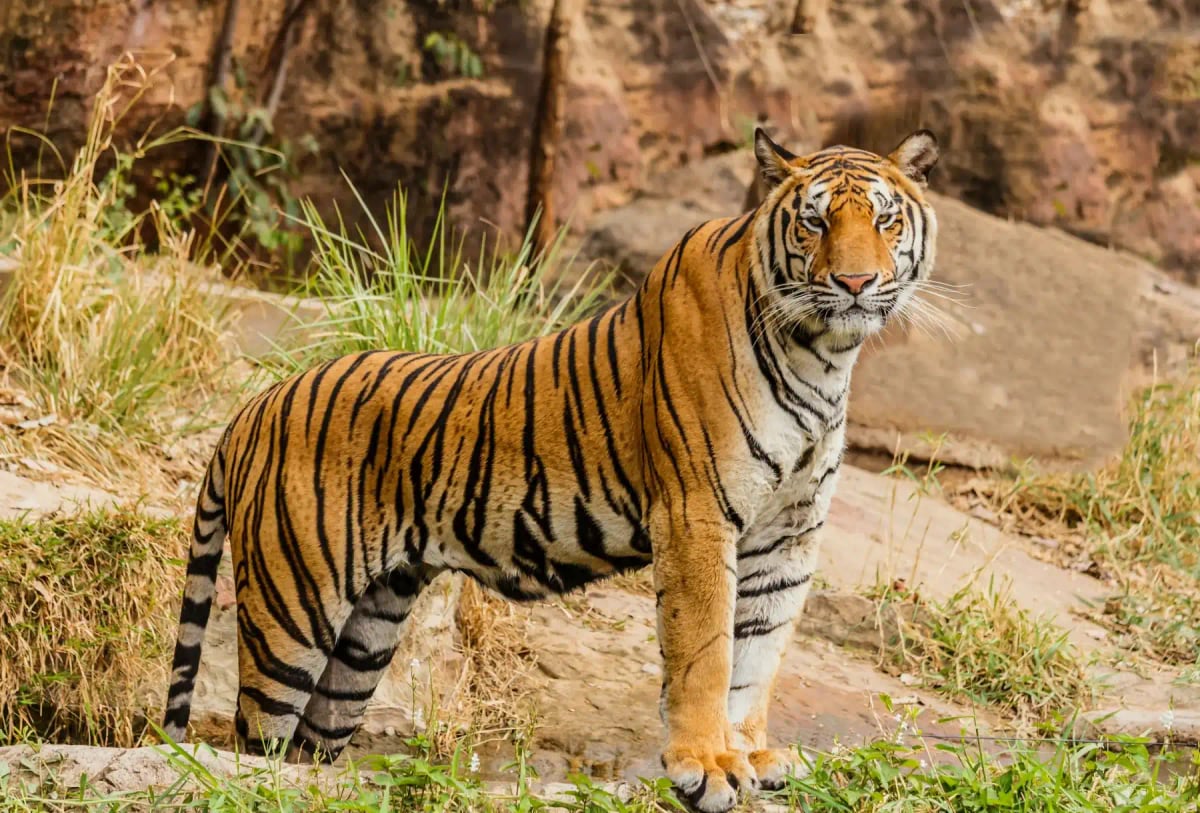
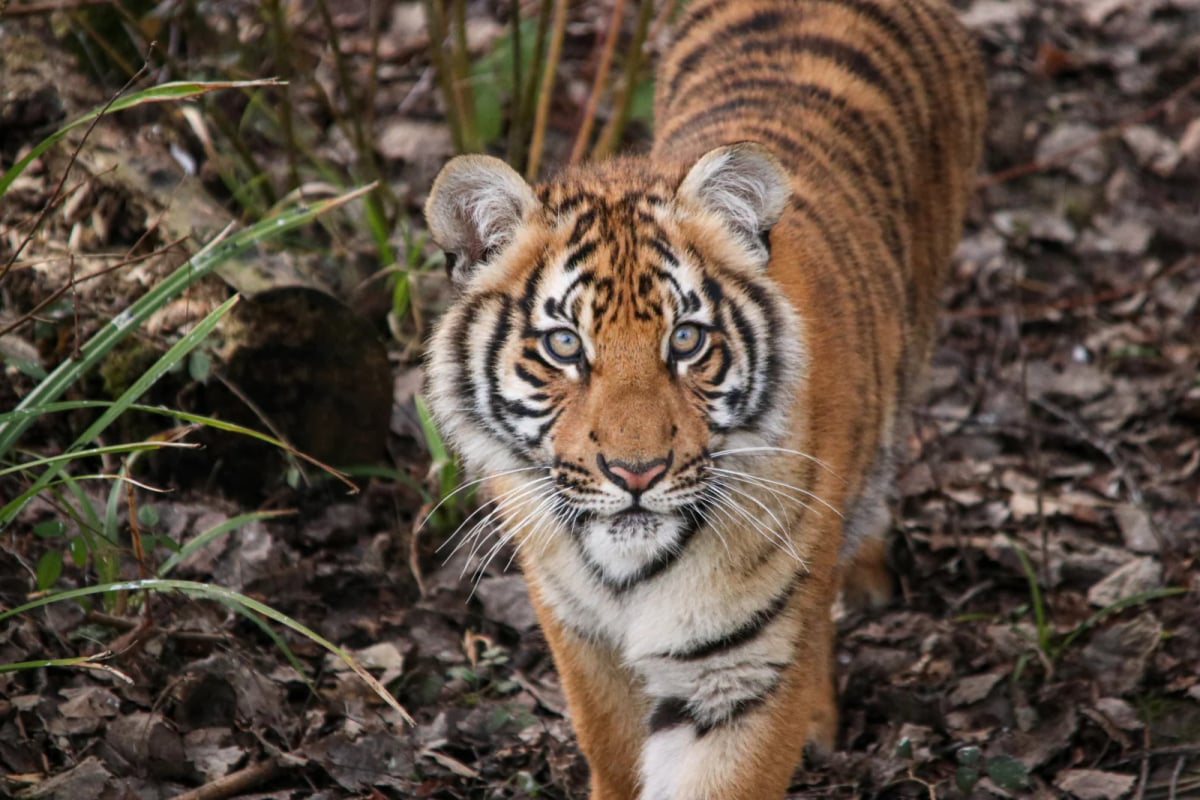
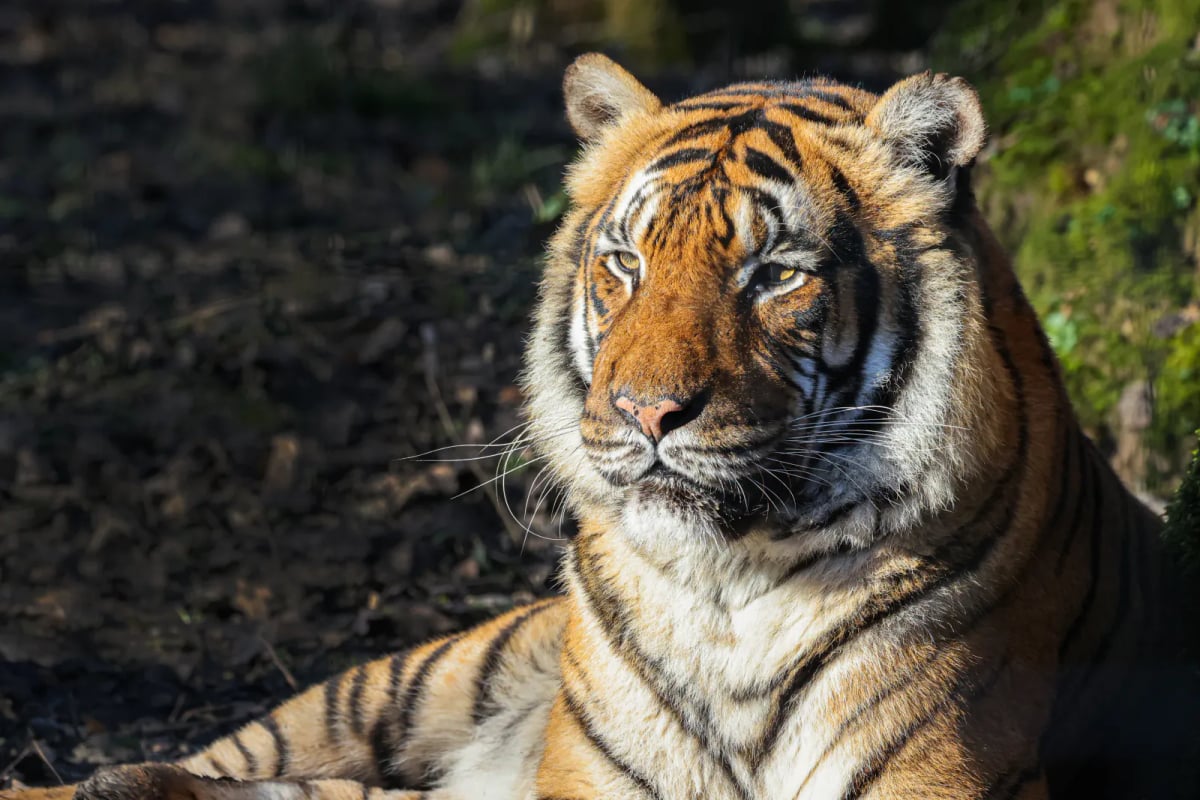
The Malayan tiger is one of the smaller tigers of mainland Asia, lighter than its northern neighbor, the Indochinese tiger, and clearly smaller than the Bengal and Siberian tigers. Adult males usually weigh about 100 to 130 kilograms and measure about 2.4 meters from the nose to the tip of the tail, of which the tail makes up close to a meter. Females are smaller and lighter, usually around 75 to 110 kilograms. Even so, a male Malayan tiger is several times heavier than a large leopard, the only other big cat that shares its forests. A smaller body is an advantage in dense rainforest, where tigers must move quietly through thick undergrowth and steep, broken hills, and where prey is smaller and more scattered than on the open grasslands of India. The coat is a deep, rich orange, darker than that of tigers from colder places, and it is crossed by narrow black stripes that are often closer together than those of the Bengal tiger. The cheeks, throat, belly and the inside of the legs are white, and there are white spots on the back of the black ears, which may help cubs follow their mother. Each tiger's stripe pattern is unique, like a fingerprint, and researchers use it to identify individual animals in camera trap photos. The fur is short and sleek, suited to the hot and humid climate, unlike the long, thick coat of the Siberian tiger. Like other tigers, the Malayan tiger has powerful forelegs, large paws with retractable claws and long canine teeth for gripping and killing large prey.
Malayan Tiger Habitat and Range
Malayan tigers live only in Peninsular Malaysia, the part of the country on the Asian mainland. They once also lived in Singapore, where the last wild tigers were killed in the 1930s, and the tigers of the far south of Thailand were part of the same population, but today the peninsula's tigers survive almost entirely inside Malaysia. Their home is tropical rainforest, from lowland forest near rivers to hill forest and lower mountain forest, and they also use the edges of plantations, old logging areas and secondary forest when there is enough prey and cover. Most of the remaining tigers live in the large forest blocks of the Main Range and the east of the peninsula. The most important strongholds are the Belum Temengor forest complex in northern Perak, Taman Negara, Malaysia's oldest and largest national park, which stretches across Pahang, Kelantan and Terengganu, and the Endau Rompin forests in Pahang and Johor. These forests are linked, or were once linked, as part of the Central Forest Spine, a network of forests along the backbone of the peninsula that the government plans to keep connected with wildlife corridors and viaducts over the highways. Each tiger needs a very large area. Because rainforest holds less prey than open grasslands, a Malayan tiger's home range can cover hundreds of square kilometers, and tigers that are cut off in small patches of forest struggle to find food and mates. They share these forests with Asian elephants, Malayan tapirs, sun bears, clouded leopards and dholes.
Malayan Tiger Diet and Hunting
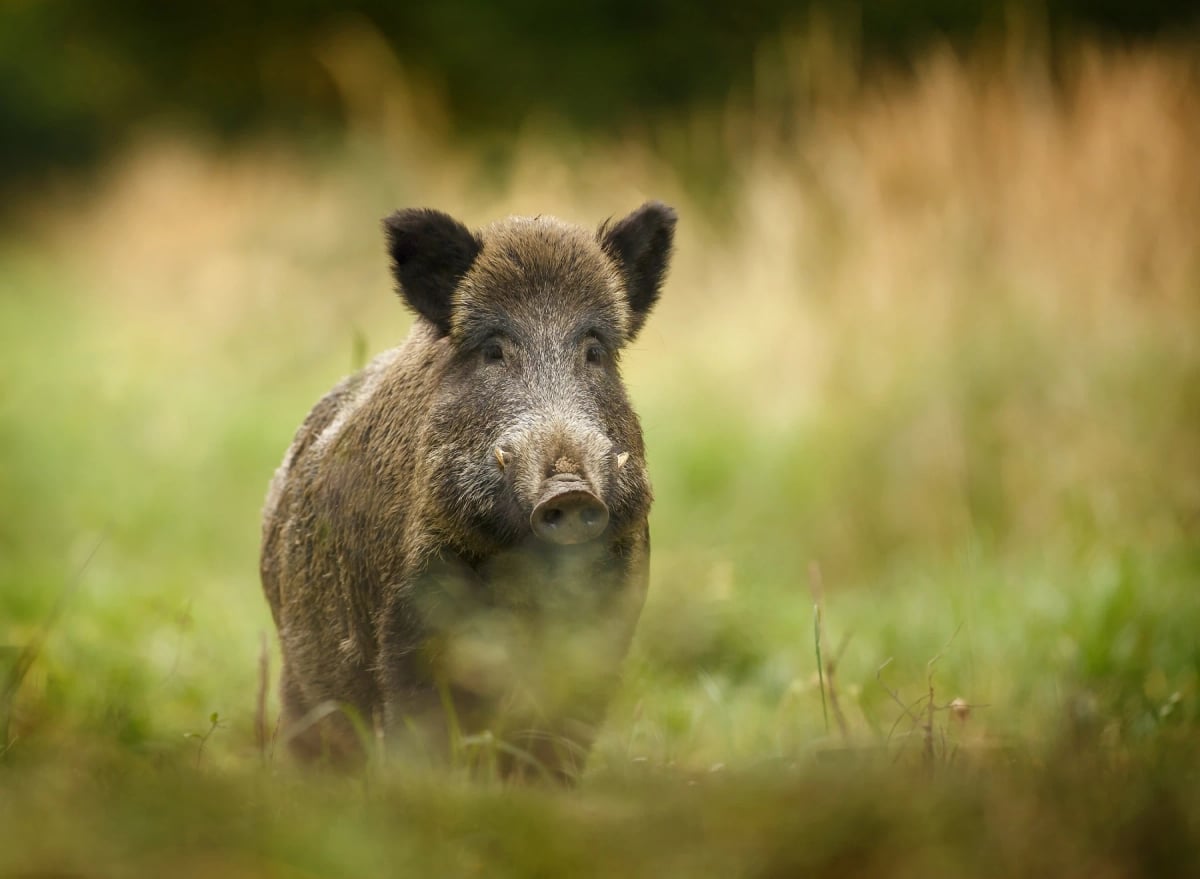
Malayan tigers are carnivores that hunt mostly large hoofed animals. Their main prey are sambar deer, the largest deer of Southeast Asia, wild boar and barking deer, also called muntjacs. They also take gaur calves, Malayan tapirs, serow, monkeys, porcupines and other smaller animals, and in rare cases young Asian elephants. Studies with camera traps have shown that where sambar and wild boar have been hunted out by people, tigers become scarce too, because there is not enough food to support them. That is why protecting prey is as important for tiger conservation as protecting the tigers themselves. Like other tigers, the Malayan tiger is an ambush hunter. It moves mostly at night, at dawn and at dusk, using trails, ridges, streams and old logging roads, and relies on cover and its striped coat to get within a few meters of its prey without being seen. Then it rushes forward, grabs the animal with its forelegs and kills it with a bite to the back of the neck for smaller prey or to the throat for large animals. A tiger can eat a large amount of meat in one meal and often drags the carcass into thick cover, returning to feed on it over several days. Hunts fail far more often than they succeed, so a tiger may go days without eating. When wild prey is scarce, tigers sometimes kill cattle, goats or dogs near villages and plantations, which can lead to conflict with people. These cases are handled by the wildlife department, which may capture and move the tiger.
Malayan Tiger Behavior and Cubs
Malayan tigers are solitary. Adults live alone in large home ranges that they mark with scent, urine, scrapes on the ground and scratches on tree trunks, and a male's range usually overlaps those of several females. Tigers avoid each other most of the time, and meetings between adults are brief, except when a male and a female come together to mate. They are most active at night and in the cool hours of dawn and dusk, and rest during the hottest part of the day in shade or near water. Like other tigers, they are strong swimmers and often cross rivers or cool off in streams. Females can breed at any time of year. After a pregnancy of a little over three months, about 100 to 105 days, a female gives birth to a litter of usually two to four cubs in a hidden den among rocks, roots or thick vegetation. The cubs are born blind and helpless, weigh around one kilogram, and depend completely on their mother, who raises them alone. They start following her when they are about two months old, learn to hunt by watching and practicing, and stay with her until they are about one and a half to two years old. Then young males leave to find their own territory, often traveling long distances, while young females tend to settle closer to their mother. Many cubs die before reaching adulthood, from hunger, disease, predators or male tigers. In the wild, Malayan tigers usually live about 10 to 15 years, and in captivity they can live up to about 20 years.
Malayan Tiger Population and Conservation Status
The Malayan tiger is one of the most threatened tigers in the world. In the 1950s Peninsular Malaysia may have had about 3,000 tigers. A study published in 2014 estimated that only 250 to 340 remained, and the first National Tiger Survey, carried out between 2016 and 2020 by the Department of Wildlife and National Parks, known as PERHILITAN, with WWF Malaysia and other groups, found that fewer than 150 were left in the wild. The IUCN assessed the Malayan tiger as Critically Endangered in 2015, while the tiger as a species is listed as Endangered. The biggest threat is poaching. Hunters set wire snares along forest trails to catch deer and wild boar for bushmeat and tigers for their skin, bones and other parts, which are sold illegally for decoration and traditional medicine. Snares kill or maim tigers and also empty the forest of the prey they need. Some poaching gangs come from abroad, attracted by the high price of tiger parts. The second threat is the loss and division of the forest, cleared for oil palm and rubber plantations, logging, mining and roads. In 2021 the Malaysian government approved a national plan for 2021 to 2030 with the goal of stopping the decline and rebuilding the tiger population. It includes more rangers and joint patrols with the police and the army under Operation Khazanah, community patrols with Orang Asli rangers, new protected forests, wildlife crossings over highways and a captive breeding program with Malaysian zoos. In 2026 officials said the number of tigers was starting to rise, with cubs born every year, but the results of a new national survey had not yet been published.
A National Symbol of Malaysia
Few countries are as closely tied to an animal as Malaysia is to the tiger. The Malayan tiger is the national animal, and two tigers stand on either side of the shield in the national coat of arms, holding it up. The tiger also appears in the emblems of many institutions and companies, and Maybank, the country's largest bank, uses a tiger's head as its logo. In sport, the national football team is known as Harimau Malaya, the Malayan Tigers, and the name is one of the most familiar in the country. The tiger also has a long place in the traditions of the Malay Peninsula. In old Malay stories it is a symbol of strength and courage, and in some beliefs it is linked to the spirits of ancestors and to the guardians of the forest, which is one reason why people traditionally avoided calling it by its name and used respectful nicknames such as Pak Belang. For the Orang Asli, the Indigenous peoples of the peninsula's forests, the tiger is a powerful figure that must be treated with respect. This deep cultural importance contrasts sharply with the state of the wild population. Conservation groups often point out that the animal printed on the coat of arms, the football shirts and the bank cards could disappear from Malaysia's forests within a generation if poaching and forest loss are not stopped, and campaigns use the national pride in the tiger to win support for protecting it.