Indochinese Tiger
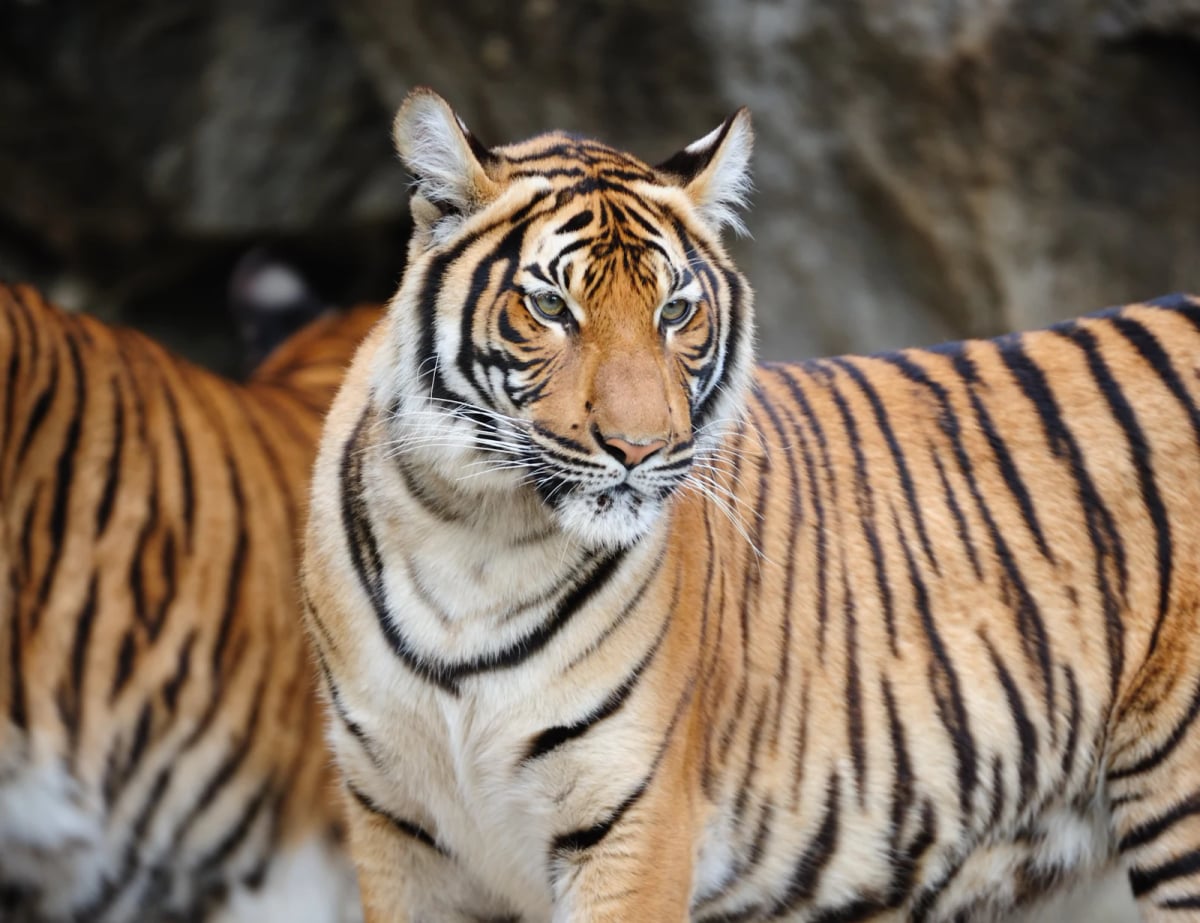
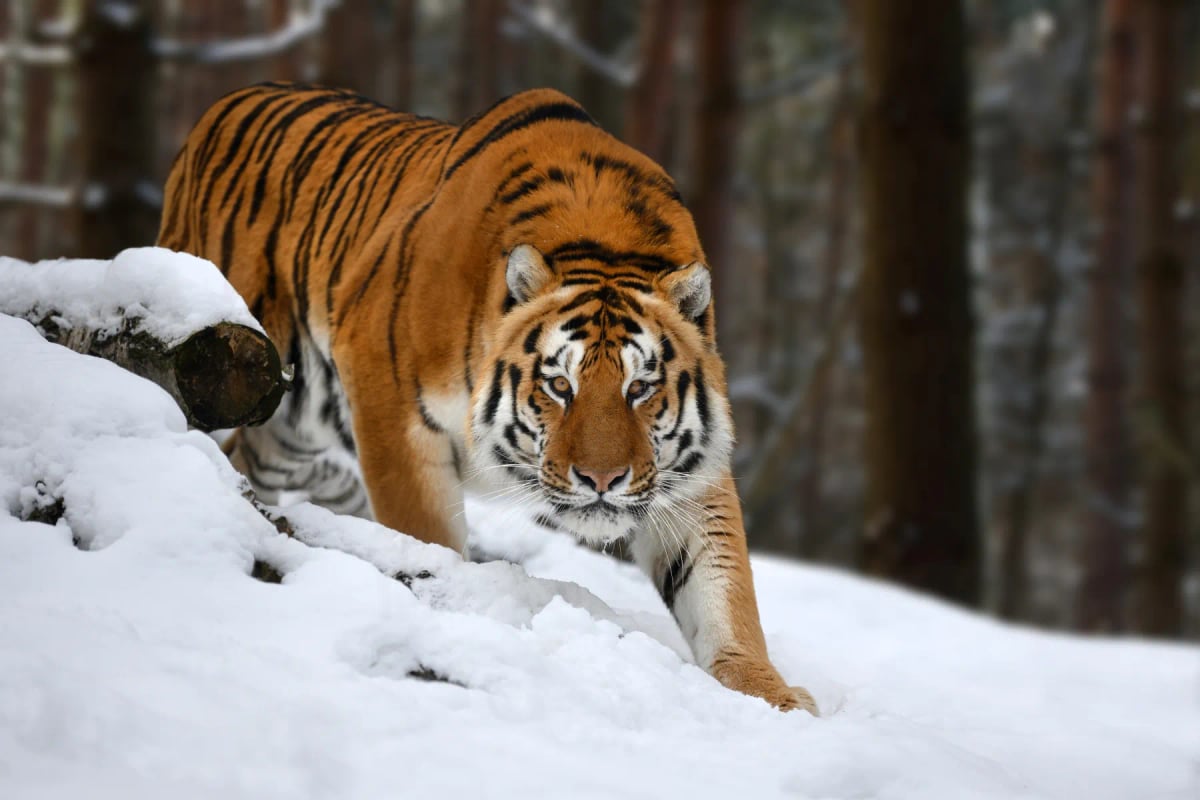
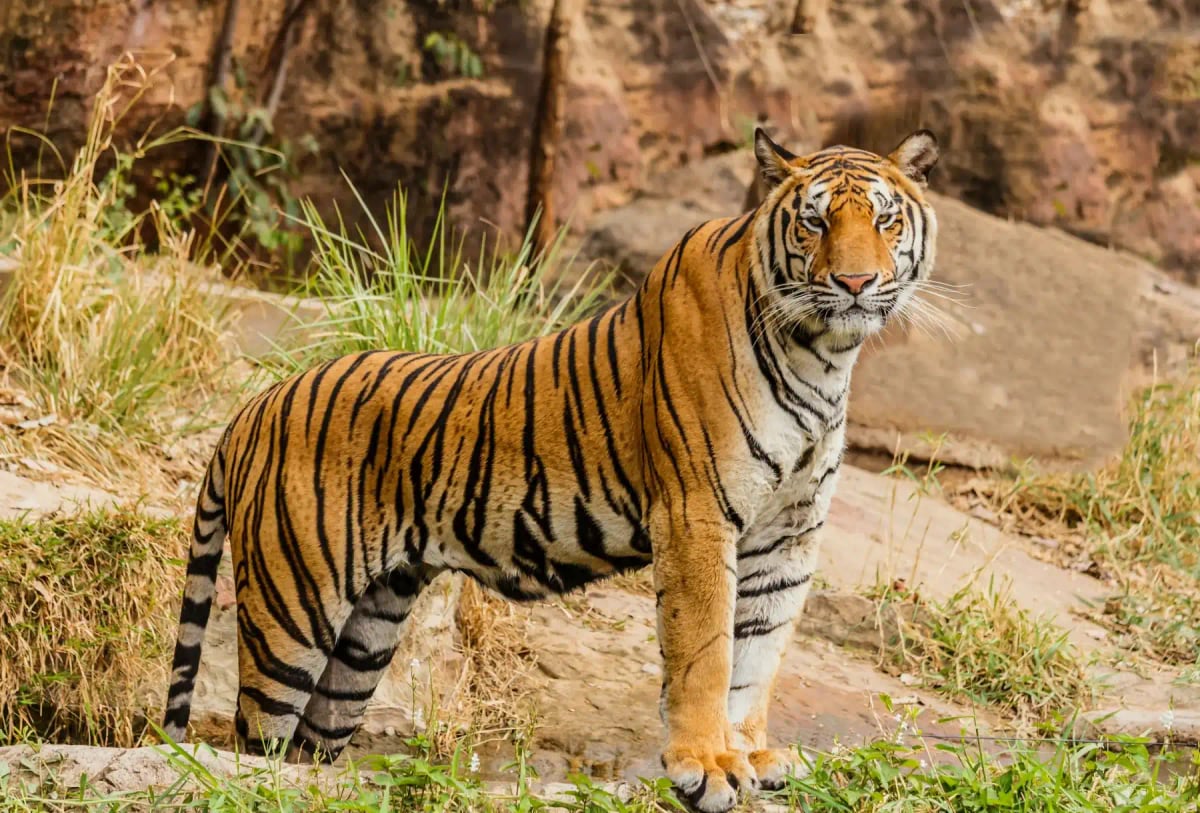
The Indochinese tiger is the tiger of mainland Southeast Asia, and today it survives only in Thailand and Myanmar. It once roamed the forests of Cambodia, Laos, Vietnam and southern China as well, but it has disappeared from all of them in the last few decades. Its coat is a darker orange than that of the Bengal tiger, with shorter and narrower stripes, and its skull is a little smaller. Males usually weigh about 150 to 195 kilograms and measure about 2.5 to 2.8 meters from nose to tail tip, while females weigh about 100 to 130 kilograms. Like all tigers it is a solitary hunter that moves quietly through the forest, mostly at night and at dusk, and kills its prey with a bite to the neck or throat. It feeds mainly on sambar deer, wild boar, banteng and gaur, and it sometimes takes elephant calves, muntjacs, porcupines and pangolins. Scientists named it Panthera tigris corbetti in 1968, after the hunter and naturalist Jim Corbett. Since 2017 many experts group it with the other tigers of mainland Asia in Panthera tigris tigris, although a genetic study from 2018 found that it still forms its own branch of the tiger family. Its largest population lives in the Western Forest Complex of Thailand, around the Huai Kha Khaeng Wildlife Sanctuary, where stronger patrols have helped tiger numbers grow. Thailand counted 179 to 223 wild tigers in 2024, and a survey in Myanmar confirmed at least 22 adults in 2019. Poaching for the illegal trade in tiger parts, snares and the loss of forest are its main threats. The IUCN lists the tiger as a species as Endangered, and the Indochinese population is one of the most threatened of all.
Indochinese Tiger: Name and Classification
The Indochinese tiger takes its name from Indochina, the old name for the mainland of Southeast Asia between India and China. In Thailand, its last stronghold, the tiger is called suea khrong, the striped tiger, to tell it apart from the leopard and the other wild cats of the forest. The Czech zoologist Vratislav Mazák described it as a separate subspecies in 1968 and gave it the scientific name Panthera tigris corbetti, in honor of Jim Corbett, the British hunter who later became one of the first voices for tiger conservation in India. Mazák based his decision on the darker color of the coat, the pattern of the stripes and the shape of the skull. For a long time the Indochinese tiger was thought to reach all the way to the southern tip of the Malay Peninsula, but in 2004 a genetic study showed that the tigers of Peninsular Malaysia were different enough to be counted apart, and they became the Malayan tiger. In 2017 the Cat Classification Task Force of the IUCN Cat Specialist Group simplified the tiger family into just two subspecies: one for the islands of Sumatra, Java and Bali, and one for all the tigers of the mainland, Panthera tigris tigris. A year later, a study that read the full genomes of 32 tigers found six separate branches, and the Indochinese tiger was one of them. Both views are still in use, so today the Indochinese tiger is described either as a subspecies or as a distinct population of the mainland tiger.
Indochinese Tiger Size and Appearance
The Indochinese tiger is a medium sized tiger: smaller than the Bengal and Siberian tigers, but larger and heavier than its neighbor to the south, the Malayan tiger. According to the measurements gathered by Mazák, adult males usually weigh about 150 to 195 kilograms and measure about 2.5 to 2.8 meters from the nose to the tip of the tail. Females are clearly smaller, weighing about 100 to 130 kilograms and measuring about 2.3 to 2.5 meters. The tail alone is close to a meter long and helps the tiger keep its balance when it turns sharply or climbs over fallen trees. The coat is a deep, dark orange, darker than that of the Bengal tiger, and it is crossed by stripes that tend to be shorter, narrower and more numerous. Skins of Indochinese tigers kept at the Natural History Museum in London have between 21 and 31 stripes on each side. The cheeks, throat, belly and the inside of the legs are white, and the backs of the black ears carry a white spot that may help cubs follow their mother through tall grass and thick forest. Each tiger has its own stripe pattern, like a fingerprint, and researchers in Thailand and Myanmar use it to recognize individual animals in camera trap photos. The fur is short and sleek, suited to the hot and humid climate of the region. Like all tigers, it has strong forelegs, broad paws with retractable claws and long canine teeth that can reach about 7 centimeters, built to hold and kill large prey.
Indochinese Tiger Habitat and Range
The Indochinese tiger lives in the forests of mainland Southeast Asia, from tall evergreen rainforest to dry deciduous woodland that loses its leaves in the hot season. It does best in large, quiet forests with rivers, open grassy patches and plenty of deer and wild cattle to hunt. Today its range has shrunk to two countries. More than half of all Indochinese tigers live in the Western Forest Complex of Thailand, a chain of more than a dozen connected parks and sanctuaries along the border with Myanmar. At its heart are the Thungyai and Huai Kha Khaeng wildlife sanctuaries, declared a UNESCO World Heritage Site in 1991, and from there tigers have spread into nearby parks such as Mae Wong, Khlong Lan and Khao Laem. A second, smaller population lives in eastern Thailand, in the Dong Phayayen to Khao Yai forest complex, mainly in Thap Lan National Park and Dong Yai Wildlife Sanctuary, where about 20 to 30 tigers were thought to live in 2025. In Myanmar tigers still survive in remote forests of the north and the south, such as the Htamanthi Wildlife Sanctuary and the hills of Tanintharyi and Kayin State, but large parts of the country have never been fully surveyed. GPS collars fitted on tigers in Huai Kha Khaeng showed that a female uses an area of about 70 square kilometers, while a male covers around 270 square kilometers, overlapping the ranges of several females.
Indochinese Tiger Diet and Hunting
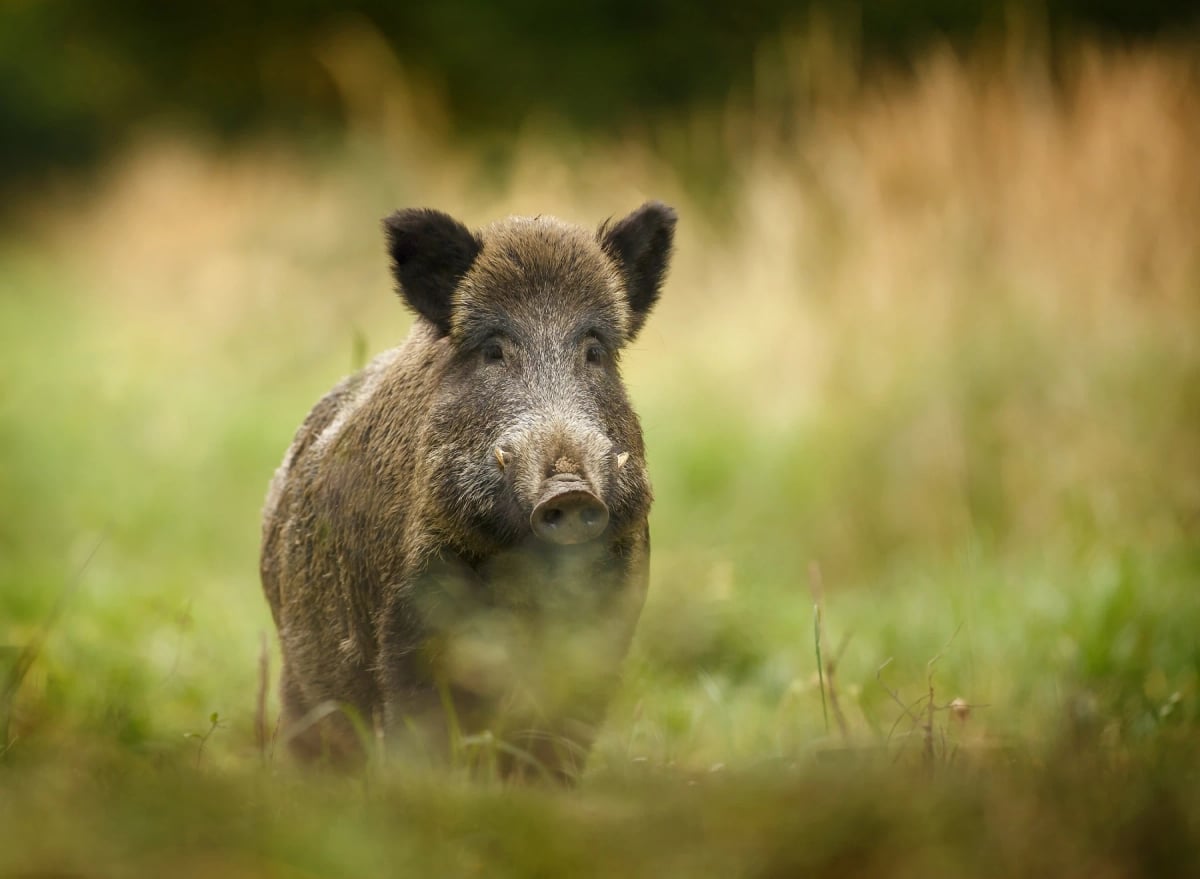
The Indochinese tiger is a pure carnivore that depends on large hoofed animals. The best picture of its diet comes from Huai Kha Khaeng, where researchers followed collared tigers and visited 150 of their kill sites between 2013 and 2015. They found 11 kinds of prey, weighing from about 3 kilograms to almost 290 kilograms. The most common were sambar deer, banteng, gaur and wild boar, but the tigers also killed Asian elephant calves, muntjacs, serows, porcupines, hog badgers, pangolins and langurs. A tiger usually hunts alone, mostly at dusk, at night and in the early morning. It walks slowly along streams, game trails and forest roads, then stalks its prey under cover until it is only a few meters away, rushes forward and knocks it down. Small animals are killed with a bite to the back of the neck, and large ones with a long bite to the throat that cuts off their air. After a big kill the tiger drags the body to a hidden spot and may feed on it for several days, eating up to 30 kilograms of meat at a time and then going days without hunting. Because tigers need so much prey, the number of deer and wild cattle in a forest decides how many tigers it can hold. In Thailand, park staff have released sambar deer raised in breeding centers into the Western Forest Complex, and the growth of prey has gone hand in hand with the recovery of the tigers.
Indochinese Tiger Behavior and Cubs
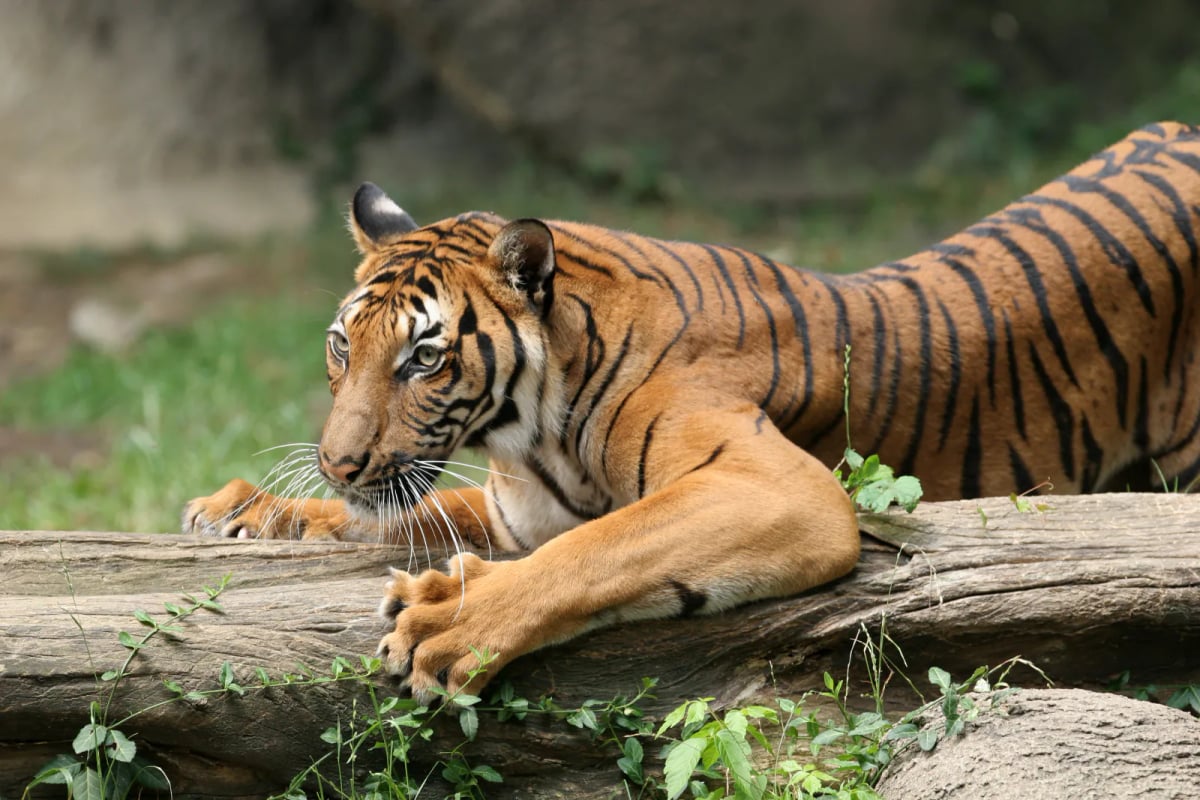
Indochinese tigers live alone, except for mothers with their young. Each adult keeps a home range that it marks with urine sprayed on trees and bushes, scratches on tree trunks, droppings left along trails and scrapes on the ground. These signs tell other tigers who lives there, whether a female is ready to breed and when the owner last passed by. Tigers also keep in touch with long roars that can be heard far away through the forest. A male's range is several times larger than a female's and usually overlaps with two or more of them, and males defend their area against rival males. Tigers are strong swimmers, and in the hot months they often rest in streams and pools to cool down. A male and a female stay together for only a few days to mate. About three and a half months later the female gives birth to a litter of usually two or three cubs in a hidden den among rocks, roots or thick vegetation. The cubs are born blind and weigh only about one kilogram. They start to follow their mother at about two months, learn to hunt by watching and copying her, and stay with her until they are about two years old. Then they leave to look for a home range of their own, which in a crowded forest can mean long and risky journeys. In 2016, six cubs were seen in Mae Wong and Khlong Lan, a sign that tigers were breeding again outside their core area. In the wild they usually live 10 to 15 years.
Indochinese Tiger Population and Conservation Status
The IUCN does not assess the Indochinese tiger on its own. It lists the tiger as a species as Endangered, in an assessment made in December 2021 and published in 2022, and that assessment already counts Cambodia, Laos and Vietnam among the countries where tigers are extinct. In 2025 the IUCN also gave the tiger its first Green Status assessment, which rated the species as Critically Depleted across Asia. The Indochinese population is one of the most threatened of all. The main danger is poaching for the illegal trade in tiger skins, bones and other body parts, which are sold for traditional medicine, tiger bone wine and decoration, much of it bound for China and Vietnam. Snares set for deer and wild boar also kill tigers by accident. Logging, roads, dams and plantations have cut many forests into pieces, as in Myanmar's Hukaung Valley, where large areas set aside for tigers were turned into plantations. Thailand is the bright spot. Since 2006, rangers in the Western Forest Complex have patrolled more often and recorded every sign of poaching, and the number of tigers has slowly grown. National counts rose from 148 to 189 tigers in 2022 to 179 to 223 in 2024, making Thailand the first country in Southeast Asia to increase its wild tigers. In Myanmar, a survey announced in 2019 confirmed at least 22 adults in study areas that cover only about 8 percent of the country's tiger habitat, so the real number is unknown. International trade in tigers has long been banned under CITES.
Where the Indochinese Tiger Has Disappeared
Not long ago the Indochinese tiger lived in six countries. Today it survives in only two, and its loss from the rest of the region happened fast. In Vietnam, tigers were found in 17 provinces before the 1960s and were still present in 14 protected areas in the 1990s, but none has been confirmed since 1997. In Cambodia, camera traps last photographed tigers in Mondulkiri Protected Forest and Virachey National Park in the early 2000s, and in 2016 the government declared the tiger functionally extinct in the country. Laos held on a little longer. Surveys in Nam Et-Phou Louey National Park recorded tigers until 2013, but later camera trap work found none, and researchers concluded that the last ones had been killed by poachers using snares and guns. In China, the tiger once lived in the forests of southern Yunnan, where three individuals were still detected between 2004 and 2009, but the IUCN now counts the tiger as extinct in Yunnan. The story is almost the same everywhere: forests full of snares, a strong demand for tiger parts, and too few rangers. Even protected areas that still had good forest and prey lost their tigers once poaching went unchecked. These losses are why Thailand's population matters so much: it is now the main source of hope for bringing tigers back to the region. Cambodia has started planning a return of tigers to the Cardamom Mountains with the help of India, using tigers from outside the region, which shows how hard it is to replace a population once it is gone.