Shoebill
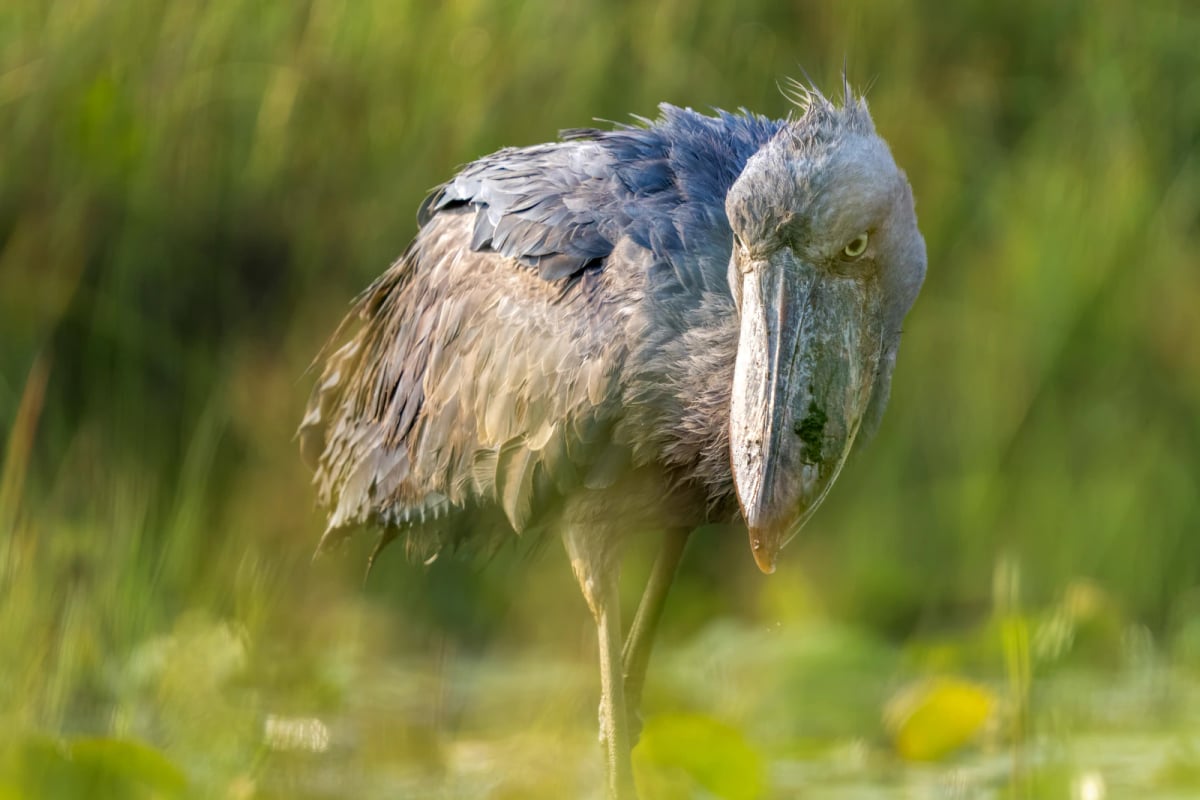
The shoebill (Balaeniceps rex), often called the shoebill stork or whale headed stork, is one of the most unusual birds in the world. It is a huge, gray wading bird that can stand up to about 1.4 meters tall, with a wingspan of up to about 2.6 meters, pale yellow eyes and an enormous bill shaped like a wooden clog, with a sharp hook at the tip. It lives only in the great freshwater swamps of central and eastern Africa, from the Sudd in South Sudan to the Bangweulu Swamps of Zambia, where floating papyrus, reeds and shallow water hold plenty of fish. The shoebill is famous for its patience. It can stand completely still for long periods, watching the water, and then lunges forward and collapses on its prey with its whole body, grabbing it with the bill. Its favorite food is the lungfish, but it also eats catfish, tilapia, frogs, water snakes and sometimes young crocodiles. Despite the name, it is not a true stork: its closest relatives are pelicans and the hamerkop. Shoebills are solitary and mostly silent, but they clatter their bills loudly when they greet a mate at the nest. The IUCN lists the shoebill as Vulnerable, because its numbers are falling as swamps are drained, burned and disturbed, nests are raided and chicks are taken for the illegal bird trade.
Shoebill Names and Family
The shoebill is a large wading bird from the swamps of central and eastern Africa, and it is the only living member of its own family, the Balaenicipitidae. Its scientific name, Balaeniceps rex, means whale headed king, a reference to its enormous head and bill. In English it is also called the whale headed stork or shoebill stork, and in Arabic speaking Sudan it has long been known as abu markub, which means father of the shoe. All of these names point to the same thing: a bill so wide and deep that it looks like a wooden shoe or clog. For a long time scientists placed the shoebill with the storks, because of its long legs, large size and slow, careful hunting style, and that is why so many people still call it a stork. Later studies of its anatomy and its DNA showed that it is not a true stork at all. Its closest living relatives are the hamerkop, another odd African wading bird with a hammer shaped head, and the pelicans, and the three are now grouped together in the order Pelecaniformes. Like pelicans, the shoebill has a keel along the middle of its bill and holds its head back on its shoulders in flight. It was described for science in 1850 from a specimen collected along the upper White Nile, and it has fascinated naturalists and travelers ever since.
Shoebill Size and Appearance
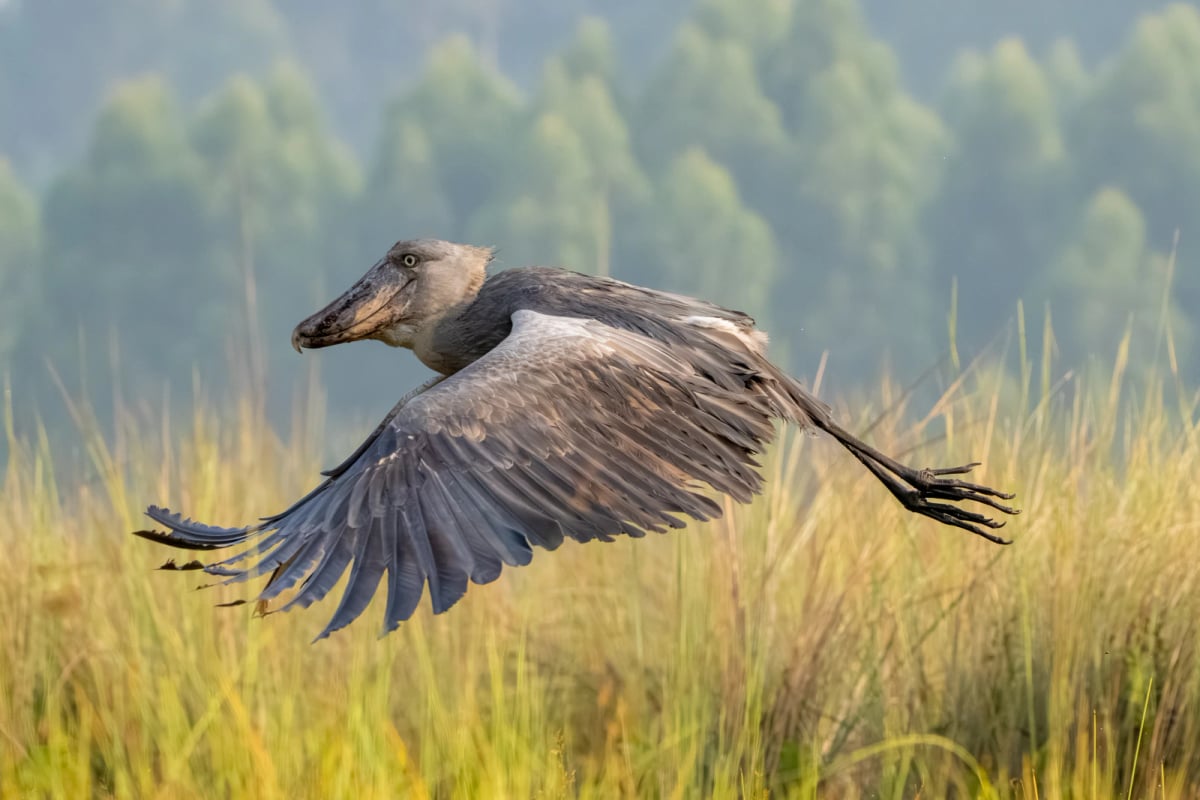
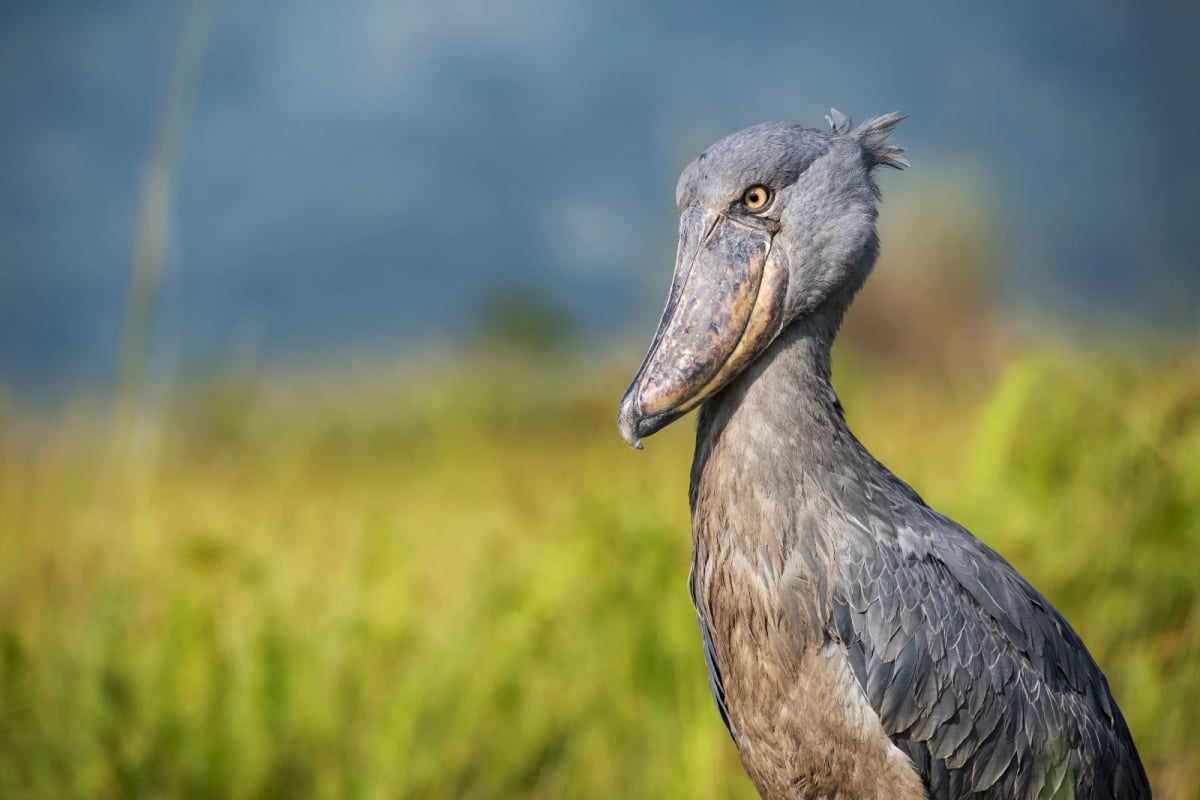
The shoebill is one of the tallest birds in Africa. Adults usually stand about 110 to 140 centimeters tall, and the largest can reach about 150 centimeters, close to the height of a child of ten or eleven. They weigh about 4 to 7 kilograms, with males somewhat larger than females, and their broad wings span about 2.3 to 2.6 meters. The plumage is slate gray to blue gray, darker on the wings and paler on the belly, with a small, ragged tuft of feathers at the back of the head. The legs are long and dark, and the toes are very long, which spreads the bird's weight when it stands on floating vegetation. The bill is the shoebill's most famous feature. It is about 20 to 24 centimeters long and very wide, pale with dark blotches, with sharp edges and a hooked tip that helps it hold slippery prey and cut it into pieces. The eyes are large, pale yellow or bluish white, and they face forward more than in most birds, so the shoebill can look straight down its bill at the water. That steady stare, the huge bill and the slow, deliberate movements have made the shoebill a favorite online, where it is often described as a living dinosaur. In fact all birds descend from dinosaurs, but few look the part as much as the shoebill.
Shoebill Habitat and Range
Shoebills live only in Africa, in a band of large freshwater swamps that runs from South Sudan south through Uganda, Rwanda, western Tanzania and the eastern Democratic Republic of the Congo to northern Zambia. Their habitat is very specific. They need permanent or seasonally flooded swamps with shallow water, floating mats of papyrus, reeds, cattails and grasses, and plenty of fish that come up to breathe in oxygen poor water. Within these swamps they prefer open channels, pools and the edges of floating vegetation, where they can stand still and watch the water. The biggest stronghold is the Sudd, the immense wetland of the White Nile in South Sudan, which holds the largest number of shoebills by far. Other important areas are the swamps around Lake Victoria, Lake Kyoga and Lake Albert in Uganda, the Malagarasi and Moyowosi wetlands of western Tanzania, the Upemba wetlands in the Democratic Republic of the Congo, the papyrus swamps of Akagera National Park in Rwanda and the Bangweulu Swamps in Zambia. Shoebills are mostly sedentary, but they may move within a wetland as water levels rise and fall, and in South Sudan some move regularly between feeding and breeding areas. Lone birds have also been recorded far from their usual range, in countries such as Kenya and Ethiopia, but those are wanderers, not resident populations.
Shoebill Diet and Hunting
Shoebills are carnivores, and most of what they eat comes from the water. Their favorite prey is the lungfish, a long, eel like fish that can breathe air and often rises to the surface in the warm, oxygen poor water of the swamps. They also catch catfish, tilapia and other fish, as well as frogs, water snakes, monitor lizards, turtles and, now and then, young crocodiles. The way they hunt is what makes them famous. A shoebill walks very slowly through shallow water or stands on a mat of floating vegetation and waits, sometimes without moving for long periods, with its bill pointed down at the water. When a fish comes close to the surface, the bird lunges forward and collapses on it with its whole body, wings opening for balance, and grabs the prey along with a big mouthful of water and plants. It then stands up, shakes its head to drain the water and plant matter, often cuts the prey with the sharp edges of the bill, and swallows it whole, sometimes after removing the head. This all or nothing strike, called collapsing, misses often, so a shoebill may need many attempts to catch a meal. Shoebills hunt alone and defend their feeding spots, and they are most active in the early morning and late afternoon, especially where fish gather as water levels drop.
Shoebill Behavior and Breeding
Shoebills are solitary birds. Even members of a pair usually feed at opposite ends of their territory, and nests are spread out, usually fewer than three per square kilometer. They are mostly silent, but at the nest they greet each other with loud bill clattering, a fast drumming sound that can be heard from far away, and chicks make hiccup like calls when they beg for food. Despite their heavy look they are strong fliers, and they can soar on rising warm air with their heads tucked back. Breeding usually starts at the end of the rainy season, as the water begins to drop. The pair builds a large nest of grass and plant stems on a mound of floating vegetation or on a small island, often up to about 3 meters wide, trampling the plants around it into a platform. The female lays one to three white eggs, and both parents take turns incubating them for about a month. In the heat of the swamp, the parents carry water in their bills and pour it over the eggs and chicks to keep them cool. Usually only one chick survives. The oldest is bigger and stronger and often takes most of the food, and the younger chicks frequently die; the extra eggs seem to work as a backup if the first chick is lost. The surviving chick leaves the nest after about three to four months, and the parents keep feeding it for some weeks more.
Shoebill Population and Conservation Status
The shoebill is listed as Vulnerable on the IUCN Red List. BirdLife International estimates the world population at about 5,000 to 8,000 birds, and numbers are believed to be falling, especially in Tanzania, Zambia and Rwanda. Because the species breeds slowly, usually raising a single chick per nesting attempt and not every year, it recovers very slowly from losses. The main threat is damage to its swamps. Wetlands are drained and cleared for farming, burned during the dry season, grazed by cattle and disturbed by fishing camps, and dams and changes in water levels can flood or dry out nesting areas. Oil exploration and large water projects along the Nile and around Lake Albert add pressure. Shoebills are also hunted in some places, and their eggs and chicks are taken from nests. Some of those chicks end up in the illegal wildlife trade, sold abroad as status birds for private collections, a trade that is banned under international law because the species is listed on CITES Appendix II, and many of the birds die along the way. Conservation work focuses on protecting key wetlands and on involving local people. In Zambia's Bangweulu Swamps, for example, local fishermen are employed as shoebill guards to watch over nests until the chicks fledge, and nest success has improved where they work. Tourism also helps, since shoebills draw birdwatchers to Uganda, Zambia and Rwanda and give local communities a reason to protect them.
Where to See Shoebills
Uganda is the easiest country in which to see a shoebill in the wild. The most popular site is Mabamba Swamp, a wetland on the shore of Lake Victoria about an hour from Entebbe, where local guides paddle visitors through papyrus channels in small wooden canoes to find birds feeding at the edge of the reeds. Many visitors combine it with a flight into or out of Entebbe International Airport. In Murchison Falls National Park, boat trips to the delta where the Victoria Nile flows into Lake Albert regularly find shoebills, especially in the early morning, and the papyrus swamps around Lake Mburo National Park are another good option. In Zambia, the Bangweulu Swamps are one of the best places on the continent to see shoebills, with guided walks and canoe trips across the floodplain, usually best from about March to July, when water levels and nesting make the birds easier to find. In Rwanda, a few shoebills live in the papyrus swamps of Akagera National Park, where boat trips on the lakes occasionally find them. South Sudan's Sudd holds more shoebills than anywhere else, but it is remote and rarely visited. Wherever they are seen, shoebills are often surprisingly calm and may stay still for long periods, so watching from a respectful distance and letting the bird carry on fishing gives the best views.