Red Wolf
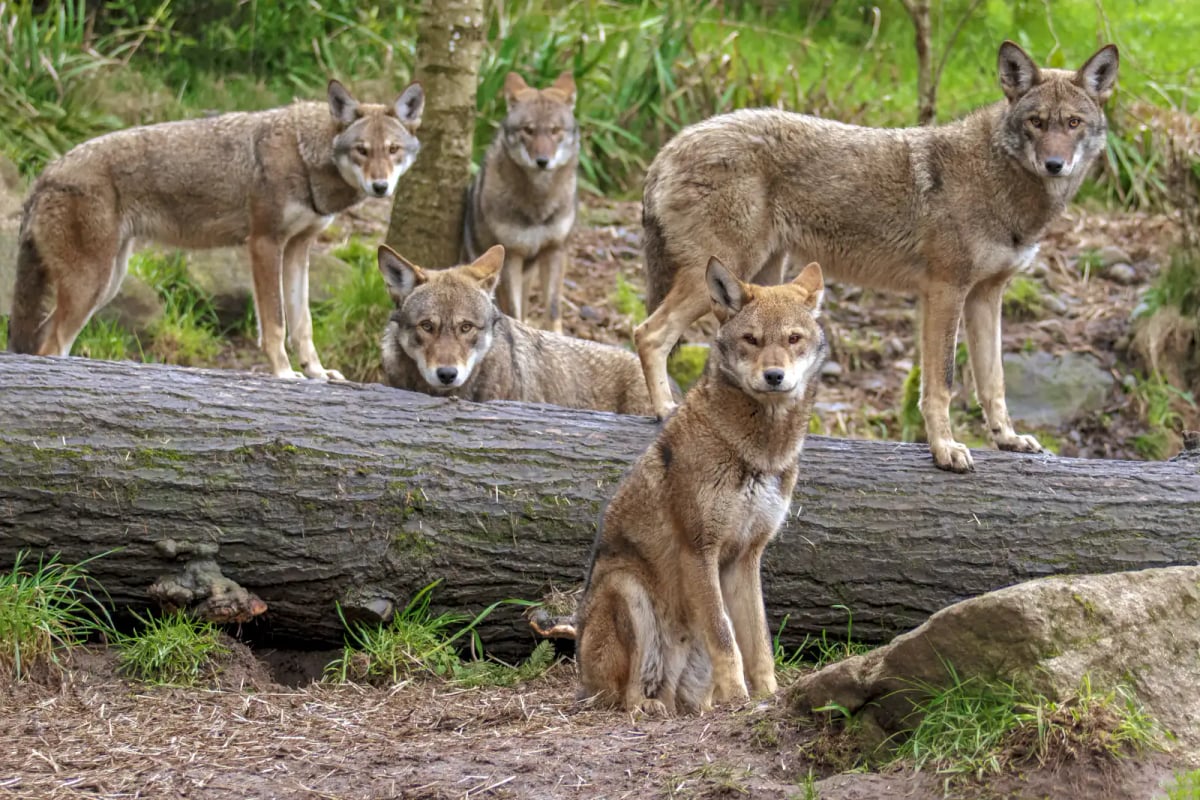
The red wolf (Canis rufus) is a wolf native to the eastern United States and one of the most endangered wild canids in the world. It is smaller and slimmer than the gray wolf, with long legs, large pointed ears and a coat that mixes gray, tan, black and the reddish brown on the head, ears and legs that gives it its name. Red wolves once lived across much of the Southeast, from Texas to Florida and north along the Atlantic coast, but hunting, predator control, the loss of forests and wetlands and crossing with coyotes pushed them to a last pocket on the Gulf Coast of Texas and Louisiana. In 1980 the species was declared extinct in the wild, and the survivors became the base of a captive breeding program. In 1987 red wolves were returned to Alligator River National Wildlife Refuge in North Carolina, the first time an animal declared extinct in the wild was brought back to its native range. Today the only wild population lives on the Albemarle Peninsula of eastern North Carolina, with only a few dozen wolves, while close to 300 more live in breeding facilities across the country. Red wolves live in family packs and hunt white tailed deer, raccoons, rabbits, nutria and rodents. The IUCN lists the red wolf as Critically Endangered.
Red Wolf Species and Origins
The red wolf is a wolf that lives only in North America, and its scientific name, Canis rufus, means reddish dog. It belongs to the genus Canis together with the gray wolf, the coyote and the domestic dog, and it sits between the two wild ones in size: bigger than a coyote, smaller than a gray wolf. Older books sometimes call it the Florida wolf, the Texas red wolf or the red timber wolf, after the regions and forests where it once lived. Its exact place in the wolf family has been debated for decades. Red wolves, gray wolves and coyotes can all interbreed, and some genetic studies found that red wolf DNA looks like a mix of gray wolf and coyote. Other scientists argue that the red wolf is an old North American lineage of its own, closely related to the eastern wolf of Canada, which later picked up coyote genes. In 2019 a review by the National Academies of Sciences, Engineering, and Medicine in the United States concluded that the red wolf should be treated as a separate species, and both the United States government and the IUCN manage it that way. Whatever its deep history, the red wolf is the wolf that belongs to the forests, swamps and coastal plains of the American Southeast, where gray wolves never really settled.
Red Wolf Size and Appearance
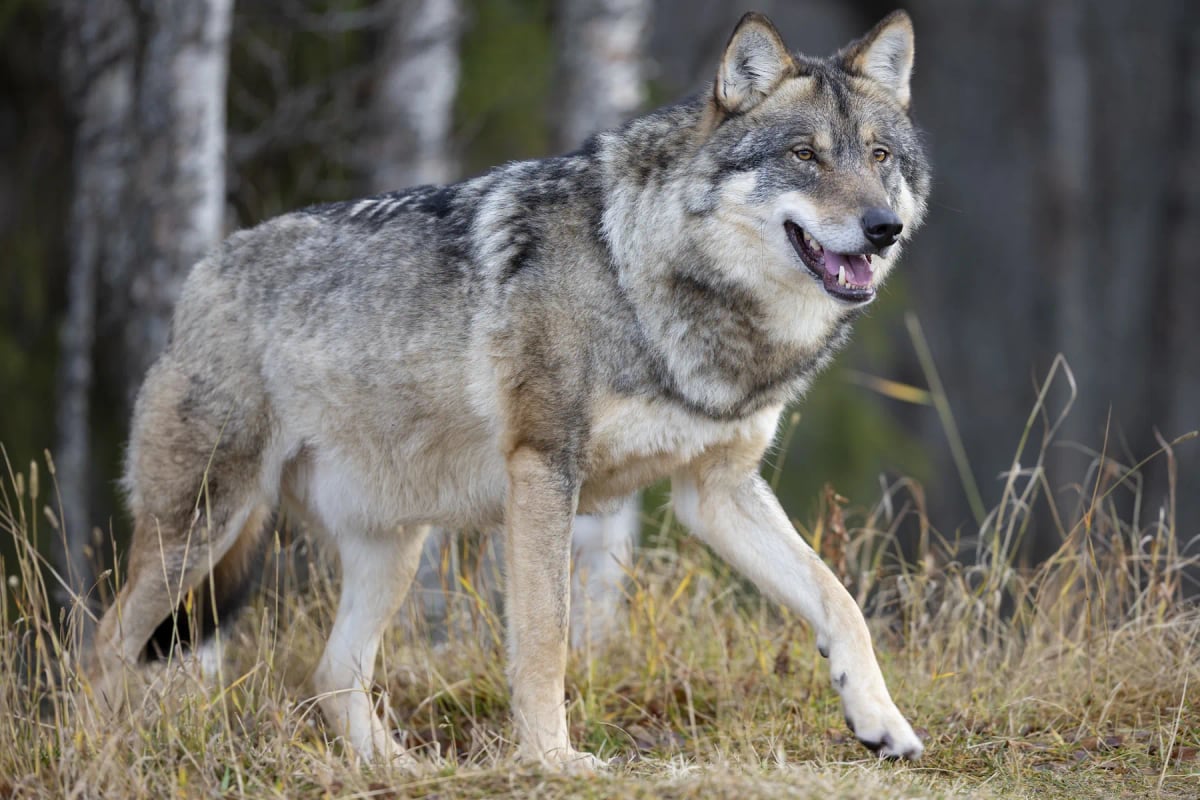
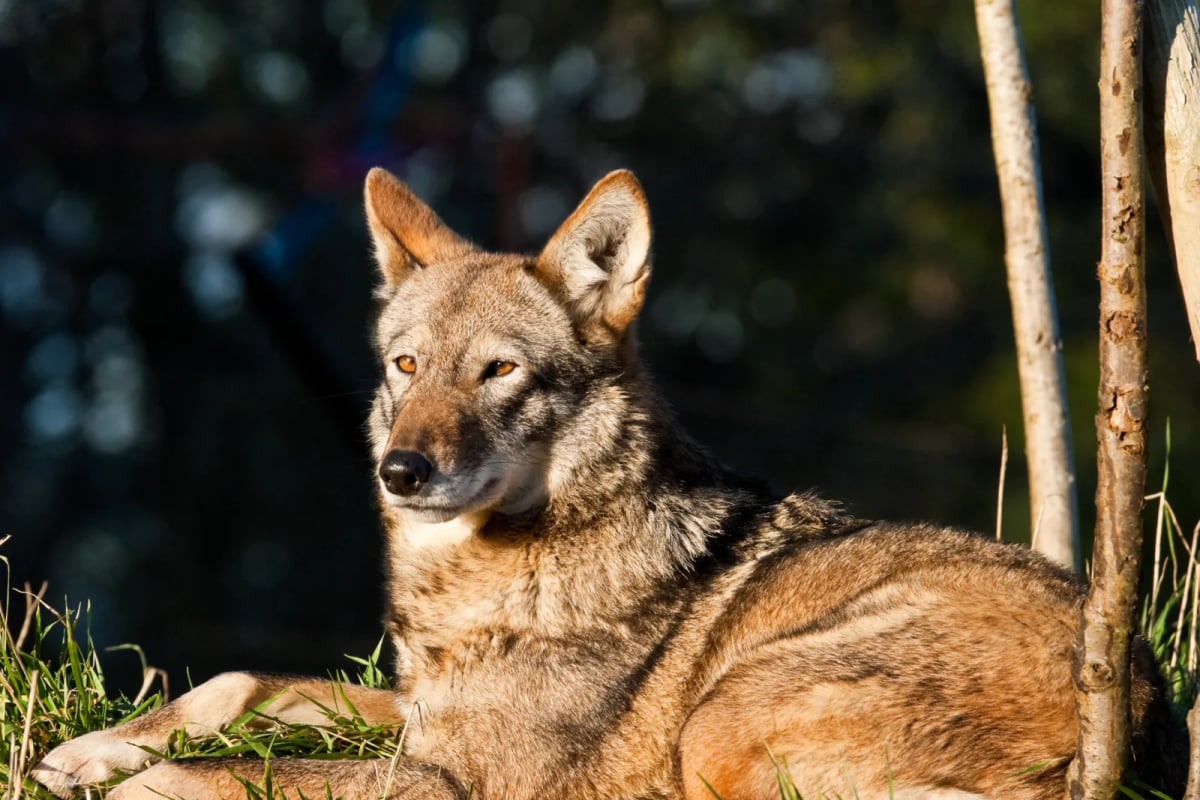
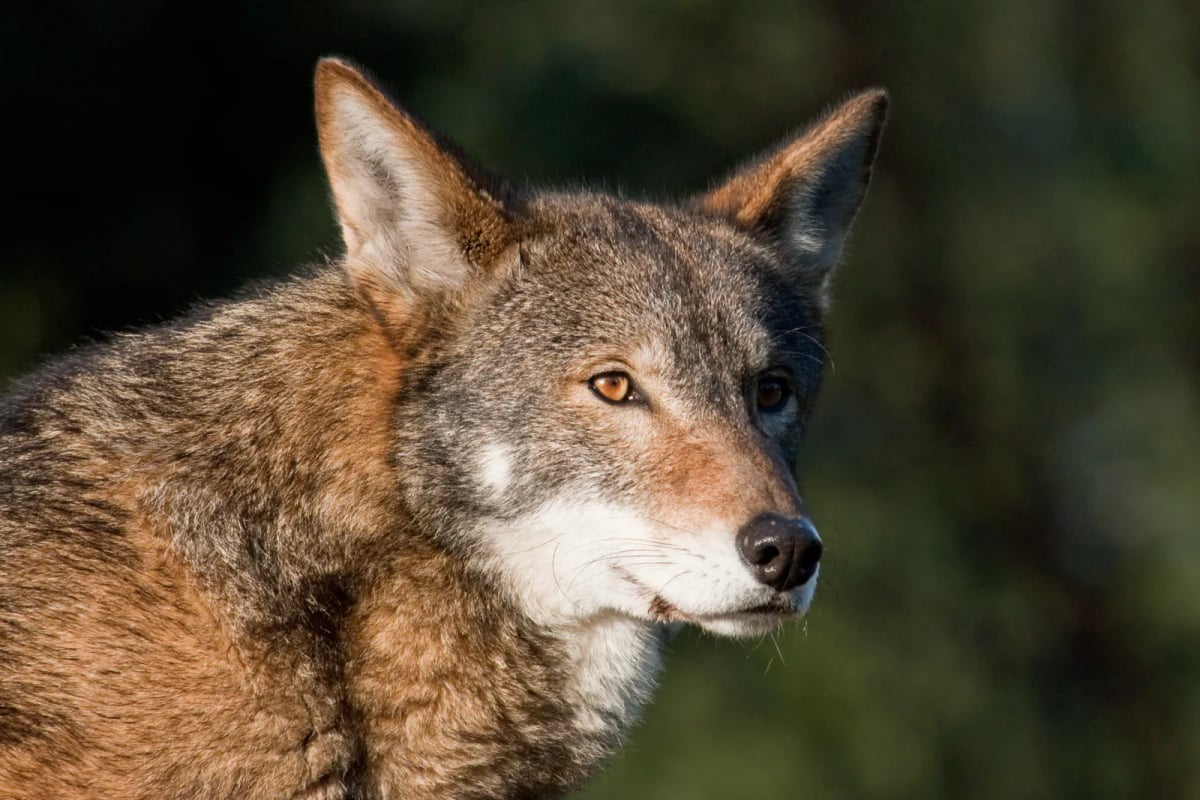
Red wolves are medium sized wolves. An adult measures about 1.2 meters from the tip of the nose to the tip of the tail and stands about 66 centimeters at the shoulder. Most adults weigh between about 20 and 36 kilograms, with males larger and heavier than females. That makes the red wolf clearly bigger than a coyote but much lighter than a gray wolf, whose large males can weigh twice as much. The body is lean, with long legs that give the wolf a tall, rangy look, a fairly narrow muzzle and large, pointed ears. Despite its name, a red wolf is not bright red. Its coat is usually a mix of tan, gray and black along the back, with the cinnamon or reddish brown color showing most on the muzzle, the back of the ears, the head and the legs. The throat, lips and muzzle are often whitish, and the bushy tail usually ends in a dark tip. Their eyes are a light amber or golden color. The coat is shorter and thinner than that of northern wolves, which suits the hot, humid summers of the Southeast, and it becomes a little thicker in winter. At a distance, red wolves are easy to confuse with coyotes, which is one of the reasons they are so often shot by mistake.
Red Wolf Habitat and Range
Red wolves once lived across much of the eastern and southeastern United States, from central Texas east to Florida and north along the Atlantic coast, in forests, river bottoms, swamps and coastal prairies. Two centuries of hunting, trapping and land clearing reduced them, and by the 1970s the last ones survived only in the marshes and coastal prairies of southeastern Texas and southwestern Louisiana, where they were crossing more and more often with coyotes. Today the only wild red wolves live on the Albemarle Peninsula of eastern North Carolina, in the five counties of Beaufort, Dare, Hyde, Tyrrell and Washington. The heart of their range is Alligator River National Wildlife Refuge and Pocosin Lakes National Wildlife Refuge, a low, wet land of pine forests, pocosin shrub bogs, marshes and farm fields. Packs use all of these habitats, and many hunt along the edges of crop fields, where deer, rabbits and rodents are common. A pack's home range usually covers about 50 to 200 square kilometers, depending on how much prey is available. The wolves are mostly active at night, at dusk and at dawn, which makes them hard to see even inside the refuges. Visitors sometimes hear them during guided howling events held near Alligator River, one of the few ways to experience wild red wolves.
Red Wolf Diet and Hunting
Red wolves are carnivores that hunt medium and small mammals. In North Carolina their diet is made up mainly of white tailed deer, raccoons, rabbits, nutria and smaller rodents such as rats and mice. Before the species disappeared from the wild, the last red wolves of the Texas and Louisiana coast lived largely on nutria, rabbits and rodents, while the wolves of the restored population rely more on deer, which are abundant on the Albemarle Peninsula. They also take birds and other small animals when they find them and sometimes eat carrion, berries and insects. A red wolf usually eats about 1 to 2.3 kilograms of food a day, and it can travel 30 kilometers or more in a single night looking for food. Hunting is often done by members of the same pack, alone or in small groups, rather than by the whole pack together. Adults catch rabbits and rodents on their own, while deer, especially fawns, are often hunted by two or more wolves. Their prey choice gives them a role in the local ecosystem: by hunting deer, raccoons and nutria, red wolves help keep those animals in check, and nutria in particular are an invasive rodent from South America that damages marshes and wetlands. Red wolves rarely bother livestock or pets, and attacks on them are very uncommon.
Red Wolf Packs and Pups
Red wolves live in packs, which are family groups made up of a breeding pair and their offspring from one or more years. A typical pack has about five to eight wolves. The breeding pair usually stays together for years, often for life, and the pack defends its territory against other wolves and coyotes. Pack members keep in contact with howls, scent marks and body language, and young wolves usually stay with their parents for one to three years, helping to raise younger brothers and sisters before leaving to find a mate and territory of their own. Red wolves mate once a year, usually in February, and the pups are born in April or May after a pregnancy of about two months. The mother gives birth in a well hidden den, often dug into a ditch bank, under fallen trees or in thick brush. Litters are usually of three to six pups, but can be larger; in 2025 a pack at Alligator River had eight. The pups are born blind and dark, and the whole family helps feed them by bringing food to the den. Life is hard for young wolves: in the wild only about half of the pups survive to adulthood. To boost the wild population, biologists also place captive born pups into wild dens a few days after birth, a technique called fostering, and wild mothers raise them as their own.
The Red Wolf Recovery Program
The red wolf was one of the first animals listed as endangered in the United States, in 1967. By the early 1970s it was clear that the last wild red wolves in Texas and Louisiana were disappearing into the coyote population, so the U.S. Fish and Wildlife Service made a drastic decision: catch as many as possible and save the species in captivity. Between 1973 and 1980 more than 400 wild canids were trapped, but only 14 were judged to be pure red wolves, and those 14 became the founders of every red wolf alive today. In 1980 the red wolf was declared extinct in the wild. In 1987 four pairs of captive bred wolves were released at Alligator River National Wildlife Refuge in North Carolina, the first time a species declared extinct in the wild was returned to its native range. A second release in Great Smoky Mountains National Park, begun in 1991, ended in 1998 because few pups survived and the wolves could not settle there. In North Carolina, though, the wolves did well. The program pioneered techniques such as fostering captive pups into wild dens and sterilizing coyotes so they hold territories without producing hybrids, and by 2012 the wild population had reached as many as 120 wolves. After that it collapsed, mainly because of shootings, road deaths and crossing with coyotes, before releases and new litters began to bring it back in the 2020s.
Red Wolf Population and Conservation Status
The red wolf is listed as Critically Endangered on the IUCN Red List and as endangered under the U.S. Endangered Species Act, and it is often called the most endangered wolf in the world. In August 2026 the U.S. Fish and Wildlife Service estimated the wild population at about 22 to 23 adult and young wolves, plus 14 to 15 pups born that spring, all of them in eastern North Carolina. That is very few, but it is an improvement on the low point of around 2020, when fewer than ten wolves were known in the wild. In 2026 four wild packs had litters, with 23 pups born, the best season in years. Behind the wild wolves stands a larger safety net: close to 300 red wolves live in about 50 zoos, nature centers and breeding facilities across the country under the Red Wolf SAFE program, and their pups are used for releases and fostering. Red wolves are endangered for several reasons that feed into each other. Gunshots and collisions with vehicles are the leading causes of death, and every adult lost can break up a breeding pair. When a pair breaks up, the surviving wolf may pair with a coyote, and the hybrid pups slowly dilute the red wolf population. The small number of founders also means low genetic diversity, so every litter counts for the future of the species.