Quokka
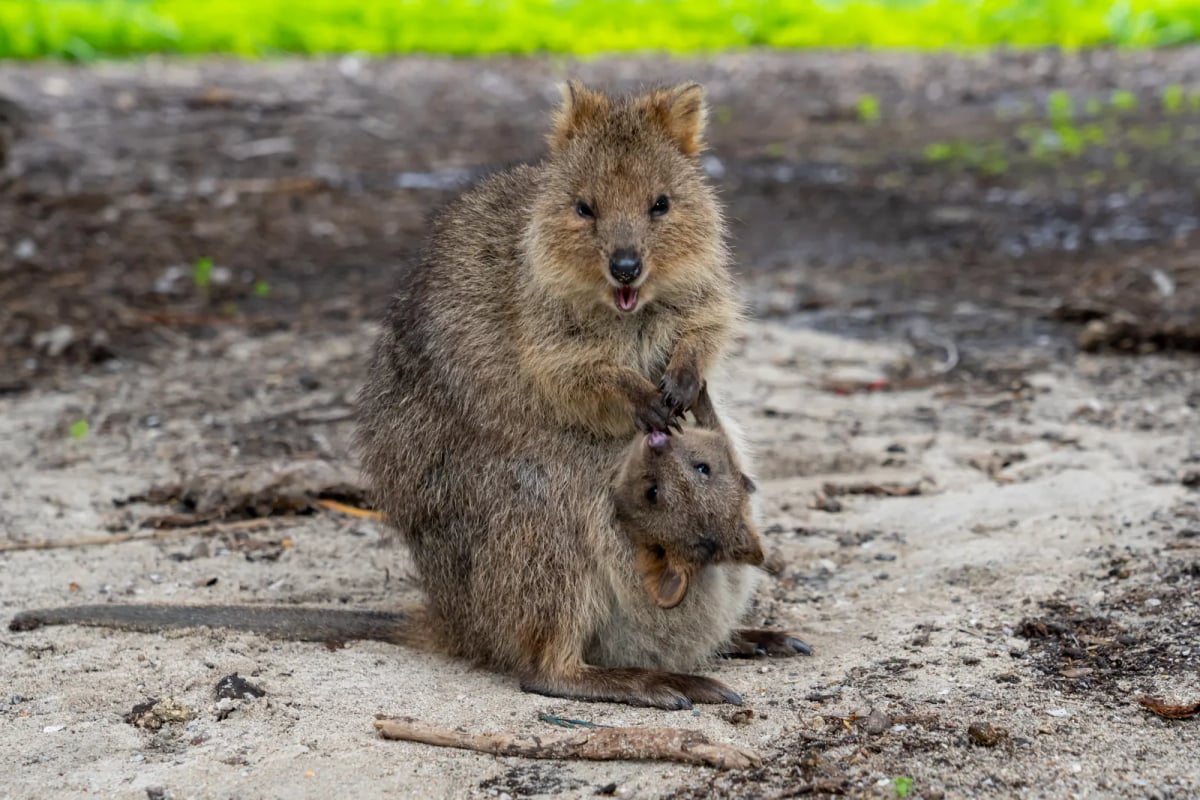
The quokka is a small wallaby that lives only in the southwest of Western Australia, and it has become one of the most photographed animals in the country. About the size of a large house cat, it has a round body, short rounded ears, a short tail and thick brown fur, and the shape of its mouth makes it look as if it is always smiling. That face, and its habit of walking up to people without fear, turned it into a star of social media and earned it the nickname of the happiest animal in the world. Most quokkas live on Rottnest Island, a short ferry ride from Perth, and on Bald Island near Albany, two islands where there are no foxes or cats. On the mainland they survive in small, scattered groups in dense, swampy thickets of the southwestern forests. Quokkas are mostly active at night and eat grasses, sedges, succulent plants and the leaves of shrubs, getting much of the water they need from the plants themselves. Like kangaroos, they carry their young in a pouch: a single joey lives there for about six months. Dutch sailors who landed on Rottnest in 1696 thought quokkas were giant rats, which is how the island got its name. Foxes, feral cats, land clearing, fires and a drier climate have pushed the quokka out of much of its old range on the mainland. The IUCN lists the quokka as Vulnerable, with a decreasing population of 7,500 to 20,000 adults.
What Is a Quokka?
The quokka is a marsupial, a mammal that raises its young in a pouch, and it belongs to the macropods, the family of kangaroos and wallabies. In simple words, it is a very small wallaby. It is the only living species in its genus, Setonix, and it was first described for science in 1830 by the French naturalists Quoy and Gaimard. Its scientific name, Setonix brachyurus, refers to its short tail, which is much shorter than the tail of most wallabies. Because of its round body and small ears, many people confuse the quokka with a wombat. The two are related only from far away: both belong to the same large order of Australian marsupials, but wombats are heavy diggers that live in burrows and walk on four legs, while quokkas hop on their long hind feet like a kangaroo. The first Europeans to see quokkas were Dutch sailors. In 1658 a Dutch crew described a kind of wild cat on the island, and in 1696 Willem de Vlamingh took the animals for giant rats and named the island Rottnest, rat's nest in Dutch. Today the quokka is one of the symbols of Western Australia, and Rottnest is the place where almost every visitor meets one for the first time.
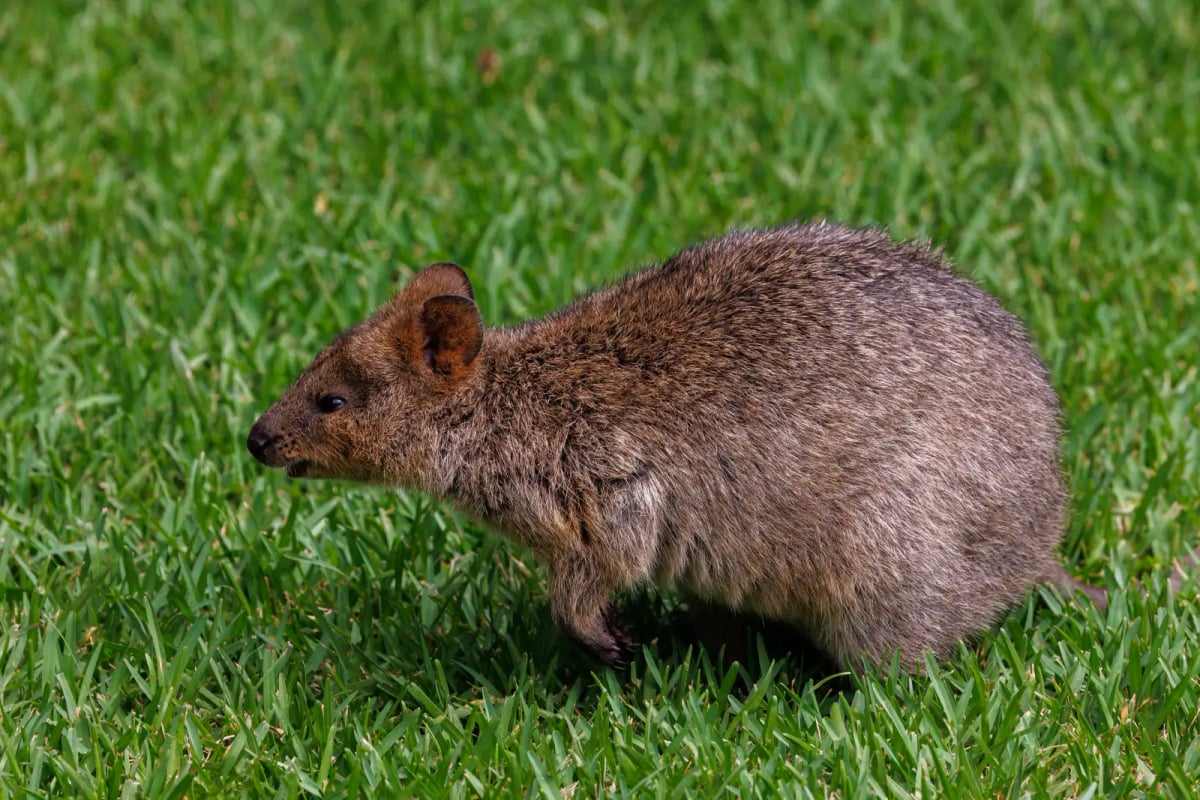
Quokka Size and Appearance
The quokka is about the size of a large house cat. Its body measures 40 to 54 centimeters from nose to rump, and its tail adds another 25 to 31 centimeters. Males are bigger than females: an adult male weighs 2.5 to 5 kilograms and a female 1.6 to 3.5 kilograms. Its fur is thick and coarse, grayish brown on the back and paler underneath, with a reddish tinge around the face and neck. The ears are short and rounded, the eyes are dark and the nose is black and bare. Like other macropods, it has long, narrow hind feet that it uses to hop, and short front legs with small hands that it uses to hold food. Its tail is short, thin and almost hairless compared with the tail of a kangaroo, and it is not used as a prop when the animal sits. The feature that made the quokka famous is its face. The corners of its mouth curve upward, so it seems to be smiling in almost every photo. This is simply the shape of its jaw and lips, and it says nothing about how the animal feels: a stressed or frightened quokka looks just as happy.
Quokka Habitat and Range
The quokka lives only in the southwest corner of Western Australia, so the only country where it can be seen in the wild is Australia. Its strongholds are two islands without foxes or cats. Rottnest Island, about 18 kilometers off the coast of Fremantle, holds the largest population, usually estimated at around 10,000 animals, although numbers rise and fall with dry summers. Bald Island, a nature reserve off the south coast near Albany, holds roughly 600 to 1,000 more. On the mainland the quokka was once common across the southwest, from the edge of Perth to the south coast. Since the 1920s its range has shrunk to the south and today it survives in small groups at a few dozen sites in the jarrah and karri forests, between the hills east of Perth and the area around Walpole and Albany, including Two Peoples Bay Nature Reserve. On the mainland it needs dense, often swampy thickets beside streams, where thick vegetation hides it from predators. In December 2024 an Aboriginal conservation group, the Bibbul Ngarma Aboriginal Association, photographed quokkas in the Perth Hills with fauna cameras, the first time the public had seen them there, and it now monitors them with the state wildlife department. On Rottnest quokkas live in scrub, woodland and around the settlement, where they rest in the shade during the day.
Quokkas on Rottnest Island
Rottnest Island, known to the Noongar people as Wadjemup, is the easiest place in the world to see a quokka. The ferry from Fremantle takes about half an hour, and a longer one leaves from central Perth, and the island is almost free of private cars, so most visitors explore it by bike or on foot. Quokkas are everywhere: in the bushes along the paths, around the cafes of Thomson Bay and near the lakes, and because they are used to people they often come close. In the early 2010s visitors began to post selfies with smiling quokkas, and by 2015 the quokka selfie had become a worldwide trend that brought even more tourists to the island. The quokkas of Rottnest are wild and protected animals. Touching, picking up or feeding them is against the island's rules, and the Rottnest Island Authority hands out on the spot fines, usually reported at 200 Australian dollars, to people who break them. Human food such as bread and chips can make quokkas sick, and quokkas that learn to beg for food bite more often. The island's medical center treats dozens of people for quokka bites every year, most of them children who were feeding or petting an animal. The safest way to get a good photo is to crouch down, keep still and let the quokka decide how close to come.
Quokka Diet and Survival in Summer
The quokka is a herbivore. It feeds mostly at night on grasses, sedges, succulent plants and the leaves and shoots of shrubs Its sharp front teeth cut tough stems close to the ground, and its back teeth grind them down. On the mainland, where it lives in damp thickets beside streams, it finds green plants and water all year. Life is harder on Rottnest Island. The island has very little fresh water and the summers are long, hot and dry, so the quokkas there get most of the water they need from the plants they eat, especially succulents that grow near the coast and around the salt lakes. A classic study from the 1960s showed that Rottnest quokkas lose condition toward the end of summer, when the plants dry out and their diet becomes poor in protein. Many animals, especially young ones, die in that season, and the population recovers when the winter rains return. Quokkas can store fat at the base of the tail and use it when food is scarce. This is one of the reasons why feeding them is a problem: bread, chips and other human food fill their stomach without giving them what they need.
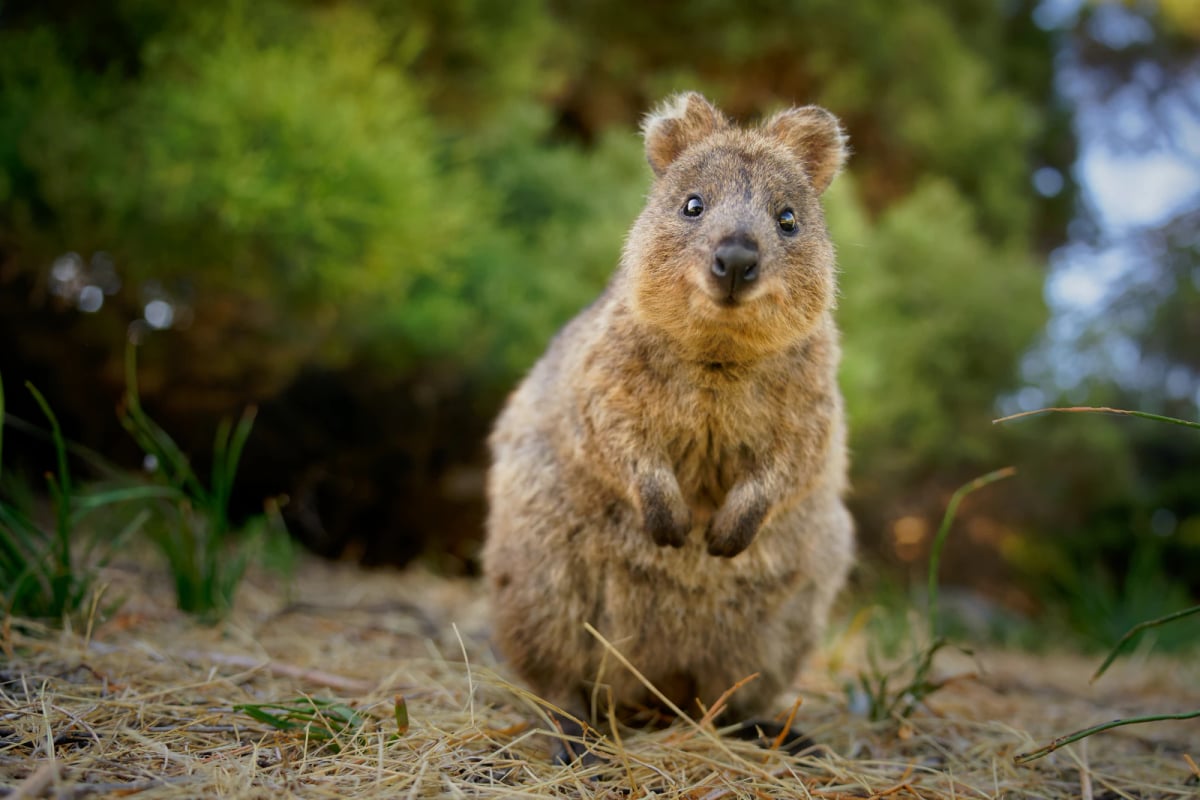
Quokka Behavior and Joeys
Quokkas are mostly active at night. During the day they rest in the shade of dense bushes, and at dusk they come out to feed. They live in loose groups whose home ranges overlap, and on Rottnest many animals gather around the few freshwater soaks in summer. Outside those moments each quokka moves and feeds on its own, and when it is frightened it bounds away on its hind feet into the nearest thicket. Like all marsupials, the quokka gives birth to a tiny, undeveloped young after a pregnancy of about one month. The newborn crawls into the mother's pouch, attaches to a teat and stays there for about six months. After leaving the pouch, the joey keeps following its mother and drinking her milk for about two more months. Females have one joey at a time. On Rottnest breeding follows a season that peaks from January to March, while on the mainland they can happen at any time of the year. The quokka was the first animal in which scientists proved embryonic diapause, the ability to keep a second embryo dormant while a joey grows in the pouch. If the joey is lost, that embryo starts to grow again and is born about four weeks later.
Quokka Population and Conservation Status
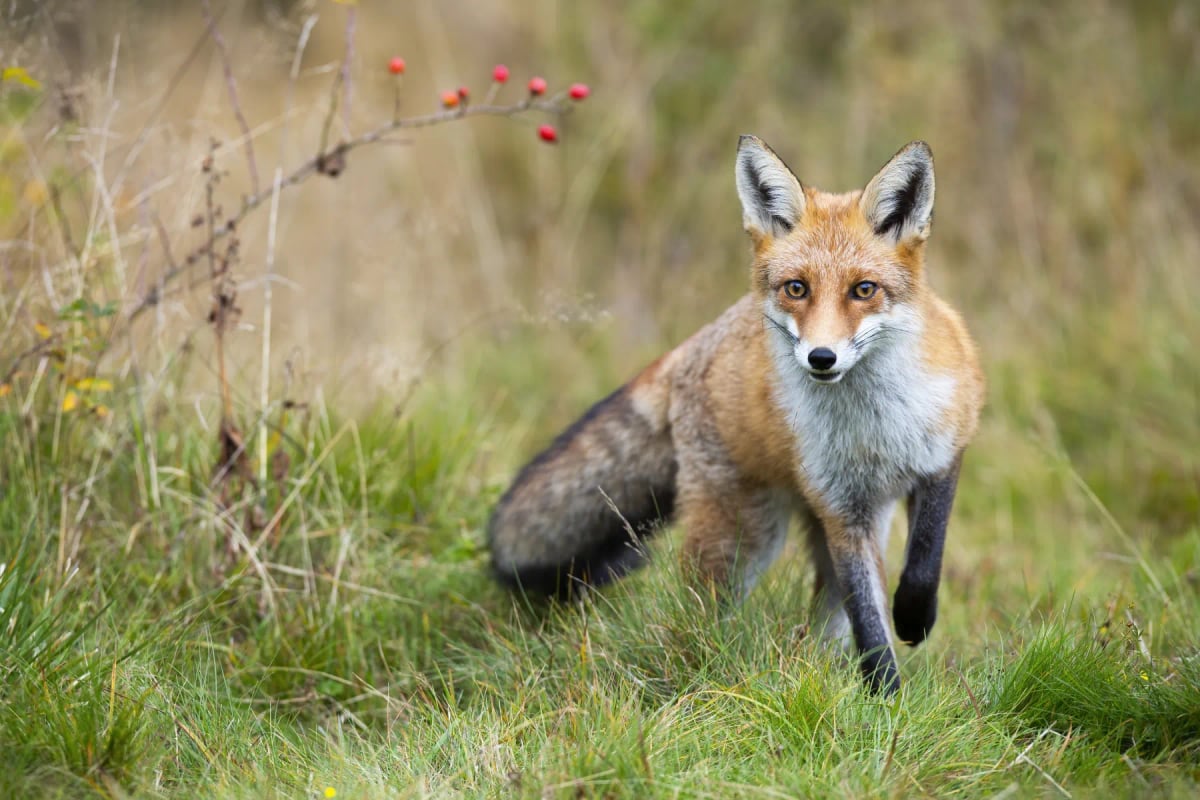
The IUCN lists the quokka as Vulnerable. Its latest assessment, made in November 2024 and published in 2025, estimates 7,500 to 20,000 mature adults and a population that is still going down. The species is also listed as Vulnerable under Australia's national environment law. Almost all of those animals live on Rottnest and Bald islands, which means the quokka depends on two small places. On the mainland the picture is much worse. Since the arrival of the red fox and the feral cat, quokkas have vanished from most of their old range, and the groups that remain are small and cut off from each other. Clearing for farms and towns, changes in water flow and fire add to the damage: in 2015 a bushfire near Northcliffe killed about 90 percent of a local population of some 500 quokkas. A drier climate is another threat, because quokkas need cool, damp thickets, and one study warned that under the worst climate scenario they could lose their whole range by 2070. Fox baiting, fire planning and the protection of wetlands help the mainland groups. Quokkas are protected animals and cannot legally be kept as pets: they cannot be bought or exported, and outside Australia only a few zoos keep them under special agreements.