Sumatran Tiger
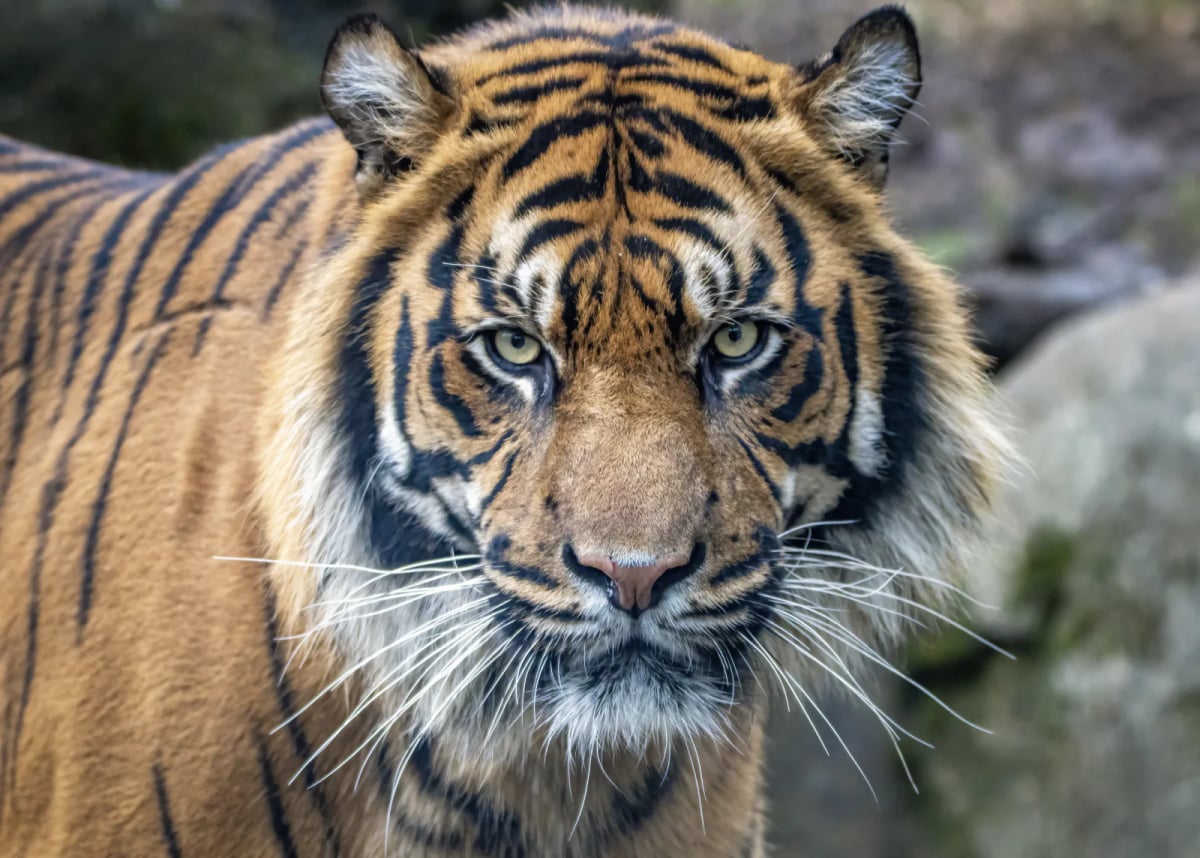
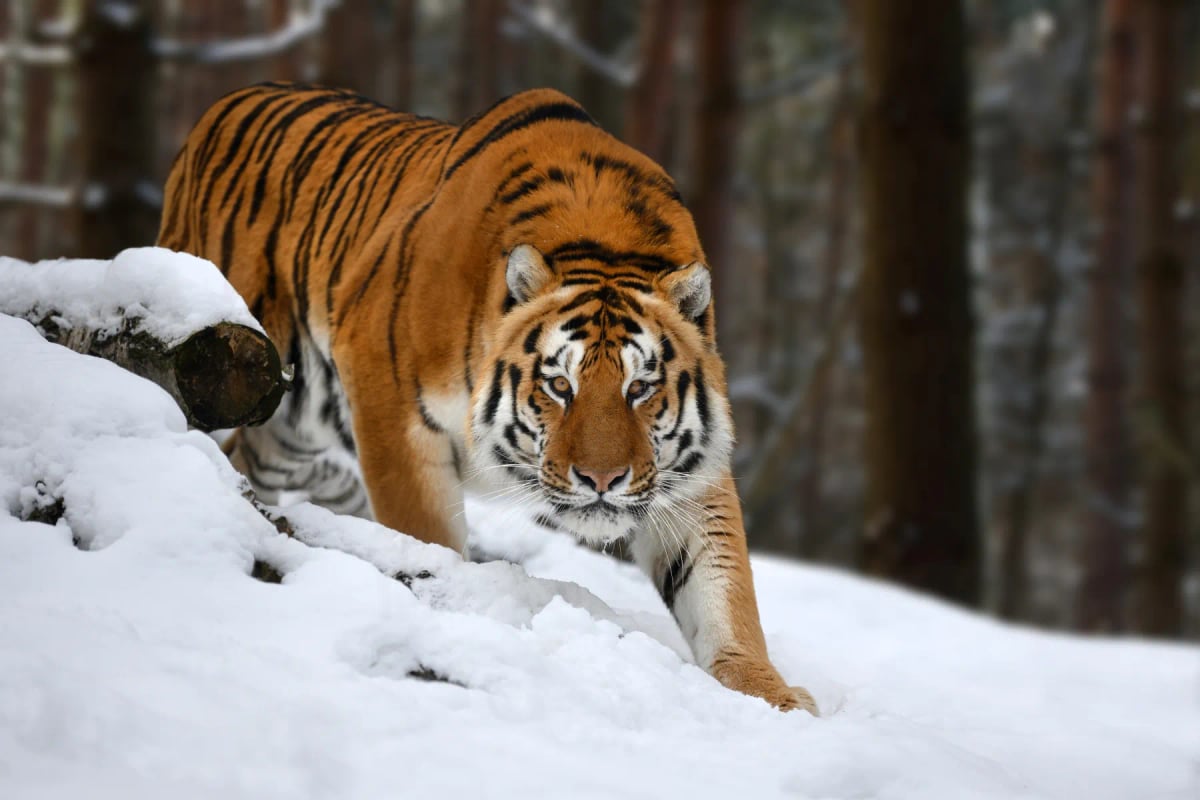
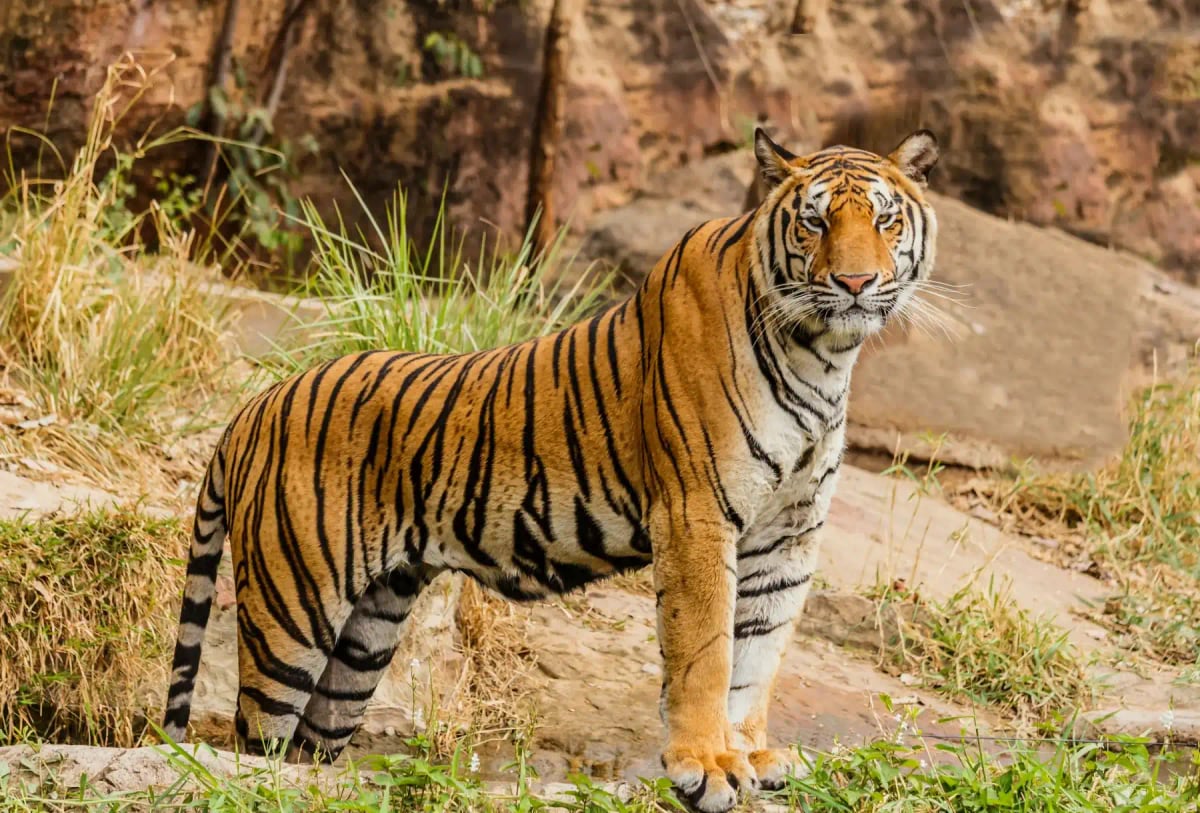
The Sumatran tiger is the tiger of the Indonesian island of Sumatra and the smallest tiger alive today. It is the last survivor of the Sunda tigers, the tigers of the Sunda Islands, which also lived on Java and Bali until people wiped them out in the twentieth century. Males weigh about 100 to 140 kilograms and measure about 2.4 meters from nose to tail tip, and females are smaller. Its coat is a deep orange crossed by narrow black stripes that sit close together and often run down the front legs, and males have a thick ruff of fur around the face. It lives in the rainforests of Sumatra, from lowland and peat swamp forest to the forests of the mountains, and its most important refuges are Kerinci Seblat and Gunung Leuser national parks. Like all tigers it is a solitary hunter that stalks its prey and kills it with a bite to the neck or throat, and its main prey are wild boar and sambar deer. In 2017 the IUCN Cat Specialist Group placed it, together with the extinct Javan and Bali tigers, in the subspecies Panthera tigris sondaica. Its future is uncertain. A study published in 2017 estimated that about 618 adult tigers lived on the island in 2012, down from 742 in 2000, as forests were cleared for oil palm and pulpwood plantations and poachers set snares for tigers and their prey. The IUCN lists the Sumatran tiger as Critically Endangered.
Sumatran Tiger: Name and Classification
The Sumatran tiger is the tiger of Sumatra, the large Indonesian island west of Java and south of the Malay Peninsula. In Indonesian it is called harimau Sumatera, and it is often called the Sunda tiger or the Indonesian tiger, because it is the only tiger left in the Sunda Islands and the only wild tiger in Indonesia. For most of the twentieth century scientists treated it as its own subspecies, Panthera tigris sumatrae, separate from the Javan tiger and the Bali tiger, which lived on the islands to the east. Tigers reached these islands when sea levels were lower and they were joined to mainland Asia, and after the seas rose the island tigers were cut off and became smaller and darker than their relatives on the continent. In 2017 the Cat Classification Task Force of the IUCN Cat Specialist Group simplified the tiger family tree to two subspecies: Panthera tigris tigris for the tigers of mainland Asia, such as the Bengal, Siberian, Indochinese and Malayan tigers, and Panthera tigris sondaica for the tigers of the Sunda Islands. That makes the Sumatran tiger the last living member of its group, because the Bali tiger disappeared around the middle of the twentieth century and the last Javan tigers were seen in the 1970s. Many people in Sumatra still treat the tiger with deep respect. In parts of the island they avoid saying the word for tiger and use honorific names instead, such as datuk or inyiak in West Sumatra, nenek in South Sumatra and ompung in North Sumatra.
Sumatran Tiger Size and Appearance
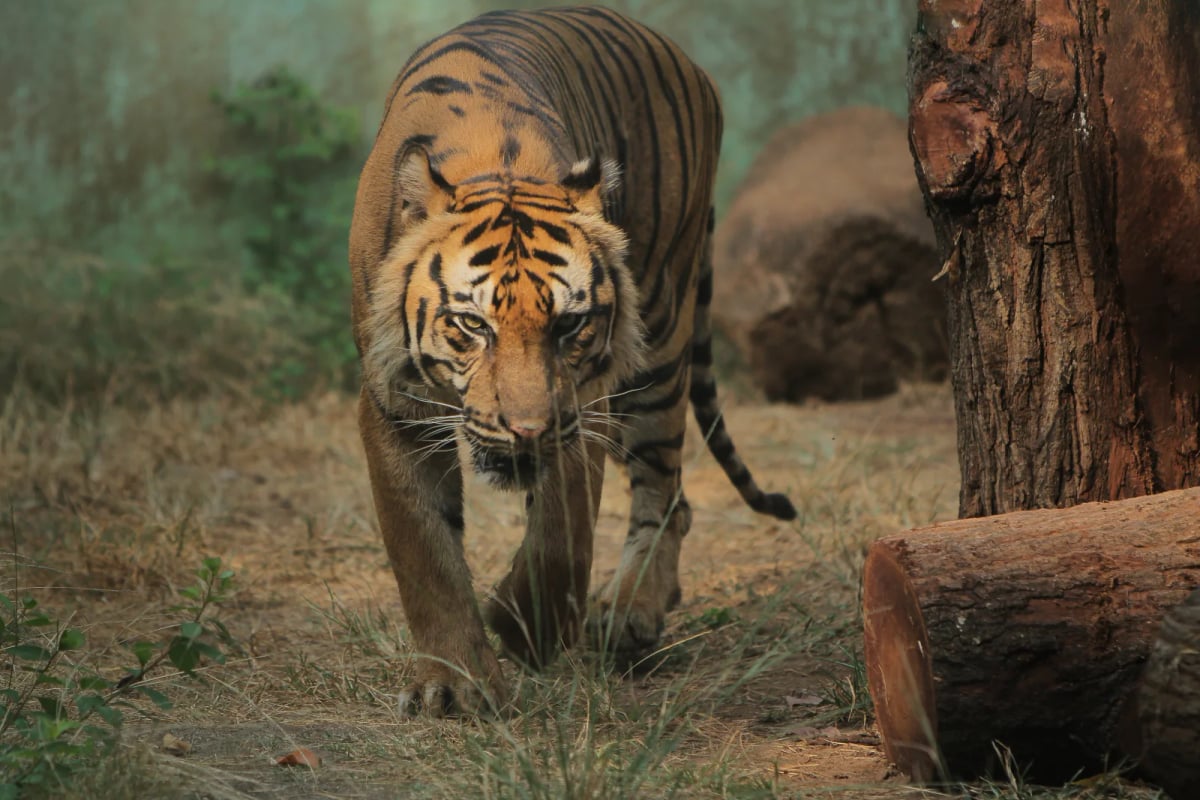
The Sumatran tiger is the smallest tiger in the world. Adult males usually weigh about 100 to 140 kilograms and measure about 2.4 meters from the nose to the tip of the tail, while females weigh about 75 to 110 kilograms and measure about 2.2 meters. That makes a large male Sumatran tiger roughly half the weight of a large Siberian tiger, the biggest of all tigers. Its small size is an advantage on a hot, forested island. A smaller body loses heat more easily in the humid tropics, and it moves more quietly through thick undergrowth, steep slopes and swampy ground, where prey is scattered and hard to approach. The coat is a deep, rich orange, darker than that of most mainland tigers. Its black stripes are narrow and set close together, more numerous than on the Bengal tiger, and they often continue down the front legs. Males have a thick ruff of longer fur around the cheeks and neck, which gives them a bearded look and makes the face look wider than it is. The chin, throat, belly and the inside of the legs are white, and there is a white spot on the back of each black ear. As in every tiger, the pattern of stripes is unique to each animal, and researchers use it to tell individual tigers apart in camera trap photos. The fur is short and sleek, suited to the warm climate, and the strong forelegs, large paws and long canine teeth are those of a hunter built to bring down animals heavier than itself.
Sumatran Tiger Habitat and Range
Sumatran tigers live only on the island of Sumatra, in Indonesia. In the past they were found across most of the island, but today they survive in a set of separate forest areas, most of them along the Bukit Barisan mountains that run down the west side of Sumatra, plus some large forests in the lowlands of the east. According to the Indonesian Ministry of Environment and Forestry, the number of forest pockets where tigers still lived fell from 29 in 2010 to 23 in 2016. Their habitat is tropical forest of almost every kind found on the island: lowland rainforest, peat swamp forest near the east coast, hill forest and the mountain forests of the volcanoes. Tigers do best in large blocks of undisturbed forest. A study published in 2017 found that tiger densities were 47 percent higher in primary forest than in degraded forest, and that tigers strongly avoid oil palm and other plantations. The two most important strongholds are Kerinci Seblat National Park, the largest national park in Sumatra, which stretches across four provinces in the center and south of the island, and Gunung Leuser National Park and the wider Leuser Ecosystem in the north. A survey by Fauna & Flora in 2019 and 2020 estimated 128 tigers in Kerinci Seblat and the forests around it, the largest single population on the island. Other important areas include Bukit Barisan Selatan National Park in the far south, Bukit Tigapuluh in the center and the Berbak and Sembilang peat swamp forests on the east coast. Sumatran tigers share these forests with Asian elephants, Malayan tapirs, sun bears, orangutans and dholes.
Sumatran Tiger Diet and Hunting
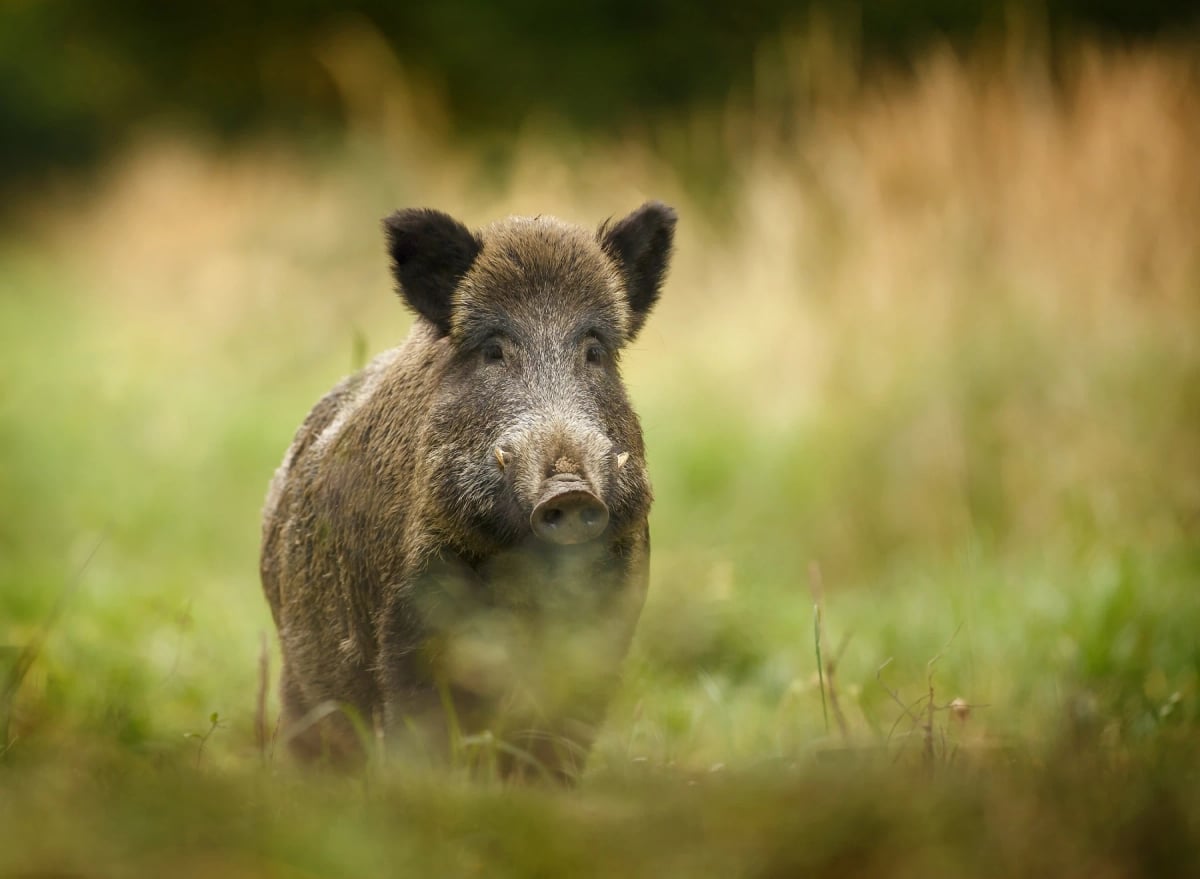
Sumatran tigers are carnivores that depend on large and medium sized hoofed animals. Long term studies with camera traps in Bukit Barisan Selatan National Park found that wild boar and sambar deer, the largest deer in Southeast Asia, are their most important prey, and that tigers are most common where these animals are plentiful. Barking deer, also called muntjacs, and a range of smaller mammals complete the menu, and a tiger will take almost any animal it can catch when larger prey is scarce. Because prey in the rainforest is spread thinly, the number of tigers a forest can hold depends directly on how many deer and wild pigs live there. The same studies found that prey numbers were much lower where many people lived near the park, mostly because of hunting, which is why protecting prey is as important as protecting the tigers themselves. Like all tigers, the Sumatran tiger is an ambush hunter. It moves mostly at night, at dawn and at dusk, following forest trails, ridges, rivers and old logging roads, and uses the cover of the undergrowth and its striped coat to creep close to its prey without being seen. Then it rushes forward over a short distance, grabs the animal with its forelegs and kills it with a bite to the back of the neck or to the throat. It often drags the carcass into thick cover and returns to feed on it for several days. Most hunts fail, so a tiger may go days without a meal. When wild prey runs out near villages, tigers sometimes kill goats, cattle or dogs, which is the start of many conflicts with people.
Sumatran Tiger Behavior and Cubs
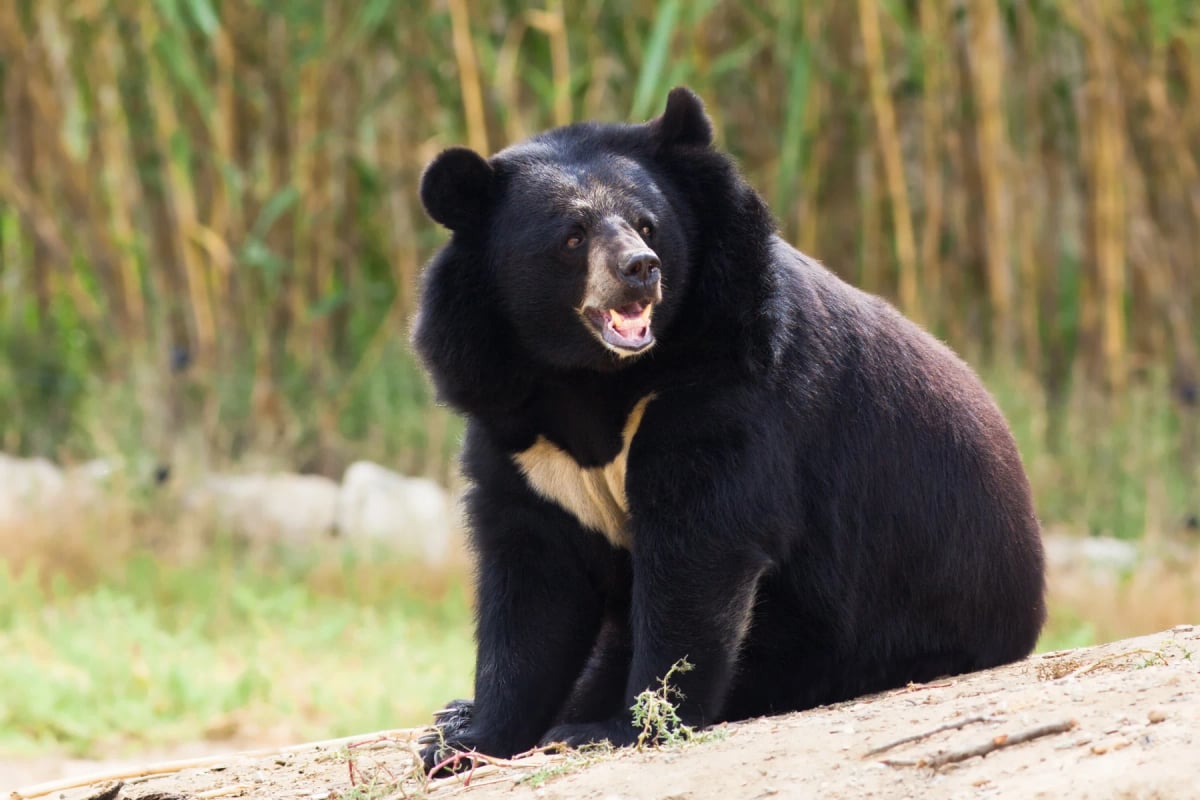
Sumatran tigers are solitary. Each adult lives alone in a home range that it marks with urine, scent, scrapes on the ground and scratches on tree trunks, and a male's range usually overlaps the ranges of several females. Because prey is scarce in the rainforest, these ranges are large, and tigers living in small or broken patches of forest have trouble finding enough food and a mate. Adults avoid each other most of the time and meet mainly to breed. They are most active at night and in the cooler hours around dawn and dusk, and they spend the hottest part of the day resting in the shade. Like other tigers they like water: they swim well, cross rivers without hesitation and often lie in streams and pools to cool off, something that helps in the swampy lowland forests of eastern Sumatra. Females can breed at any time of the year. After a pregnancy of a little over three months, the female gives birth in a hidden den among rocks, roots or thick vegetation, usually to two or three cubs. The cubs are born blind and helpless, weigh about one kilogram and depend completely on their mother, who raises them alone, without any help from the father. They begin to follow her on her travels when they are about two months old, learn to hunt by watching her and practicing, and stay with her until they are about one and a half to two years old. Then they leave to find a territory of their own. Many cubs die young, from hunger, disease, accidents or attacks by other tigers.
Sumatran Tiger Population and Conservation Status
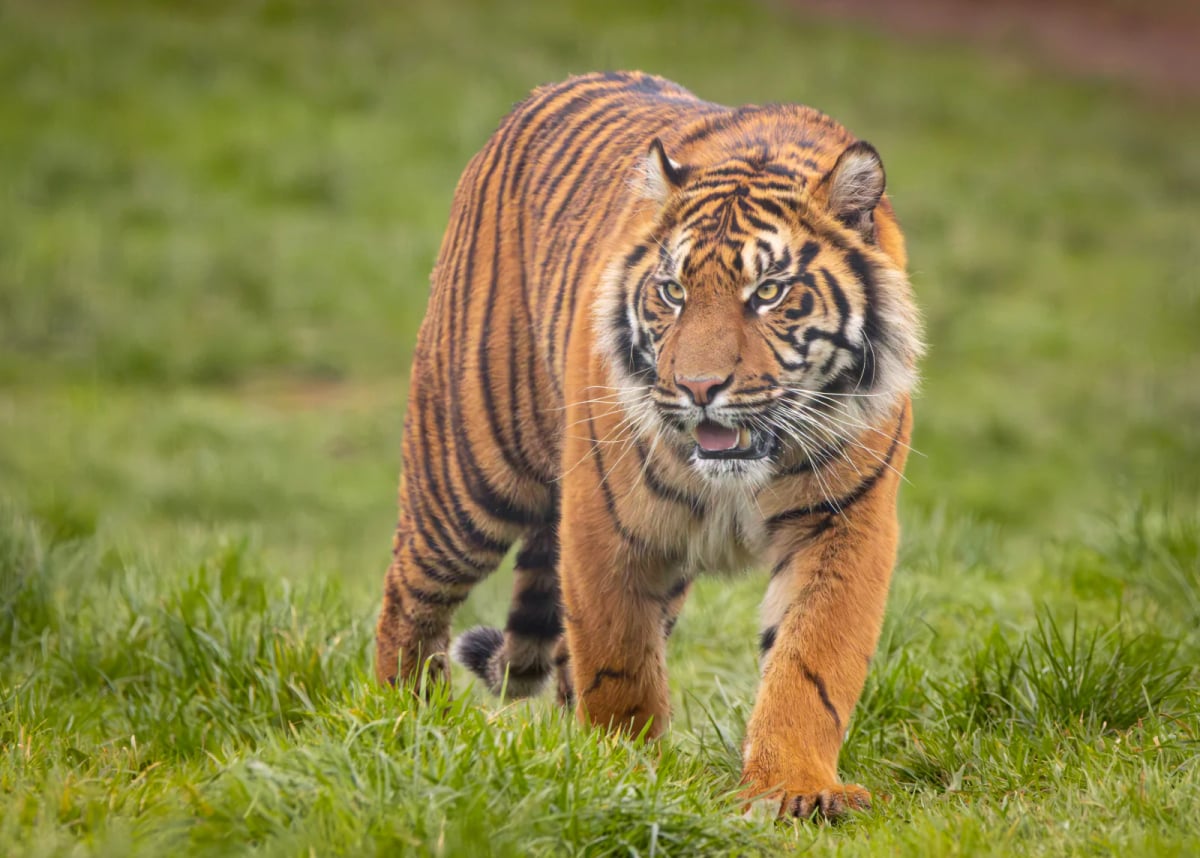
The Sumatran tiger is listed as Critically Endangered by the IUCN, the highest level of threat before extinction in the wild, in an assessment that also describes its population as decreasing and severely fragmented. The tiger as a whole species is listed as Endangered. Counting tigers in dense rainforest is very hard, so estimates vary. A study led by Matthew Luskin and published in Nature Communications in 2017 estimated that about 618 adult tigers lived on Sumatra in 2012, down from 742 in 2000, while the forests they used shrank by about 17 percent over the same years. In 2018 the Indonesian Ministry of Environment and Forestry said that no more than 600 remained. The main threat is the loss of forest. Large areas of lowland Sumatra have been cleared for oil palm and pulpwood plantations, logging, farms and roads, leaving tigers in smaller and more isolated pockets. The second threat is poaching. Hunters set wire snares to catch deer and wild boar, and also tigers, whose skins, bones and other parts are sold illegally. Snares kill and maim tigers and empty the forest of their prey. Conflict with people is the third problem: tigers that lose their forest or their prey sometimes kill livestock or, more rarely, people, and some are then killed in revenge. There is also good news. The 2017 study found that tiger densities inside protected forests had been rising by almost 5 percent a year, a sign that patrols against poaching were working, and a camera trap study published in 2025 identified 27 tigers in forests of the Leuser Ecosystem outside the national parks, including 14 females, a sign that these unprotected forests are also important for the species.